Visit Salzburg: Introduction
Visit Salzburg: Nestled amidst the majestic peaks of the Austrian Alps, the enchanting city of Salzburg offers a travel experience unlike any other in Europe—a harmonious blend of profound history, spectacular Baroque architecture, and an unparalleled musical legacy.
When you decide to visit Salzburg, you are not just seeing another beautiful city; you are stepping directly into a living, breathing UNESCO World Heritage site that has inspired generations of artists, composers, and filmmakers.
This comprehensive guide is designed to unlock the very best of this celebrated destination, taking you far beyond the surface to explore the true essence of its allure.
From its powerful foundation built on the wealth of salt—the literal “Salt Fortress”—to its enduring status as the birthplace of Wolfgang Amadeus Mozart, every narrow cobblestone street and grand plaza tells a story of Prince-Archbishops and musical genius.
We will delve into the commanding presence of the Hohensalzburg Fortress, navigate the charming, ornate alleyways of the Altstadt, and reveal the hidden gems that only locals truly know.
Moreover, we will provide essential information for those looking to combine cultural immersion with outdoor adventure, outlining the quick and easy travel routes to the spectacular, world-class ski resorts that lie just beyond the city limits.
Whether you are chasing the echoes of “The Sound of Music” or seeking the thrill of the slopes, prepare to discover why Salzburg remains an essential stop on any sophisticated European itinerary.
Begin your journey here, and let us guide you through the city’s stunning beauty, rich heritage, and dynamic contemporary life.
Visit Salzburg: What Key Historical Era Shaped the City into a Baroque Masterpiece?
The deep and profound history of this picturesque location is fundamentally defined by its almost thousand-year run as an independent, sovereign state ruled by powerful ecclesiastic figures known as the Prince-Archbishops.
Before this period, the area was a significant Celtic and Roman settlement called Juvavum, but the definitive transformation began with the arrival of St. Rupert around 700 AD, who laid the spiritual foundation for what would become the Archbishopric.
The true wealth and subsequent power of Salzburg originated from the mining and trade of “white gold”—salt—which is literally embedded in the city’s name, meaning “Salt Fortress.”
The immense revenues generated from the salt monopoly allowed the Prince-Archbishops, particularly figures like Wolf Dietrich von Raitenau and Paris Lodron in the 17th century, to completely reimagine and rebuild the city.
They employed Italian architects to transform the medieval town into the stunning Baroque capital we admire today, complete with the monumental Cathedral, the Residenz, and numerous palaces and churches.
This long period of clerical rule, which lasted until the Napoleonic era secularized the state in 1803, ensured that Salzburg developed its unique, magnificent architectural style, distinctly separate from the Habsburg influence dominating other Austrian cities.
To fully appreciate the grandeur of the Altstadt, one must understand that every ornate facade and grand square is a direct legacy of this incredible era, making this rich history a central part of your cultural travel experience.
It is this extraordinary past that makes you visit Salzburg today, not just for the music, but for the story of power carved in stone.
Visit Salzburg: Why is this Austrian City Considered a Global Cultural and Musical Treasure?
Stepping into this stunning baroque city is an immediate immersion into a world where history, art, and music harmoniously converge, instantly revealing why it holds such a revered place on the global cultural stage.
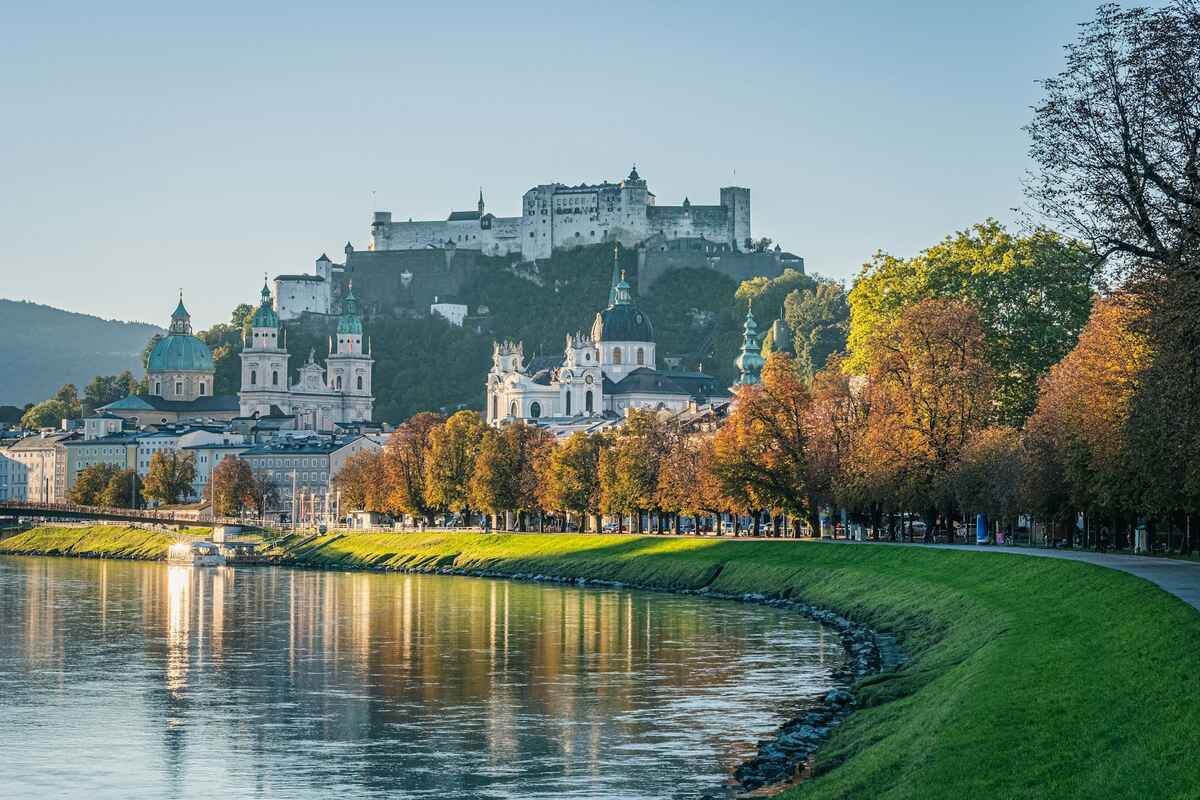
Nestled perfectly at the foot of the magnificent Eastern Alps, its sheer beauty—characterized by the winding Salzach River and the visually arresting Hohensalzburg Fortress dominating the skyline—is enough to justify a dedicated journey.
However, the true, resonant heartbeat of the city lies in its unparalleled musical heritage. This location is famously and profoundly the birthplace of Wolfgang Amadeus Mozart, arguably the world’s most celebrated composer, whose influence is palpable in the numerous concert halls, specialized museums, and even the confectioneries named in his honor.
For many others, the city is synonymous with “The Sound of Music,” the iconic film that showcased its picturesque landscapes to an international audience, further cementing its romantic image.
A journey here offers a rich tapestry of history, from its powerful roots as an independent Prince-Archbishopric to its modern status as a carefully preserved UNESCO World Heritage site, ensuring its historical integrity.
To truly experience the magic and depth of its cultural offering, you simply must visit Salzburg and immerse yourself in a world where history and timeless music beautifully intertwine.
This unique blend of architectural splendor, dramatic mountainous backdrop, and an unwavering commitment to high culture ensures its status as a top-tier destination for any ambitious European travel itinerary, promising something profoundly memorable and inspiring at every turn, for all types of explorers.
Visit Salzburg: What is the Most Essential Sight in the City’s Historic Old Town (Altstadt)?
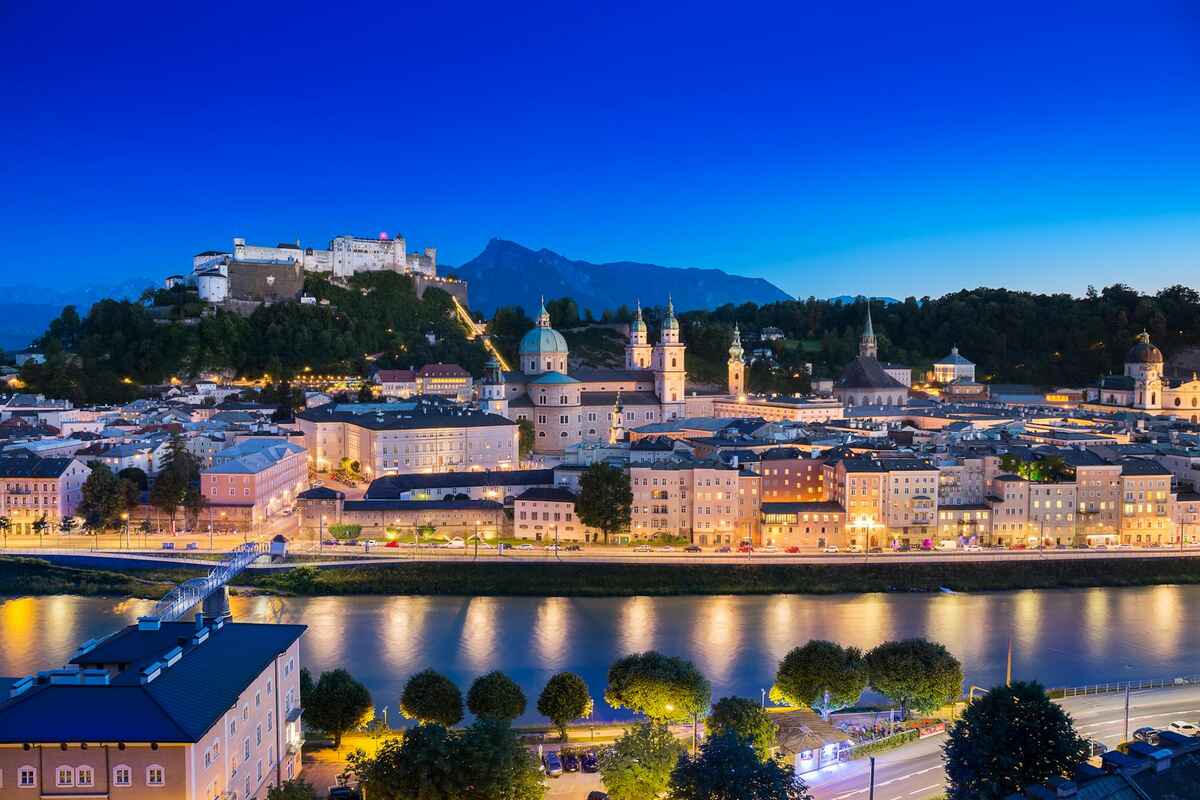
The Altstadt, or Historic Old Town, is undoubtedly the jewel in the crown of any exploratory trip to this beautiful region, but one formidable structure commands the skyline and demands your immediate attention: the mighty Hohensalzburg Fortress.
Perched dramatically atop the Mönchsberg mountain, this colossal medieval castle is recognized as one of Europe’s largest and most well-preserved fortresses, making it an unmissable landmark for any first-time visitor.
Built initially in 1077 and expanded over the centuries, it served as both a powerful symbol of authority and an impenetrable defensive structure for the Prince-Archbishops of the past.
The journey to the top, whether you choose a vigorous climb on foot for a rewarding perspective or the quick, efficient ride via the funicular, grants visitors spectacular, unmatched panoramic vistas of the entire cityscape, the serpentine Salzach River below, and the majestic surrounding Alpine peaks stretching into the distance.
Once inside the fortress walls, you can wander through the richly decorated State Rooms, delve into the various historical museums detailing life within the castle, and appreciate the immense scale of its ancient fortifications and towers.
To fully appreciate the legacy of Salzburg’s powerful past and gain a comprehensive lay of the land, one must ascend to this ultimate historic viewpoint.
Before you embark on your grand tour of the city, plan your travel time carefully; allowing a good three to four hours here is essential to soak in both the magnificent views and the layered history of this monumental piece of Austrian heritage.
Visit Salzburg: How can I Best Experience the Legacy of Wolfgang Amadeus Mozart?
The deep connection between this Austrian gem and its most famous son, Wolfgang Amadeus Mozart, is not just historical—it is a pervasive and tangible presence, offering visitors numerous ways to connect directly with the musical genius.
The most direct and poignant way to honor his legacy is to tour his two key residences within the city. First, there is Mozart’s Birthplace (Mozart Geburthaus), situated in the heart of the bustling Getreidegasse.
This essential museum showcases original instruments from his childhood, personal documents, and portraits, painting an intimate, detailed portrait of his early years and rapid development.
Second, a short and pleasant walk across the river takes you to the Mozart Residence (Mozart Wohnhaus), where the family lived from 1773, which also serves as a fascinating museum space detailing his later years in the city.
Beyond the static museums, his spirit truly thrives in the city’s classical music scene. You can elevate your travel experience by booking tickets for an exquisite chamber music concert in the stunning, acoustically perfect Marble Hall of Mirabell Palace, or attending a grander, world-class performance at the Great Festival Hall, which is the centerpiece of the annual, internationally acclaimed Salzburg Festival.
For a more casual nod to his name, you must seek out and try the original Mozartkugel (Mozart ball) chocolate from the Fürst shop—a delectable local confection that makes for a perfect, edible souvenir of your trip.
A deliberate and structured trip to his memorial sites is non-negotiable for a truly complete cultural experience in the region.
Visit Salzburg: Where Can I Find the City’s Most Beautiful and Photogenic Gardens?
For those moments when you seek a tranquil retreat and horticultural splendor amidst the heavy baroque grandeur of the Old Town, the Mirabell Palace and Gardens are an absolute must-see destination.
These exquisitely manicured Baroque gardens are far more than just a simple green space; they are a recognized masterpiece of landscape design, a visual symphony of meticulously trimmed hedges, vibrant and colorful flowerbeds, and carefully placed classical statuary.
The gardens were initially commissioned and created in the 17th century by Prince-Archbishop Wolf Dietrich as a grand gesture of love for his beloved mistress, Salome Alt, and today they stand as a stunning public park and a favorite, romantic gathering spot for locals and tourists alike.
The photographic highlights include the famous Pegasus Fountain, the intricate Hedge Theatre, and the whimsical “Dwarf Garden,” offering countless picture-perfect moments.
However, perhaps its greatest international claim to fame is its role in “The Sound of Music,” as fans of the movie will instantly recognize the exact steps and pathways where Maria and the children performed the iconic “Do-Re-Mi” sequence.
The formal, symmetrical layout of the gardens provides stunning sightlines, particularly creating a magnificent framed view of the imposing Hohensalzburg Fortress in the distance. Planning a refreshing stop here is an essential, relaxing, and beautiful part of your travel itinerary.
It’s highly recommended to visit Salzburg during the late spring or summer months when the thousands of blooms are at their most vibrant, making the experience even more spectacular and fragrant for your senses.
Visit Salzburg: What are the Must-See Locations for Fans of “The Sound of Music”?
For many millions of international visitors, this charming Austrian city holds an undeniable, powerful allure rooted in the heartwarming, true story of the Von Trapp family and the iconic film that immortalized them.
The entire region is inextricably linked to the 1965 cinematic classic, and a dedicated exploration of its numerous filming locations is a popular, joyful, and immersive travel activity.
The city and its stunning environs served as the authentic, picturesque backdrop for some of the movie’s most memorable and beloved scenes.
Key locations that fans excitedly seek out include the Mirabell Gardens, as previously mentioned, the charming and historical yellow St. Peter’s Cemetery (which provided the location for the tense hiding scene), and the serene Nonnberg Abbey, the real-life home of the nuns and the place where Maria was a postulant.
Just a short travel distance outside the city center, fans can venture to view the imposing Leopoldskron Palace (used as the Von Trapp family home exterior) and the magnificent grounds of the Hellbrunn Palace, whose unique gazebo was relocated there and used for the “Sixteen Going on Seventeen” duet.
While driving around the surrounding district, you will instantly recognize the rolling green hills and the stunning lake district, which look exactly as they did on the big screen decades ago.
You can opt to book a lively guided Sound of Music bus tour or embark on a more personal, self-guided visit Salzburg adventure. Either way, the sheer joy of standing where cinematic history was made is a truly unique and emotional experience that makes the city famous worldwide.
Visit Salzburg: Where Should I Go for the Best Shopping and Street Atmosphere?
To truly capture the vibrant essence of this destination and enjoy a spot of charming retail therapy, you must dedicate a substantial part of your day to a leisurely stroll down the Getreidegasse.
This is universally recognized as the city’s most famous and historically significant shopping street, renowned globally for its remarkably distinctive and beautifully crafted wrought-iron guild signs that proudly jut out above the storefronts.
Each sign is a miniature work of art, a historic symbol that clearly advertises the shop’s trade, and even modern, international luxury brands are required to abide by this centuries-old tradition, which lends the entire street an unparalleled old-world charm.
Beyond the absolutely fascinating signs, the street itself is a wonderfully engaging labyrinth of narrow passageways, historic archways, and picturesque, hidden courtyards, perfect for a bit of aimless and rewarding wandering.
Here you will find an extensive variety of shops, ranging from traditional Austrian Dirndl and Lederhosen outlets to modern boutiques, as well as the significant location of Mozart’s Birthplace.
The atmosphere here is constantly buzzing with energy, filled with the sounds of conversation, ringing church bells, and the occasional street performer. It is an essential component of the authentic Salzburg experience and a highlight of any Central European travel.
This historic area is perfectly suited for picking up authentic local gifts, enjoying a traditional coffee break, and savoring the vibrant local visit Salzburg street life.
Visit Salzburg: Which Churches and Cathedrals Should I Prioritize for Baroque Grandeur?
The city is often affectionately nicknamed the “Rome of the North” due to its stunning and concentrated collection of Baroque architecture, a prominent legacy left by the powerful and influential Prince-Archbishops who ruled the region.
When meticulously planning your cultural travel route through the Altstadt, two religious buildings stand out unequivocally for their breathtaking grandeur and historical importance.
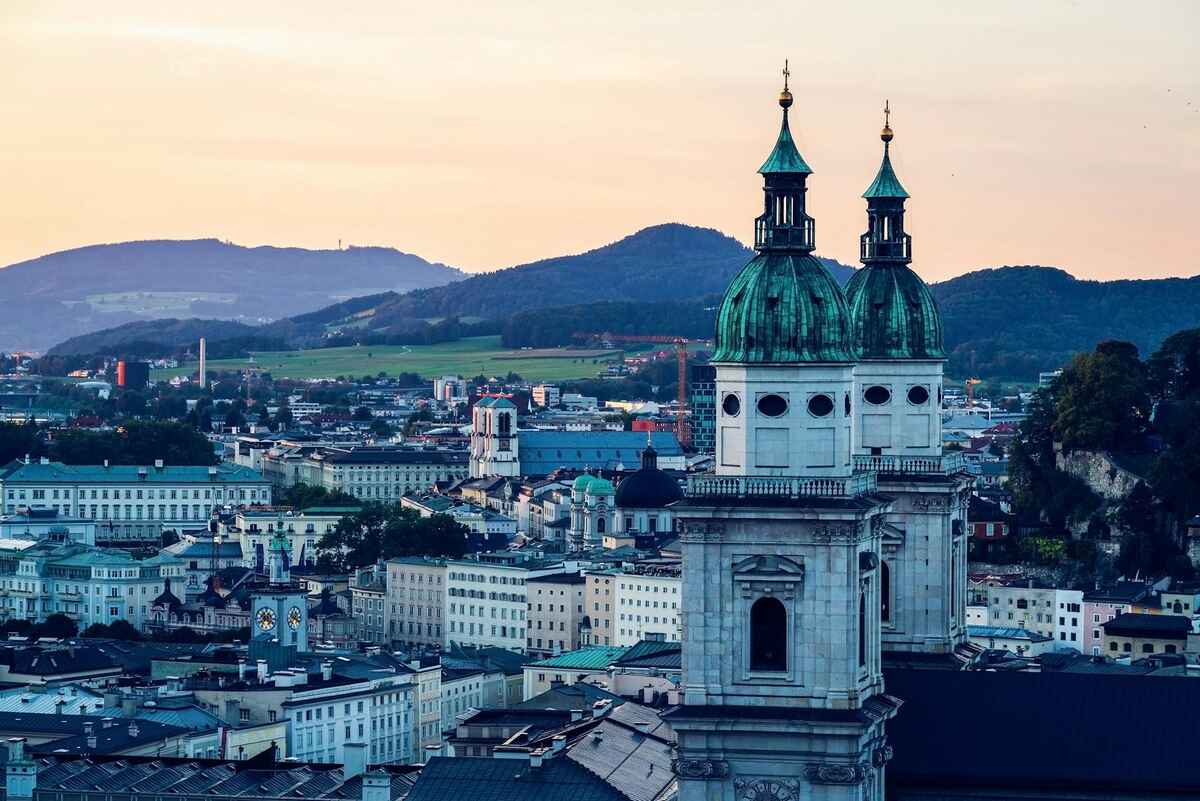
The magnificent Salzburg Cathedral (Salzburger Dom) is an absolute masterpiece of early Italian Baroque artistry, dominating the main square with its colossal marble façade and impressive twin towers soaring high above the city.
It was consecrated in 1628, and its sheer size, along with the remarkably intricate interior—which features a stunning dome, monumental bronze gates, and the preserved baptismal font where Mozart was christened—make it a pivotal cultural landmark.
Nearby, the venerable St. Peter’s Abbey and Cemetery offers a different, more ancient and serene type of beauty. This site is one of the oldest monasteries in the German-speaking world, founded around 696 AD.
While the Abbey church is architecturally stunning, the adjacent cemetery is famous for its idyllic, arcade-lined courtyards and the fascinating ancient catacombs carved directly into the sheer face of the Mönchsberg rock.
Including these profound, historic sites and places of worship in your sightseeing itinerary provides a deep and meaningful dive into the spiritual and architectural heart of this destination. It’s truly a must-do to visit Salzburg and fully appreciate this concentrated pocket of European architectural brilliance.
Visit Salzburg: What is the Best Way to Get a Spectacular View of the City and the Alps?
While the views afforded from the historic Hohensalzburg Fortress are undeniably magnificent, for a different, and perhaps even more stunning, perspective of the city and a closer, more immediate look at the surrounding Alpine landscape, a spectacular trip to the Untersberg mountain is enthusiastically recommended.
This towering peak, located just a short and convenient public bus ride south of the city center, offers a breathtaking escape into the pure, high-altitude nature of the region.
The core of the experience begins with a thrilling and memorable ride on the Untersbergbahn cable car, which smoothly whisks you up the steep slopes and rocky cliffs to an altitude of 1,853 meters (6,079 feet).
Once you step out at the summit station, you are immediately rewarded with unparalleled, sweeping 360-degree vistas that stretch across the entire city of Salzburg, the intricate surrounding valleys, and deep into the snow-capped Berchtesgaden Alps.
On a clear day, the air is incredibly crisp and clean, and the profound silence is a welcome, tranquil contrast to the cultural bustle of the city far below.
This half-day excursion adds a crucial, awe-inspiring natural dimension to your entire cultural travel experience, providing a necessary balance to the city sightseeing.
Remember to dress appropriately and warmly, even if your visit Salzburg occurs in the summer, as the temperatures at the summit can be significantly lower and the winds can be brisk.
Visit Salzburg: What Traditional Dishes and Culinary Delights Should I Seek Out?
The city’s diverse culinary scene is a delicious and memorable mix of hearty Austrian classic dishes and unique local specialties, making it a true joy for any food-focused traveler.
Beyond seeking out the globally famous Mozartkugel chocolate, your gastro-exploration should center on a few key, comforting traditional dishes found in local eateries.
The most famous and essential local dessert is the Salzburger Nockerl, a light, sweet, and incredibly airy soufflé, traditionally served warm and meant to symbolically resemble the three local city mountains—it’s a creamy, cloud-like delight that is often meant to be shared.
For a substantial main course, look specifically for authentic Austrian Tafelspitz (tender boiled beef with root vegetables) or the classic Wiener Schnitzel (veal cutlet), found in the most traditional Gasthäuser (inns) throughout the Altstadt.
Also, a vital and non-negotiable part of the local culture is the Bierkultur (beer culture). Be sure to stop by the vast Stiegl-Brauwelt, which is the museum and taproom of Austria’s largest private brewery, or the historic Augustiner Bräustübl (often called the Müllner Bräu) for an authentic, traditional beer garden experience in a former monastery.
Enjoying a robust Märzen and a local snack in one of these lively, atmospheric settings is essential to truly connect with the local social customs. To genuinely get a taste of the entire Salzburg region, take the time to visit Salzburg’s traditional eateries and savor these delightful, authentic local flavors.
Visit Salzburg: Beyond the Baroque, What Modern and Unique Attractions are Worth Visiting?
While the city’s celebrated historical sites and baroque marvels are undeniably magnificent, it also offers a variety of compelling, modern, and unique attractions that appeal strongly to the contemporary traveler.
One of the most fascinating is Hangar-7, a strikingly modern, state-of-the-art glass dome located strategically at the Salzburg Airport and owned by Red Bull founder Dietrich Mateschitz.
This truly unique architectural and exhibition building is home to a meticulously curated collection of historic aircraft (The Flying Bulls), various Formula 1 race cars, and a variety of changing international art exhibits.
The building’s architecture itself is spectacular, a feat of engineering, and it also houses several high-end bars and the two-Michelin-starred restaurant Ikarus, which features a highly renowned rotating line-up of international guest chefs each month.
It’s a remarkable fusion of technology, aviation history, art, and world-class fine dining, providing a sharp and necessary contrast to the historic Baroque city center.
Another contemporary highlight is the Museum der Moderne (Museum of Modern Art) located atop the Mönchsberg hill, which offers world-class, thought-provoking exhibitions and yet another fantastic vantage point for photography.
Adding a stop at these unique, forward-looking locations to your travel itinerary provides a fully well-rounded perspective, proving that the city is not just preserved history but also a dynamic, modern, and evolving cultural hub. You absolutely must visit Salzburg to see this compelling juxtaposition of the old and the new.
When is the Best Time of Year to Schedule My Trip to the Region?
The ideal time for a memorable travel experience to this city largely depends on your specific interests, as each of the four seasons offers a distinct, compelling charm.
Summer (June-August) is undeniably the peak season, dominated by the globally famous Salzburg Festival, an internationally renowned and intensive event featuring world-class opera, drama, and classical concerts that draw huge crowds.
The weather during this time is warm, and the famous gardens are in full, glorious bloom, but consequently, crowds are at their largest, and prices for accommodation and flights are highest.
For a quieter, but equally beautiful experience, consider the delightful shoulder seasons of spring (April-May) and autumn (September-October).
The weather is generally pleasant and mild, and the autumn foliage offers stunning colors against the mountain backdrop.
Winter is truly magical, especially if you plan to visit Salzburg around Christmas when the historic Christkindlmarkt (Christmas Market) beautifully lights up the Old Town, offering a deeply festive, traditional Austrian atmosphere.
The city’s lowest season for tourism is typically early January through March, offering the lowest prices and smallest crowds, though some remote attractions may have reduced operating hours.
Ultimately, if your goal is top-tier music and warm weather, aim for the summer; for quiet cultural immersion and great ambiance, choose the shoulder seasons.
Which World-Class Ski Regions Are Most Accessible for a Winter Sports Getaway?
While many visitors are drawn to this magnificent city for its rich cultural history and music, its location provides an extraordinary, highly practical advantage for winter sports enthusiasts: direct access to some of Austria’s most spectacular and extensive ski regions.
The entire area surrounding the city is a gateway to the Ski Amadé, an impressive mega-alliance of five major ski regions that collectively boast over 760 kilometers of impeccably groomed slopes, all accessible with a single unified lift pass.
This vast network is renowned as one of Europe’s largest winter sports destinations and is easily reachable within a short drive.
Key areas highly popular for a spontaneous travel day trip or an extended holiday include the Salzburger Sportwelt, home to family-friendly resorts like Flachau and Wagrain, and the dramatic Gastein Valley, which blends excellent skiing with thermal spa wellness in resorts like Bad Gastein.
Furthermore, the region is remarkably close to famous, world-class independent resorts like Zell am See – Kaprun, known for its reliable glacier skiing on the Kitzsteinhorn, offering a guaranteed long season from October through May.
Within an hour to an hour and a half transfer time from the airport, skiers and snowboarders of all skill levels—from absolute beginners to advanced experts—can quickly transition from the historic Altstadt to high-altitude Alpine pistes.
If you plan to visit Salzburg during the winter months, be sure to reserve a day or two to explore the incredible depth and variety of the surrounding ski terrain, making your trip a perfect, balanced blend of culture and exhilarating mountain adventure.
What are the Most Highly Recommended Day Trips to Take from the City?
Due to its prime, highly accessible location in the heart of Austria and near the German border, the city serves as an absolutely excellent base for exploring the spectacular wider travel region known as the Salzkammergut (Lake District).
Several spectacular day trips are easily accessible and come highly recommended by experts and locals alike.
The most popular and frequently cited excursion is a necessary journey to the breathtaking lakeside village of Hallstatt, a UNESCO World Heritage site known the world over for its stunning, dramatic lakeside setting, picturesque Alpine houses, and sheer mountain backdrop.
This makes for a perfect half or full-day trip via public transport or guided tour. Alternatively, you can explore the region’s intense historical significance by visiting the Eagle’s Nest (Kehlsteinhaus) near Berchtesgaden (in Germany, but easily accessible), which offers a sober look into World War II history alongside absolutely incredible high-mountain views.
For an unforgettable natural wonder, the Eisriesenwelt (Giant Ice Caves) near Werfen, recognized as the largest ice cave system in the world, provides a fascinating, chilly, and unique adventure.
Whether you are seeking history, unique natural beauty, or quaint, postcard-perfect villages, these easily accessible routes promise to significantly enrich your overall visit Salzburg experience, providing a varied perspective on the undeniable beauty of Central Europe.
Conclusion
As we conclude this comprehensive guide, the image of Salzburg remains one of exquisite balance—a city where the grand Baroque architecture funded by the ancient salt trade perfectly frames the dramatic Alpine landscape.
The journey through the Altstadt, the exploration of the mighty Hohensalzburg Fortress, and the deep dive into the world of Mozart confirm that this Austrian gem is far more than a simple stopover; it is an immersive cultural experience that resonates long after you leave.
We have uncovered the city’s rich historical narrative as the Prince-Archbishopric, revealed the most beautiful gardens and cinematic locations from “The Sound of Music,” and detailed the essential culinary delights that define the local flavor.
Crucially, we’ve also highlighted its strategic position as a premium launchpad for winter sports, placing you within easy reach of the enormous Ski Amadé network.
This unique combination of high culture, stunning natural beauty, and adventure potential makes Salzburg a truly year-round destination, promising a deeply rewarding experience whether you arrive in the festive winter or the vibrant summer.
The time for planning your own unforgettable Central European travel adventure is now. Don’t merely admire the images; choose to visit Salzburg and walk the very streets that shaped Mozart and defined the Baroque era. The city’s timeless beauty and welcoming atmosphere are ready to create your next great travel story.
FAQ
To truly soak up the main sights—the Old Town, Hohensalzburg Fortress, and Mozart’s residences—we recommend at least two full days. If you plan to include a day trip (like Hallstatt) or enjoy the surrounding ski resorts, you should allocate three to four days for your complete adventure when you visit Salzburg.
Yes, for most tourists, the Salzburg Card is highly worthwhile. It provides free entry to all major attractions and museums, including the fortress and Mozart’s Birthplace, plus unlimited use of public transport, which simplifies how you visit Salzburg and saves money.
Salzburg Airport (SZG), officially W. A. Mozart Airport, is the closest and most convenient option. It’s located just 4 km from the city center, offering quick and easy access to your accommodation, which makes planning your visit Salzburg hassle-free.
The historic core (Altstadt) is small, pedestrianized, and easily explored on foot. Public transport, including buses and the funicular, is only necessary for traveling to sites outside the center (like Hellbrunn Palace) or reaching the summit of the Hohensalzburg Fortress.
You must try the Salzburger Nockerl. This iconic, sweet meringue soufflé is traditionally prepared to represent the city’s three famous mountains and is a delightful, light local dessert essential to your culinary experience when you visit Salzburg.
Absolutely. Many key locations, such as the Mirabell Gardens and St. Peter’s Cemetery, are centrally located in the Old Town. For sites outside the center, like Leopoldskron Palace, we highly recommend taking one of the popular, dedicated “Sound of Music” guided tours.
Yes, the annual Salzburg Festival (typically late July and August) is the peak season. The city is vibrant, but hotels and concert tickets should be booked many months in advance due to the high volume of cultural travelers who visit Salzburg during this time.
The city’s immense historical wealth was derived primarily from the mining and trade of salt, which gave the city its name (“Salt Fortress”). This wealth enabled the Prince-Archbishops to fund the stunning Baroque architecture seen today, dramatically shaping how you visit Salzburg.
The famously scenic village of Hallstatt is approximately 1.5 to 2 hours away by car or bus/train. It makes for an excellent, highly recommended day trip to see the stunning Austrian Lake District (Salzkammergut) during your extended visit Salzburg.
Yes! Salzburg is an ideal base for skiers. Many major ski resorts, particularly those within the massive Ski Amadé network (like Flachau or Wagrain), are reachable within a quick 45 to 90-minute transfer, making it simple to combine culture and slopes when you visit Salzburg.

Author: Horeca Health
Horeca Health




Leave a Reply