Introduction
Liechtenstein defies expectations the moment you cross its border. Tucked between Switzerland and Austria, this tiny Alpine principality feels less like a country and more like a carefully guarded secret. The air is cleaner here, the mountain peaks sharper, and the pace of life noticeably calmer.
There is no rush, no roaring traffic, just a quiet confidence that comes from centuries of sovereignty and a deep-rooted sense of identity.
It is a place where a castle still houses a ruling prince, where vineyards climb sun-drenched slopes, and where walking trails lead not only to breathtaking viewpoints but through layers of European history.
Arriving in Liechtenstein is like opening a storybook where each chapter reveals a balance of natural beauty, respectful tradition, and understated luxury that few destinations can match. This is not a country that shouts for attention; it simply exists with a gentle, grounded elegance that draws curious travelers in.
Where Is Liechtenstein and How to Get There?
Liechtenstein is a doubly landlocked microstate in Central Europe, bordered entirely by Switzerland to the west and south and by Austria to the east and north.
Covering just 160 square kilometers, it is one of the smallest countries in the world, yet its location in the Rhine Valley gives it a strategic position along historic trade routes. The principality has no airport of its own.
The closest international gateway is Zurich Airport (ZRH) in Switzerland, roughly 115 kilometers away, which offers frequent connections to major cities worldwide. From Zurich, travelers can take a direct train to Sargans or Buchs, followed by a short bus or taxi ride across the Rhine into Liechtenstein.
Alternatively, the smaller St. Gallen–Altenrhein Airport, about 50 kilometers away, serves select regional flights and is convenient for visitors arriving from within Europe. Driving from neighboring countries is straightforward, with well-maintained motorways connecting to the border.
Those combining a Liechtenstein visit with a broader Alps itinerary often enter via the Austrian town of Feldkirch, which sits just a few kilometers from the northern tip of the principality.
For those relying on public transport, the Swiss rail network and PostBus services make reaching Liechtenstein surprisingly easy. Although no trains cross the border, the railway stations in Buchs and Sargans act as smooth transfer points.
The Liechtenstein Bus network, operated by LIEmobil, connects all major towns and villages, linking seamlessly with Swiss and Austrian routes. A Liechtenstein travel day pass offers unlimited bus travel on the local network and is a practical choice for short stays.
The absence of a train station inside the country adds to its quiet character, reinforcing the feeling of entering a place slightly removed from the well-trodden tourist circuits. During peak travel seasons, it is wise to check schedule updates, as bus frequencies can change.
Entry requirements follow the Schengen Area rules, meaning most European visitors need only a valid ID, while non-European travelers should verify visa conditions through official Swiss representations, since Liechtenstein shares its border and customs control with Switzerland.
The approach from Switzerland is particularly scenic, winding through the Rhine Valley with the Alps rising on either side. Whether arriving by car or bus, the first glimpse of Vaduz Castle perched above the capital is an unforgettable moment.
The journey itself becomes a gentle transition from the urban bustle of Zurich into a pastoral landscape of vineyards, meadows, and forested slopes. Liechtenstein’s compact size means that your base, whether in Vaduz, Schaan, or a mountain village like Triesenberg, is never far from any attraction.
This ease of access is part of the principality’s charm, making it an ideal destination for travelers who prefer short, unhurried transfers rather than long overland journeys.
Once you are inside Liechtenstein, orientation is simple. The entire country can be traversed from north to south in under an hour.
Nevertheless, the border experience is soft and often unmarked, so travelers are advised to check if they need to carry a passport for identification, even when crossing within the Schengen zone. Local signage is clear, and English is widely understood in tourism-related services.
Combining a visit to Liechtenstein with a broader Switzerland or Austria itinerary is common, and many visitors are surprised by how distinctly the principality stands apart from its neighbors, despite its geographical integration.
A Brief History of Liechtenstein: From Alpine Territory to Sovereign Principality
The roots of modern Liechtenstein stretch back to the early 18th century, when the princely House of Liechtenstein acquired the lordship of Schellenberg and the county of Vaduz.
In 1719, Emperor Charles VI united the two territories and raised them to the rank of an imperial principality, naming it after the ruling family.
Until then, the Liechtenstein dynasty had held vast estates mainly in Moravia, Lower Austria, and Silesia, but lacked a territory directly under the Holy Roman Empire. The creation of the principality gave the family a seat in the Imperial Diet, a political necessity for their ambition.
The territory remained largely agrarian and relatively isolated well into the 19th century, protected by its Alpine geography and the diplomatic neutrality of its rulers.
This small state managed to survive the Napoleonic wars, the dissolution of the Holy Roman Empire, and the reshaping of Central Europe with a quiet resilience that still defines its national character.
During the 19th century, Liechtenstein moved closer to Austria, forming a customs and monetary union with the Habsburg monarchy. However, the collapse of the Austro-Hungarian Empire after World War I led to a decisive shift.
The principality turned toward Switzerland, and in 1923 a customs treaty was signed that integrated Liechtenstein into the Swiss economic area, including the use of the Swiss franc as its currency.
This treaty remains a pillar of the country’s stability, providing access to Swiss markets and monetary policy without requiring Liechtenstein to join the Swiss Confederation politically.
The period between the wars was economically harsh, but the principality maintained its sovereignty and neutrality, a feat few states of its size managed. Even during World War II, Liechtenstein remained officially neutral, although it navigated complex pressures from neighboring powers.
The second half of the 20th century transformed Liechtenstein from a poor agricultural country into a prosperous, highly industrialized nation. A favorable tax environment, political stability, and business-friendly laws attracted a wave of manufacturing, financial services, and international companies.
Family-owned firms and innovative industries in dental products, electronics, and construction technology flourished. This economic miracle happened without sacrificing the principality’s identity or its deep connection to its Alpine landscape.
The Prince of Liechtenstein remains the head of state, and the country’s constitution blends monarchical and direct democratic elements in a unique political model. In 2003, a constitutional referendum expanded the prince’s powers, a rare move in modern Europe that reaffirmed the population’s trust in the monarchy.
Today, Liechtenstein is a constitutional hereditary monarchy with a thriving economy, a high standard of living, and a population of around 40,000.
Its history is not one of dramatic battles or colonial expansions, but of careful diplomacy, strategic alliances, and a remarkable capacity to adapt while preserving sovereignty. For visitors, this historical arc is tangible in the castles, the civic architecture, and the quiet pride of the people.
Walking through Vaduz, you are moving through a state that has crafted its own path with intelligence and discretion, a theme that surfaces again and again in Liechtenstein’s cultural and political life.
Why Does Liechtenstein Feel Like a Hidden Gem of Europe?
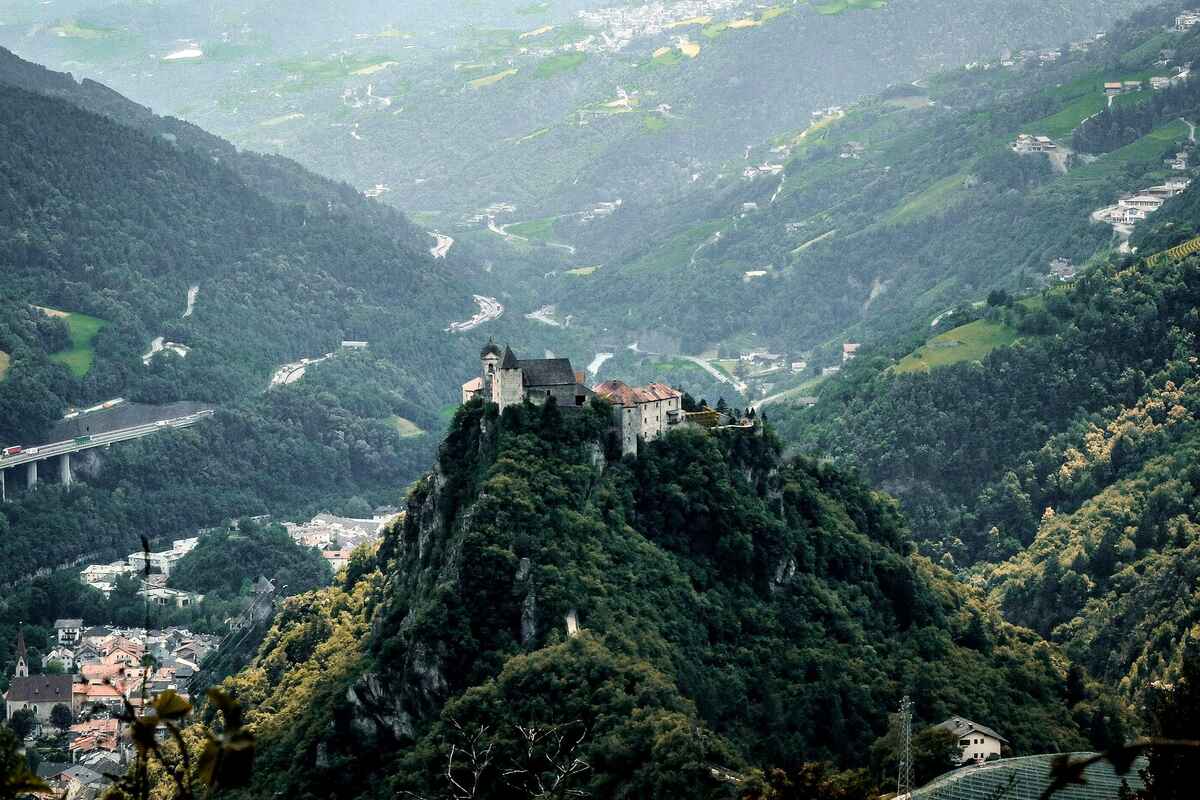
Liechtenstein remains one of Europe’s least visited countries, and that is precisely why it feels so special. Despite its central location, it attracts a fraction of the tourists that flood neighboring regions in Switzerland and Austria.
The principality has intentionally avoided mass tourism, focusing instead on quality experiences, cultural depth, and environmental preservation. There are no sprawling resorts, no crowded cable cars, and no lines to buy tickets.
The country’s smallness lends it an intimacy that is increasingly rare on the continent. Walking across the capital, you might meet more locals than tourists, and in the countryside, the only sounds are cowbells, flowing streams, and the wind moving through pines.
This sense of discovery, of having stumbled upon a place not yet cataloged by every travel influencer, gives Liechtenstein a gentle exclusivity that feels earned rather than marketed.
The natural setting amplifies this hidden-gem appeal. The Rhine Valley, framed by the Rhätikon Alps, offers dramatic scenery that would be a major attraction anywhere else, yet here it serves as a quiet backdrop rather than a theme park.
Hiking trails, including the renowned Fürstensteig, deliver world-class landscapes without the procession of selfie sticks. In spring, wildflowers cover the alpine meadows; in autumn, the larch forests turn gold.
The country’s compact geography means you can experience high-altitude ridges and valley-floor vineyards within the same morning.
Because Liechtenstein is often overlooked on standard European grand tour itineraries, those who do come are usually genuinely interested in nature, culture, or history, creating a more mindful travel environment.
The character of Liechtenstein also stems from its balanced identity. It is at once deeply Central European and distinctly global, with a multilingual population that moves easily between Alemannic dialect, standard German, and English.
The economic sophistication of its banking and high-tech sectors coexists with small-scale agriculture and a strong sense of local tradition. In Triesenberg, for example, you can still hear the Walser German dialect brought by settlers from Valais centuries ago.
This preservation of heritage, without turning it into a tourist caricature, gives Liechtenstein a genuine texture. The feeling is not one of a curated museum but of a living community that simply continues its way of life.
It would be inaccurate to describe Liechtenstein as “undiscovered,” because those who know European travel well have long admired it. Yet its appeal never feels mainstream or commodified.
The sense of peace is tangible: the streets are clean, the architecture respectful of landscape, and the cultural offerings, from the Kunstmuseum Liechtenstein to the Liechtenstein National Museum, rival those of much larger cities.
The principality rewards travelers who appreciate subtlety, who are willing to slow down, and who understand that quiet luxury is often the greatest luxury of all. In a world where overtourism frays the edges of many beautiful places, Liechtenstein feels like a whispered invitation rather than a broadcast.
Vaduz: The Compact Capital of Liechtenstein
Vaduz is not a capital in the grand sense of monumental boulevards and bustling crowds. Instead, it is a neat, sophisticated town of around 5,700 residents that serves as the political, cultural, and symbolic heart of the principality.
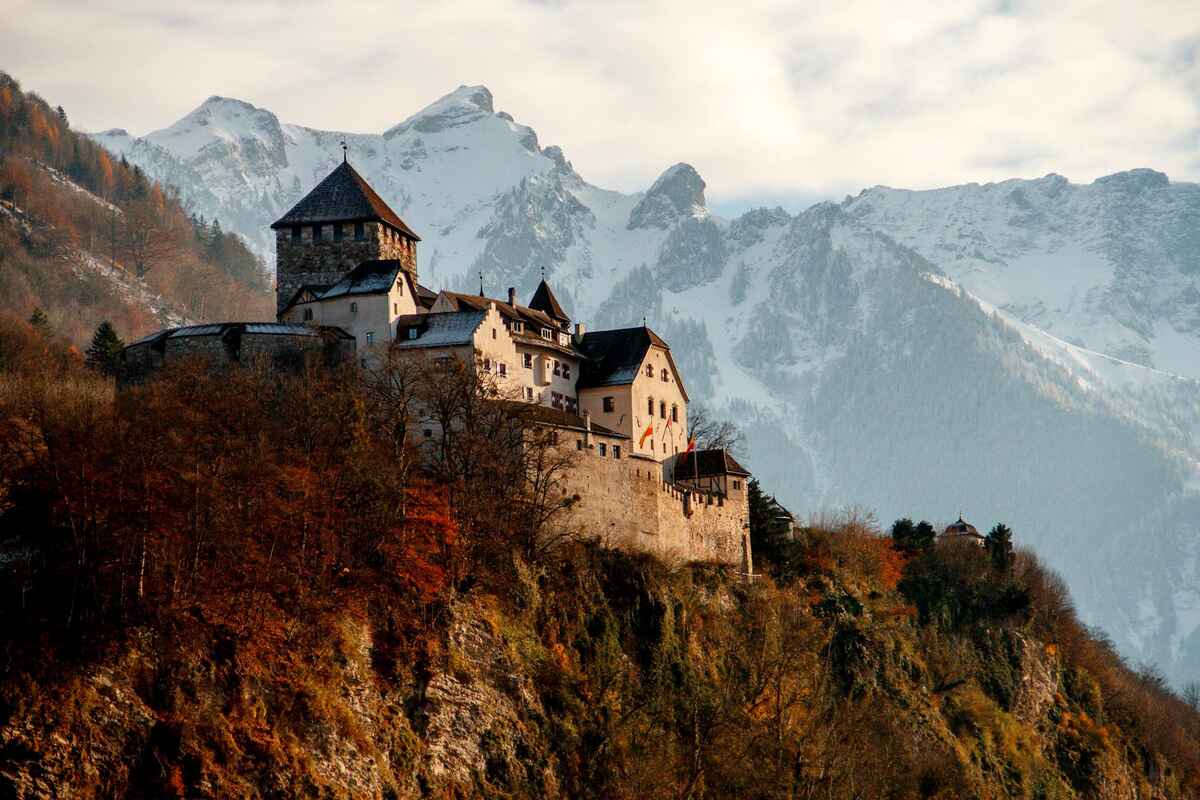
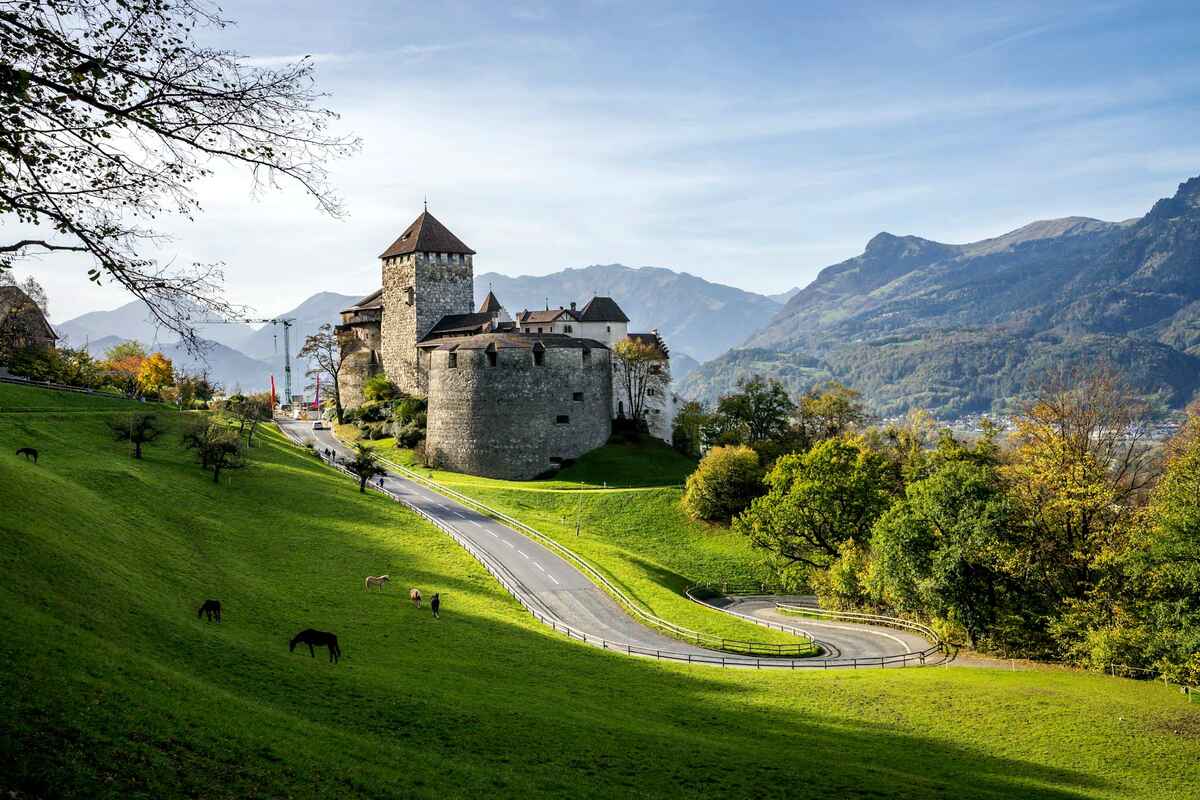
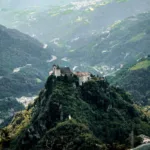
The iconic Vaduz Castle, sitting on a forested hill directly above the town, provides the unmistakable focal point. While the castle is the residence of the princely family and not open to the public, its silhouette dominates the skyline and offers a constant reminder of Liechtenstein’s monarchical continuity.
The town center is characterised by the Städtle, a pedestrian-friendly street lined with contemporary art spaces, elegant boutiques, and cafés that spill onto sunny terraces.
The walk from the central square to the government quarter takes only a few minutes, but each step reveals architectural details that tell the story of a small state with outsized cultural ambitions.
The Kunstmuseum Liechtenstein, a striking black basalt cube designed by architects Meinrad Morger, Heinrich Degelo, and Christian Kerez, houses the state’s modern and contemporary art collection.
It is an internationally respected institution, featuring works from the 19th century to the present and regularly hosting exhibitions that draw curators and artists from across Europe. Nearby, the Liechtenstein National Museum offers a deep dive into the country’s history, archaeology, and folklore.
Housed in a former inn and a medieval tower, it displays everything from Bronze Age artifacts to objects connected with the princely collections. For such a small town, the concentration of high-quality cultural institutions is remarkable and reflects the principality’s commitment to education and aesthetics.
Vaduz also rewards those who walk without a strict plan. The English Building, a curiosity from the 1930s that once housed a spinning mill and later a cinema, stands as a reminder of the town’s evolving layers.
The Cathedral of St. Florin, with its dual spires, marks the religious center, while the Parliament Building shows the country’s modernist architectural language. Alongside the formal institutions, small wine taverns offer local vintages from the Prince of Liechtenstein’s own vineyards.
The regional white wines, particularly the Riesling-Sylvaner, are crisp and reflect the calcareous soils of the Rhine Valley. Tasting a glass with a view of the castle is a quintessential Vaduz experience, combining local produce, scenery, and a sense of place that no museum label can replicate.
Even in the heart of the country, nature is never far away. The path up to the castle, the Schlossweg, winds through a forested slope that offers uninterrupted views across the valley to the Swiss mountains.
In the evenings, when the day-trippers have left, Vaduz becomes serene. The streets empty, the mountain light fades slowly, and the principality’s quiet personality reveals itself most clearly.
Accommodation options range from the refined Hotel Park-Hotel Sonnenhof to smaller guesthouses that provide a warm, personal welcome.
Staying in Vaduz means being immersed in a capital that operates on a human scale, a place where you can stroll from a world-class art gallery to a vineyard terrace in the space of an afternoon.
Liechtenstein’s Alpine Hiking Trails: A Walker’s Paradise
Liechtenstein’s mountainous terrain is a gift for hikers. Despite the country’s small size, the trail network covers over 400 kilometers, offering everything from gentle walks through the valley floor to demanding ridge climbs that require a head for heights.
The most famous path, the Fürstensteig, is a classic Alpine route that runs along a narrow limestone ridge high above the town of Vaduz.
The trail is not for the faint hearted: it involves exposed sections, steel cables, and steep drops, but the reward is an unmatched panorama of the Rhine Valley, the Swiss peaks, and the principality unfolding below.
This path is usually accessible from late spring to early autumn, and proper footwear, weather awareness, and a reasonable fitness level are essential.
For those who prefer less vertiginous walks, the valleys and mid-altitude slopes offer equally beautiful alternatives. The Princes’ Way, a multi-day hiking circuit that connects the entire country, allows you to experience different landscapes gradually.
You pass through vineyards, old Walser settlements, alpine pastures, and thick coniferous forests. Signposting is excellent, and the yellow trail markers common to Switzerland and Liechtenstein guide you reliably.
Along the way, mountain huts serve simple, hearty dishes such as käsknöpfle, a local cheese noodle specialty, and refreshing apple juice from regional orchards. The rhythm of a walking day in Liechtenstein is never rushed, and the panoramic benches placed at viewpoints invite long, meditative pauses.
The variety of microclimates ensures that almost every season offers a different hiking experience. In May and June, the lower slopes burst with wild narcissi and gentians, while the higher trails remain snow-covered until July.
Autumn, from late September through October, is perhaps the most photogenic period. The larch trees turn brilliant gold, the air stays crisp but comfortable, and the tourist numbers drop to a minimum.
Winter hiking is also possible on prepared paths in the Malbun region, where snowshoeing and cross-country skiing trails broaden the outdoor offer. Hiking in Liechtenstein is not merely a recreational activity; it is woven into the national identity, a practice that connects the people to their land and history.
Practical considerations matter. The alpine weather can shift quickly, so carrying rain gear, extra layers, and sufficient water is advisable even on short walks. Mobile phone coverage is generally good, but in some deep valleys it may be patchy.
Several official tourism platforms provide updated trail statuses and difficulty ratings, and it is wise to consult them before setting out. Guided hikes led by trained local guides are available for those who want deeper insights into the geology, flora, and cultural history of the region.
Safety on the trail is paramount, and while the routes are well maintained, high-altitude sections involve objective mountain risks. Hiking smartly, respecting the terrain, and knowing one’s own limits are the keys to enjoying Liechtenstein’s breathtaking natural theatre.
Exploring Liechtenstein’s Quiet Luxury: Boutique Stays and Fine Dining
Quiet luxury in Liechtenstein is not about ostentation. It is expressed through impeccable service, understated design, and a harmony with the natural surroundings that makes you feel instantly at ease.
The accommodation options, though limited in number, are carefully curated. The Park-Hotel Sonnenhof in Vaduz exemplifies this philosophy: a family-run establishment with panoramic views of the Alps, a Michelin-starred restaurant, and gardens that invite you to linger for hours.
In the Malbun valley, the small alpine hotels and spa lodges offer a sense of retreat where mountain air and contemporary comfort merge seamlessly. Throughout the principality, the focus remains on quality rather than quantity, and the staff you meet are often locals who share genuine pride in their homeland.
Fine dining in Liechtenstein has evolved considerably in recent years. The principality’s gastronomic scene draws from Austrian, Swiss, and Italian influences while championing regional ingredients.
At Restaurant Marée in the Sonnenhof, awarded one Michelin star, the cuisine combines French technique with Alpine produce, often paired with wines from the prince’s own vineyards.
In Schaan, the Restaurant Zum Schäfle offers traditional recipes executed with precision, while smaller farm-to-table establishments in the countryside serve meals that taste of the valley’s own rhythms.
Locally produced dairy, freshwater fish, game from the forests, and seasonal vegetables feature prominently. The wine culture is a revelation for many visitors: the dry Riesling-Sylvaner and Pinot Noir of the region are gaining international recognition, well beyond the principality’s borders.
Wellness is another dimension of this quiet luxury. Several hotels integrate spa facilities with mountain views, offering treatments that use Alpine herbs and natural products.
The Malbun area, in particular, is known for its clean air and serene environment, making it a year-round destination for those looking to recharge.
There are no noisy après-ski scenes here; instead, evenings end with the crackle of a fireplace, a glass of local wine, and a deep sense of stillness that only high-altitude valleys can provide.
This approach attracts a specific type of traveler: one who values privacy, authenticity, and a slower pace, and who sees luxury as an alignment of comfort with environment rather than an accumulation of glitz.
Even outside the high-end bracket, the quality of life permeates every level of a Liechtenstein stay. Small guesthouses and farm stays deliver warmth and authenticity that feel truly personal. Breakfast tables are laden with local cheese, fresh bread, and homemade jams.
It is not uncommon to have a host explain the walking trail directly from their property or to recommend a winery visit that is not in any guidebook.
The combination of refined professionalism in the starred establishments and heartfelt hospitality in the simpler lodgings creates a balanced travel experience. Liechtenstein does not need to claim its luxury loudly; it is embedded in the very way places are run, meals are prepared, and guests are welcomed.
What Is the Best Time to Visit Liechtenstein?
The best time to visit Liechtenstein depends largely on your interests. For hiking and outdoor activities, late spring through early autumn (May to October) offers the most favorable weather, with July and August providing warm temperatures and the longest daylight hours.
If you seek winter sports or a quiet snowy landscape, December to March is ideal, especially in the Malbun region. The shoulder seasons of late September to October and April to May bring fewer visitors and a more intimate atmosphere, though some high-altitude trails may remain closed due to snow.
The climate varies with altitude, so the valley can be mild while the peaks hold snow well into spring. Checking seasonal opening dates for mountain huts, museums, and restaurants is recommended before finalizing plans.
| Season | Typical Weather | Best Activities | Crowd Level | Approximate Price Level |
|---|---|---|---|---|
| Spring (Mar–May) | Cool to mild, valley blossoms, snow possible at altitude | Lower walks, cultural visits, wine tastings | Low to moderate | Moderate |
| Summer (Jun–Aug) | Warm, occasional rain, high-altitude trails accessible | Hiking, cycling, open-air events, castle tours | High (especially July) | Higher |
| Autumn (Sep–Oct) | Crisp, golden foliage, clear skies early, cooling later | Photography, hiking, wine harvests, museum visits | Low | Moderate to lower |
| Winter (Nov–Feb) | Cold, snow in mountain areas, valley milder | Skiing, snowshoeing, Christmas markets, thermal spas | Low (except holiday weeks) | Variable |
How Many Days Do You Need for a Liechtenstein Trip?
Two to three full days are sufficient to experience Liechtenstein’s main highlights and absorb its atmosphere without feeling rushed. This allows time to explore Vaduz, visit key museums, complete a memorable alpine hike, and perhaps enjoy a leisurely dinner or a wine tasting.
With three days, you can also venture into the Malbun region for mountain walks or winter sports, discover the Walser villages, and still have space for unplanned moments.
For those using Liechtenstein as a stop on a longer Swiss or Austrian itinerary, even one overnight stay delivers a surprisingly rich impression, but extending to two or three nights transforms the visit into a genuine slow travel experience. The compact geography means you lose very little time in transit, so each day feels full yet unhurried.
Getting Around Liechtenstein: Transport Tips for a Seamless Journey
Getting around Liechtenstein is remarkably simple, thanks to its small geography and efficient public transport. The LIEmobil bus network connects all major towns, including Vaduz, Schaan, Balzers, Triesen, and the mountain communities, with frequent services during the day.
The yellow-green buses are clean, punctual, and equipped with clear route maps. A network pass for unlimited travel within the principality is an excellent investment for short stays. Bicycle lanes and quiet country roads also make cycling a pleasant way to explore the valley.
The Rhein route along the river offers flat, scenic paths that suit cyclists of varying fitness levels. For those who prefer driving, car rental is available in Vaduz or at the Swiss border towns, and parking is generally uncrowded outside peak summer days, though spaces in the capital can fill up quickly during business hours.
Unique Cultural Experiences in Liechtenstein
Culture in Liechtenstein is not confined to its museums and concert halls; it lives in the rhythm of villages, the pride of craftsmanship, and the continuity of seasonal festivals.
One of the most distinctive celebrations is Liechtenstein’s National Day on August 15th, when the princely family invites residents and visitors to Vaduz Castle for a reception, followed by festivities in the capital.
The date aligns with the Feast of the Assumption and serves as a unique intersection of state ceremony, religious tradition, and popular gathering. Fireworks over the Rhine and music performances create an atmosphere of communal joy that is rare in a country of this size.
Arriving a day earlier allows you to witness the setting up of marquees and the quiet preparation that precedes the public joy.
The Walser heritage in the mountain community of Triesenberg offers another layer of cultural immersion. The Walser people migrated from the Valais region in the 13th century, bringing their distinctive dialect, architectural style, and alpine farming traditions.
The Walser Museum in Triesenberg documents this history with sensitivity, displaying household objects, clothing, and farming tools that trace a way of life shaped by high-altitude seasons.
Walking through the village, you can see traditional wooden houses with shingled facades and small chapel interiors adorned with local votive art. The cheese-making practices and local recipes, passed down through generations, can occasionally be experienced through farm visits arranged in advance.
Liechtenstein’s musical and theatrical life also punches above its weight. The Liechtenstein Symphony Orchestra performs regularly, and the Vaduzersaal and Takino in Schaan host concerts ranging from classical to contemporary.
The International Guitar Days and the Little Big Beat Festival introduce innovative programmes that attract audiences from across the region.
What makes these events special is their intimacy: you are rarely sitting far from the stage, and the sense of connection between performers and audience is tangible. Booking tickets directly through official websites or local tourist offices is recommended, as some events sell out quickly despite the principality’s small population.
The principality’s religious art and architecture add depth to a cultural tour. The Parish Church of St. Peter and Paul in Mauren, with its Romanesque origins and Baroque interior, and the Chapel of St. Mamertus in Triesen, one of the oldest church buildings in the country, are places of silence that speak of a long spiritual continuity.
Even in such secularised times, these spaces remain active parts of the community. Respectful dress and quiet behaviour are appreciated when visiting active places of worship. Liechtenstein’s cultural landscape is not a spectacle to be consumed but a lived reality to be entered with curiosity and respect.
What Are Liechtenstein’s Must-See Castles and Museums?
The two most emblematic castles in Liechtenstein are Vaduz Castle, the princely residence dating from the 12th century, and Gutenberg Castle in Balzers, which stands on a rocky hill in the south.
While Vaduz Castle is not open to the public, Gutenberg Castle welcomes visitors to its courtyards and offers guided tours that explore its medieval architecture and the history of the region’s fortifications.
For museums, the Kunstmuseum Liechtenstein is the highlight for modern and contemporary art, the Liechtenstein National Museum provides a comprehensive view of the principality’s heritage, and the Walser Museum in Triesenberg preserves the unique culture of the Walser settlers.
The Postal Museum and the Treasure Chamber, both in Vaduz, add niche perspectives on the country’s philatelic and princely collections.
Practical Travel Tips for Visiting Liechtenstein
Planning a visit to Liechtenstein requires a handful of practical considerations that can greatly improve your experience. The official currency is the Swiss franc, and although some establishments may accept euros, change is typically given in francs, often at an unfavourable rate.
Carrying cash in small denominations is useful for mountain huts and smaller cafés, though credit and debit cards are widely accepted in urban areas and hotels.
The country uses the Swiss telephone and postal system, so a Swiss SIM card or a compatible international roaming plan will keep you connected. Tap water is safe and of excellent quality, which makes refilling bottles in village fountains a sustainable and pleasant habit.
Dress codes in Liechtenstein are generally relaxed but neat; hiking attire is perfectly acceptable in outdoor settings and mountain restaurants, while smart casual wear suits most dining and cultural venues in the capital.
Tipping is not obligatory, as service charges are included in restaurant bills, but rounding up or leaving a small extra amount is appreciated for excellent service.
English is widely spoken in tourist-facing businesses, though a few words in German, such as “Grüezi” (hello) or “Danke” (thank you), are well received. The principality is very safe, with low crime rates, but standard precautions for personal belongings apply, especially at public transport hubs across the border.
Accommodation booking is advisable during peak summer months and on National Day, when capacity is limited. Some tourist offices offer a Liechtenstein Card that may include free bus travel and discounts on attractions, though the conditions change periodically, so verifying current offers before travel is wise.
Medical facilities are of a high standard, but travel insurance is always recommended for international visitors to cover unexpected health events or mountain rescue operations that can be costly.
For hikers, a basic first-aid kit and knowledge of emergency numbers (112 for general emergencies, 1414 for mountain rescue within Switzerland and Liechtenstein) are strongly advised.
Finally, the principality’s environmental awareness should be mirrored by visitors. Stick to marked trails to protect fragile alpine vegetation, dispose of waste properly, and respect the quiet that makes Liechtenstein so special.
Drone use is restricted near the castle and residential areas, and permits may be required. By traveling mindfully, you contribute to the preservation of a place that has carefully balanced modernity with tradition. The reward is a deeper, more connected experience that goes far beyond a passport stamp or a hurried selfie.
Conclusion
Liechtenstein is a principality that chooses subtlety over spectacle, and that choice is its greatest gift to the curious traveler.
In a world that often equates travel value with size, speed, and volume, this small Alpine country offers something different: space to breathe, landscapes that invite contemplation, and cultural encounters that feel earned rather than staged.
A journey here is not about ticking off a list of attractions; it is about settling into a rhythm that is slower, quieter, and more human. The warm hospitality, the excellence of its museums and cuisine, and the majesty of its mountains combine to create an experience that lingers long after departure.
All travel conditions, from entry rules and transport schedules to opening hours and seasonal weather, can evolve, so checking official sources before booking is always a sound practice. Once there, Liechtenstein will reward those who arrive with open eyes and a willingness to embrace a rare European stillness.
FAQ
Is Liechtenstein worth visiting for a day trip?
A day trip to Liechtenstein can be rewarding, especially if you focus on Vaduz and a short hike. Many travelers combine it with nearby Swiss or Austrian destinations. However, a day trip only scratches the surface. Staying overnight allows you to experience the country after the day-trippers have left and to enjoy its restaurants and calm evening atmosphere. Note that museum opening hours may vary, so check in advance to make the most of a short visit.
Do I need a visa to enter Liechtenstein?
Liechtenstein is part of the Schengen Area. Citizens of Schengen countries can enter with a valid ID. Non-Schengen nationals should check visa requirements through Swiss diplomatic missions, as Switzerland handles border and customs control for the principality. Visa rules and entry conditions can change, so it is essential to verify current regulations with official sources before traveling.
What language is spoken in Liechtenstein?
The official language is German, but the local dialect is an Alemannic variant of High German. English is widely understood in tourist services, hotels, and restaurants. Knowledge of a few German phrases can enhance your interactions, but communication is rarely a barrier for English-speaking visitors.
Is Liechtenstein expensive to visit?
Costs are comparable to Switzerland, which means accommodation, dining, and transport can be high. Budget travelers can reduce expenses by staying in guesthouses, using public transport passes, and eating at self-service restaurants or mountain huts. Prices vary by season, and booking ahead often secures better rates.
Can I visit Vaduz Castle?
Vaduz Castle is the private residence of the Prince of Liechtenstein and is not open to the public. However, you can walk up the Schlossweg to the castle gates for sweeping views of the Rhine Valley. Gutenberg Castle in Balzers offers more access, with courtyards and occasional guided tours.
What are the best hikes in Liechtenstein?
The Fürstensteig is the most famous trail, offering dramatic ridge walking with panoramic views. For a gentler experience, the Princes’ Way or the trails around Malbun provide beautiful scenery and are suitable for varying fitness levels. Always check trail conditions, wear appropriate gear, and be aware of mountain weather changes, as conditions can shift quickly.
How do I get from Zurich to Liechtenstein?
The easiest route is by train from Zurich to Sargans or Buchs, followed by a short LIEmobil bus ride into the principality. The journey takes about 1.5 to 2 hours. Driving via the A3 motorway is also straightforward. Schedules and connections may be modified on weekends or public holidays, so confirming them in advance is recommended.
Is Liechtenstein safe for solo travelers?
Liechtenstein is generally a very safe destination, with low crime rates and a well-maintained public infrastructure. Solo hikers should follow standard alpine safety practices, inform someone of their route, and check weather conditions. The country’s small size and the helpfulness of locals add an extra layer of reassurance for those traveling alone.
Can I use euros in Liechtenstein?
The official currency is the Swiss franc. While some shops and restaurants may accept euros, the exchange rate applied is often unfavourable, and change is given in francs. It is more practical to carry Swiss francs, which can be obtained from ATMs locally or from banks in Switzerland before entering the country.
What should I pack for a Liechtenstein trip?
Layered clothing is key due to altitude variations. Comfortable walking shoes are essential, and a waterproof jacket is advisable even in summer. In winter, warm layers, gloves, and sturdy boots are needed for snow activities. A small daypack, sun protection, and a reusable water bottle complete a practical outdoor kit for the principality.

Author: Horeca Health
Horeca Health
Leave a Reply