Introduction
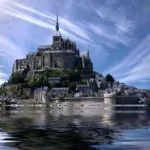
Mont Saint-Michel rises from the Normandy coastline like a fairytale vision, its gilded spire piercing the skies above a labyrinth of medieval stone. For centuries, this granite island crowned by a gravity‑defying abbey has stirred the imagination of pilgrims, warriors, and wanderers alike.
Seeing it for the first time, silhouetted against a vast tidal flat, feels less like reaching a destination and more like stepping into a legend. This Mont Saint-Michel travel guide brings together history, practical planning, and insider insights so you can experience the magic with clarity and confidence.
Visiting is not a simple check‑in; it is an encounter with extreme tides, narrow cobbled lanes, and a silhouette that changes with every hour of light.
The island belongs to UNESCO and to the collective memory of Europe, yet it remains a living village with a handful of residents, a working monastic community, and a steady stream of modern pilgrims.
Whether you arrive by shuttle, on foot across the sands during low tide, or as part of a classic Normandy road trip, the approach is part of the experience.
In the sections that follow, you will find honest seasonal advice, transportation logistics, a centuries‑deep dive into the abbey’s history, and the kind of quiet tips that make a visit smoother.
No two visits are alike, and the weather, the tides, and the crowds all shape the mood. The goal is not to promise a flawless trip but to equip you to meet Mont Saint-Michel on its own terms.
Prepare to wander a place where architecture pierces the clouds and the sea retreats with theatrical speed. This guide is built for curious travelers who want more than a photo stop. Let’s begin at the beginning: where exactly this granite wonder sits and how to reach it without confusion.
Where Is Mont Saint‑Michel and How to Get There?
Mont Saint-Michel is anchored on the border between Normandy and Brittany, in north‑western France, rising from a vast bay where the Couesnon River meets the English Channel.
The island commune belongs to the Manche department in Normandy, though historically both regions claim its spirit.
It lies roughly 360 kilometres west of Paris, 70 kilometres north of Rennes, and just over 50 kilometres east of Saint‑Malo. Its position, surrounded by some of Europe’s most dramatic tidal flats, creates both its beauty and its logistical puzzle.
Reaching the mont is straightforward with a mix of train, car, and shuttle. The nearest TGV station is Pontorson–Mont‑Saint‑Michel, about 9 kilometres away, with direct connections from Paris Montparnasse (a journey of around three hours).
From the station, shuttle buses run frequently to the dedicated visitors’ car park, and the final approach to the island is made on foot or by the free “passeur” shuttle across the causeway.
Drivers can park in the official parking area on the mainland, from where the walk takes roughly 30 to 40 minutes, or the shuttle covers the distance in a few minutes. Cycling is also possible using the dedicated voie verte from Pontorson or along the bay’s edge.
Those arriving from Rennes or Saint‑Malo can use regional buses operated by Keolis, which connect with train arrivals and offer a relaxed, scenic ride through bocage countryside.
If you are combining a Mont Saint‑Michel visit with a broader Normandy or Brittany itinerary, having a rental car gives you freedom to see the bay from viewpoints like the Gué de l’Épine or the restored working salt marshes near Genêts.
Just keep in mind that on‑island parking does not exist; every traveller, whether staying overnight or visiting for a few hours, leaves their vehicle on the mainland.
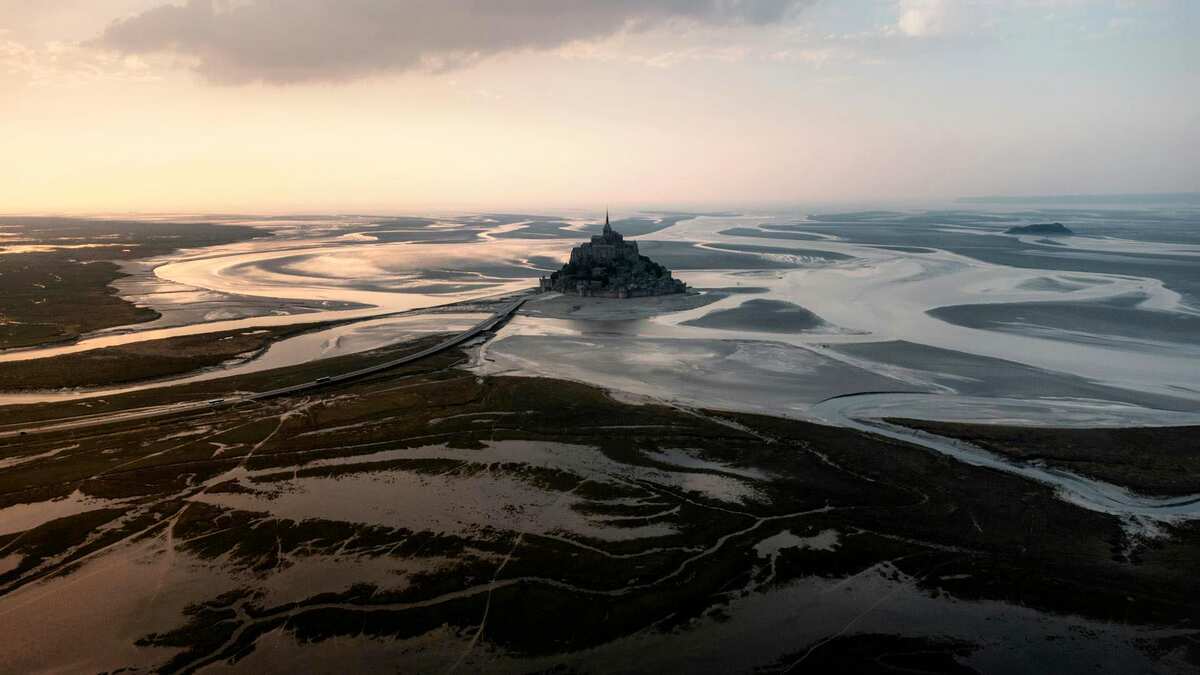
The access causeway, rebuilt as an airy bridge on stilts since 2014, allows the sea to flow freely underneath and has transformed the island’s silhouette at high tide. It also eliminates the old image of metal barriers and trapped sediment.
Walking it during a rising tide, when the water silently reclaims the sand, is both humbling and unforgettable. Always check tide tables in advance and never walk out onto the bay without a certified guide, because the sea returns faster than a person can run and quicksand pockets are real.
The Fascinating History of Mont Saint‑Michel
The story begins not with architecture but with a voice. According to legend, in 708 the Archangel Michael appeared to Aubert, bishop of Avranches, instructing him three times to build a sanctuary on the rocky tidal islet then known as Mont Tombe.
On the third insistence, the archangel pressed a finger into the bishop’s skull to leave no doubt. The relic of that skull, complete with a small hole, is kept at the Basilica of Saint‑Gervais in Avranches and still draws curious visitors.
The first modest oratory was completed that same year, and Mont Saint‑Michel became a sacred destination almost overnight.
Over the following centuries, the abbey grew from a humble Carolingian chapel into a Benedictine powerhouse. In the 10th century,
Duke Richard I of Normandy replaced the original community of canons with Benedictine monks, who began constructing the pre‑Romanesque church that forms the abbey’s crypt‑level heart.
The monastery soon accumulated land, manuscripts, and political influence, becoming both a pilgrimage hub and a strategic fortress.
Its position, impossible to besiege effectively without understanding the tides, gave it a reputation of invincibility during the Hundred Years’ War, when English forces repeatedly failed to capture it.
During the French Revolution, the abbey was deconsecrated and turned into a prison, cynically nicknamed the “Bastille of the Seas.” Political prisoners, priests, and later common criminals were held in what had once been a luminous scriptorium.
The damp cells and iron cages damaged the fabric of the building severely, and by the 19th century, the island’s architectural treasure was at serious risk of collapse. It took the voices of writers like Victor Hugo, who campaigned for its protection, to shift public opinion and begin a long programme of restoration.
Mont Saint‑Michel was inscribed on UNESCO’s World Heritage list in 1979, and a small monastic community returned shortly after the millennial celebrations.
Today, the tides of history are read in every layer of granite: Romanesque crypts, flamboyant Gothic pinnacles, revolutionary graffiti, and modern restoration scaffolding all coexist.
Understanding this timeline transforms a visit from a sightseeing stop into a walk through fifteen centuries of European faith, conflict, and resilience.
Mont Saint‑Michel Architecture: A Gothic Marvel
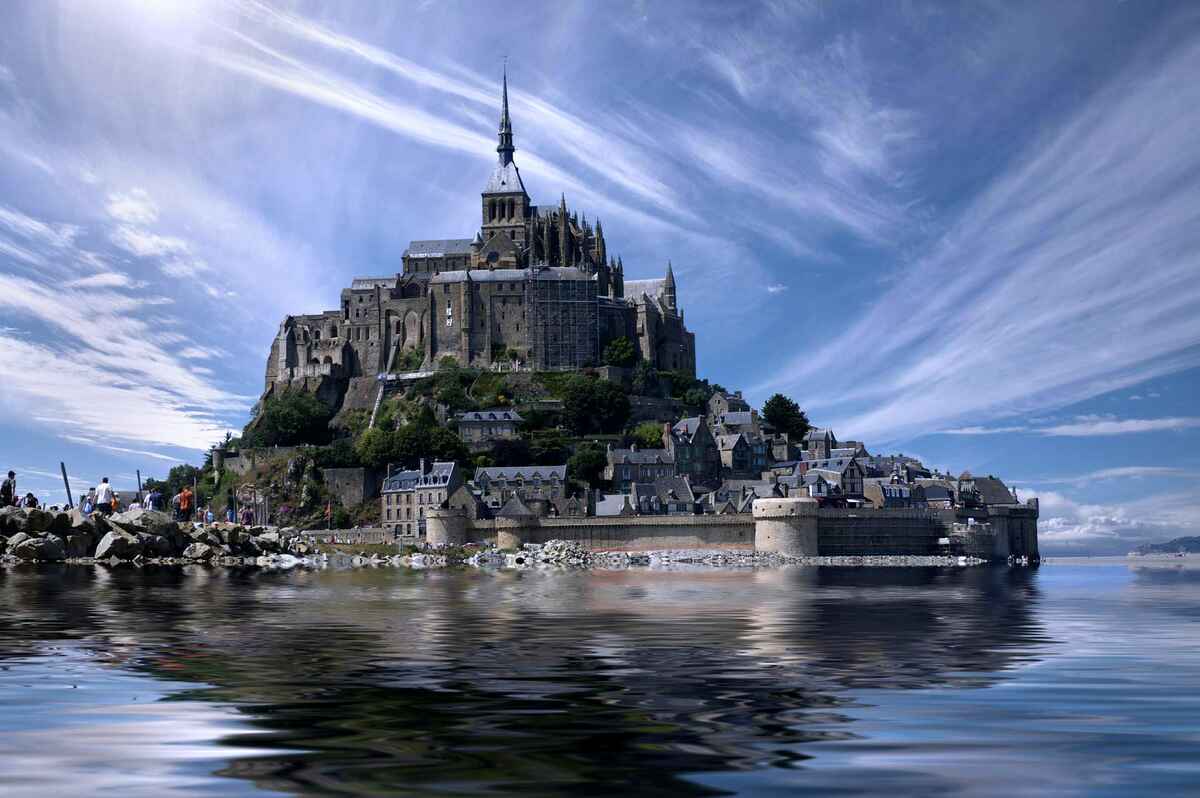
The abbey’s silhouette looks miraculous because it was an engineering miracle. Building a large church on a granite pinnacle with almost no flat ground forced medieval architects to stack structures vertically, creating what is often called the “Merveille” (the Marvel).
This part of the abbey, constructed mainly between 1211 and 1230, houses the famous cloister, the monks’ refectory, and the guests’ hall, all supported by powerful crypts and buttresses that channel weight down into the rock. The result is a floating sensation, as if the stone walls are lighter than air.
Architecturally, Mont Saint‑Michel moves from robust Romanesque forms at the lower crypt levels to the lighter, rib‑vaulted Gothic style of the upper church and Merveille. The abbey church itself sits at the summit, its choir perched on a series of crypts that compensate for the rocky slope.
The façade shows a deliberate restraint compared to the flamboyant tracery inside the cloister garden, where double columns carved from imported limestone create a rhythm of shadow and light.
Walking through these spaces, you feel the intentional contrast between the weight of the granite and the lift of the vaults.
What many visitors miss is the village architecture beneath the abbey. The single winding street, the Grande Rue, is lined with 15th‑ and 16th‑century half‑timbered houses, many of which once served as hostels for pilgrims of varying social ranks.
Look above the modern souvenir shops and you will see wooden corbels, stone lintels, and small‑paned windows that tell the story of a tightly packed, vertical medieval community.
The ramparts, rebuilt and extended after the Hundred Years’ War, encircle the island with a defensive walk offering views over the bay and the salt meadows beyond.
The 19th‑century neo‑Gothic spire, topped by a gilded statue of Saint Michael, completed the skyline we know today. It replaced an earlier bell tower destroyed by lightning and was designed by architect Édouard Corroyer.
The statue, added in 1897 by sculptor Emmanuel Frémiet, weighs over half a tonne and catches the last light of the day, shining like a beacon for miles.
Together, these layers of Romanesque strength, Gothic aspiration, and 19th‑century romanticism create a place that photographers and architects never stop drawing.
What Is the Best Time to Visit Mont Saint‑Michel?
The ideal season to visit Mont Saint‑Michel depends on whether you value mild weather, dramatic tides, or smaller crowds. Late spring (May to June) and early autumn (September to early October) offer temperate conditions, longer daylight hours, and fewer tourists than the peak summer crush.
July and August bring the warmest weather and the most vibrant tourist atmosphere, but the narrow Grande Rue becomes extremely congested, and midday uphill queues for the abbey can exceed an hour.
Winter visits, particularly on clear January mornings, reward you with near‑solitude and low winter light that turns the bay silver, though many restaurants and off‑island accommodations reduce their hours.
Tide‑driven travellers should prioritise days with high coefficients, often above 100, when the sea completely surrounds the mount and transforms it into a true island.
These “grandes marées” occur predictably several times a year, usually around the equinoxes, and draw large crowds of French and international visitors. If you plan around a high‑coefficient tide, book your accommodation months ahead and arrive early.
Spring equinox tides in March can be chilly, while September equinox tides are often still warm enough for comfortable evening spectacle watching.
A quick seasonal overview can help you weigh the trade‑offs between weather, crowds, and light.
| Season | Key Months | Pros | Cons |
|---|---|---|---|
| Spring | March – May | Mild weather, blossoming countryside, moderate crowds | Some rain, chilly mornings, school holiday spikes |
| Summer | June – August | Warmest temperatures, long daylight, full services open | Peak crowds, high accommodation prices, queue congestion |
| Autumn | September – October | Pleasant light, equinox tides possible, fewer tourists after mid‑September | Shorter days, some hotels begin seasonal closure in November |
| Winter | November – February | Solitude, dramatic low sun, crisp bay air | Cold winds, limited dining options, some attractions reduce hours |
Regardless of the season, visiting on a weekday and arriving before 9:30 am dramatically improves the experience. The compact nature of the island means that even a modest number of visitors can feel overwhelming.
Sunset hours, especially in summer when the abbey stays open late for themed nights, offer the most beautiful light and a quieter ambience. Always double‑check tide times, sunrise, and sunset hours, as these shift substantially across the year and define the quality of your visit.
How Many Days Do You Need at Mont Saint‑Michel?
A single day is enough to visit the abbey, walk the ramparts, and absorb the main sights, but staying overnight deepens the experience immeasurably.
With just a day trip, you will likely arrive mid‑morning, battle the busiest hours on the site, grab a quick lunch, and leave before the tide can produce its most theatrical moments. That is the most common way to visit Mont Saint‑Michel, and it can still be satisfying if your time is limited.
However, the island empties dramatically after the last groups leave around 6:00 pm, and the atmosphere shifts into something hushed and lantern‑lit.
Two days, with one night spent either on the rock itself or in the immediate mainland area, allow you to see the abbey in the soft morning light, explore the village when it is quiet, and watch the tide roll in from the ramparts without rushing.
You can also take a certified walking tour across the bay, which typically lasts three to four hours and is only feasible with a guide because of the shifting sands.
These walks offer a unique perspective on the mount and its relationship with the surrounding landscape, impossible to appreciate from the causeway.
For travellers interested in the bay’s ecology, birdlife, and history beyond the abbey, three days open up the wider region.
You could spend one day on the mount, one day walking the bay and visiting the tidal listening posts on Tombelaine island (guided only), and a final day exploring the nearby towns of Avranches or the salt‑marsh lamb farms of the pré‑salé.
This longer rhythm transforms Mont Saint‑Michel from a one‑stop wonder into a proper regional immersion.
The key decision is overnight stay: on‑island accommodation offers prime access and a rare after‑hours intimacy, but rooms are limited, expensive, and often booked months ahead.
Mainland hotels near the parking area are more affordable, offer easier luggage handling, and still allow an early morning or late evening walk across the bridge.
Whichever you choose, an overnight stay changes the quality of your relationship with the mount, from hurried spectator to temporary guest of the tides.
Walking Through the Medieval Village
Entering the Porte du Boulevard and climbing the Grande Rue feels like stepping onto a narrow urban spine that funnels every visitor upward.
The village below the abbey is essentially one curving street with a few steep staircases branching off, lined with stone houses that lean together and keep their secrets.
The sounds are a layered mixture of multilingual chatter, cutlery from crêperies, and the occasional bark of a gull. It is easy to be swept along by the current of people, but stopping deliberately reveals the real texture of the place.
Look for the 15th‑century parish church of Saint‑Pierre, a small, calm sanctuary tucked just to the side of the main thoroughfare.
Inside, a silver statue of Saint Michael and a delicate stained‑glass window dedicated to sailors remind you that this was never only a monastic site but also a village of fishermen, farmers, and innkeepers.
The little cemetery beside the church offers a quiet courtyard where the sound of the crowds dims and you can sit for a few restorative minutes. Next door, the Auberge de la Sirène, with its medieval facade, once hosted the fishermen who serviced the abbey’s refectory.
Higher up, the Grand Degré, a steep covered staircase, leads directly to the abbey entrance. Pause before climbing it, because the view back down into the village’s tangle of rooftops and chimney pots is one of the finest vertical compositions on the island.
From here, it becomes very clear that the mount was built upward, not outward, and that every usable square metre was fought for over centuries. The sense of a layered community, with sacred at the top and secular below, remains visually powerful.
In the evening, after most day‑trippers have gone, the Grande Rue transforms. Shutters come down, the lighting softens, and the town’s handful of permanent residents reclaim their doorsteps.
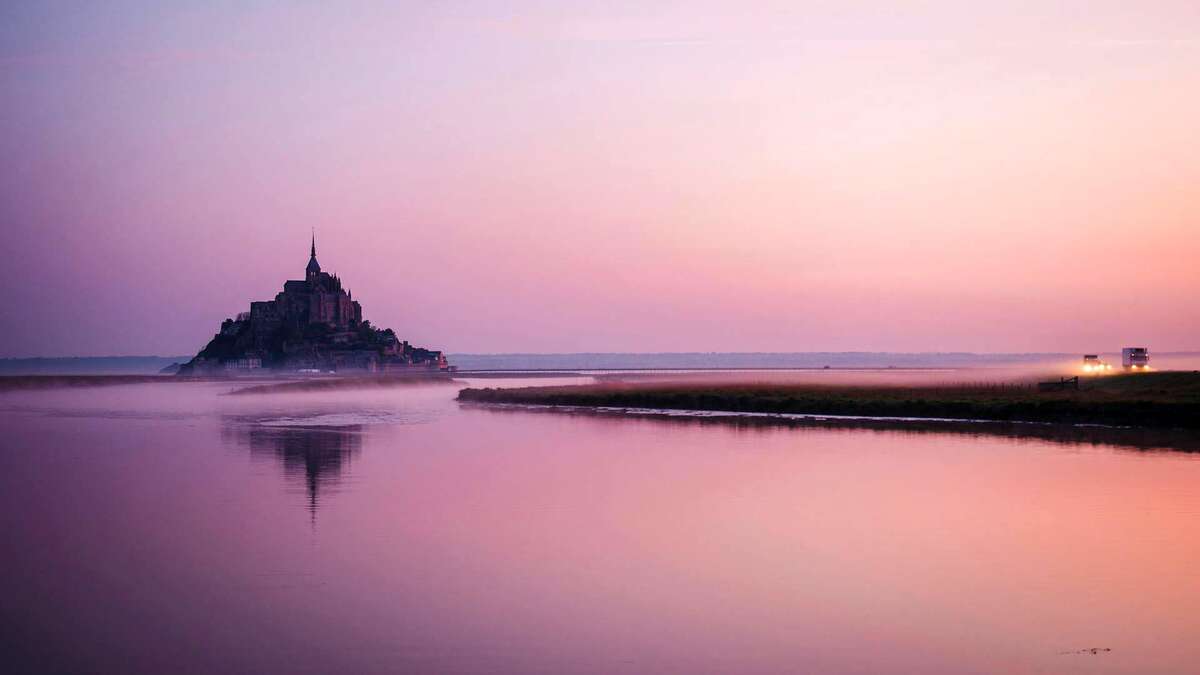
Walking the same path at 9:00 pm in summer, with the abbey silhouetted against a twilight sky, delivers a completely different, more intimate version of the “village.”
Even if you are not staying on the island, lingering until the last shuttle gives you a taste of this quieter Mont Saint‑Michel, the one that belongs to stone, salt air, and silence.
Inside the Abbey: What Must You See?
Once you pass through the abbey’s massive entrance gate and climb the covered stairs, a sequence of spaces unfolds that rewards unhurried attention. The first major highlight is the pre‑Romanesque crypt of Notre‑Dame‑sous‑Terre, accessible only by guided tour.
This low‑vaulted, early 10th‑century chamber, partly absorbed by later construction, is the spiritual kernel of the entire complex and gives a powerful sense of the primitive sanctuary Aubert might have known.
Booking this tour in advance is essential, as places are limited and it adds an irreplaceable layer of depth.
The abbey church itself, perched at the very top, surprises with its blend of Romanesque nave and Flamboyant Gothic choir.
The nave, rebuilt in the 11th and 12th centuries, feels robust and somewhat austere, while the late‑15th‑century choir, flooded with light during clear afternoons, seems to float above the crypts that support it.
Stand in the crossing beneath the tower and look east: the stained glass and slender pillars create a space of luminous serenity that contrasts sharply with the wind outside.
This is where monastic offices still occasionally echo, sung by the small community of resident brothers and sisters from the Monastic Fraternities of Jerusalem.
Do not rush through the Merveille. The cloister garden, with its double arcade of pink limestone columns arranged in a delicate offset pattern, was designed as a place of meditation and still holds that silence if you find a quiet moment.
Adjacent to it, the refectory, with its high wooden ceiling and deeply set windows, is a masterpiece of acoustics and light; a monk reading here could be heard throughout the room without raising his voice.
Then the guests’ hall, once reserved for distinguished pilgrims, features two monumental fireplaces and a vast timber roof that looks like an inverted ship’s hull.
Finally, the abbey’s terraces offer the panorama you came for: the bay sweeping out toward Tombelaine, the salt‑marsh pastures of the pré‑salé, and on clear days, the distant silhouettes of the Chausey Islands.
The gilded Saint Michael, close enough to touch from the western terrace, rotates slightly in the wind. Allow at least two hours inside the abbey, longer if you join a guided tour. Exhibitions change regularly, and the on‑site café near the exit offers a welcome break without leaving the sacred enclosure.
Why Are the Tides So Spectacular at Mont Saint‑Michel?
The bay of Mont Saint‑Michel experiences some of the highest tidal ranges in continental Europe, regularly exceeding 14 metres during spring tides.
The geography is the cause: a funnel‑shaped bay narrowing between Brittany and the Cotentin Peninsula, combined with a very gradual underwater slope, forces enormous volumes of water to move at surprising speed.
At the highest coefficients, the sea can advance across the flat sands at the pace of a galloping horse, a phenomenon that local guides memorably describe as “la marée montante.”
For most of the year, the mount is not a true island; at low tide it sits on a wide expanse of damp sand and mud, crisscrossed by the meandering courses of the Couesnon, Sée, and Sélune rivers. Then, as the tide turns, the sea reclaims the bay in a silent and relentless sweep.
What makes the spectacle so striking is the contrast between the near‑horizontal flats and the vertical rock of the abbey. During the highest spring tides, the causeway bridge becomes the only link above water, and the mount resembles exactly the floating citadel depicted in the Très Riches Heures du Duc de Berry.
For travellers, the most rewarding approach is not just to observe the high water, but to be present during the rising tide from the ramparts or the western terrace. Watching the sea erase the channels and isolate the mount gives a direct, physical sense of the site’s defensive history.
Only certified guides are allowed to lead walks during tidal changes; do not attempt a solo crossing, even if you see locals walking, because the currents around the mount are complex and quicksand zones shift unpredictably.
Serious tide watchers should consult the official tide predictions published by the Port Authority of the Bay, which list coefficient values and precise times for Pontorson and the mount. High coefficients above 110 happen a few times a year and pack the hotels.
If your schedule is flexible, aim for a coefficient around 100–105, which still gives a full insular effect with noticeably smaller crowds. And remember: the most photogenic high tide is often the one that peaks around sunset, when the water reflects the dying light and the gilded archangel catches fire.
What Are the Most Important Practical Tips for Visiting Mont Saint‑Michel?
Several small decisions make a large difference to your visit, beginning with what you carry. Mont Saint‑Michel is an entirely pedestrian site with steep cobbled lanes and many stone stairs.
Sturdy, flat‑soled walking shoes are essential; smooth‑soled city shoes can be treacherous on damp granite.
Bring a light waterproof layer even in summer, because Atlantic weather can change abruptly, and consider a compact flashlight if you plan to stay after dark, as the ramparts are dimly lit in places. Large suitcases are impractical on the island; a small daypack or overnight bag is sufficient.
Timing your arrival is perhaps the most effective crowd‑management strategy. The gate opens early on the mount itself, and the abbey generally opens at 9:30 am, closing between 6:00 pm and 7:00 pm depending on the season, with last admissions one hour before closing.
Arriving at the mainland car park by 8:30 am allows you to catch the first shuttle or a quiet walk across the bridge, and be inside the abbey before the first large tour buses deposit their passengers. Similarly, late afternoon, around 4:00 pm, sees a significant outflow of groups, and the last two hours are often delightfully calm.
Respectful dress is not strictly enforced but is warmly appreciated, especially in the abbey church. Shoulders and knees covered is a safe baseline, not out of rigid formality but out of respect for a place that remains a working sanctuary.
Photography is permitted inside the abbey without flash, though tripods and selfie sticks are generally discouraged in the narrow spaces. Drone use is entirely prohibited over the mount and the immediate bay without special authorisation.
Finally, plan your food and water with the island’s geography in mind. Options on the rock are more expensive than on the mainland, and while the crêperies and omelette‑famous restaurants are worth trying, a water bottle and a snack from a mainland bakery can save both time and money.
Public toilets are available near the entrance and halfway up the Grande Rue, with a small fee. With these simple preparations, you can focus less on logistics and more on the abbey, the light, and the long horizon of the Bay.
Where to Stay Near Mont Saint‑Michel
Accommodation choices fall into three clear categories, each carrying a different rhythm. Staying on the island itself is the most atmospheric option, with a handful of historic inns and guesthouses tucked into the medieval fabric.
These include the well‑known Auberge de la Mère Poulard, which offers simple rooms above its famous restaurant, and smaller establishments like La Vieille Auberge or Le Mouton Blanc.
Rooms are compact, often with sloping floors and limited views, but the reward is stepping out at dawn into an empty Grande Rue and having the ramparts to yourself before the first shuttle arrives. Early booking—often six months ahead for summer—is essential, and rates are high.
The second category covers mainland hotels within walking distance of the causeway, clustered near the parking area and along the road to la Caserne. These range from mid‑range chain hotels like the Mercure Mont Saint‑Michel to charming bed‑and‑breakfasts and campsites.
The advantage is easy luggage access, quieter nights, and generally lower prices. From here, you can walk to the mount in about 35–45 minutes, take the free shuttle, or, in some seasons, a horse‑drawn carriage. Mornings are still magical, and you are well placed to catch both sunrise and high tide.
The third option, suited to those exploring wider Normandy and Brittany, is staying in the surrounding towns like Pontorson, Avranches, or even Saint‑Malo. Pontorson, with its train station and a small choice of hotels, is the budget‑friendly gateway, only ten minutes by car or shuttle.
Avranches offers elevated views over the bay, the Scriptorial museum, and a deeper connection to the abbey’s history.
Saint‑Malo, though an hour away, allows you to combine Mont Saint‑Michel with a visit to Brittany’s corsair city. Whichever base you choose, leaving early and returning late is the pattern for maximising the quiet hours on the mount.
For families and groups, self‑catering gîtes in the countryside around Pontorson offer space, kitchens, and a different pace. Several working farms in the area, especially those raising agneau de pré‑salé, provide accommodation that connects you directly to the landscape the abbey overlooks.
Book directly with local tourist offices for the widest choice, as online aggregators do not always capture the smaller properties that make a stay in this corner of Normandy truly personal.
What to Eat: Local Flavors Around Mont Saint‑Michel
Food on and around the mount is deeply tied to the bay, the tides, and a Benedictine sense of hospitality. The most famous dish is the omelette de la Mère Poulard, a light, soufflé‑like egg creation beaten to a cloud‑like froth and cooked in a long‑handled copper pan over an open wood fire.
La Mère Poulard, the inn established by Annette Poulard in the late 19th century, still prepares dozens of these omelettes daily, and while prices are high, the theatrical preparation and the history are part of the draw. Many smaller restaurants along the Grande Rue also serve versions that are simpler and less expensive.
The bay’s real culinary jewel is agneau de pré‑salé, salt‑marsh lamb that grazes on the halophytic grasses of the coastal meadows and the bay’s fringes.
The meat acquires a delicate, slightly nutty flavour, low in fat and free of the strong taste sometimes found in mountain lamb. In restaurants on the mainland and in Pontorson, you will find it roasted, as gigot, or sliced into tender fillets.
It is a protected designation of origin product, and the best plates appear in autumn and spring after the lambs have fed for several months on the tidal flats.
Seafood lovers are well served by the catch of the bay and the nearby Cancale oyster beds. Moules de bouchot, small and intensely flavoured mussels grown on wooden stakes, appear in marinière sauce in casual brasseries.
The local cider, dry and slightly sparkling, complements both seafood and the region’s buckwheat galettes. Outside the abbey walls, on the mainland near the parking area, food trucks and crêperies offer simpler, fast options, including the classic galette complète (ham, cheese, egg) that fuels a long day of walking.
For a special meal, book a table at one of the fine‑dining rooms in Avranches, where chefs reinterpret Norman classics with views over the bay.
Do not overlook the little village markets in the surrounding communes: fresh butter, Neufchâtel cheese, and the caramelised apple tarte tatin are among the edible souvenirs that easily fill a picnic basket.
If possible, pair lunch with a timeline: fresh oysters at Cancale in the morning, a galette on the mount at midday, and pre‑salé lamb in the evening—a day shaped by the bay’s honest seasons.
A Perfect Day Trip Itinerary
For those with only one day to dedicate to Mont Saint‑Michel, a well‑paced itinerary transforms a rushed visit into a sequence of quiet pleasures. Start by arriving at the main car park no later than 8:15 am.
Walk across the bridge at a relaxed pace, watching the light shift over the bay and the silhouette of the abbey grow sharper.
Enter the Porte du Boulevard just after 8:30 am and climb the Grande Rue while most shops are still opening. Head straight to the abbey entrance and join the first admission of the day, around 9:30 am.
Spend the next two hours inside the abbey, following the natural upward path: crypt, church, cloister, refectory, and terraces. Do not skip the side rooms and exhibitions, which are less crowded in the morning.
By 11:30 am, descend to the village and claim an early table for lunch before the midday rush. A crêperie off the main street, such as La Sirene, offers a quieter meal than the Grand Rue hotspots.
After lunch, walk the full circuit of the ramparts, which takes about 25 minutes at a slow pace and offers ever‑changing angles on the bay.
Around 2:00 pm, if the tide allows, join a guided walk across the sands. These depart from the mainland side of the bridge and last about three hours; booking a morning or afternoon slot in advance secures a place.
The guided walk delivers the physical sensation of walking the very surface that the abbey overlooks, and your senses—bare feet in cool sand, the smell of iodine, the distant call of oystercatchers—anchor the memory.
If a guided walk is not possible, explore the mainland information centre and its interactive exhibition on the bay’s ecology.
Return to the island by late afternoon, around 5:00 pm, when day‑trippers are thinning. Climb again, not to the abbey but to the small terraces and viewpoints accessible from the village, and watch the tide rise if the timing cooperates.
Stay for sunset, then take the shuttle back to the car park. This rhythm—morning abbey, midday village, afternoon bay, evening light—gives you a layered, sensory day without feeling frantic.
It is a template you can adjust by season and tide, but the principle of early arrival and late departure always improves the experience.
Conclusion
Mont Saint‑Michel is not a destination that yields its secrets to a quick glance; it asks for a little patience, a willingness to walk, and a curiosity that reaches beyond the postcard image.
From the story of Aubert’s vision to the engineering genius of the Merveille, and from the rhythm of the tides to the taste of pre‑salé lamb on a nearby farm table, this rock has something genuine and unrepeatable.
A trip planned around the seasons, the tides, and the quieter hours will reward you with far more than a striking photograph.
Visiting responsibly means checking tide tables, respecting the fragility of the monument, and supporting the small communities that keep the bay alive. It means walking slowly up the Grande Rue and noticing the light on the granite, not just the shops.
This Mont Saint‑Michel guide was written to help you move beyond the surface and meet the mount on its own terms. Conditions, schedules, and tides change, so confirm details before you travel.
But the feeling of standing on the western terrace as the sea surrounds the abbey—that never changes, and it belongs to anyone who makes the journey.
FAQ
Is Mont Saint‑Michel worth visiting even if I have only one day?
Yes, a well‑planned day trip can be deeply rewarding. Arrive early, visit the abbey in the morning, enjoy a local meal, and walk the ramparts. The experience is richer if you can stay until sunset, but even a half‑day visit leaves a strong impression.
How long does it take to walk from the car park to Mont Saint‑Michel?
The walk from the official parking area to the mount takes approximately 35 to 45 minutes at a comfortable pace across the bridge. The free shuttle bus covers the same distance in roughly five minutes and runs frequently during operating hours.
Can you stay overnight on Mont Saint‑Michel itself?
Yes, several small inns and guesthouses operate inside the walls, offering an intimate after‑hours experience. Rooms are limited and fill quickly, so booking months in advance, especially for summer and high‑tide weekends, is strongly recommended.
What are the best months to see the highest tides?
The most spectacular high tides, with coefficients above 110, typically occur around the spring and autumn equinoxes in March and September. Exact dates vary each year, so consult the official tide calendar for the Bay of Mont Saint‑Michel.
Is it safe to walk across the bay without a guide?
No, walking across the bay alone is dangerous because of shifting quicksand and fast‑moving tides. Always use a certified guide who knows the safe routes. The sea returns faster than a person can run, and hazards are not always visible.
How much does it cost to enter the Abbey of Mont Saint‑Michel?
Entry prices vary by season and age, with a standard adult ticket typically ranging around €11–€13, and reduced or free entry for EU residents under 26 and for children. Check the official Centre des Monuments Nationaux website for current rates before visiting.
Are there restaurants and toilets on the island?
Yes, the Grande Rue offers many crêperies, restaurants, and tea rooms, though prices are higher than on the mainland. Public toilets are available near the entrance and midway up the village street, usually with a small coin‑operated fee.
Can you visit Mont Saint‑Michel with reduced mobility?
While significant improvements have been made, the island’s steep, cobbled streets and many steps create genuine challenges. The causeway and lower village are accessible, but the upper village and abbey involve long staircases; contact the tourist office in advance for the latest accessibility information and assistance options.
Does entry to the abbey require a guided tour?
No, self‑guided visits are the norm, and information panels are placed throughout. However, audio guides, paid guided tours in several languages, and special access tours to the crypt of Notre‑Dame‑sous‑Terre are available and well worth booking ahead for deeper understanding.
Is Mont Saint‑Michel open every day of the year?
The abbey is generally open year‑round except on 1 January, 1 May, and 25 December. The village and ramparts are always accessible, though some shops and restaurants close during the winter low season. Always verify seasonal hours before your visit, as they can change.
Visit Gdansk

Author: Horeca Health
Horeca Health


Leave a Reply