Introduction
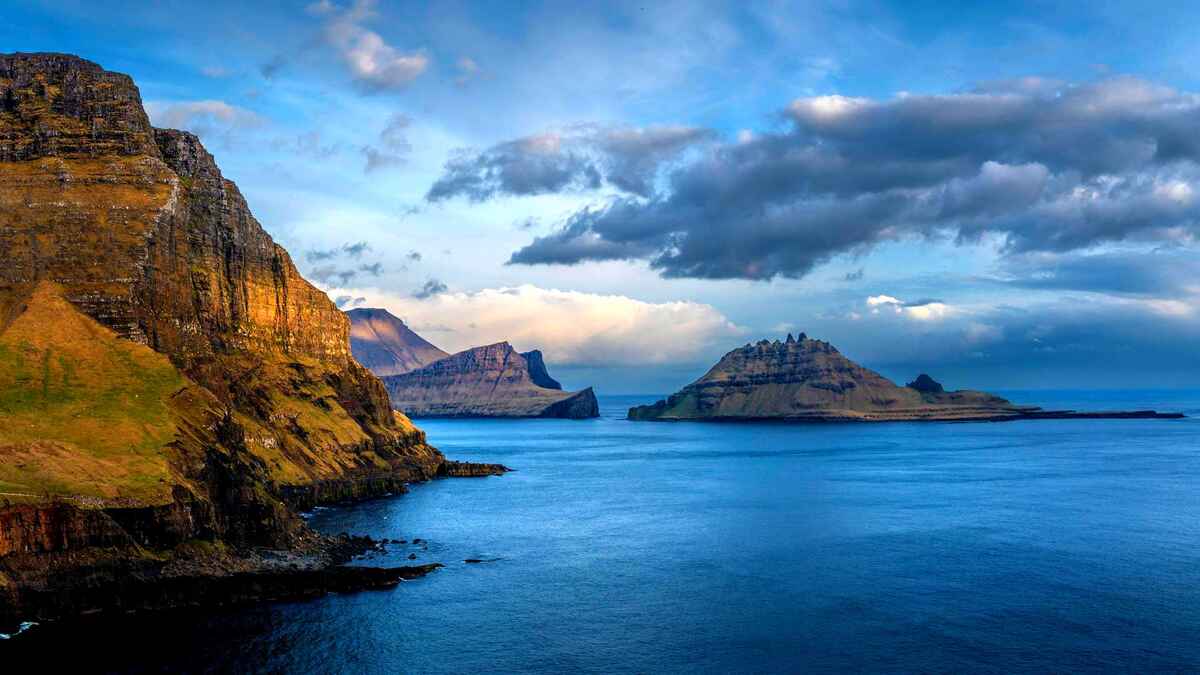
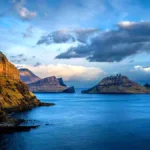
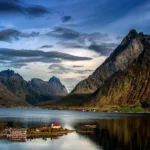
The Faroe Islands rise from the North Atlantic like a scene from an ancient saga—jagged cliffs draped in mist, waterfalls plunging straight into the sea, and turf-roofed villages that seem frozen in time.
This remote archipelago of 18 volcanic islands, governed by Denmark but fiercely independent in spirit, delivers a travel experience that feels both raw and refined.
Faroese history is etched into every fjord, from Viking longhouse remains to medieval churches, while living legends whisper through the wind on the oldest parliament site in the world.
Few places on Earth combine such dramatic landscapes with a seamless blend of Norse heritage and modern Scandinavian comfort.
Whether you are tracing the footsteps of seafaring settlers, hiking to a lighthouse at the edge of the world, or tasting air-dried lamb in a centuries-old farmhouse, the Faroe Islands offer journeys that stay with you long after you leave.
This guide weaves together history, myth, and practical know-how to help you unlock the archipelago’s deepest secrets.
The Faroe Islands remain delightfully under-visited compared to Iceland or Norway, yet their sheer beauty rivals any Nordic destination. Towering sea stacks, tumbling puffin colonies, and roads that vanish into sub-sea tunnels all contribute to a sense of otherworldly adventure.
The weather changes by the minute—harsh sunlight one moment, diaphanous fog the next—demanding a flexible itinerary and a willingness to embrace the elements.
But for those who lean into the unpredictable climate, the rewards are immense: solitude on trails, warm hospitality in knitting-clad cafés, and a genuine connection to a landscape that still shapes everyday life.
Understanding the islands’ layered past and living folklore transforms simple sightseeing into something far more meaningful. From the medieval Magnus Cathedral ruins in Kirkjubøur to the haunting tale of the seal woman, every corner has a story.
Let this essential Faroe Islands travel guide lead you through history, legends, and experiences you will never forget.
What Makes the Faroe Islands So Unique?
The Faroe Islands defy easy comparison. Located roughly halfway between Iceland and Norway, they form a self-governing nation within the Kingdom of Denmark, yet their language, culture, and topography are entirely their own.
What sets the archipelago apart is not a single landmark but an accumulation of rare qualities: 18 interconnected islands where no point lies more than 5 kilometres from the ocean, a population of just over 54,000 people, and a landscape that looks like a geologist’s fever dream.
Basalt columns, U-shaped valleys carved by ancient glaciers, and grass-covered rooftops create a fairytale aesthetic that is entirely authentic, not manufactured for tourism.
Driving from one village to another often means traversing sub-sea roundabouts, single-lane tunnels, and mountain roads with heart-stopping coastal vistas. The sense of isolation is palpable yet never lonely, thanks to the tight-knit communities that welcome visitors with genuine warmth.
Another defining trait is the Faroe Islands’ unique position at the confluence of warm Gulf Stream waters and frigid Arctic currents. This maritime climate gives the islands their moody, changeable weather and also sustains one of the richest fishing grounds in the North Atlantic.
Fishing heritage permeates every settlement, from Tórshavn’s bustling harbour to remote outposts like Gjógv. The Faroese have long understood that survival depends on harmony with the sea, and this ethos still informs everything from cuisine to conservation.
Modern infrastructure—excellent roads, ferries, and helicopter routes—coexists with ancient sheep-grazing rights and traditional boat-building. Visitors often remark that the Faroe Islands feel both futuristic and prehistoric at once, and that tension is precisely what makes them so memorable.
For travellers seeking a destination that refuses to follow predictable tourism formulas, the Faroes deliver an experience that is singular, layered, and deeply resonant.
A Brief History of the Faroe Islands
The story of the Faroe Islands begins with Irish monks seeking solitude in the 6th century, but it was the Norse Vikings who truly shaped the archipelago’s identity. According to the Færeyinga Saga, the first Norse settler was Grímur Kamban, who arrived around 825 AD.
Over the following centuries, waves of Norwegian settlers established farms, fishing stations, and a distinct society. The name Føroyar itself derives from Old Norse, meaning “Sheep Islands,” a nod to the woolly inhabitants that have sustained the Faroese for generations.
During the Viking Age, the islands’ central location made them a crucial waypoint for North Atlantic seafaring routes connecting Scandinavia, the British Isles, and beyond. Evidence of this era survives in archaeological sites such as the Kvívík settlement, where Viking longhouse foundations still trace the daily life of early inhabitants.
In 1035, the Faroe Islands formally came under Norwegian crown control, and later passed to Denmark through the Kalmar Union in 1380.
The Reformation arrived in the 16th century, replacing Catholicism with Lutheranism and leaving behind ruins like the Magnus Cathedral, which was never completed.
For centuries, a Danish trade monopoly stifled local economic development, but the Faroese language, ballads, and oral traditions persisted as a form of cultural resistance.
The 19th century brought national awakening, culminating in the revival of Faroese as a written language and the reestablishment of the Løgting, the Faroese parliament, which claims lineage from the Viking-era ting at Tinganes.
Although the islands gained home rule in 1948 and extensive self-governance since, the question of full independence remains a living debate. Grasping this history is essential for any traveller, because the tension between tradition and modernity, autonomy and interdependence, colours every aspect of Faroese life today.
How to Get to the Faroe Islands
Reaching the Faroe Islands is surprisingly straightforward despite their remote location, thanks to excellent air and sea connections.
The main international gateway is Vágar Airport (FAE), located on the island of Vágar, about a 45-minute drive from the capital Tórshavn. Atlantic Airways, the national carrier, operates direct flights from several European cities including Copenhagen, Reykjavík, Edinburgh, Oslo, and seasonally from Paris and Barcelona.
Flight duration from Copenhagen is just over two hours, making the islands an accessible extension to any Scandinavian itinerary. SAS also offers seasonal connections, and occasionally Widerøe operates routes during summer months.
Vágar Airport is small and efficient, so arriving passengers typically clear immigration and baggage quickly, then step out into a landscape that instantly announces you have arrived somewhere wild.
For those who prefer a more leisurely approach, the Smyril Line ferry M/S Norröna sails year-round from Hirtshals in Denmark to Tórshavn, with a stop in the Faroe Islands en route to Iceland during summer.
The crossing takes roughly 36 hours and allows travellers to bring their own vehicle, which is invaluable for exploring the islands independently. The ferry is comfortable, with cabins, restaurants, and even a swimming pool, turning the journey into a mini-cruise.
Upon arrival in Tórshavn, the capital’s colourful harbourside greets you immediately. Another option is to combine flights and ferries: fly to Vágar, rent a car, and then use the excellent inter-island tunnel and ferry network.
Regardless of your chosen route, always check seasonal timetables well in advance, as schedules change and both flights and ferry cabins sell out quickly during the peak summer months of June through August.
Best Time to Visit the Faroe Islands
The Faroe Islands’ weather is famously unpredictable, so “best” time largely depends on what you hope to experience.
Summer, from June through August, offers the longest daylight hours, with the midnight sun lingering until nearly 11 pm, and temperatures averaging 10–13°C (50–55°F).
This is the prime season for hiking, birdwatching, and attending vibrant cultural festivals such as Ólavsøka, the national holiday at the end of July. The landscape is lush and green, puffins nest on sea cliffs, and all ferry and transport services operate at full capacity.
However, summer also brings the highest visitor numbers, so accommodation and car rentals should be booked months ahead. Fog and rain are still common, so waterproof gear remains essential even in July.
Late spring and early autumn offer a compelling compromise. May and September see fewer tourists, slightly lower prices, and still acceptable weather for outdoor activities. The colours in September are striking, with heather purpling the hillsides and the first hints of golden light.
Winter, from November to March, transforms the archipelago into a dramatic, storm-lashed wilderness that appeals to photographers and solitude seekers.
Temperatures hover around 3–6°C (37–43°F), rarely dropping far below freezing thanks to the Gulf Stream, but gale-force winds and short daylight hours limit mobility.
The upside is the possibility of witnessing the northern lights on rare, clear nights, and experiencing the cosy Faroese concept of “hygge” indoors with candles and traditional food. Whenever you choose to go, prepare for all four seasons in one day, and you will never be disappointed.
| Season | Months | Highlights | Considerations |
|---|---|---|---|
| Summer | June–August | Midnight sun, puffins, festivals, full transport | Peak crowds, higher prices, rain still possible |
| Spring | April–May | Fewer tourists, emerging greenery, lambing season | Some highland trails may remain muddy |
| Autumn | September–October | Golden light, fewer visitors, lower costs | Shorter days, ferry schedules reduce |
| Winter | November–March | Storm-watching, northern lights potential, cosy atmosphere | Limited daylight, road closures possible, cold |
Top Natural Wonders You Must See
The Faroe Islands are a gallery of natural masterpieces, and narrowing down a list is almost painful. Still, certain sites capture the essence of the archipelago with such intensity that they demand a place on every itinerary.
The cliffs of Vestmanna are a prime example. Boarding a boat tour here takes you into deep sea grottoes, past towering rock pillars, and beneath skies swirling with fulmars and kittiwakes.
The sheer scale of the 600-metre-high cliffs, carved by relentless Atlantic swells, is humbling and exhilarating. Another unmissable sight is the sea stack Trøllkonufingur, the “Witch’s Finger,” a solitary basalt spire rising from the ocean near Sandavágur.
Shrouded in legend, it is said to be the finger of a witch turned to stone by sunlight, and on misty days the image is uncannily evocative.
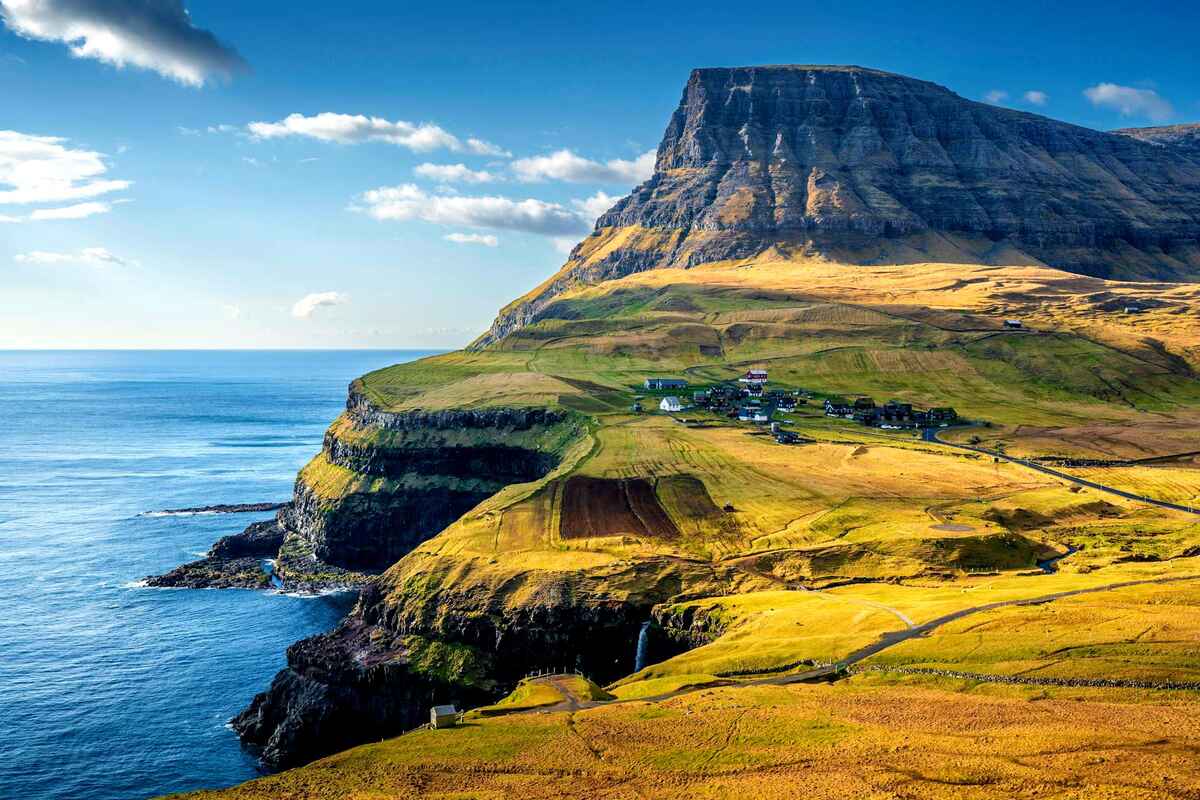
Equally iconic is Gásadalur village, until recently accessible only by hiking over a mountain pass or by boat. A tunnel now links it to the rest of Vágar, but the trek down to the waterfall Múlafossur remains unforgettable.
Here, a ribbon of freshwater cascades off a green cliff straight into the surging sea, with the tiny village of turf-roofed houses perched dramatically above. South of Tórshavn, the islet of Sumba reveals dizzying coastal vistas where the land simply drops away.
And then there is the Lake above the Ocean, Sørvágsvatn, an optical illusion that makes the lake appear to float hundreds of metres above the sea.
Standing at its edge, with the wind roaring and the Atlantic stretching endlessly westward, you feel the raw, creative force of nature in a way that no photograph can fully convey.
These wonders are not just scenic backdrops; they are living, breathing parts of the Faroese identity that demand respect and careful exploration.
What Are the Best Hiking Trails in the Faroe Islands?
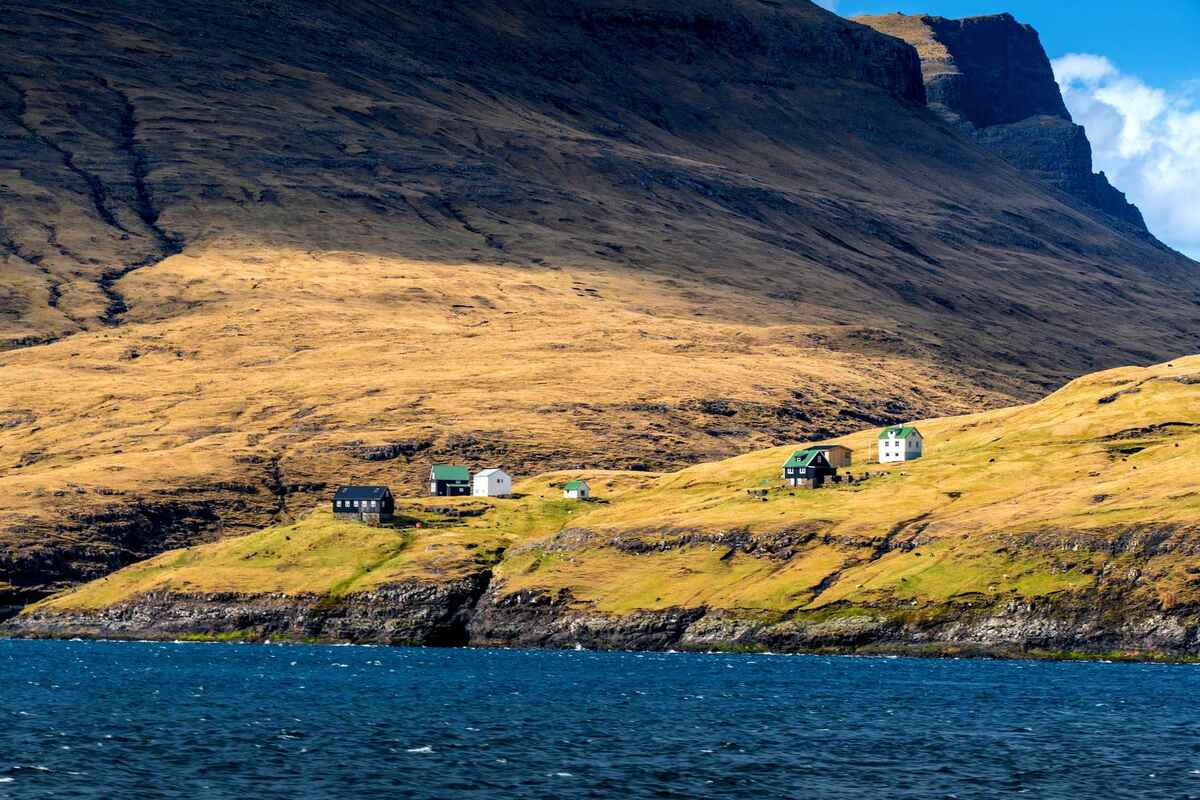
The Faroe Islands offer some of the most rewarding hiking in Northern Europe, with trails that traverse ancient sheep paths, serpentine coastlines, and mountain ridges. One standout is the hike to the Kallur Lighthouse on the island of Kalsoy.
This moderate route begins near the village of Trøllanes and climbs steeply to a narrow ridge where the red lighthouse stands guard over dramatic cliffs plunging into the sea. The view towards the towering sea stacks Risin and Kellingin, said to be a giant and a witch frozen in stone, is legendary.
Another must is the Lake Sørvágsvatn trail on Vágar, where a well-marked path leads to the famous floating lake illusion. The trek is relatively easy and offers sweeping coastal panoramas that change dramatically with the shifting light.
For those seeking a full-day alpine experience, the hike from the village of Funningur to the summit of Slættaratindur, the highest mountain in the Faroe Islands at 880 metres, delivers unmatched 360-degree views. On clear days you can see the entire archipelago spread out like a map.
The trail is steep but non-technical, though it requires proper navigation skills in fog. More solitary is the track to the abandoned village of Víkar on the island of Vágar, an outpost that was deserted in the 19th century and now lies in a green-floored valley beside a black sand beach.
Hiking there feels like stepping into a time capsule. All trails demand sturdy waterproof boots, layers, and a healthy respect for the weather, which can shift from sunshine to thick fog in moments.
Local guides are recommended for less frequented routes, and a hiking fee may apply on some privately owned land—a small price to pay for access to such pristine wilderness.
Where to Stay: Accommodation Options Across the Faroe Islands
Accommodation in the Faroe Islands ranges from design-forward boutique hotels to traditional farmhouse bed-and-breakfasts and cosy guesthouses. Tórshavn, the capital, naturally has the widest selection.
The boutique Hotel Føroyar, set on a hillside overlooking the city and the sea, combines sleek Nordic design with a superb restaurant featuring local ingredients.
For a more intimate stay, Havgrím Seaside Hotel offers rooms with fjord views and a tranquil atmosphere. In the old town, the historic quarter of Tinganes, small guesthouses tucked into centuries-old wooden buildings provide a uniquely Faroese experience, though they book up months ahead during high season.
Outside the capital, the village of Gjógv on Eysturoy island is home to the charming Gjáargarður Guesthouse, where traditional timber architecture meets hearty home-cooked meals.
On the southern island of Suðuroy, the welcoming Hotel Tvøroyri overlooks the fjord and serves as a perfect base for exploring less-travelled landscapes.
For adventurous souls, “heimablídni” or home hospitality offers the chance to stay with a Faroese family and share meals, an immersive option that fosters genuine cultural exchange. Cottages and Airbnb rentals are also widely available, particularly on Vágar and Streymoy, often in spectacular seaside locations.
A crucial note: the Faroe Islands have limited hotel capacity overall, so spontaneous bookings during summer can lead to disappointment.
Secure your accommodation as early as possible, and consider splitting your stay between different islands to reduce driving time and deepen your connection to the diverse facets of Faroese life.
How Many Days Do You Need for a Faroe Islands Trip?
A minimum of five to seven days is highly recommended for a meaningful Faroe Islands experience that goes beyond a whistlestop tour.
With under a week, you can cover the essentials: a day in Tórshavn, the iconic sights of Vágar including Gásadalur and Sørvágsvatn, a boat trip to Vestmanna cliffs, and a hike on Kalsoy or another outer island.
This pace allows you to absorb the landscape without feeling rushed, but it does require early starts and a willingness to drive between islands using the tunnel and ferry network.
With seven days, you can add a journey to the southern islands of Suðuroy or the northern village of Viðareiði, where the scenery becomes even more dramatic and the sense of isolation deepens.
If you have ten days or more, you unlock a slower, more immersive rhythm. You can linger over coffee in a turf-roofed café, hike less-visited trails, and visit islands like Mykines exclusively for puffin encounters during the summer months.
Multiple-night stays on different islands become possible, reducing daily travel time and allowing you to form a more intimate bond with each place. Photography enthusiasts especially benefit from extended itineraries, because the light here is capricious and the best shots often require patience.
Keep in mind that ferry schedules dictate how easily you can island-hop, especially for destinations like Mykines and Kalsoy, so planning a longer stay gives you flexibility when weather cancels a sailing.
Regardless of duration, every extra day in the Faroe Islands feels like a gift—one that slowly peels back layers of history, folklore, and natural majesty.
Traditional Faroese Food and Drink You Should Try
Faroese cuisine is deeply rooted in the islands’ harsh climate and maritime abundance, and tasting it is an essential part of any travel guide. Lamb is the star ingredient, free-range and seasoned by the herbs and grasses the animals graze upon all summer.
Skerpikjøt, wind-dried mutton, hangs in wooden sheds called hjallur, developing a complex, slightly tangy flavour that pairs beautifully with dark rye bread and butter.
Ræst, a semi-dried lamb or fish prepared through a controlled fermentation process, is an acquired taste but one that embodies Faroese culinary heritage.
In recent years, a new wave of chefs has reinterpreted these traditional methods in fine-dining settings, most notably at the Michelin-starred restaurant KOKS, which sources hyper-local ingredients and serves them in a remote renovated farmhouse.
Seafood is, of course, central. Faroese salmon, both farmed and wild, is prized worldwide, and simple preparations let its quality shine. Cod, haddock, and langoustines feature prominently, often served simply with potatoes and a delicate cream sauce.
For the adventurous, garnatálg—a type of fermented fish fat—remains a traditional delicacy. On the sweeter side, rhubarb grows abundantly and appears in jams, desserts, and refreshing beverages.
The local drink landscape includes craft beers from OY Brewing, small-batch aquavit, and the non-alcoholic “kaffimik,” a coffee gathering that doubles as a social institution.
Visitors should not leave without trying heimablídni, a home-hosted dining experience where Faroese families open their homes to share traditional meals, storytelling, and a genuine taste of hospitality that no restaurant can replicate.
Is the Faroe Islands Safe for Solo and Family Travel?
The Faroe Islands consistently rank among the safest destinations in the world for travellers of all types. Violent crime is almost nonexistent, petty theft is rare, and the community-oriented nature of Faroese society means locals often look out for visitors.
Solo travellers, including women, report feeling completely at ease walking through Tórshavn at night or hiking remote trails alone, though standard outdoor precautions apply.
Emergency services are reliable, and mobile phone coverage reaches most inhabited areas and many popular hiking routes, providing an extra layer of security.
For families, the islands provide a welcoming environment where children can explore nature freely, and attractions such as the National Museum or the Nordic House offer engaging, child-friendly exhibits.
That said, the primary safety concern here is not crime but nature. Coastal cliffs have no protective railings in many places, and rogue waves have been known to sweep in unexpectedly.
Hiking trails can become treacherous in fog or heavy rain, and rapidly changing weather demands constant vigilance. Parents with young children should choose walks carefully and keep kids close to hand.
Driving also requires care; narrow, winding roads, single-lane tunnels with passing places, and occasional sheep on the pavement are all part of the experience. Always check weather forecasts before setting out, inform someone of your intended route, and carry a fully charged phone.
By respecting the landscape and exercising common sense, solo explorers and families alike will find the Faroe Islands not only safe but profoundly enriching.
Understanding Faroese Culture, Legends, and Local Customs
To travel the Faroe Islands without grasping their folklore is to miss half the story. Ancient Norse beliefs intertwined with Christian traditions have produced a rich tapestry of myth.
The huldufólk, or hidden people, are said to inhabit rocks and mounds, and many Faroese still treat certain locations with quiet reverence.
The legend of the seal woman, a selkie who sheds her skin to become human but is forever drawn back to the sea, speaks to the soul-deep connection the Faroese hold with the ocean.
During winter evenings, kvæði—traditional ballads recounting heroic tales of kings and giants—are still sung in gatherings, preserving an oral heritage that stretches back to the Viking Age.
Attending a chain dance, where participants hold hands and sway to these ancient verses, is a powerful way to experience living culture.
Modern Faroese identity balances this deep history with cutting-edge creativity. The art scene, centred around the Listasavn Føroya art museum and independent galleries, produces world-class works that reinterpret the landscape through contemporary lenses.
Fashion designers like Guðrun & Guðrun, famed for their knitwear worn in the TV series The Killing, blend tradition with high fashion. Respectful travel means more than avoiding prohibited behaviours; it means engaging genuinely.
Greet people with “góðan daginn,” accept invitations to coffee, and observe the custom of removing shoes when entering homes. Kayaking with local guides, learning about sustainable sheep farming, or volunteering through organised environmental projects deepens the exchange.
The Faroese are proud of their heritage and eager to share it, but they appreciate visitors who approach with curiosity rather than entitlement. Understanding the unspoken rules—such as not disturbing nesting birds and asking before photographing people—fosters a travel experience rooted in mutual respect.
What Should You Pack for a Trip to the Faroe Islands?
Packing for the Faroe Islands requires a mindset shift: forget predictable sunny holidays and embrace the mantra “there is no such thing as bad weather, only bad clothing.”
A waterproof and windproof jacket with a sturdy hood is non-negotiable, as rain and gusty winds can arrive without warning even in midsummer. Layering is key; pack thermal base layers, fleece or wool mid-layers, and quick-dry hiking trousers.
Sturdy, waterproof hiking boots with good ankle support are essential for the often muddy and uneven trails, while lighter footwear suffices for town explorations.
Gloves and a warm hat should stay in your daypack year-round, because temperatures on exposed mountain passes can feel close to freezing even in August.
Equally important are accessories that enhance comfort and flexibility. A reliable, fully waterproof backpack cover or dry bag protects cameras and electronics during sudden downpours. Binoculars are a game‑changer for spotting puffins, gannets, and whales from clifftop viewpoints.
For photographers, a tripod and neutral density filters help capture misty waterfalls and long exposures in the ethereal Faroese light. Swimwear might seem counterintuitive, but the islands have stunning geothermal pools and brave travellers often take a dip in the chilly ocean.
An eye mask can prove useful during the bright summer nights if your accommodation lacks blackout curtains. Finally, pack a sense of humour and patience; if the weather alters your plans, lean into the unexpected. The Faroe Islands reward those who come prepared for nature’s whims rather than fighting them.
Conclusion
The Faroe Islands are not a destination that reveals itself in a single glance. They demand time, attention, and a willingness to be moved by windswept landscapes, stories told around kitchen tables, and the quiet persistence of a culture that has weathered centuries of isolation and change.
From the Viking-era parliament at Tinganes to the modern art galleries of Tórshavn, history here is not something locked away in museums—it breathes through everyday life.
The legends of hidden people and seal women still shape how locals relate to the sea and the land, reminding us that some places remain wonderfully untamed.
Whether you spend five days or two weeks, the islands leave an imprint that outlasts any photograph, a feeling of having touched something ancient and enduring.
Practical planning matters, but so does leaving room for spontaneity. Ferry schedules, tunnel tolls, accommodation, and seasonal considerations all factor into a successful trip, yet the most memorable moments often arise when plans go sideways and a farmer invites you in for coffee or the fog lifts to reveal a rainbow arched over a waterfall.
The Faroe Islands travel guide you hold in your hands—or more likely, on your screen—is meant to be a starting point, not a rigid script. Travel conditions, weather, prices, and opening hours can change, so confirm critical details before you book or set out.
With curiosity, preparation, and respect, you will discover that the Faroe Islands offer not just a holiday, but a true encounter with the North Atlantic’s wild heart.
FAQ
Do I need a visa to visit the Faroe Islands?
The Faroe Islands are not part of the Schengen Area, but they follow Denmark’s visa policy with specific restrictions. Citizens of many countries can enter visa-free for short stays, while others require a special Faroe Islands visa, distinct from a Danish Schengen visa. Always check official Danish immigration guidance and confirm requirements well before travel, as rules can change based on nationality and purpose of visit.
What currency is used in the Faroe Islands?
The official currency is the Faroese króna, which is pegged to the Danish krone at a 1:1 rate. Danish kroner are widely accepted, and credit cards are used almost everywhere, even in remote villages. It is wise to carry a small amount of cash for rare situations, but electronic payments dominate daily transactions.
Can I drive my own car in the Faroe Islands?
Yes, bringing your own vehicle via the Smyril Line ferry from Denmark is a popular option. The road network is modern and well-maintained, though many tunnels are narrow and some are single-lane with passing places. If you bring a car, be aware that undersea tunnels require a toll payable online or via automatic registration, so research the system beforehand.
Is English widely spoken in the Faroe Islands?
English is spoken fluently by a large majority of the population, particularly younger generations and those working in tourism. Faroese is the official language, and Danish is also taught in schools, but you will rarely encounter a communication barrier as a traveller. Learning a few Faroese greetings, however, is warmly appreciated.
What is the best way to see puffins in the Faroe Islands?
The island of Mykines is the prime location for puffin watching during the summer nesting season roughly from May to August. Access is by ferry or helicopter, and a local hiking fee applies on the island. Other cliffs, notably on Vestmanna and Kalsoy, also host puffin colonies but in smaller numbers. Always follow marked paths and avoid disturbing the birds.
Are there any dangerous animals in the Faroe Islands?
There are no large predators or venomous snakes on land, and the islands are remarkably safe in terms of wildlife. The greatest risk comes from the terrain itself: steep cliffs, unpredictable waves, and rapidly changing weather. Stay away from the cliff edges, heed local advice, and never turn your back on the ocean when exploring shorelines.
How expensive is travelling in the Faroe Islands?
The Faroe Islands are generally on par with other Nordic countries, meaning accommodation, dining out, and car rentals can be relatively high. Budget travellers can reduce costs by self-catering, using public buses, and staying in guesthouses or campsites. Prices for flights and ferries vary by season, so booking early often yields better deals.
Can I use public transport to explore the islands?
Yes, a comprehensive bus network connects most villages on the larger islands, and ferries link the outer islands. The public bus system, called Bygdaleiðir, is reliable but infrequent, so careful planning is required. A travel card can be purchased for discounted fares, and helicopter services are available for some inter-island routes, though primarily designed for locals.
What are the must-attend festivals in the Faroe Islands?
Ólavsøka, the national festival held on July 28–29, is the high point of the cultural calendar, featuring chain dancing, parades, rowing competitions, and music. Other notable events include the G! Festival in Gøta, a music festival with a stunning seaside stage, and the Summertime Festival in Klaksvík. Dates and programmes vary, so check local listings in advance.
Is the weather really as unpredictable as people say?
Yes, and that is part of the Faroe Islands’ charm. It is not unusual to experience sunshine, rain, fog, and gusty winds within a few hours. Layers, waterproof gear, and flexible itineraries are essential. Always monitor weather forecasts from the Faroese Meteorological Office and be prepared to adjust plans, especially when hiking or using small ferries.

Author: Horeca Health
Horeca Health
Leave a Reply