Gdańsk: Introduction
Gdańsk, a city where Gothic spires pierce the Baltic sky, seduces travelers with its layered history and maritime soul. Walking through its medieval streets, you quickly sense that this is no ordinary Polish destination.
The amber-lit facades of the Long Market, the immense brick silhouette of St. Mary’s Church, and the ever-present scent of the sea create a narrative that stretches back a thousand years.
Gdańsk has been a Hanseatic powerhouse, a birthplace of modern European solidarity, and a phoenix risen from wartime rubble, all while guarding a fiercely independent identity.
A travel guide to Gdańsk must go beyond the postcard views. The city’s palpable Baltic Sea spirit expresses itself through its shipyard cranes, smoked fish stalls, and the quiet hum of a waterfront that refuses to become a museum piece.
This is a place where you can trace the footsteps of medieval merchants in the morning, honor the heroes of the Solidarity movement by noon, and sip craft gin laced with real gold leaf by evening. Few cities in Europe balance intellectual weight with such effortless charm.
Understanding Gdańsk means embracing its constant dialogue between land and water, between the old bricks of the Main Town and the modern pulse of the metropolitan Tricity area.
Whether you arrive for the history, the fusion cuisine, or the pale dunes of the nearby Baltic coast, you will find that Gdańsk wraps its stories around you like a sea mist. Every cobblestone, every carved Neptune, and every offer of amber jewelry whispers the same invitation: stay a little longer.
What Makes the History of Gdańsk So Unique?
The history of Gdańsk is unique because it has shifted between Polish, Prussian, and autonomous Free City status for centuries, creating a multicultural identity forged by trade, war, and fierce independence.
Gdańsk’s historical tapestry is woven with threads of Teutonic conquest, Hanseatic League prosperity, and royal Polish patronage. To walk through the city is to step into a living chronicle.
The medieval port enjoyed immense wealth as a member of the Hanseatic League, shipping grain, timber, and amber across Europe.
That golden era left behind architectural treasures that still define the skyline, from the towering brick Gothic churches to the ornate merchant houses on ulica Długa, the Long Street. The city’s very stones tell the story of a commercial republic that understood power as a negotiation between land and sea.
The 20th century placed Gdańsk at the epicenter of events that reshaped the world. The first shots of the Second World War were fired at Westerplatte on 1 September 1939, and the subsequent destruction nearly erased the historic core.
What you see today is a masterwork of reconstruction so faithful that it has been recognized by UNESCO. The city’s resilience turned postwar rubble into a symbol of cultural survival.
That same defiant spirit ignited the strikes at the Gdańsk Shipyard in 1980, leading to the rise of Solidarność and the eventual fall of the Iron Curtain.
Yet the most human layer beneath this dramatic narrative is the everyday multicultural identity. Walking the streets, you can still feel the presence of Flemish builders, Dutch merchants, and Jewish traders who shaped the city’s character.
The blend of Prussian discipline, Polish romanticism, and a distinctive local Kaszubian heritage creates a cultural climate that refuses simple labels.
Locals often say that Gdańsk’s history is not just something you read about in a museum – it’s something you breathe, especially when a foghorn echoes across the Motława River at dusk.
What Is the Best Time to Visit Gdańsk?
The best time to visit Gdańsk is from May to September, when mild Baltic weather, long daylight hours, and seasonal events like St. Dominic’s Fair bring the waterfront and medieval streets to life.
Summer, particularly July and August, transforms Gdańsk into a vibrant festival city. The St. Dominic’s Fair, a tradition stretching back to 1260, floods the streets with artisan markets, street performers, and the scent of grilled oscypek cheese.
Outdoor cafés spill onto every cobblestone square, and the Motława River glitters with pleasure boats and replica galleons.
Temperatures hover comfortably between 18°C and 25°C, ideal for exploring on foot, though afternoon crowds along Długi Targ can feel dense. Booking accommodation several months in advance is wise if you plan to visit during this peak window.
Spring and early autumn offer a more contemplative experience of Gdańsk. May and June bring blossoming chestnut trees along the Royal Route and a softer, more intimate light for photography.
September retains much of the summer warmth, but the tourist tide begins to recede, leaving the waterfront terraces peaceful enough for a long, uninterrupted dinner by the Crane.
Prices for flights and hotels dip noticeably outside the July–August core, and the weather remains generally pleasant, though a sudden Baltic rain can remind you to pack a light waterproof jacket.
Winter in Gdańsk has its own austere beauty, with a dusting of snow on the red-tiled roofs creating a fairy-tale atmosphere. The Christmas market in the Coal Market Square (Targ Węglowy) fills the cold air with mulled wine and gingerbread aromas.
While many boat tours pause and daylight shrinks to around seven hours, the city’s museums feel intimate and dramatically lit.
For travelers who prioritize atmosphere over outdoor nightlife and are content to explore excellent amber galleries and cozy milk bars between snow flurries, a winter visit can be deeply rewarding, though Baltic winds demand serious layers.
How to Reach Gdańsk: Transport and Connectivity
Gdańsk is well connected via Gdańsk Lech Wałęsa Airport, high-speed PKP Intercity trains, and a modern highway network linking it to Warsaw, Berlin, and the Baltic States.
Gdańsk Lech Wałęsa Airport, located about 12 kilometers west of the city center, serves as the main gateway for international visitors. A fast and frequent SKM train service shuttles passengers from the airport’s rail station directly to Gdańsk Główny, the central station, in approximately 25 minutes.
This seamless connection allows travelers to step off a flight and arrive in the medieval heart of the city without a single transfer. Major European carriers and low-cost airlines operate regular routes, making direct access from cities like London, Copenhagen, and Oslo exceptionally easy.
The railway network elevates Gdańsk into a perfect anchor for a wider Polish or Baltic itinerary. High-speed Pendolino and InterCity trains glide from Warsaw in under three hours, offering comfortable workspaces and dining cars.
Connections from Kraków, Poznań, and Wrocław require a change in Warsaw but remain efficient. The central station itself is a historic gem, with its red brick exterior and a whimsical weathervane tower, placing you immediately in the spirit of the city the moment you disembark onto the platform.
For travelers coming from Berlin, the direct rail connection via Szczecin turns the journey into a scenic eastern European passage.
Road and maritime options add flexibility for longer explorations. The A1 motorway links Gdańsk smoothly to the south of Poland, while the S7 expressway connects the city to Warsaw. Long-distance bus services, such as FlixBus, offer budget-friendly travel with stops close to the city center.
Ferries and cruise ships also dock near the historic waterfront, a fitting approach that mimics how merchants arrived centuries ago.
Once in Gdańsk, a highly efficient network of trams, buses, and the fast urban SKM train makes navigating the entire Tricity area, from Gdynia to Sopot, straightforward and inexpensive.
Understanding the Royal Route and Main Town
The Royal Route forms the ceremonial spine of Gdańsk’s historic core, tracing the path where Polish kings once entered the city in triumph.
This axis, starting at the Renaissance Upland Gate and culminating at the Green Gate on the Motława waterfront, is not merely a street but a stage for the city’s ambition.
Walking its length, you pass beneath arched portals and alongside narrow, richly decorated façades that were designed to impress visiting monarchs and wealthy traders alike.
The route’s layout, perfectly aligned to display power, makes it an ideal starting point for any exploration of Gdańsk’s medieval layout.
Along this axis, the Long Market (Długi Targ) unfolds as a dazzling gallery of Mannerist and Dutch-influenced architecture. The Main Town Hall, a gothic-renaissance masterpiece, anchors the square with its tall spire, while the majestic Neptune’s Fountain provides the city’s most recognizable symbol.
Artus Court, directly opposite, stands as a unique monument to merchant culture, its lavish interior hall once served as an exclusive meeting place for the city’s elite.
The entire ensemble was reconstructed with obsessive precision after wartime devastation, using salvaged fragments and old engravings to restore a sense of real continuity rather than a theme-park replica.
The streets radiating off the Royal Route reward aimless wandering with quiet courtyards and unexpected details.
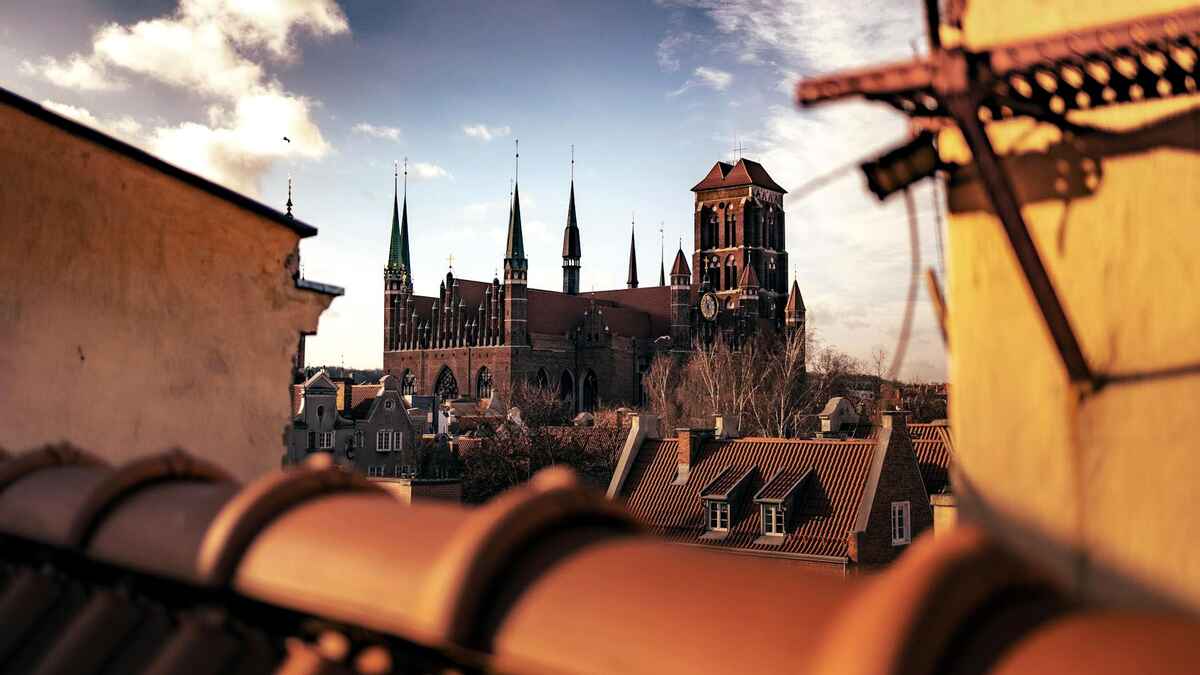
Notably, ulica Mariacka, lined with amber shops and gargoyle-adorned terraces, descends gently toward St. Mary’s Basilica, the largest brick church in the world.
In the early morning or late afternoon, when the crowds thin, this pedestrian lane becomes a tunnel of polished cobblestones and soft reflections, offering a glimpse of how merchants once lived above their workshops.
The sound of buskers playing classical guitar often echoes off the narrow walls, enhancing the sense of intimate discovery.
The gates that punctuate the Royal Route deserve focused attention. The Golden Gate and the Green Gate are more than architectural bookends; they express the city’s civic values.
The Golden Gate bears allegorical statues representing Peace, Freedom, Wealth, and Fame, while the Green Gate, despite its name, was intended as a royal palace.
Though no monarch ever slept there, its grand design reveals the high political aspirations of Renaissance Gdańsk. Standing beneath these portals, you feel the layered weight of ceremony, trade, and self-governance that still defines the city’s character.
Where to Stay in Gdańsk: Neighborhoods for Every Traveler
Choosing the right base in Gdańsk shapes your experience, as each district offers a distinct rhythm and atmosphere. The Main Town (Główne Miasto) places you directly within the postcard scenery, steps from the Neptune’s Fountain and the Motława riverfront.
Hotels and apartments here occupy painstakingly restored tenement houses, giving you a nightly view of illuminated spires.
The trade-off is a premium price tag and occasional street noise, especially during the St. Dominic’s Fair, but for first-time visitors craving immediate immersion, nothing beats waking up inside the historical canvas.
The Old Town (Stare Miasto), slightly to the north, offers a quieter but equally authentic alternative. Its streets are less crowded, yet the iconic sights like the Great Armoury and St. Catherine’s Church remain within a five-minute walk.
The area hosts a mix of boutique hotels and thoughtfully designed apartments, often with kitchenettes that appeal to families.
The neighborhood feels more residential, with small bakeries and bookshops tucked into the ground floors of historic buildings, allowing you to slip into a slower local rhythm between sightseeing.
Younger travelers and nightlife enthusiasts gravitate toward Wrzeszcz, a dynamic district that fuses 19th-century charm with contemporary energy. The revitalized Garnizon district, with its gastronomic halls and converted military buildings, has become a culinary hub.
Accommodation here tends to be more affordable, and the fast SKM train zips you into the central station in under ten minutes. Staying in Wrzeszcz reveals a different facet of Gdańsk: a university town energy, craft beer bars, and an authentic local feel far removed from the tourist lanes.
The following table summarizes the key neighborhoods to help match your accommodation with your travel style.
| Neighborhood | Best For | Vibe | Price Range |
|---|---|---|---|
| Main Town | First-timers, sightseeing | Historic, atmospheric | Premium |
| Old Town | Couples, families | Quiet, residential | Mid-range |
| Wrzeszcz | Nightlife, budget | Trendy, local | Budget to Mid-range |
| Oliwa | Nature, peace | Green, suburban | Mid-range |
Navigating the Motława Riverfront and the Crane
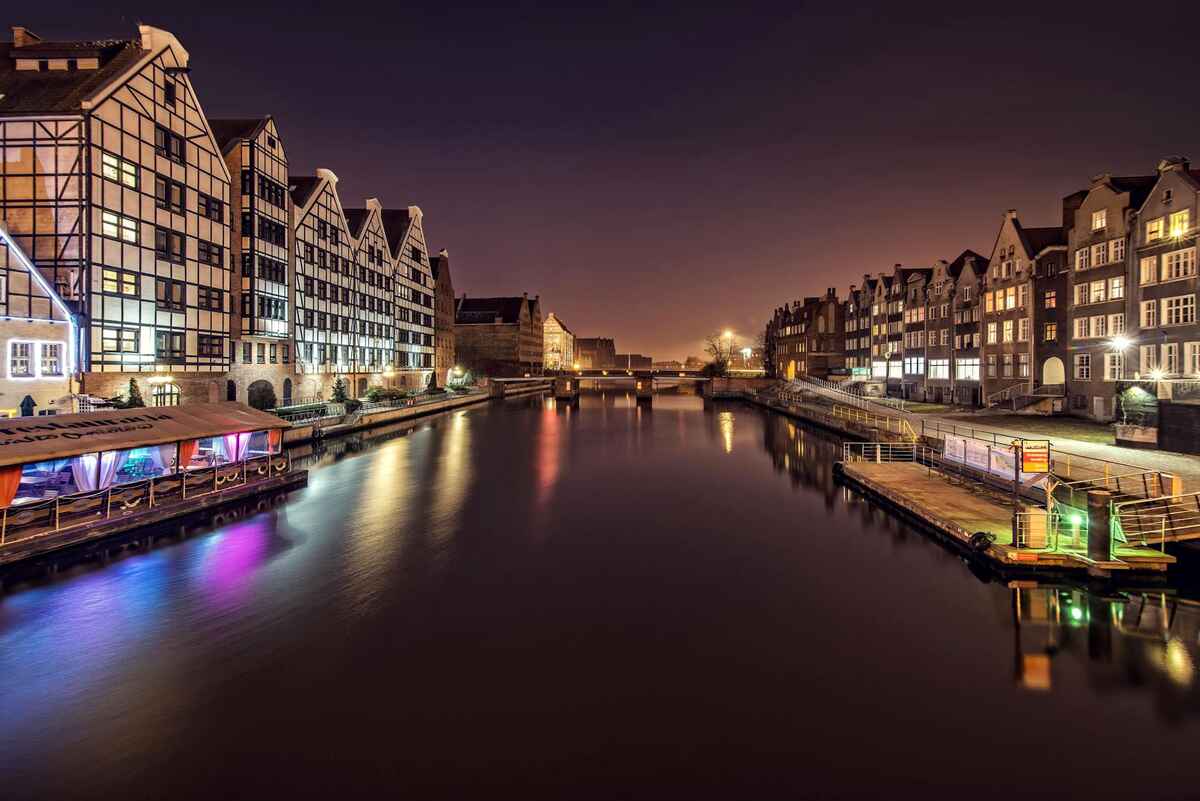
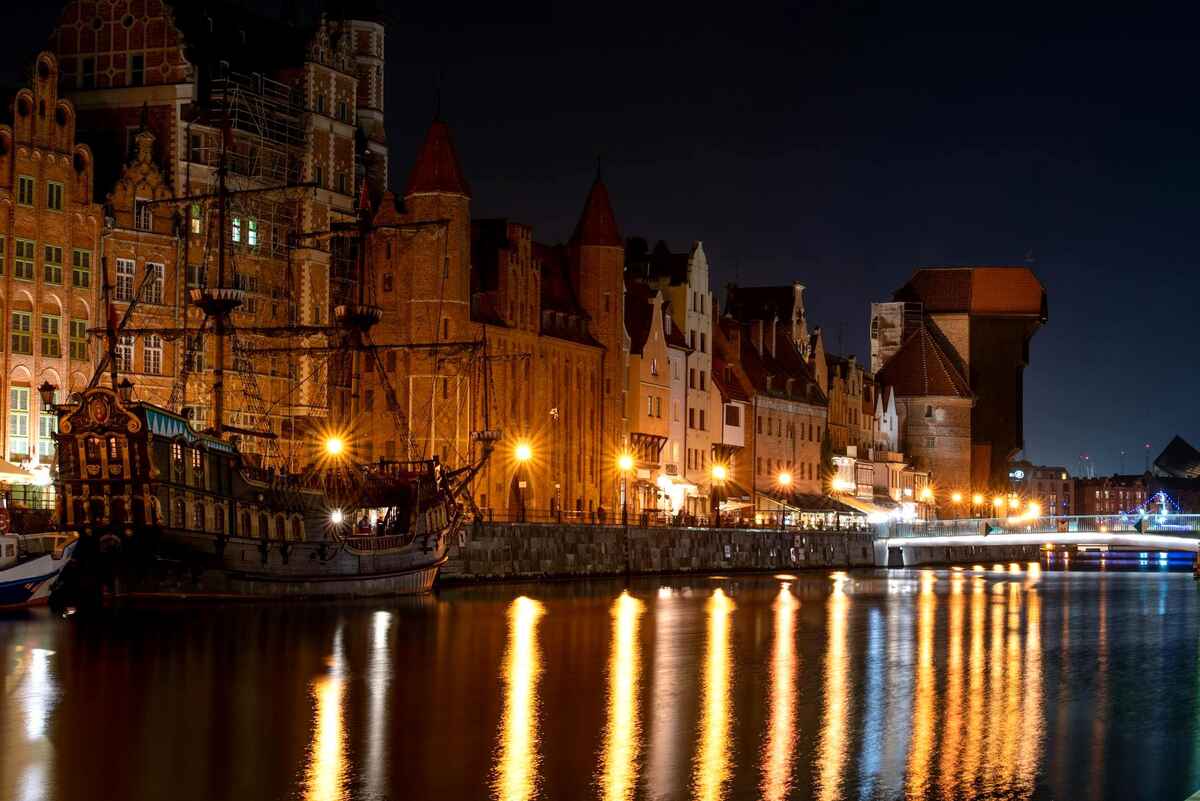
The Motława River embankment, known as Długie Pobrzeże, is the liquid heart of Gdańsk, where the city’s Baltic soul is most tangible.
Strolling along the water, you pass a continuous line of characteristic gatehouses, each with its own water gate that once allowed merchants to unload cargo directly into their homes.
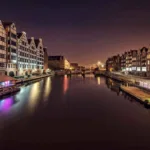
The reflections of the colorful Gothic and Mannerist façades shimmer on the river surface, broken only by the passage of a modern water tram or a wooden replica galleon. This waterfront promenade invites you to slow down and absorb the defining maritime atmosphere.
Towering over the embankment is the legendary Crane (Żuraw), the largest medieval port crane in Europe and an enduring icon of Gdańsk. Built in the 15th century, its twin brick towers and massive wooden lifting mechanism once hoisted masts onto ships and even raised heavy maritime cargo.
Today, the Crane houses a maritime museum that explains the port’s medieval logistics, but the structure itself is the main attraction. Seeing its silhouette against a Baltic sunset, with seagulls wheeling overhead, is an image that lodges itself permanently in memory.
The riverfront comes alive in the evening with a broad selection of waterfront restaurants and amber galleries. Open-air terraces along the embankment serve freshly grilled Baltic fish and ice-cold Polish beer, with views across to Ołowianka Island, home to the modern Polish Baltic Philharmonic.
The sound of lapping water and the creak of moored vessels provide a sensory soundtrack that contrasts beautifully with the silent grandeur of the brick warehouses behind you.
Ferries to Westerplatte and river cruises to the shipyard also depart from here, making the embankment a practical launchpad for deeper exploration.
A short walk south leads to the revitalized Granary Island (Wyspa Spichrzów), which has been transformed from a ruined post-industrial zone into a sleek urban quarter.
Modern glass-and-brick hotels now stand alongside restored granaries, housing food halls, boutique shops, and innovative design spaces.
Swinging footbridges connect the island to the main promenade, allowing you to trace a circular walking route that takes in both the medieval waterfront and its contemporary architectural rebirth. This contrast underscores Gdańsk’s ability to honor its past while confidently shaping its future.
How Many Days Do You Need in Gdańsk?
You need a minimum of three full days in Gdańsk to explore the Main Town, the museums, and a nearby Baltic coast excursion, though four to five days allow a richer, more relaxed experience.
A three-day itinerary allows you to capture the essential spirit of Gdańsk without feeling rushed. Day one can be dedicated entirely to the Royal Route, climbing the tower of St. Mary’s Church, and visiting the Museum of Gdańsk inside the Main Town Hall.
The evening naturally unfolds along the Motława embankment, with a dinner of locally caught zander and a moonlit stroll past the illuminated Crane.
Day two shifts toward the emotional gravity of the Solidarity movement at the European Solidarity Centre and a trip to Westerplatte, grounding you in the city’s modern moral significance.
Extending your stay to four or five days transforms a city break into a regional exploration. A full fourth day can be set aside for the grand Teutonic fortress of Malbork Castle, a UNESCO World Heritage site located an easy 30-minute train ride south.
Alternatively, a day trip along the Baltic coast to Sopot and Gdynia introduces the relaxed seaside elegance and modernist architecture of the Tricity.
This extra time also allows for deeper cultural immersion, such as an amber workshop, a concert at the Baltic Philharmonic, or an unhurried afternoon in Oliwa Park.
A longer stay also gives travel conditions the breathing room they deserve. Gdańsk’s weather can change quickly near the sea, so having flexible days means you can swap an outdoor stroll for a museum morning when Baltic drizzle arrives.
It transforms the trip from a checklist exercise into a genuine encounter with the local pace. Instead of racing between sites, you can spend an hour simply sitting at a café on ulica Mariacka, watching the world go by and noticing the small details that make Gdańsk feel like a lived-in city rather than an open-air exhibit.
Baltic Coast Day Trips from Gdańsk
Gdańsk sits at the heart of the Tricity conurbation, making seamless day trips along the Baltic coast one of its greatest travel advantages. The urban SKM train connects the three cities in a single swift line, turning the seaside into an effortlessly accessible playground.
Departing from Gdańsk Główny, you can be standing on the sandy shores of Sopot or exploring the port city of Gdynia within twenty minutes. The close proximity means a morning in a medieval cathedral can seamlessly give way to an afternoon of sunbathing or yacht-watching.
Sopot, the elegant middle sister, charms with its belle époque spa architecture and the longest wooden pier in Europe.
Strolling along Monte Cassino Street, you pass the famous Crooked House and countless outdoor terraces, but the real allure lies in the white sand beaches and the gentle waters of the Bay of Gdańsk.
A short walk north of the pier leads to quieter stretches of beach backed by pine forests, perfect for a peaceful escape. Sopot’s blend of luxury and seaside indulgence makes it an ideal contrast to the Hanseatic gravity of Gdańsk.
A more historically resonant day trip heads directly to Westerplatte, the small peninsula where World War II began. A 30-minute boat ride from the Motława waterfront delivers you to the vast Monument to the Coast Defenders and the preserved ruins of military barracks.
The site is stark, windswept, and powerfully somber, offering a crucial perspective on Gdańsk’s role in 20th-century history.
Adding a visit to the nearby Wisłoujście Fortress, a unique circular stronghold guarding the port mouth, deepens the maritime defense narrative in a location still shaped by wind and tide.
While not strictly a coastal escape, Malbork Castle is so close that it demands inclusion in any day-trip discussion. The immense brick castle, the largest in the world by land area, rises from the plains like a medieval mirage.
A direct regional train from Gdańsk delivers you to Malbork in about 30 minutes, where you can spend hours wandering galleries, kitchens, and grand masters’ palaces.
Combining a morning at this Teutonic fortress with a late afternoon Baltic swim in Sopot or Gdynia showcases the extraordinary diversity of experiences that orbit Gdańsk.
Culinary Gdańsk: What to Eat and Drink
Gdańsk’s culinary landscape blends Pomeranian traditions, Baltic Sea freshness, and a dash of Hanseatic global spice.
The local table reflects the city’s trading history, where ingredients like cardamom, cinnamon, and juniper arrived via merchant ships and found their way into hearty regional recipes.
Eating here is a journey through maritime simplicity and refined urban gastronomy, often within the same meal. The city’s restaurant scene has surged in recent years, with chefs rediscovering forgotten Kaszubian ingredients and pairing them with contemporary techniques.
Traditional dishes that define Gdańsk’s palate include the following highlights.
- Śledź po gdańsku: Herring marinated with onions, oil, and aromatic spices, a cold appetizer reflecting Baltic bounty.
- Zupa rybna po kaszubsku: A rich Kaszubian fish soup with root vegetables and a touch of cream, often served with fresh dill.
- Pierogi z kaszubską truskawką: Fruit-filled dumplings using the region’s intensely flavorful strawberries, a sweet seasonal treat.
- Goldwasser: A legendary root-based liqueur containing real 22-karat gold flakes, invented in Gdańsk in the 16th century.
The city’s modern dining scene flourishes in places like the Garnizon district in Wrzeszcz and within revitalized granaries on Granary Island.
Here, restaurants serve seasonal tasting menus that might feature locally caught pikeperch with wild sorrel, or smoked goose breast with beetroot variations.
Craft beer culture has also exploded, with microbreweries producing Baltic porters, wheat ales, and IPAs that pay homage to the city’s brewing heritage. Pairing a dark Baltic porter with a plate of matured sheep cheese from the nearby Tuchola Forest is a revelation in regional terroir.
No culinary tour of Gdańsk is complete without a stop at a traditional bar mleczny, a workers’ milk bar. These no-frills eateries, such as Bar Turystyczny near the train station, serve deeply comforting versions of Polish classics at remarkably low prices.
A plate of potato pancakes with goulash or a steaming bowl of żurek with white sausage offers a genuine taste of daily life. Eating shoulder to shoulder with students and pensioners, you encounter Gdańsk’s humble yet proud food culture, a perfect contrast to the elegant riverfront terraces.
Gdańsk for History Buffs: Solidarity and World War II
Gdańsk occupies a unique place in modern historical memory, serving as both the flashpoint of global conflict and the cradle of a peaceful revolution. History buffs will find that the city treats its past not as a distant archive but as a living conversation.
The European Solidarity Centre, housed in a striking rust-red building that evokes ship hulls, is a world-class museum that chronicles the fall of communism in Eastern Europe.
Interactive exhibits, original strike banners, and personal testimonies make the movement feel extraordinarily immediate, elevating the visit beyond any typical museum tour.
The Gdańsk Shipyard, just beyond the Solidarity Centre, is a landscape of monumental historical weight. Standing before the Monument to the Fallen Shipyard Workers, three soaring crosses anchor the site where workers were shot in 1970.
Nearby, the famous Gate No. 2, where Lech Wałęsa addressed the crowds, remains a pilgrimage site for those who study peaceful resistance. Guided walks through the shipyard, often led by former workers, provide personal narratives that transform the industrial landscape into a crucible of moral courage.
The Second World War narrative is equally powerful and far-reaching. The Museum of the Second World War, with its leaning, angular architecture, offers a profoundly comprehensive and emotionally devastating exhibition.
Its narrative moves beyond Poland to encompass the global human tragedy, yet the central place of Gdańsk’s suffering is never lost. Exhibits include personal belongings excavated from ruins and audiovisual testimonies that underscore the city’s physical and psychological reconstruction.
The famous statement that the war began here at Westerplatte is fully explored through immersive installations.
For those interested in less monumental but equally important sites, the former Gestapo headquarters on ulica Okopowa and the ruins of the Great Synagogue on Podwale Staromiejskie offer quiet spaces of reflection.
The Jewish heritage trajectory, from medieval persecution to vibrant pre-war life and tragic destruction, is remembered through plaques and educational trails.
Walking these routes, history buffs gain a nuanced understanding of Gdańsk as a city that has repeatedly rebuilt its identity from ashes, not just architecturally but ethically.
Discovering Amber and Local Crafts in Gdańsk
Amber, known as the gold of the Baltic, is inseparable from Gdańsk’s identity and has been for millennia. The region’s deposits of fossilized resin, washed ashore after storms, turned the city into a global center of amber craftsmanship.
Walking through the Main Town, you are never far from a shop window glowing with warm cognac-colored, green, or even rare blue amber.
Jewellery, sculptures, and intricate objets d’art fill the galleries along ulica Mariacka, where artisans have worked with the material for generations, transforming raw sea-tossed nuggets into wearable art.
The Amber Museum, housed within the historic Foregate complex of the Prison Tower, offers a scholarly and visually stunning introduction to this natural treasure.
Its collection includes prehistoric inclusions of insects and plants trapped for millions of years, alongside masterpieces by contemporary designers.
The museum educates visitors on how to distinguish genuine Baltic amber from imitations, a useful skill in a city awash with amber vendors. Understanding the science and art behind the gem deepens your appreciation for the glowing necklaces and rings displayed throughout Gdańsk.
Beyond Amber, Gdańsk nurtures a broader landscape of local crafts that reflect the region’s maritime and ethnographic heritage. Kaszubian embroidery, with its distinctive blue, yellow, and green palette of motifs drawn from nature, adorns linen, ceramics, and traditional snuffboxes.
Small workshops in the Old Town still produce hand-painted glassware and pottery, and the craft markets during St. Dominic’s Fair are exceptional opportunities to buy directly from the makers. Purchasing these items supports living cultural traditions rather than mass-produced souvenirs.
The city’s contemporary design scene adds a surprising twist to traditional craft. Design shops on Wyspa Spichrzów and in the revitalized backstreets showcase modern reinterpretations of Baltic motifs, from concrete jewelry embedded with amber chips to furniture inspired by ship hulls.
The fusion of historical materiality with minimalist aesthetics has made Gdańsk a quiet center of creative entrepreneurship.
Taking home a piece of modern Baltic design, alongside a classic amber keepsake, tells a complete story of a city that constantly renegotiates its relationship with its precious natural resources.
Practical Travel Tips for Gdańsk
Practical preparation ensures that your time in Gdańsk unfolds smoothly, freeing you to absorb the city’s atmosphere without unnecessary friction.
Currency remains the Polish złoty, and while many restaurants and shops accept card payments, small markets, milk bars, and some public transport ticket machines may require cash. ATMs are widely available throughout the city center.
The public transport system, operated by ZTM Gdańsk, runs efficiently via trams and buses; tickets must be validated upon boarding to avoid fines, which random inspectors frequently check in tourist areas.
The following travel tips will enhance your visit and help you navigate local customs with confidence.
- Download the SkyCash or Jakdojade mobile app for seamless public transport ticket purchases and route planning.
- Learn a few basic Polish greetings; saying “dzień dobry” breaks the ice warmly in local shops and cafés.
- Pack layered clothing and a windproof jacket, as Baltic breezes can turn a sunny afternoon unexpectedly chilly.
- Reserve tickets online for the European Solidarity Centre and the Museum of the Second World War to avoid long queues.
- On Sundays, some smaller shops and galleries may close early, so plan any major purchases accordingly.
Accommodation wise, booking directly with a hotel or a verified apartment platform often yields better cancellation terms and local insights.
In the peak summer season, the central Gdańsk Główny area becomes a hub of pedestrian activity; staying slightly outside in Wrzeszcz or Oliwa and commuting via the frequent SKM train can offer both cost savings and tranquility.
For those driving, note that the Main Town is largely pedestrianized, and parking requires paid zones or secure garages on the fringe of the historic core.
Safety in Gdańsk is generally high, and the city is welcoming to solo travelers, families, and all visitors. Like any popular European destination, common-sense precautions against pickpocketing should be maintained in crowded areas like the St. Dominic’s Fair or on packed trams.
Travel conditions, opening hours, and local regulations can change, so it is wise to check current information with official tourism sources before setting out.
The palpable sense of civic pride here means that residents are approachable and often eager to share directions or a recommendation for an off-the-beaten-path pierogi shop.
Conclusion
Gdańsk imprints itself on the traveler not as a simple collection of sights but as a complete sensory and intellectual encounter with the Baltic Sea spirit.
The medieval streets, painstakingly rebuilt, do more than please the eye; they tell a story of cultural survival, Hanseatic ambition, and quiet Kaszubian pride.
Standing between the towering red brick of St. Mary’s and the reflective waters of the Motława, you understand why this city breeds a fierce independence.
It is a place where the weight of the Second World War and the triumph of Solidarity are not distant chapters but active, breathing elements of the urban landscape.
The fusion of history with a forward-looking vitality defines the modern Gdańsk experience. The same shipyard that once sparked a revolution now anchors a digital and design renaissance, and a stroll from the medieval Crane to the glass-walled food halls of Granary Island captures this dialogue perfectly.
Travel, here, becomes education of the most enjoyable kind, learned over bowls of Kaszubian fish soup and Baltic porter, in the shadow of a Gothic spire. The city offers a rare combination of profound substance and everyday beauty.
As a travel guide destination, Gdańsk rewards those who give it more than a rushed weekend. Its layered neighborhoods, its amber-lit artisan lanes, and its seamless connections to the sandy Baltic coast and Teutonic castles invite deep exploration.
Whether you come for the architecture, the cuisine, or the moving historical monuments, you leave with a profound respect for a city that has repeatedly chosen resilience over resignation.
Travel information, including prices, schedules, opening hours, and local safety conditions, can shift with the seasons and changing circumstances.
Always verify key details with official local sources before finalizing your plans in Gdańsk. The Baltic Sea may be constant, but the rhythms of the city deserve your informed and thoughtful attention, ensuring that your visit is as seamless as it is memorable.
FAQ
Is Gdańsk an expensive city to visit?
Gdańsk offers excellent value compared to Western European destinations. Mid-range restaurants serve three-course meals for around 60–80 złoty, while a comfortable hotel in the Old Town averages between 250 and 500 złoty per night depending on the season. Budget travelers can eat at milk bars for under 25 złoty. Prices rise during the St. Dominic’s Fair and peak summer weeks, so advance booking is recommended for the best rates.
What is the best way to get from Gdańsk Airport to the city center?
The SKM train, departing regularly from the airport rail terminal, reaches Gdańsk Główny in under half an hour. Tickets can be bought at machines on the platform and are inexpensive. Taxis and ride-sharing services are available at a higher cost and take about 20 minutes, though traffic can sometimes extend the journey. The train is the most reliable and atmospheric option.
Can you visit Malbork Castle as a day trip from Gdańsk?
Yes, Malbork Castle is an easy and rewarding day trip from Gdańsk. Regional trains depart roughly every hour from Gdańsk Główny and reach Malbork in about 30 to 40 minutes. The castle is a short walk from the station, and a guided tour inside lasts around three to four hours. Checking train schedules and castle opening times in advance is encouraged, as seasonal variations may apply.
Does Gdańsk have good public transport for tourists?
Gdańsk has an efficient network of trams and buses managed by ZTM Gdańsk, with routes covering all major districts and attractions. The urban SKM train also connects Gdańsk, Sopot, and Gdynia in a single line. Tickets are time-based and must be validated immediately after boarding. Mobile apps simplify purchases and route planning for visitors unfamiliar with the system.
What are the must-try local dishes in Gdańsk?
Essential local flavors include Kaszubian fish soup, marinated Baltic herring, and pierogi filled with seasonal strawberries from the Kaszuby region. Goldwasser, a historic Gdańsk liqueur with gold flakes, is a unique digestif. The city also boasts a growing craft beer scene, with Baltic porters pairing particularly well with smoked fish plates along the Motława waterfront.
Is Gdańsk a safe city for solo travelers?
Gdańsk is generally considered a safe city for solo travelers, with well-lit historic streets, a visible municipal police presence, and a welcoming local attitude. Standard urban precautions against pickpocketing in crowded markets and on trams are advisable. Solo visitors often find the city’s compact walkable core and extensive tourism infrastructure especially comfortable.
What is the connection between Gdańsk and the Solidarity movement?
Gdańsk is the birthplace of Solidarity, the trade union movement that challenged communist rule and eventually led to the fall of the Iron Curtain. The strikes began at the Gdańsk Shipyard in 1980 under the leadership of Lech Wałęsa. The European Solidarity Centre now tells this story through powerful exhibits, and Gate No. 2 remains an iconic pilgrimage site for those interested in modern European history.
How walkable is the historic center of Gdańsk?
The historic center of Gdańsk is exceptionally walkable. The Royal Route, Motława riverfront, and main museums are all within a compact pedestrian-friendly area of cobbled streets. Comfortable walking shoes are recommended due to uneven surfaces. A single day on foot can cover most central attractions, with trams available for any needed connections to farther districts like Oliwa or Wrzeszcz.
Where can I buy genuine Baltic amber in Gdańsk?
Ulica Mariacka is the most famous street for purchasing genuine Baltic amber, lined with reputable shops and artisan workshops. The Amber Museum and certified galleries provide authenticity guarantees, and purchasing from shops offering certificates of origin adds confidence. As with any precious material, checking official travel and consumer advice about quality marks before buying is sensible.
What day trips from Gdańsk combine beach and nature?
Sopot and Gdynia offer immediate beach access via the SKM train, with wide sandy shores and forested coastal parks. The Hel Peninsula, a bit farther, provides secluded dunes and windsurfing conditions. Oliwa Park within the city itself combines a beautiful Baroque garden with a famous organ in the cathedral, offering a green escape without leaving the Gdańsk metropolitan area.

Author: Horeca Health
Horeca Health



Leave a Reply