Visit Ghent: Introduction
When you visit Ghent, you step into a city where medieval grandeur meets contemporary energy, and every canal reflection tells a story. Tucked between Brussels and Bruges, this Flemish treasure remains delightfully under‑the‑radar for many international travelers.
It cradles one of Europe’s best‑preserved historical centers, yet it buzzes with a young, creative pulse that fills its squares with street art, designer studios, and a fiercely local food scene.
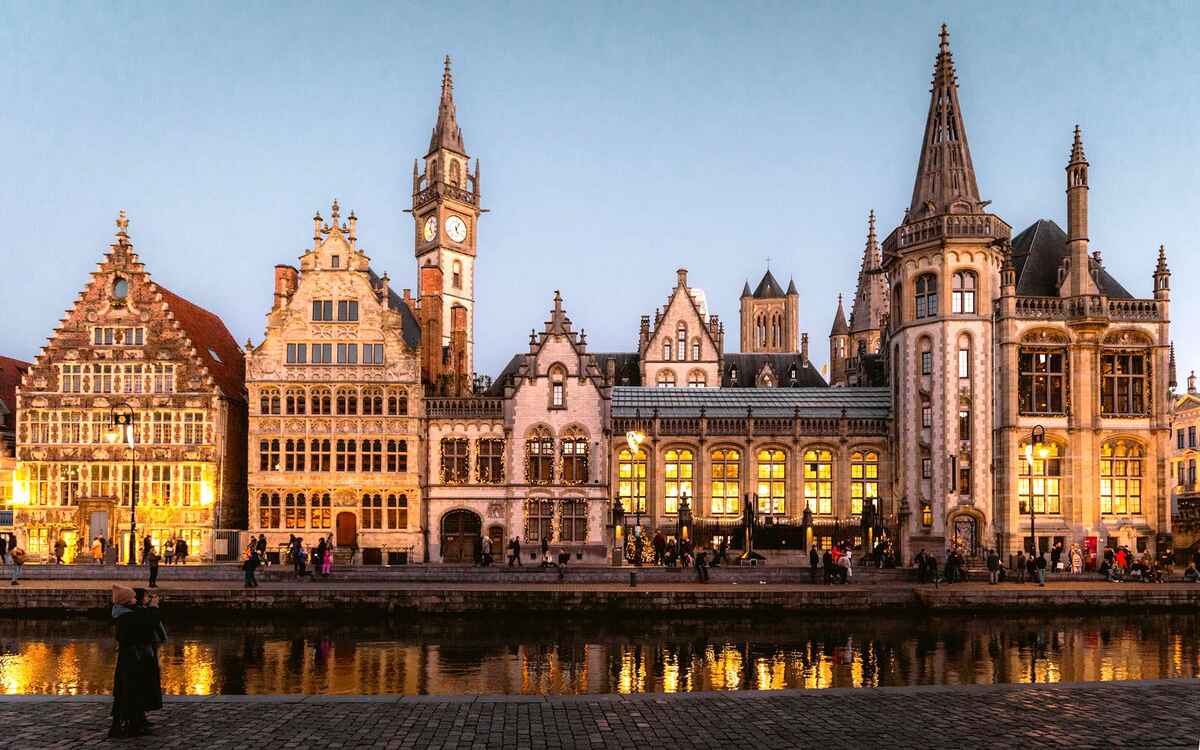
You can wander cobbled alleys in the morning, climb a 14th‑century belfry at noon, and sip a spontaneously fermented lambic by the Graslei as evening lights ripple across the water.
Ghent refuses to be a museum piece. The city wears its history with pride but never lets it overshadow the modern rhythm of university life and sustainable innovation. Vegan eateries share blocks with medieval guildhalls, and cargo bikes glide past Gothic churches.
This guide gathers everything you need to shape an unforgettable stay: deep‑dive history, curated itineraries, neighborhood insights, food rituals, and practical advice. Whether you are a first‑time explorer or a returning lover of the Low Countries, this is your complete companion for a richly layered visit.
We will walk through why Ghent deserves your attention, how to plan your trip around the seasons, and which landmarks you simply cannot miss. You’ll learn where to bed down in style, what to eat between canal‑side strolls, and how to string together a perfect day on foot.
By the end, you’ll understand why so many travelers arrive for a day trip and immediately regret not booking a longer stay. A visit to Ghent rewards the curious, the unhurried, and anyone who believes that the best travel memories are found in cities that feel genuinely alive.
Why Should You Visit Ghent Instead of Bruges?
Ghent offers medieval spectacle without the packaged perfection. While Bruges enchants with picture‑postcard precision, Ghent delivers a raw, lived‑in authenticity that feels more spontaneous and less curated.
The city’s three towers—Saint Nicholas’ Church, the Belfry, and Saint Bavo’s Cathedral—form an iconic skyline that rivals anything in Flanders, yet the streets are filled with students, cyclists, and neighborhood markets rather than horse‑drawn carriages arranged for tourists.
That balance of grandeur and everyday life is exactly what makes a visit to Ghent so compelling.
Another powerful reason is sheer convenience. Ghent sits at a rail crossroads roughly thirty minutes from Brussels and twenty minutes from Bruges, making it an ideal hub for exploring the region without decamping every other day.
You can sleep in a 700‑year‑old converted beguinage and still be in Antwerp or the Belgian coast within an hour. Public transport is efficient, the city center is wonderfully walkable, and the compact layout means you’ll spend less time navigating and more time discovering.
Ghent also offers a richer culinary identity than its neighbors. It gave the world cuberdons (the purple, cone‑shaped candies), pioneered vegetarian dining long before it became trendy, and protects traditions like waterzooi and Tierenteyn mustard with quiet pride.
Every street corner seems to hold a bakery, a specialty beer café, or a chocolatier that has operated for generations. Dining here feels like a conversation with Flemish culture rather than a check‑list exercise.
Finally, the city pulses with a cultural edge you won’t find in a postcard. The STAM museum tells the city’s story with interactive, thought‑provoking installations. The Design Museum Gent juxtaposes historic interiors with radical contemporary objects.
And the official street art circuit transforms the Werregarenstraatje into an open‑air gallery that changes weekly. When you visit Ghent, you encounter a city that is continuously writing its next chapter while holding tight to the best of its past.
What Is the Best Time to Visit Ghent?
The sweet spot runs from late April through June and from September to mid‑October, when daylight stretches long and temperatures hover comfortably around 15–22 °C.
During these months the canalside terraces burst with life, the wisteria drapes over old stone walls, and the city’s event calendar hits its stride without the peak‑summer crush of river‑cruise groups.
You’ll enjoy softer light for photography, shorter queues at Sint‑Baafskathedraal, and a noticeably more local atmosphere in the medieval core.
July and August bring some of Ghent’s most spectacular festivals, especially the Gentse Feesten, a ten‑day street jamboree that transforms every square into a stage.
If you plan to visit Ghent during this period, book accommodation months in advance and be ready for vibrant chaos and later restaurant hours.
The weather is warmest, although occasional rain remains a Flemish constant, so a light waterproof layer is always wise. Early mornings still offer serene moments even amid the festival buzz—you just need to slip into the Patershol quarter before the crowds wake.
Winter casts a different spell. From late November onward, the city dresses in soft golden lights, and the Christmas market on Sint‑Baafsplein and around the Belfry fills the air with mulled jenever and roasted nuts. Museums feel intimate, and you can linger in cafés like the iconic Julien without competing for a table.
The lower visitor numbers mean hotel rates dip, making a long weekend surprisingly affordable. Just pack proper boots; Ghent’s cobblestones glisten beautifully but demand sure footing after drizzle.
A brief seasonal snapshot helps orient your planning.
| Season | Weather | Highlights | Crowd Level |
|---|---|---|---|
| Spring | Mild, occasional showers | Blooming parks, canal terraces | Moderate |
| Summer | Warm, some rain | Gentse Feesten, long daylight | Very high |
| Autumn | Crisp, colourful leaves | Film Fest Gent, cosy brown cafés | Moderate |
| Winter | Cold, damp, rare snow | Christmas market, quiet museums | Low |
Whenever you choose to visit Ghent, the city rewards flexibility. Rainy afternoons become an excuse to dive into the Adoration of the Mystic Lamb or explore the cavernous university library.
The key is to book tickets for major sights online, check the city’s official event calendar, and leave room for the serendipitous discoveries that Flanders does so well.
How to Reach Ghent from Brussels and Beyond
Ghent‑Sint‑Pieters station ties the city directly to Brussels in under forty minutes, with frequent connections to Antwerp, Bruges, and the international terminals at Brussels Airport.
Trains are smooth, affordable, and run so regularly that you rarely need to consult a timetable—just show up and tap your contactless card for a standard‑class seat.
If you’re arriving by Eurostar or Thalys from London, Paris, or Amsterdam, the natural pivot is Brussels‑Midi, where a seamless transfer puts you on a local service within minutes.
For those who prefer the road, the E40 motorway runs past Ghent’s southern edge, and long‑stay parking at park‑and‑ride facilities like P+R Watersportbaan keeps the historic center pleasantly car‑free.
Biking into the city from the outskirts is an authentically Flemish approach, too, with well‑marked cycling lanes and bike rental points even at the station. Drivers should note that the central circulation plan funnels cars away from pedestrian zones, so plan to leave your vehicle and explore on foot or by tram.
Air travelers have a few solid options. Brussels Airport (Zaventem) lies about an hour by direct train. Charleroi Airport handles budget carriers and connects to Ghent via a Flibco shuttle to Brussels‑Midi and onward rail.
Even Schiphol in Amsterdam can work, with a comfortable IC‑train ride of roughly two and a half hours that deposits you right at Gent‑Sint‑Pieters. Whichever airport you choose, the final leg is rarely a headache.
Once you are in the city, walking is your primary mode. The tram network is straightforward and uses contactless payment, while hop‑on boats let you arrive in style along the Leie.
Taxis and ride‑sharing services exist but feel almost needlessly fast in a place that rewards slow meandering. Every bridge and hidden courtyard will make you glad you planned your journey to visit Ghent with ease.
Ghent’s Medieval History: A Story Written in Stone
To visit Ghent is to walk through a thousand years of European history pressed into a few square kilometers. The city rose to prominence in the 11th century as a powerhouse of cloth production, its wealth fed by English wool and Flemish craftsmanship.
By the 13th century it ranked among the largest cities north of the Alps, a trade giant with independent guilds that wielded real political clout. That legacy of self‑assured burghers and rebellious grit still echoes in the monumental façades and the stubborn local pride.
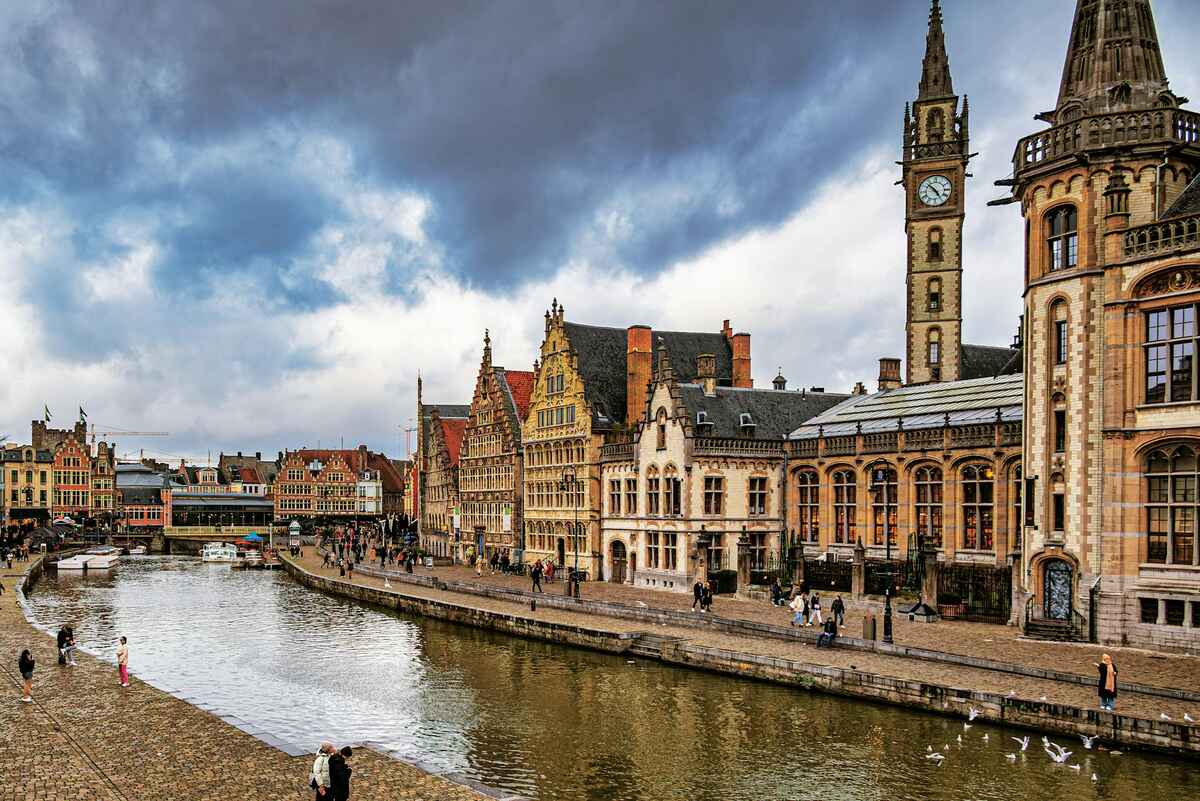
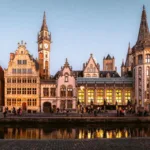
The Graslei and Korenlei form the beating heart of this story, once the wharves where ships unloaded grain, wine, and spices. Behind those step‑gabled buildings, guilds regulated prices, inspected quality, and defended their members against counts and emperors.
The Belfry tower was raised not just as a bell chamber but as a concrete symbol of civic freedom; its iron‑clad chest held the city’s charters of rights. Sitting in the shadow of that tower, you can almost hear the medieval clock chiming the rhythm of a fully functioning mercantile republic.
Religious life shaped the skyline too. Saint Bavo’s Abbey, a Benedictine powerhouse founded in the 7th century, gave the city its oldest spiritual root and eventually its name.
The abbey’s influence spread across the Low Countries, and its political fractures—most notably Emperor Charles V’s crushing of the 1539 Revolt—left physical scars you can still trace in the Ghent city museum.
Charles forced the city leaders to walk barefoot and wear nooses as penance; today those “Stroppendragers” (noose‑bearers) are celebrated as a badge of rebellious courage.
Modern Ghent carries this layered history without suffocating under it. A 19th‑century industrial revival, driven by textiles and a visionary urban plan, created the broad boulevards and the university district.
World War preservation efforts saved the medieval core from large‑scale destruction. Visit Ghent today and you’ll grasp this palimpsest: Romanesque crypts beneath baroque altars, cast‑iron footbridges leading to Renaissance guildhalls, and a tram line sweeping past a 12th‑century castle. It is a place where the past is not behind glass but underfoot.
What Are the Must‑See Landmarks in Ghent?
The Adoration of the Mystic Lamb anchors any first‑time itinerary. Housed inside Sint‑Baafskathedraal, Jan and Hubert van Eyck’s 1432 masterpiece is one of the most influential paintings in Western art, and seeing its luminous, jewel‑like panels in person is a near‑transcendent experience.
Book a timed entry slot and allow the virtual‑reality exhibit in the crypt to prime your eyes for the panel’s symbolism. A visit to Ghent without this encounter is like skipping the Duomo in Florence.
Gravensteen Castle rises a few streets away, a brooding fortress with ramparts that deliver sweeping views of the city’s three‑tower skyline.
Its museum does a fine job of narrating medieval justice, weaponry, and daily life inside the keep, while the rooftop panorama alone justifies the climb. Walk here in the early morning or at dusk, when the stonework glows amber and the crowds thin out.
The juxtaposition of this intimidating pile directly across from grannies selling flowers at the Vrijdagmarkt perfectly captures Ghent’s contradictions.
The Belfry of Ghent, a UNESCO World Heritage site, offers a different perspective. Ride the elevator partway and then scale the narrow staircase to see the great copper dragon weathervane up close.
The carillon concerts ring out across the city, and the view frames the overlapping spires of Sint‑Niklaaskerk and Sint‑Baafskathedraal. If you visit Ghent on a Saturday morning, the square below blooms with the weekly flower and vegetable market, adding color and chatter to the scene.
Do not overlook lesser‑sung gems. Sint‑Niklaaskerk itself holds a luminous Gothic interior and a recently restored organ that sometimes gives free afternoon recitals.
The Groot Vleeshuis, a medieval meat market with a cavernous timber roof, now serves as a regional food center where you can taste artisanal hams and cheeses right on site.
And the MSK (Museum of Fine Arts) houses a compact but world‑class collection of Flemish primitives and modernists that complements the brighter tourist trail. Connecting these stops on foot, you’ll realize that the whole historical center is an open‑air gallery.
A Self‑Guided Walking Tour Through Ghent’s Historic Heart
This compact loop lets you experience the city’s essential sights in a leisurely day. Start at Sint‑Baafskathedraal to absorb the Mystic Lamb, then cross the bridge into the Korenmarkt and pause for a coffee in the shadow of Sint‑Niklaaskerk.
The route unwinds naturally along the Graslei, where the gabled houses are best admired from the opposite bank or from a short canal cruise that departs right from the quay. You’ll clock fewer than three kilometers, yet every turn feels cinematic.
From the Graslei, duck behind the Design Museum and enter the Patershol quarter, an intimate warren of stepped alleys, antique shops, and bistros tucked inside 17th‑century merchants’ homes. This is the place to lose the map and lean into serendipity.
If hunger strikes, you’ll find everything from candlelit Flemish classics to Vietnamese pho within a two‑minute walk. The absence of through‑traffic makes the whole neighborhood a sanctuary of footsteps and conversation.
Head west toward the Gravensteen, walking through the Vrijdagmarkt square, where the socialist newspaper Vooruit and the popular culture house occupy a striking Art Nouveau building.
After touring the castle, follow the Lieve canal northward to discover the Rabot, a fortified water‑gate and a reminder of Ghent’s once‑mighty defensive network. This stretch feels quieter and more residential, revealing a side of the city that many rushed day‑trippers never see.
Loop back through the Begijnhofdries to the tranquil courtyard of the Old Beguinage, a UNESCO‑listed cluster of white‑painted houses that sheltered religious laywomen for centuries.
Finish your walk near Sint‑Anna’s Church and the Bijlokemuseum, then wander down to the Portus Ganda marina for an aperitif as the light softens. By stringing these moments together, you craft a visit to Ghent that unfolds at a human pace and lodges itself in memory.
Ghent’s Food Scene: From Cuberdons to Waterzooi
Eating in Ghent is a journey into Flemish comfort and fearless experimentation. A good place to start is waterzooi, a velvety stew of chicken or fish, leeks, carrots, cream, and egg yolks that tastes like a warm hearth on a damp day.
Seek it at a classic brasserie like De Graslei or at a neighborhood grill where the recipe hasn’t changed in four generations. Pair it with a blonde Belgian ale and a side of crusty bread, and you’ll understand why this dish has anchored local tables since the Middle Ages.
The sweet side of Ghent revolves around cuberdons, the raspberry‑flavored, cone‑shaped gummy candies with a liquid‑jam center.
Judging the freshness of a cuberdon is a local art; they stiffen within weeks, so the best specimens come from open‑air market stalls where they’re sold in paper cones. Try them at the Groentenmarkt or from the iconic stand near the Stadhuis.
On the savory side, Tierenteyn‑Verlent, a mustard shop that has been grinding seeds for over two centuries, sells pungent stone jars that elevate a simple sausage or cheese plate into something memorable.
Vegetarians and vegans will feel unusually welcomed. Ghent was the first city in the world to launch an official “Thursday Veggie Day,” and the movement seeded a vibrant plant‑based dining culture.
Restaurants like Le Botaniste serve botanical bowls in an apothecary‑themed interior, while Soul Kitchen offers layered flavor combinations that even omnivores rave about.
Farmers’ markets like the Zondagmarkt at Ledeberg bring organic growers and artisanal bakers right into the community calendar.
Beer is inseparable from a proper visit to Ghent. Move beyond the ubiquitous pils and explore soulful, spontaneously fermented lambics, tart red‑brown Flemish ales, and the full‑bodied tripels brewed in nearby abbeys.
Gruut brewery offers tastings inside a restored 19th‑century factory, while the legendary Dulle Griet café stocks hundreds of bottles served in their correct glass—and a signature “schoonen” basket to ensure you return their kwak glass.
Whether you’re a food pilgrim or a casual gourmand, Ghent’s table remains one of Europe’s most under‑celebrated feasts.
Where to Stay When You Visit Ghent: Neighborhoods and Hotels
Choosing the right base transforms your experience. The historical center (Kuip) places you steps from the three towers and the Graslei, but prices reflect the convenience.
Patershol, just north of the core, offers atmospheric lanes and some of the city’s best restaurants right outside your door. For a more local feel, consider the neighbourhoods that lie within a fifteen‑minute walk but trade doorstep monuments for leafy squares and lower rates.
| Neighborhood | Best For | Price Indicator | Example Stay |
|---|---|---|---|
| Korenmarkt & Kuip | First‑time visitors, instant access to sights | €€€ | 1898 The Post |
| Patershol | Food lovers, romantic atmosphere | €€–€€€ | B&B Petit Versailles |
| Sint‑Pieters Station area | Early trains, business travel | €–€€ | NH Gent Belfort |
| Brugse Poort | Creatives, multicultural vibe | €–€€ | Edville Studio |
| Beguinage quarter | Quiet retreat, UNESCO setting | €€ | Getaway Studios |
Boutique design hotels have flourished in recent years. 1898 The Post inhabits the old post office on the Korenmarkt, blending neo‑Gothic architecture with moody, literary interiors and a top‑floor cocktail bar that overlooks the spires.
Pillows Grand Hotel Reylof channels Louis XVI elegance with a modern spa and a serene inner garden. Those seeking a more intimate scale can turn to bed‑and‑breakfasts set inside step‑gabled townhouses, often run by owners who map out the city on a napkin over breakfast.
Budget‑conscious travelers are not sidelined. The Treck Hostel occupies a reimagined industrial building near the station with thoughtful communal spaces and a craft‑beer bar.
Smart apartment rentals around the Ledeberg district or near the Citadelpark put you a short tram ride from the center while letting you live a little more like a local. When you visit Ghent during festivals, book four to six months ahead; rooms inside the historical ring evaporate fast, especially for Gentse Feesten.

Ghent’s Canals: How to Enjoy the Waterways
Canals are Ghent’s connective tissue, and getting on the water is one of the most meditative ways to absorb the city’s geometry.
The standard forty‑minute boat tours depart from the Graslei and the Vleeshuisbrug, gliding past the medieval wharves, under low stone bridges, and around the castle’s forbidding walls. Commentary is usually bilingual or trilingual and lighthearted; it’s tourism well done rather than a floating lecture.
Opt for an open‑air boat if weather permits, because the full panorama of those step‑gabled guildhalls deserves an unobstructed view.
For a more independent drift, rent a kayak or a pedal boat and navigate the quieter reaches of the Leie and the Coupure. You can paddle up to the Bijloke site and the old abbeys, where weeping willows trail into the water and the city feels surprisingly pastoral.
Early mornings on the water are especially magical—mist rising off the surface, swans escorting you, and the first tram bells echoing across the stone embankments.
The city also orchestrates two seasonal spectacles on the canals. During the Gentse Feesten, floating stages host concerts that ricochet off the water, and illuminated art installations blink in the dark.
Ghent Light Festival, held every three to four years, transforms the waterways into a canvas of light sculptures and projections that draw international crowds. If your visit to Ghent aligns with either event, staying near a canal‑side viewing point helps you slip seamlessly from door to spectacle.
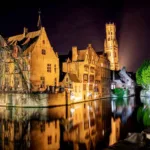
Even if you never board a boat, walking the water’s edge remains an essential ritual. The evening glow on the Graslei, when the floodlit buildings mirror in still water, is the city’s most photographed moment for a reason.
Grab a cone of frites from a frituur and sit on the stone steps by the old harbor crane. The canals are not just scenery; they are a living thread that has shaped Ghent’s commerce, its defences, and its singular charm.
What Makes a Visit to Ghent Unique for Art Lovers?
The Van Eyck brothers’ altarpiece is the headliner, but Ghent’s art identity stretches far beyond a single painted panel. The MSK (Museum voor Schone Kunsten) offers a chronological sweep from Hieronymus Bosch to Léon Spilliaert, with galleries calm enough to study a Bruegel miniature without jostle.
Just across the park, the S.M.A.K. (Stedelijk Museum voor Actuele Kunst) counters with daring contemporary installations, video art, and works by figures like Marcel Broodthaers that probe Belgium’s surrealist streak. Together, these two museums create a dialogue between centuries that few mid‑sized cities can match.
Public art brings the streets to life. Ghent’s official street art route, anchored in the Werregarenstraatje, is an evolving legal graffiti alley where the murals change so often that even locals find fresh surprises.
Sculptures by Maarten Vanden Eynde and others sit on roundabouts and riverbanks, converting the city into an open‑air gallery. This democratic approach to art means that even a casual stroll to your hotel can become a cultural encounter.
The city also champions craft and design. The Design Museum Gent occupies an 18th‑century mansion with a startlingly modern extension, juxtaposing historic furniture with cutting‑edge prototypes.
Temporary exhibitions often feature Belgian design stars or explorations of sustainable materiality. For a more intimate experience, small artist studios in the Brugse Poort and Dampoort quarters open their doors during the annual Kunstmeersen route, letting visitors meet painters, ceramicists, and jewelers in their working environments.
Music weaves into the visual tapestry. The Handelsbeurs concert hall books everything from classical quartets to world‑jazz fusion, while the Vooruit arts centre stages boundary‑pushing performances in a former socialist cooperative hall that is itself a work of Art Nouveau.
To visit Ghent as an art lover is to feel that creativity is not a separate box on a map but the city’s operating system—present in a graffiti‑adorned skatepark, an altarboy’s embroidered cope, and a gallery‑café where you can trace the waterway’s reflection in your coffee.
Day Trips from Ghent: Castles, Breweries, and Countryside
Ghent’s central location makes it a perfect springboard for half‑day escapes that add variety without the hassle of repacking.
One of the most rewarding is a journey to Ooidonk Castle, a fairytale Renaissance fortress still privately owned by the House of t’Kint de Roodenbeke.
Surrounded by a moat and French‑style gardens, it lies just a forty‑minute drive or a scenic bike ride along the Leie. Summer weekend openings allow entry into the salons and towers, where you can admire Flemish tapestries and family portraits that span centuries.
Beer pilgrims will want to target the Flemish Ardennes. A short train or car trip northeast leads to the village of Melle and the Huyghe Brewery, home of Delirium Tremens, where bookable tours end in a tasting room filled with pink elephants.
Slightly farther afield, the Romanesque village of Oudenaarde and its VanderGhinste brewery combine a gusty brown ale with a charming market square. Cycle routes connecting these spots let you earn your tasting through quiet hop‑fields and riverbank paths.
If you crave panoramic nature, head east to the Zwalm region or west to Bourgoyen‑Ossemeersen, a wetland nature reserve just on Ghent’s outskirts where birdwatchers and walkers follow boardwalks through reed beds.
For architectural splendor, the beguinage in Kortrijk and the UNESCO‑listed Plantin‑Moretus Museum in Antwerp are both reachable in under an hour by rail, turning a morning excursion into a full‑on cultural immersion.
Closer still, the St. Peter’s Abbey complex and its surrounding vineyards are practically inside the city. You can sample locally grown wine and explore the abbey’s art exhibitions without ever leaving the urban tram network.
The ease of these escapes reinforces why you visit Ghent as a home base: the region unfurls such a dense patchwork of history, flavor, and landscape that you’ll compile a list of returns before you’ve even left for the first.
Practical Tips for a Smooth Visit to Ghent
A little local knowledge goes a long way. First, embrace the slow morning. Most shops open around 10:00 or even 10:30, and breakfast culture leans toward lingering over koffiekoeken (sweet pastries) at a bakery rather than a rushed hotel buffet.
Cafés like Julie’s House or Le Pain Quotidien in the historic center offer early‑bird hours, but the real rhythm kicks in when the market traders set up their stalls. Sync your internal clock with the city’s and you’ll find mornings infinitely more pleasant.
Payment habits are shifting, yet it’s wise to carry a small amount of cash for street markets, tiny chocolate shops, and some frituurs. Contactless cards work almost everywhere else, and public transport now accepts tap‑to‑pay directly.
The tram and bus network operated by De Lijn requires a ticket validated at the onboard machine or via the app; single‑journey tickets can be purchased via SMS if you have a local SIM.
During your visit to Ghent, download the official “Gentse Feesten” app even if you travel outside festival season for its handy city map and event updates.
Dress for the cobblestones. Stylish boots with solid grip beat flimsy sandals every time in a city built on centuries‑old uneven paving. Layers serve you well year‑round; a sunny afternoon can turn cool and damp within an hour, so a packable rain jacket is a constant companion.
Bicycle rental shops like Swapfiets or De Fietsambassade let you rent by the day or week, and riding the dedicated cycle paths gives you a genuine local vantage point while cutting down foot fatigue.
Finally, use the official information office on the Veerleplein as more than a souvenir stop. The staff can book last‑minute canal tours, advise on real‑time queue‑skipping for the Mystic Lamb, and point you toward free music evenings at small venues.
A visit to Ghent works best when you treat the city as a friend showing you around rather than a checklist to conquer. Arrive with a loose plan, a sturdy pair of shoes, and an appetite—you’ll leave with far more than you expected.
Ghent with Kids: Family‑Friendly Things to Do
A family trip to visit Ghent can be surprisingly smooth and full of wide‑eyed moments. Gravensteen Castle is a natural magnet for children, with its swords, armoury displays, and the absorbing audio tour that casts you as a servant in the 12th‑century household.
The castle towers, narrow stone staircases, and a small dungeon area spark imaginations without being too frightening. Afterwards, the adjacent square is perfect for snacks and letting kids run around while you admire the market bustle.
The city’s green spaces offer a gentle counterpoint. The Citadelpark, designed in the romantic English landscape style, contains a playground, a small waterfall, and plenty of shaded benches for pushchair breaks.
A bit further out, the Blaarmeersen recreation area delivers a sandy beach, a large swimming lake, and outdoor adventure trails that burn off excess energy. Bring a towel and swim gear in summer; the lakeside atmosphere feels like a mini‑holiday within the city limits.
Museums have made smart efforts to engage younger visitors. The MIAT (Museum of Industry) on Minnemeers features working textile machines, a recreated spinning room, and interactive exhibits about chocolate‑making.
The Ghent University Botanical Garden packs a surprising diversity of exotic plants into a compact area, and kids love the giant water lilies and carnivorous plant display. Entry is free, and the attached greenhouse offers shelter on a rainy day.
Practicalities matter. Ghent’s pedestrian core is largely stroller‑friendly, though some cobbled lanes demand sturdy wheels. The tram network provides easy connections, and kids under six ride free when accompanied.
Family‑friendly restaurants are plentiful; most brasseries offer a simple children’s menu, and frituur stalls are a reliable hit. Paper “Ghent for Kids” maps, available at the tourist office, turn exploration into a scavenger hunt punctuated by hiding spots, statues, and sweet‑shop rewards.
Why Ghent Is One of Europe’s Most Sustainable Cities
When you visit Ghent, you encounter a city that has woven sustainability into everyday life without making it a marketing slogan. Its Low Emission Zone covers the entire inner area, pushing heavy polluters out and making streets safer for cyclists and pedestrians.
Almost six kilometers of the city center has been reclaimed as pedestrian‑only space, and Ghent now claims more than 400 electric vehicle charging points, a figure that grows steadily. The air quality data backs up the intent, with measurable improvements since the policy’s introduction.
The city’s relationship with food sets a global benchmark. Ghent was the first in the world to establish a municipal “Veggie Thursday,” and it has since built an entire food policy council that connects farmers, chefs, and citizens.
Urban agriculture projects like the Bijgaardehof transform vacant industrial sites into productive gardens. School canteens and public events routinely default to plant‑rich menus, and the knowledge that you can eat incredibly well without a large carbon footprint is baked into the local culture.
Mobility beyond the car thrives. The C‑Fiets bicycle network links Ghent with surrounding towns through safe, signposted routes that make a two‑wheeled commute not just viable but genuinely pleasant. The tram fleet runs on green electricity, and the city’s bike‑sharing system continues to expand.
Even the tourist canal boats are gradually shifting to electric engines, reducing noise and preserving the waterway’s tranquillity for the swans and the otter families that have returned in recent years.
Staying in Ghent gives you a front‑row seat to this evolving story. Hotels proudly display eco‑labels, tap water is served with enthusiasm, and waste‑sorting stations are a normal part of any streetscape.
The reuse culture flourishes at second‑hand design stores and repair cafés, and the Dampoort neighbourhood hosts a zero‑waste lifestyle hub. Choosing to visit Ghent means supporting a city that treats sustainability not as a trend but as a natural extension of its stubborn, pragmatic character.
What to Buy: Ghent’s Best Souvenirs and Artisan Shops
The best souvenirs carry a taste of the city. Cuberdons top the list, but don’t grab just any pre‑packaged bag; the freshest ones come from market stalls like that of the Cuberdon‑Beirens family near the Stadhuis, where the candies are barely a day old and the centers still run like liquid jam.
For a more robust edible memory, a stone jar of Tierenteyn mustard provides months of flavour—mix it with vinegar and oil for a vinaigrette or slather it on a grilled sandwich. Pair it with a wedge of local Ganda ham, an artisanal raw ham cured in the Flemish manner.
Chocolate in Ghent reaches beyond the big Belgian brands. Artisan chocolatiers like Yuzu, Maya van Vooren, and Chocolatoa craft single‑origin bars and bonbons with surprising ingredients such as yuzu peel, speculoos crunch, or genever.
Many shops provide tasting plates, and the conversation with the chocolatier often becomes the real gift. A box of hand‑painted pralines stowed in your bag will carry the memory of those canalside afternoons long after you return home.
Design and fashion offer something less ephemeral. The Vrijdagmarkt and the streets radiating from the Groentenmarkt hold small concept stores selling Ghent‑designed ceramics, linen goods, and recycled‑leather accessories.
The weekly book and antique markets at the Ajuinlei and Bij Sint‑Jacobs attract collectors of vintage posters, Flemish comic books, and Mid‑century glassware. Take your time rummaging; the real treasures are rarely displayed at eye level.
Finally, visit the STAM museum shop for beautifully produced city histories, silk‑screen prints of the three towers, and educational toys that tie back to Ghent’s heritage.
For beer lovers, a mixed six‑bottle crate assembled at the Gruut or Dok Brewing Company brewhouses guarantees a taste of the city’s liquid identity. A visit to Ghent becomes tangible through these objects, each one a small ambassador for a city that values honest making and proud provenance.
Conclusion
To visit Ghent is to step into a city that refuses to be neatly summarized. It holds you with the weight of its Gothic stonework, then surprises you with a vegan tasting menu, a student‑run concert in a former church, and a dawn kayak ride beneath a mist‑softened castle.
Belgium’s hidden medieval gem earns that label not by hiding, but by never needing to shout. It simply exists, confident and beautifully layered, waiting for travelers who prefer depth to spectacle.
This guide has traced a path from the origins of Ghent’s cloth wealth to the practical details that make a stay seamless. You now know when to book, where to sleep, how to eat, and which artworks will change the way you see the Low Countries.
More importantly, you know why Ghent deserves a slot on your itinerary beyond the usual hour‑long whistle‑stop. The city rewards the slow traveler with quiet courtyards, unexpected jazz, and the kind of genuine hospitality that scripted destinations often lose.
Return home with a jar of mustard, a few cuberdons, and the memory of walking along the Graslei as the evening lights warm the guildhall gables.
If your first visit leaves you wanting more—and it likely will—the city will remain here, steadfast and ever‑so‑slightly rebellious, a place where history is not sealed under glass but lives in the cobblestones, the kitchens, and the wry smile of every noose‑bearer.
Plan your visit to Ghent with intention, and the city will give you far more than you could possibly pack into a single itinerary. It will give you a reason to return.
FAQ
How many days do I need to visit Ghent?
Two full days let you explore the main landmarks, climb the Belfry, experience the canals, and enjoy the food scene. A third day opens up day trips or deeper museum visits.
Is Ghent a walkable city?
Absolutely. The historic centre is compact and largely pedestrianised, with most sights within a 20‑minute walk. Comfortable shoes are essential because of the cobblestones.
What is the best way to reach Ghent from Brussels Airport?
Board a direct train at the airport station to Brussels‑Midi or Brussels‑Central, then transfer to a Ghent‑bound IC train. The total journey takes about one hour.
Do I need to book tickets for The Adoration of the Mystic Lamb in advance?
Yes, strongly recommended. Time‑slot reservations open online and secure your entry. During peak seasons, walk‑up tickets often sell out by mid‑morning.
What is typical Flemish food to try in Ghent?
Waterzooi (creamy chicken or fish stew), stoverij (beef braised in beer), cuberdons, Tierenteyn mustard, and a bowl of mussels with frites are all essential tastes.
Can I take a day trip to Ghent from Brussels or Bruges?
Yes, trains run frequently and the ride is under 40 minutes. However, staying overnight lets you experience the city’s evening charm without rushing.
Is Ghent suitable for a family holiday?
Very much so. Gravensteen Castle, the Citadelpark playgrounds, Blaarmeersen lake, and child‑friendly museum exhibits keep younger visitors engaged and happy.
What currency is used in Ghent?
The euro (€). Contactless card payments are widely accepted, though some market stalls and small shops still prefer cash for low amounts.
When is the Ghent Light Festival held?
It takes place every three to four years, usually in late winter. The next edition dates are announced on the city’s official tourism website well in advance.
Can I rent a bike easily in Ghent?
Yes, several rental services operate near the station and in the city centre. Dedicated cycling lanes and bike‑friendly traffic make it a very enjoyable way to get around.

Author: Horeca Health
Horeca Health











Leave a Reply