Visit Stralsund: Introduction
Visit Stralsund: Imagine a place where the majestic red-brick grandeur of the Middle Ages meets the invigorating spirit of the Baltic Sea, all wrapped up in a welcoming, maritime embrace.
Welcome to Stralsund, a breathtaking city in northern Germany that is far more than just a gateway to the famous island of Rügen.
This is a destination defined by its exceptional history and stunning architecture. Recognized globally for its wonderfully preserved Old Town, which holds the prestigious status of a UNESCO World Heritage Site, this coastal treasure offers an unparalleled journey back to the days of the powerful Hanseatic League.
In this ultimate travel guide, we will navigate the cobblestone streets of the Altstadt, climb the towering spires of its Gothic churches, and feel the sea breeze down at the bustling harbour, home to world-class attractions like the Ozeaneum.
We’ll uncover its most fascinating secrets, from its crucial role in the Swedish Empire to its unique culinary traditions centered around fresh sea catches.
Whether you are a history buff, a maritime enthusiast, a cyclist, or a family seeking an engaging getaway, this expert guide will provide all the knowledge you need.
Get ready to experience the perfect blend of cultural immersion and northern German charm. It is time to discover why you simply must visit Stralsund!
Visit Stralsund: What are the most significant turning points that shaped its impressive history?
The story of this fascinating Baltic port is a narrative of trade, power, and architectural resilience, commencing with its founding in 1234.
From its earliest days, Stralsund was destined for greatness, strategically positioned on the shores of the Stralsund strait, making it a pivotal gateway between the Baltic Sea and its extensive trading routes.
Its most defining historical era began in the 13th century, when it rose to prominence as a key member of the mighty Hanseatic League.
This alliance of merchant guilds brought immense wealth and influence, which was channeled into the construction of the monumental Brick Gothic churches, the magnificent Town Hall, and the characteristic merchant houses that still define the Old Town today.
This “golden age” solidified its medieval street plan and architectural profile, a heritage later recognized by UNESCO.
A critical turning point occurred during the devastating Thirty Years’ War; its successful defense against Albrecht von Wallenstein’s siege in 1628 saved the city from destruction and dramatically shifted its allegiance, marking the beginning of a long period under the Swedish Crown.
For nearly 200 years (1648-1815), it served as the administrative centre of Swedish Pomerania, adding a distinct baroque and military flavor to its already rich historical layers.
This enduring preservation of medieval and Swedish-era structures offers an unparalleled historical perspective, making the location a true destination for history enthusiasts.
To grasp the layers of political and economic history that shaped northern Europe, you absolutely must visit Stralsund and incorporate it into your historical travel itinerary.
Visit Stralsund: Why is the historic Old Town a UNESCO World Heritage Site?
The moment you step onto the cobblestone streets, it becomes clear why the historic center of this coastal gem holds UNESCO World Heritage status.
The answer lies in its exceptional preservation of Brick Gothic architecture, a distinctive style that flourished during the city’s powerful days as a leading member of the Hanseatic League. Founded in 1234, the city quickly grew into a vital trading hub, connecting the lucrative Baltic and North Sea routes.
The wealth generated by its merchant class funded the construction of monumental churches, a magnificent town hall, and characteristic merchant houses, all built with fired red brick.
This enduring architectural landscape offers an unparalleled window into the Middle Ages, allowing visitors to walk the same paths trodden by medieval traders.
The UNESCO designation, shared with nearby Wismar, specifically recognizes the outstanding testament the city provides to the economic and political influence of the Hanseatic League from the 13th to the 15th centuries.
Furthermore, the city’s unique geographical setting on an island, strategically protected by the Stralsund strait, has meant its medieval street plan has remained virtually unchanged for centuries, offering an authentic sense of place that few other European cities can match.
To truly appreciate this remarkable history and architecture, you absolutely must visit Stralsund. The opportunity to experience this living history and appreciate the artistry of the Hanseatic-era builders makes the journey an essential part of any northern German travel itinerary.
Visit Stralsund: Which architectural highlights define the Hanseatic era?
The architectural tapestry of the city is undeniably woven with the rich, deep red of Brick Gothic, but it’s the specific monumental buildings that truly define its Hanseatic-era splendor.
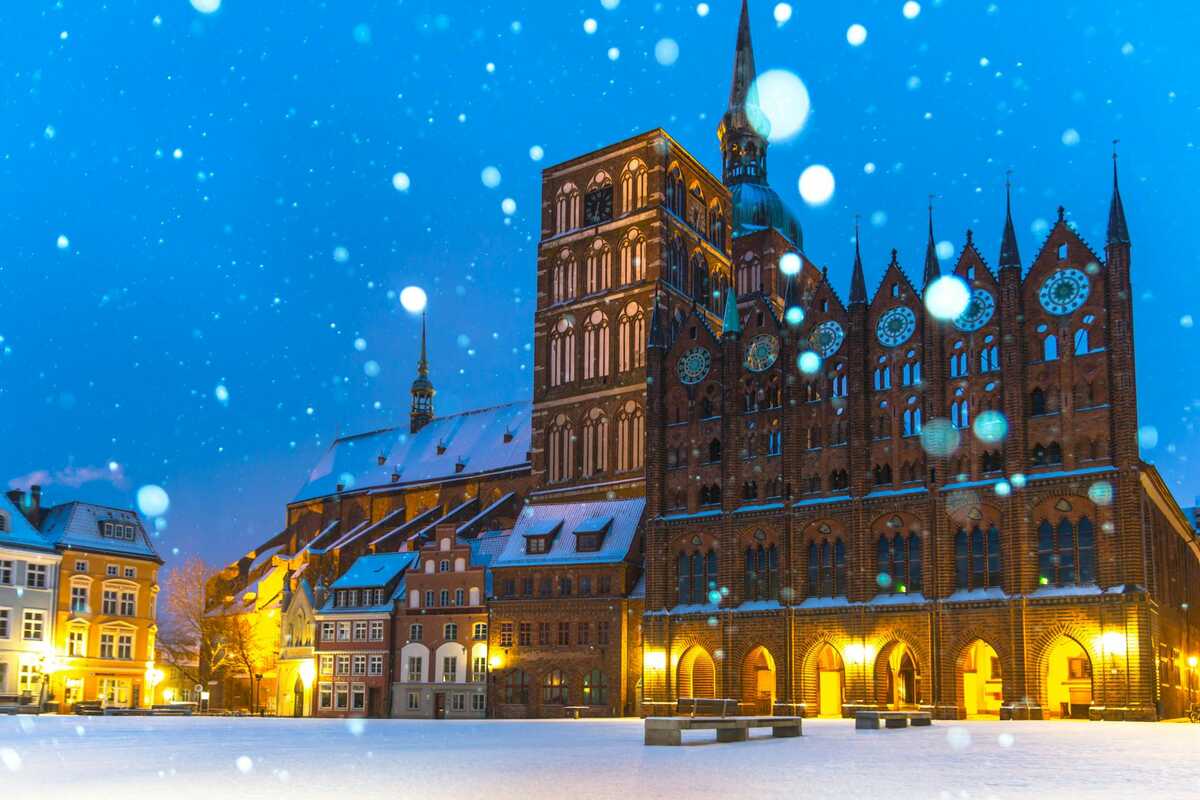
Three colossal parish churches – St. Nicholas‘, St. Mary’s, and St. James‘ – dramatically dominate the skyline, each a towering symbol of the town’s medieval prosperity and spiritual importance.
St. Nicholas’ Church, the oldest and most centrally located, boasts a striking interior with an astronomical clock and stunning vaulting, while St. Mary’s Church once held the title of the tallest building in the world in the 17th century; a climb up its tower rewards you with a panoramic perspective that is second to none.
Equally important is the extraordinary Town Hall on the Old Market Square. Its elaborately decorated facade, dating back to the 13th century, is one of the most famous examples of secular Brick Gothic architecture in the entire Baltic region, featuring an impressive, open arcade that once bustled as a marketplace.
Beyond these major landmarks, the charm is in the details: the beautifully restored Giebelhäuser (gabled houses) of the wealthy merchants, and the surviving portions of the medieval city wall with its gates and towers.
This concentration of exceptional medieval craftsmanship provides a captivating visual record of a golden age. For anyone with a passion for history and northern European design, a visit Stralsund offers a profound immersion into a bygone era, making the city a high priority for cultural travel.
Visit Stralsund: What are the must-see maritime attractions near the harbour?
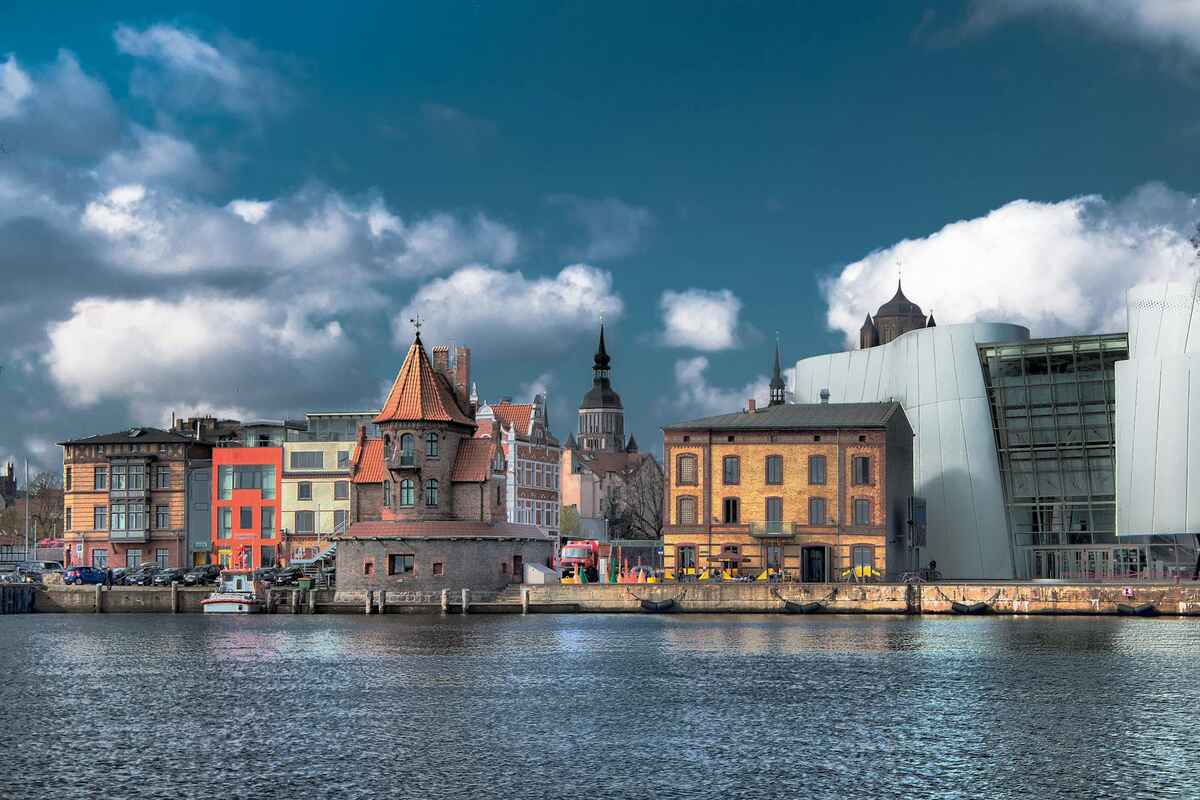
The city’s soul is inseparable from the sea, and the harbour area is the buzzing, vibrant heart of its maritime culture. One absolutely unmissable sight is the Ozeaneum, a stunningly modern public aquarium that stands in bold, brilliant contrast to the ancient brickwork of the Old Town.
Voted European Museum of the Year, it offers an immersive journey through the marine worlds of the northern seas, featuring massive tanks dedicated to the Baltic Sea, the North Sea, and the Atlantic, complete with a spectacular exhibition on whales.
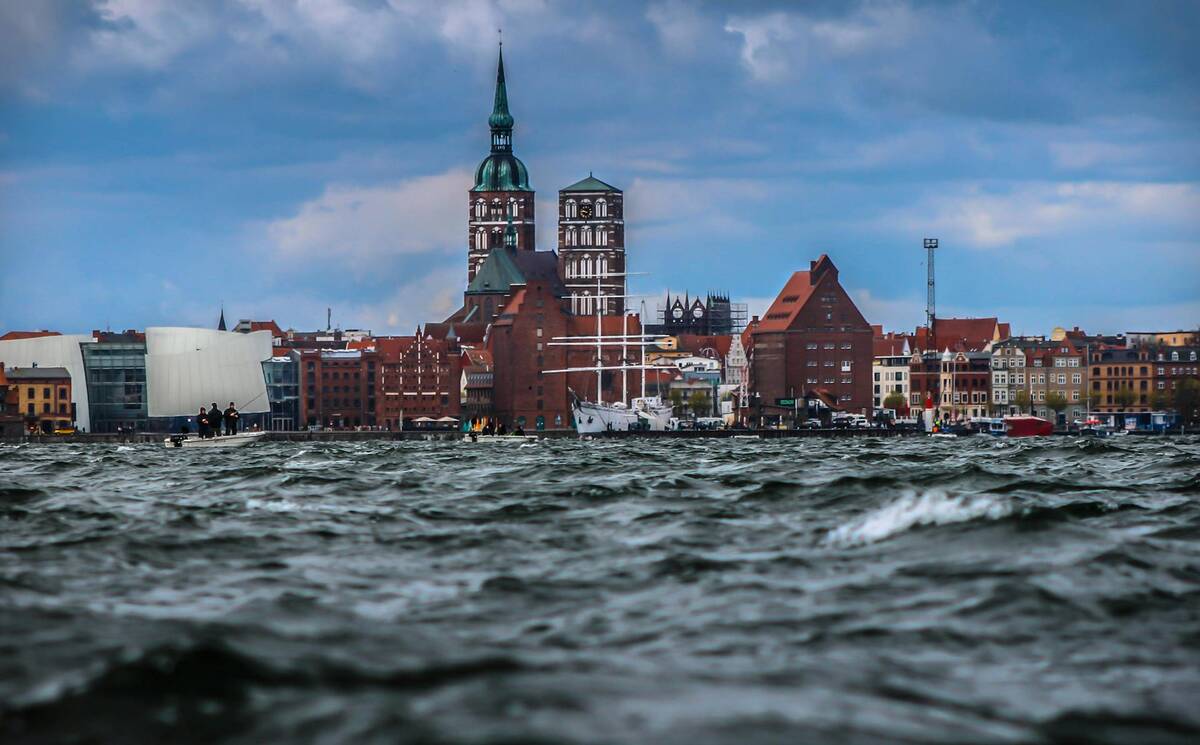
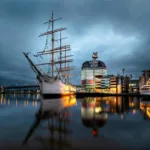
Just steps away, you can’t miss the towering masts of the Gorch Fock I, a majestic three-masted tall ship launched in 1933.
This impressive vessel, now a floating museum, offers a fascinating glimpse into naval history and the demanding life of sailing ship crews, allowing you to walk its decks and imagine the voyages of the past.
The harbour promenade itself is an attraction, perfect for a leisurely stroll, people-watching, or grabbing a regional specialty like a Fischbrötchen (fish sandwich) from one of the iconic stalls.
This area is also the departure point for scenic harbour cruises, which offer the unique opportunity to see the famous Stralsund skyline—a striking blend of old and new—from the water.
To truly connect with the city’s nautical heritage and enjoy the fresh Baltic air, you need to visit Stralsund and dedicate significant time to exploring its bustling waterfront.
Visit Stralsund: Where can I delve into the city’s rich history and culture?
Beyond the grand churches and the dynamic harbour, the city offers several excellent museums that provide a deeper dive into its rich and varied history and cultural significance.
The Stralsund Museum of Cultural History is a fantastic place to start, housed in a historic former Dominican monastery, which is an architectural gem in itself.
The museum’s extensive collections walk you through the town’s life from its founding to its time as a major Swedish administrative centre, showcasing everything from archaeological finds to fine art and folk culture. It’s the perfect place to understand the city’s geopolitical importance across the centuries.
A very different but equally essential stop is the Deutsches Meeresmuseum (German Oceanographic Museum), located in the Old Town in a former monastery.
While the Ozeaneum focuses on modern marine biology, this older sister museum covers the history of oceanography, fishing, and the unique ecosystems of the Baltic Sea, making it a crucial part of the city’s educational landscape.
For a quick but powerful overview, make sure to visit the UNESCO World Heritage Exhibition Centre, which clearly explains why the Old Town is considered globally significant. Exploring these historical venues, housed within buildings that are centuries old, creates a powerful link between the past and the present.
You will quickly find that to properly appreciate the layers of history that make the region unique, you must visit Stralsund’s specialized museums as part of your comprehensive travel plan.
Visit Stralsund: What is the best way to explore the Old Town’s hidden gems?
The true magic of the Altstadt (Old Town) often reveals itself off the main squares, down its narrow, winding lanes. The best way to uncover these hidden gems is simply to put away the map and allow yourself to wander.
The pedestrian-friendly layout encourages aimless exploration, which is how you stumble upon charming courtyards, secluded squares, and architectural details you might otherwise miss.
Look for the well-preserved parts of the old city fortifications, such as the Kniepertor and Kütertor, two of the medieval city gates that still stand today, offering a tangible connection to the town’s defensive past.
The area around the Monastery of the Holy Spirit (Heilgeistkloster), one of northern Germany’s oldest surviving monasteries, is particularly tranquil and historically evocative.
As you roam, pay close attention to the smaller, baroque gabled houses that tell the story of the Swedish era, following the Hanseatic boom. These houses, often painted in pastel colours, provide a beautiful contrast to the deep red brick of the grander Gothic structures.
Keep your eyes peeled for decorative stone carvings and historic plaques that offer snippets of the lives of the past inhabitants. Joining a guided walking tour, perhaps even a fascinating Night Watchman’s tour, can illuminate stories and details that an independent explorer might overlook.
The goal of your travel here should be to soak up the atmosphere, and to truly visit Stralsund is to embrace the art of getting delightfully lost in its enchanting, historic streetscape.
Visit Stralsund: How can I use the city as a gateway to the island of Rügen?
One of the city’s most strategic and attractive features is its role as the primary gateway to Rügen, Germany’s largest and arguably most beautiful island.
This easy access makes the town an ideal home base for day trips and explorations of the island’s famous chalk cliffs, seaside resorts, and pristine beaches.
The connection is a visual spectacle in itself: the towering, impressive Rügen Bridge (Rügenbrücke), which gracefully spans the Strlasund strait, is an impressive piece of modern engineering.
While the bridge is for vehicles, the old Rügendamm (causeway and bridge) offers excellent pedestrian and cycling access to the small island of Dänholm and then on toward Rügen proper.
Regular train services and buses also make the hop across the water effortless, connecting you quickly to popular spots like the elegant resort town of Binz or the natural wonders of Jasmund National Park.
Alternatively, you can opt for a scenic ferry ride from the harbour, which is a lovely way to approach the island and appreciate the coastal views.
The convenience of this connection means you can spend your morning exploring the UNESCO-listed architecture, take a short trip to Rügen for a rejuvenating afternoon hike by the sea, and be back in time for dinner at one of the city’s harbourside restaurants.
For the ultimate northern German experience blending history, architecture, and natural beauty, you must visit Stralsund and include the exploration of Rügen in your travel plans.
Visit Stralsund: What local dishes and culinary traditions should I explore?
Given its prime location on the Baltic Sea, the city’s cuisine is naturally dominated by fresh, locally sourced fish, and this should be the starting point for any culinary exploration.
The signature, must-try local delicacy is the Fischbrötchen—a simple, yet utterly delicious fish sandwich served in a soft roll.
You can find these at small, specialized stalls, particularly down by the harbour, offering variations with everything from herring (especially Matjes or pickled herring) to smoked sprat or salmon.
It’s the ultimate grab-and-go Baltic snack. Beyond the casual fare, the region is known for its hearty, traditional German cooking. Look out for dishes featuring regional produce like sea buckthorn (Sanddorn), a tart berry often used in juices, jams, and liqueurs.
Another local star is the Störtebeker Braumanufaktur, a renowned regional brewery. Taking a tour or simply enjoying their finely crafted beers at a local pub is a key part of the cultural experience, tying into the region’s long history of trade and craftsmanship.
The best restaurants often focus on seasonal ingredients, offering modern interpretations of classic Pomeranian and Mecklenburg fare.
When you visit Stralsund, the culinary journey is a vital part of connecting with the local way of life. Don’t be shy about trying the local catches and regional beverages; it’s an essential element of your travel through this northern German region.
Visit Stralsund: Where can I find unique souvenirs and authentic local crafts?
The quest for the perfect souvenir should begin in the Old Town, which is rich with small, independent shops offering authentic local goods that reflect the region’s history and character. Naturally, a major theme is the city’s maritime heritage.
Look for items made from amber, often called the “Gold of the North,” which washes up on the nearby Baltic shores and is crafted into beautiful jewellery.
Another specialty to seek out is anything related to the Brick Gothic style; this can range from prints and paintings of the iconic gabled houses and churches to small-scale ceramic or wooden models of the famous buildings.
For a truly unique and regional gift, consider a souvenir from the Stralsunder Marzipan factory, or perhaps some of the local spirits or liqueurs, often flavoured with the aforementioned sea buckthorn.
The Alter Markt (Old Market) and the surrounding pedestrian streets are the main hubs for shopping, where you’ll find a mix of well-established stores and smaller boutiques.
Keeping an eye out for seasonal or weekly markets is also a great idea, as they often feature local craftspeople and food producers. By purchasing items with a genuine connection to the town and its surroundings, you’re not only taking home a memory but also supporting local artisans.
To ensure your travel memories are tangible and unique, you must visit Stralsund’s charming shops and explore its local crafts scene.
Visit Stralsund: What cultural events and festivals enrich the visitor experience?
Throughout the year, the city hosts a lively calendar of events that infuse its historic setting with contemporary energy and local tradition. If your travel dates allow, timing your trip to coincide with one of these festivals can significantly enrich your experience.
The biggest event, the Wallensteintage (Wallenstein Days), is a spectacular historical festival held annually in July.
It commemorates the city’s successful resistance against Albrecht von Wallenstein’s siege in 1628, transforming the Old Town into a vibrant, living history stage complete with historical parades, encampments, markets, and performances. It’s a massive, multi-day event that truly brings the city’s past to life.
In the summer months, the harbour area often hosts open-air concerts and various maritime-themed festivals, celebrating its connection to the sea.
The Christmas season is equally magical, with a traditional German Christmas Market taking over the Alter Markt, offering regional handicrafts, Glühwein, and festive cheer against the stunning backdrop of the Town Hall and St. Nicholas’ Church.
Additionally, various smaller art exhibitions, theatre performances, and musical events take place in the city’s historic venues throughout the year.
Checking the local event schedule before you visit Stralsund is highly recommended, as these gatherings are a wonderful way to connect with the local community and see the historic squares and streets utilized for lively celebrations.
Are there great activities for families traveling with children?
Absolutely! This Hanseatic city is surprisingly well-equipped for family travel, offering a blend of educational, interactive, and outdoor activities that appeal to all ages.
The number one attraction for families is, without a doubt, the Ozeaneum. Its huge aquariums, interactive exhibits, and the stunning life-sized models of whales in the main hall are guaranteed to capture the imagination of children and adults alike.
It’s an engaging, hands-on experience that makes learning about marine biology fun. Another excellent choice is the Gorch Fock I sailing ship; kids love the adventure of climbing aboard a real ship, exploring the decks, and learning about life at sea.
For a break from history and museums, the Stralsund Zoo offers a peaceful retreat with a focus on regional and exotic animals.
When the weather is nice, the various green spaces and parks around the Old Town, or a short travel across the Rügen bridge to the beaches, offer plenty of room for children to run and play.
The city’s compact size also means less walking between attractions, making it easier for younger legs. Even a simple ferry ride across the Stralsund to the small island of Dänholm is a fun, inexpensive outing that provides great views and a sense of adventure.
What are the best options for outdoor activities and cycling?
The region surrounding the city is a paradise for outdoor enthusiasts, particularly cyclists and hikers, thanks to its proximity to the Baltic coast and the scenic islands of Rügen and Hiddensee.
The area is integrated into several excellent long-distance cycling routes, including the Baltic Coast Cycle Route, which provides stunning coastal views and easy connections to nearby towns and natural areas.
Within the city itself, cycling is very popular, and rentals are easily available, allowing you to quickly explore the remnants of the old city walls and the waterfront promenade. For a more serious outdoor adventure, a day trip to Rügen is a must.
The island’s well-developed network of cycling paths takes you through idyllic villages, past ancient beech forests, and right up to the famous white chalk cliffs of Jasmund National Park.
Alternatively, a ferry to the car-free island of Hiddensee offers a uniquely tranquil experience, perfect for gentle cycling and exploring pristine nature reserves. Beyond cycling, you can indulge in various water sports like kayaking, sailing, or paddleboarding right on the Stralsund strait.
The combination of historical sightseeing and easy access to exceptional natural landscapes makes the town a perfect base for an active travel experience. If you enjoy blending cultural immersion with physical activity and natural beauty, you need to visit Stralsund and explore its fantastic outdoor options.
What is the nightlife and evening atmosphere like in the city?
While the town is known for its quiet, dignified historical atmosphere, the evenings reveal a more relaxed and charming side to the Hanseatic city.
The nightlife is generally more subdued than in Germany’s larger metropolitan areas, focusing more on cozy pub culture, excellent dining, and cultural performances rather than late-night clubs. The most vibrant area in the evenings is the harbourfront and the Alter Markt.
Here, you’ll find a great selection of restaurants and bars housed in historic buildings, many of which offer outdoor seating in the warmer months, providing lovely views of the illuminated town hall or the masts in the harbour.
You can enjoy a sophisticated dinner, followed by a local craft beer from the Störtebeker brewery at a traditional Kneipe (pub). For a truly unique evening, check for performances at the Theater Vorpommern, which features drama, opera, and concerts in a beautiful venue.
A popular evening activity for visitors is the Night Watchman’s Tour, a guided walk that brings the town’s medieval stories to life under the glow of streetlamps, offering a spooky and educational way to see the architecture after dark.
The safe, intimate atmosphere makes for a very comfortable and enjoyable evening experience. To fully appreciate the tranquil, historic glow that settles over the city after sunset, you must visit Stralsund and enjoy its charming evening ambiance as part of your comprehensive travel experience.
Conclusion
As our ultimate guide draws to a close, we hope you’ve been inspired by the timeless beauty and profound history waiting to be discovered here.
From the commanding spires of its UNESCO-listed Brick Gothic churches to the state-of-the-art marine wonders of the Ozeaneum, Stralsund stands as a magnificent testament to centuries of maritime history and architectural genius.
It seamlessly blends its proud past as a Hanseatic and Swedish powerhouse with a vibrant, modern coastal atmosphere.
The city offers a truly rich and varied travel experience: you can spend the morning walking the defensive walls of a medieval city, enjoy an afternoon tasting a fresh Fischbrötchen by the harbour, and still have time for an evening stroll under the romantic illumination of the historic gables.
It serves not only as a destination in its own right but also as the perfect, convenient base for exploring the breathtaking nature of Rügen and the surrounding Baltic coast. More than just a collection of sights, it offers a distinct sense of place—a calm yet captivating atmosphere that lingers long after you’ve left.
Don’t just dream about the Baltic coast; make your plans today. The magnificent Brick Gothic gem is waiting to share its stories with you. It’s time to pack your bags and visit Stralsund!
FAQ
The best time to visit Stralsund is generally from late June to early September. This period offers the warmest weather (average highs around 70-71°F or 21-22°C), perfect for exploring the harbour, taking boat trips, and enjoying outdoor festivals. However, spring (May) and early autumn (September/October) offer pleasant temperatures and fewer crowds
Stralsund’s Old Town is famous because it is a UNESCO World Heritage Site. It is celebrated for its exceptional preservation of Brick Gothic architecture, providing an authentic look into its prosperity and importance as a leading member of the Hanseatic League in the 13th and 14th centuries.
While you can see the main sights in one busy day, we recommend spending 2 to 3 days to fully appreciate the historic centre, explore the museums (like the Ozeaneum), and take a relaxing stroll along the harbour. This also allows time for an easy day trip to the island of Rügen.
The absolute must-sees are the Ozeaneum (public aquarium), the majestic Brick Gothic churches (especially St. Mary’s and St. Nicholas’), the historic Town Hall on the Alter Markt, and the tall ship museum Gorch Fock I at the harbour.
Yes. Stralsund is well-connected by train (Deutsche Bahn) from major German cities like Berlin and Hamburg. Once you arrive, the Old Town is very compact and walkable, so you won’t need public transport to explore the historic centre. Local buses are available for destinations further afield.
Absolutely. Stralsund is the gateway to Rügen, Germany’s largest island. The impressive Rügen Bridge (Rügenbrücke) and the older causeway provide easy access by car, train, and bus, making the city the perfect home base for a combined trip.
You must try a Fischbrötchen (fresh fish sandwich) from a stall by the harbour. Also, look for regional specialties featuring sea buckthorn (Sanddorn), a tart berry used in juices and liqueurs, and sample the regional beers from the Störtebeker brewery.
Public city tours are typically conducted in German, but the Stralsund Tourist Office can arrange private guided tours in English for groups. Brochures and audio guides for the major museums and sights are generally available in English
The most significant event is the Wallensteintage (Wallenstein Days) in July, a spectacular historical festival commemorating the city’s successful defence in 1628. The harbour also hosts vibrant maritime festivals and the city features a charming Christmas Market in December.
The Old Town is largely pedestrianized. It is best to use the designated parking garages or public parking lots located just outside the main UNESCO zone, often clearly signed as “Altstadt” parking. This allows for easy access to the sights without driving through the historic streets.

Author: Horeca Health
Horeca Health








Leave a Reply