Introduction: The Eternal Appeal of a Visit to Naples
A visit Naples experience ignites the senses from the very first moment you step into its sun-baked piazzas. This is a city that refuses to be tamed by time, where ancient Greek walls stand beside boisterous vicoli and the scent of wood-fired pizza drifts through chaotic, music-filled streets.
To visit Naples is to witness a living, breathing anthology of Mediterranean civilization, layered with the energy of its passionate inhabitants. Unlike the manicured perfection of other Italian destinations, Naples offers an unfiltered intensity that rewards the curious traveler with moments of staggering authenticity.
The historical weight of the city manifests in every corner: Spanish palazzos, Roman theaters, and Baroque chapels coexist in a thrilling urban tapestry.
A thoughtful visit Naples itinerary must include time to simply wander, absorbing the theatrical rhythm of daily life. Here, laundry flutters above marble shrines, and the roar of a motorino becomes a familiar soundtrack.
The city’s UNESCO-listed historic center is one of the largest in Europe, a testament to its enduring importance as a cultural crossroads.
Beyond the urban intensity, the Gulf of Naples unfurls in breathtaking form, with Vesuvius looming as a silent sentinel over turquoise waters. The proximity of coastal escapes and archaeological marvels adds another layer to the appeal.
Those who visit Naples discover a strategic hub that connects some of Italy’s most treasured sites, making it both a destination and a gateway. The region’s natural beauty frames the gritty elegance of the city, offering a complete sensory experience that few European capitals can rival.
Preparing to visit Naples means embracing a destination that doesn’t politely queue for your attention—it demands it. The city challenges comfortable preconceptions and rewards deep engagement, from deciphering Neapolitan dialect to mastering the art of crossing streets.
This guide walks you through the essential history, culture, and coastal charm that make Naples not just a stopover, but the soul of southern Italy. The journey ahead reveals why each traveler should plan an extended visit Naples adventure, tapping into the authentic pulse of the Mezzogiorno.
Delving Into Naples’ Rich Historical Tapestry
You cannot truly visit Naples without understanding that its streets are built upon millennia of human ambition and resilience. Founded by Greek settlers in the 8th century BCE as Neápolis, the New City, Naples grew into a prized gem of Magna Graecia.
The grid of ancient streets still whispers beneath the modern chaos, with remnants of Greek walls and the legacy of philosophical schools that rivaled Athens. This profound historical depth distinguishes a visit Naples journey from a simple sightseeing tour, transforming every walk into a timeline of Western civilization.
The Roman period elevated the city’s status as a coastal haven for emperors and poets. Villas dotted the headland of Posillipo, and the thermal springs of the Phlegrean Fields attracted those seeking leisure and healing.
During the Empire, the nearby towns of Pompeii and Herculaneum thrived—until Vesuvius froze them in ash. When you visit Naples today, museums overflow with artifacts that tell the story of that sudden destruction and rebirth, providing context for the resilience embedded in the local psyche.
Centuries of foreign rule shaped the city’s architectural and cultural DNA. Norman kings constructed formidable castles, the Hohenstaufen dynasty left its stamp on civic structures, and the French Angevin era brought Gothic splendor to religious buildings.
However, it was the Aragonese and later the Spanish viceroys who turned Naples into a Baroque metropolis of immense proportions. The contrasts you’ll notice as you visit Naples — ornate churches squeezed between tenement blocks, aristocratic palaces facing bustling bassi — are living remnants of this layered sovereignty.
The Kingdom of the Two Sicilies cemented Naples’ role as a European capital before unification with Italy in 1861. Although the city endured struggles in the modern era, its cultural heritage remained fiercely protected.
To visit Naples with historical curiosity means peeling back each layer: Greek crypts, Roman markets, medieval cathedrals, and Renaissance piazzas all vie for your gaze. This continuous habitation and reinvention make the city one of the most historically dense urban environments on the planet.
Why the Historic Center Is a UNESCO Treasure
A visit Naples itinerary naturally orbits the Centro Storico, a sprawling UNESCO World Heritage site that encapsulates twenty-five centuries of history. The designation, granted in 1995, acknowledges the exceptional cultural continuity found in the urban fabric of the old city.
Walking through the grid of decumani, particularly the lively Spaccanapoli—the narrow street that bisects the center—is to trace the original Greek and Roman layout.
Every visit Naples experience should dedicate substantial time to this open-air museum where history is not barricaded behind velvet ropes but woven into the marketplace and the family home.
Within this dense network, religious architecture achieves staggering heights. The Gothic Basilica of San Lorenzo Maggiore sits atop a Roman market complex, offering a literal journey through time from the scavi beneath to the medieval apse above.
A few steps away, the Cappella Sansevero houses Giuseppe Sanmartino’s Veiled Christ, a marble sculpture so exquisite that it seems to defy the laws of matter. These concentrated wonders reinforce why a visit Naples should never be rushed; the sheer density of masterpieces demands slow, deliberate exploration.
The area’s intangible heritage is equally compelling. The artisan workshops along Via San Gregorio Armeno produce handcrafted presepi (nativity scenes) all year, preserving a tradition that merges the sacred with the satirical.
To visit Naples during the Christmas season is to witness this street transform into a theatrical spectacle of figurine art. Meanwhile, the soundscape of the historic center blends church bells, Arab-Norman echoes, and the melodic shouts of fruit vendors, creating a multisensory archive of Neapolitan life.
Preservation here doesn’t mean sanitization. The historic center remains a gritty, lived-in district where laundry lines crisscross above limestone portals and scooters weave past ancient columns. UNESCO’s recognition protects not just the monuments but the culture of the vicolo.
As you visit Naples and wander into cloistered courtyards like the Chiostro di Santa Chiara, you’ll understand that the city’s soul lives not in a museum but in the continuity of everyday existence within these medieval walls.

Discovering Naples’ Royal and Religious Landmarks
No visit Naples exploration is complete without confronting the city’s monumental expressions of royal power. The Piazza del Plebiscito anchors the monumental district, framed by the sweeping colonnade of the Basilica of San Francesco di Paola and the imposing bulk of the Palazzo Reale.
Inside the Royal Palace, visitors encounter sumptuous apartments, a lavish court theater, and the National Library that once served the Bourbon dynasty. To visit Naples and stand in this majestic square is to feel the weight of regal ambition that once rivaled Versailles.
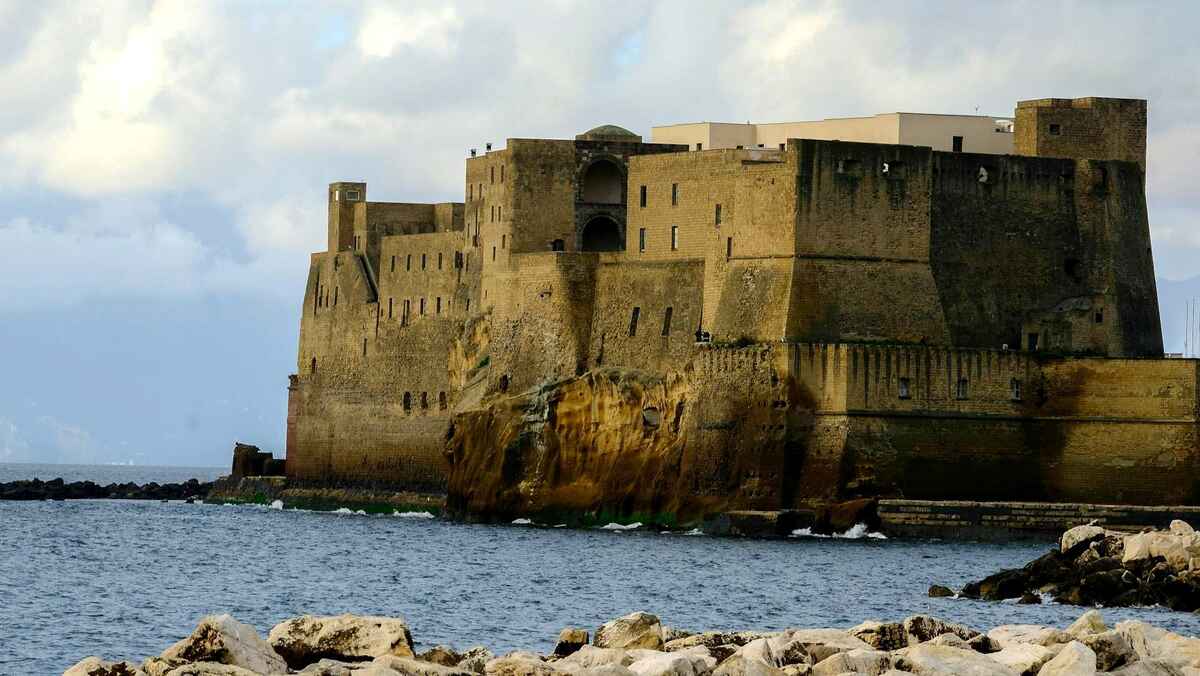
Castles define the city’s waterfront and peaks with militant grace. Castel dell’Ovo, perched on the islet of Megaride, represents the legendary birthplace of the city, where the siren Parthenope washed ashore. Its ramparts deliver sweeping views of the bay and the marina.
Nearby, the Maschio Angioino, or Castel Nuovo, commands the port with its triumphal arch from the Aragonese era. During your visit Naples stay, stepping into its Barons’ Hall and the Palatine Chapel reveals frescoes and architectural spans that connect medieval Europe with Renaissance Italy.
Religious landmarks radiate from the Duomo, the Cathedral of the Assumption of Mary, a stratified structure housing the miraculous relic of San Gennaro. Each year, the ceremony of the liquefaction of the saint’s blood captivates the faithful, underscoring the city’s deep spiritual connection.
Visitors can tour the Baptistery of San Giovanni in Fonte, the oldest in the Western world, with luminous early Christian mosaics. When you visit Naples, timing your cathedral visit to avoid mass hours allows quiet contemplation of this complex of chapels and crypts spanning centuries.
The Certosa e Museo di San Martino crowns the Vomero hill like a jewel box of Baroque excess. Its church, sacristy, and cloister overflow with polychrome marble, Cosmatesque inlay, and works by masters such as Ribera and Battistello Caracciolo.
The adjoining museum contextualizes Neapolitan artistic traditions and popular theater. A visit Naples itinerary should deliberately include this perch not just for the spiritual art but for the panoramic terrace that grants a gods’‑eye view of the entire gulf, making the ascent a multisensory pilgrimage in marble and light.
The City’s Underground Secrets: Naples Sotterranea
To visit Naples only at street level is to miss the equal measure of civilization buried beneath your feet. The subsoil hides a parallel universe of Greek caveas, Roman aqueducts, and WWII air‑raid shelters.
The most extensive network, Napoli Sotterranea, reveals a labyrinth carved from yellow tuff stone that served as the city’s water supply for centuries.
Walking through these narrow cunicoli with an authorized guide, you’ll understand how the ancient Greeks quarried the stone to build the upper city before later inhabitants transformed the voids into a vital infrastructure.
The aqueduct system expanded under Roman engineers, eventually stretching over 280 miles to bring spring water from the Apennines to wealthy villas and public fountains. During a visit Naples underground tour, candelit passages open into vast cisterns whose acoustics produce eerie echoes.
The cool, damp air contrasts sharply with the Mediterranean heat above, offering a literal immersion in the geological memory of the city. Guides share insights into the pozzari, skilled workers who maintained the channels and became folkloric figures.
World War II repurposed these ancient caverns into shelters that protected thousands of civilians during heavy bombing campaigns. Discarded toys, rusted gas masks, and graffiti still lie in the cavities, transforming the underground into a poignant museum of tragedy and survival.
Those who visit Naples with a sensitivity to recent history will find the catacomb tours profoundly moving, as the dark corners reflect the resilience of a population that has repeatedly rebuilt from rubble.
Accessibility varies: some routes require climbing steep staircases and navigating narrow passages, so comfortable shoes are non‑negotiable. The Catacombs of San Gennaro and San Gaudioso provide an alternative subterranean experience focused on early Christian burial customs and aristocratic tombs.
No matter which pathway you choose, an underground exploration adds essential depth to how you visit Naples. It reminds you that the city’s vibrancy is a product of its ability to live above, and with, the accumulated weight of history carved in volcanic stone.
A Culinary Tour Through Naples: Pizza, Pasta, and Pastries
If you visit Naples for any single reason, the cuisine alone could justify the journey. The city asserts its identity through food with an insistence that borders on religion.
The incomparable pizza margherita, with its supple, charred cornicione and velvet San Marzano tomatoes, is codified by the Associazione Verace Pizza Napoletana. To bite into a pie at a historic pizzeria like L’Antica Pizzeria da Michele or Sorbillo is to taste a centuries‑old craft perfected in the crowded ovens of the Spanish Quarter.
Beyond the iconic pizza, a visit Naples gastronomic tour must explore ragù napoletano, a slow‑simmered meat sauce that embodies Sunday family traditions across the city. Trattorias in the Materdei district serve it draped over thick ziti pasta, accompanied by a pour of gritty Aglianico wine.
Seafood dominates the coastal neighborhoods; impepata di cozze, a peppered mussel broth, captures the brine of the Gulf, while spaghetti alle vongole delivers simplicity with clams from the Tyrrhenian Sea fresh off the docks at Porta Nolana.
Street food offers a quicker but equally soulful way to visit Naples with your appetite. The fried wonders of a friggitoria include crocchè (potato croquettes), arancini, and pizza fritta—a pocket of dough stuffed with ricotta and cicoli before immersion in bubbling oil.
Walking through the market streets, you’ll encounter cuoppo, a paper cone brimming with tiny fried fish and vegetables, sold by vendors whose family recipes have remained unchanged for generations. The ritual of eating while standing at a counter connects you directly to the working‑class soul of the city.
Pastry completes the sensory map. The flaky, orange‑scented sfogliatella—whether riccia or frolla—pairs perfectly with an espresso at Gran Caffè Gambrinus, a Belle Époque institution. Meanwhile, the rum‑soaked babà, mushroom‑shaped and syrup‑drenched, epitomizes the Neapolitan sweet tooth.
To visit Naples and skip the pasticceria culture is to ignore the daily rituals that punctuate the city’s rhythm. Each bite you take layers flavor onto the historical and cultural narrative already swirling around you.
Coastal Charms: Visiting the Gulf of Naples and Beyond
The visual drama of the Gulf frames every visit Naples experience, transforming the city into a balcony overlooking one of the most beautiful bays in the world. The sweeping curve from Posillipo to the Sorrento Peninsula is a continuous postcard of pastel villages, limestone cliffs, and deep sapphire water.
The Lungomare, Naples’ waterfront promenade, offers an unbroken pedestrian path where locals gather for passeggiata as Vesuvius catches the sunset. To walk this promenade is to understand why poets from Virgil to Leopardi fell under the gulf’s spell.
Marechiaro, a tiny fishing hamlet clinging to the Posillipo hill, provides an intimate coastal escape without leaving the city limits. Its iconic Fenestella (little window) frames the view of Vesuvius from a weathered, bougainvillea‑draped arch.
Those planning a leisurely visit Naples itinerary can rent a small boat or join a kayaking tour to explore grottoes and ancient Roman ruins that slip beneath the waves. The water here, part of the protected Parco Sommerso di Gaiola, hosts submarine archaeological remains that meld myth with aquatic biodiversity.
Heading slightly east, the district of Santa Lucia and the Borgo Marinari wrap around the base of Castel dell’Ovo, offering yacht‑filled marinas and seafood terraces. Dining on spaghetti ai frutti di mare while the gentle wash of the Med laps below is a quintessential moment you deserve when you visit Naples.
For swimming, the public beach at Bagno Elena and the more upscale lidos along Via Posillipo provide a chance to plunge into the Tyrrhenian. Although urban beaches cannot rival the Amalfi strand, the sight of Neapolitans embracing the sea is a culture in itself.
For the ultimate coastal perspective, the ferry system becomes an extension of your visit Naples transportation plan. A quick boat ride lands you on the islands of Procida, with its sherbet‑colored harbors, or Ischia, renowned for thermal spas and lush gardens.
These island gems float in the gulf like stepping stones to a slower rhythm. Returning to Naples by sea at dusk, with the city’s lights flickering on against the dark silhouette of the volcano, delivers a cinematic closure to any coastal day exploring the bay.
Day Trips from Naples: Pompeii, Vesuvius, and the Amalfi Coast
Any well‑structured visit Naples holiday leverages the city’s position as a strategic base for world‑class excursions. The Circumvesuviana train line connects central Naples to the archaeological sites of Pompeii and Herculaneum in under forty minutes, making morning departures effortless.
Standing in the Forum of Pompeii, with Vesuvius looming ominously in the background, creates a visceral connection to the catastrophe of 79 CE. As you visit Naples and plan side trips, allocating at least half a day for these ruins allows you to absorb the plaster casts, frescoed villas, and ancient fast‑food counters that freeze Roman daily life.
Climbing Mount Vesuvius itself offers a different adrenaline. Shuttle buses from Pompeii or Ercolano take visitors to a trailhead, from which a steep volcanic gravel path ascends to the crater’s rim.
The panoramic reward spans the entire Bay of Naples, a surreal backdrop for peering into the steaming fumaroles of the sleeping giant.
A visit Naples trip combined with a Vesuvius hike requires sturdy footwear and a sense of adventure, as the sulfuric scent and lunar terrain remind you that this is still an active volcano. National park rangers provide periodic interpretive talks that enrich the geological context.
The Amalfi Coast road, though slightly farther, remains the most glamorous day trip accessible to those who visit Naples. SITA buses or private drivers weave along the cliffhuging corniche to Positano, Amalfi, and Ravello, each a terrace of lemon groves and Moorish domes.
Early starts are essential to beat the crowds and secure a window seat on the coastal bus, where the drop to the sea below is as thrilling as the destination. Stopping in Amalfi to taste dolce di limone at a historic pastry shop turns a scenic ride into a culinary chapter of your Naples‑based journey.
For a more serene alternative, the Royal Palace of Caserta, a UNESCO site often dubbed the Versailles of Italy, lies just a short train ride north. Its 1,200‑room palace and vast English gardens offer a Baroque counterpoint to the ancient ruins.
The choice of day trip reveals the regional richness that makes a visit Naples strategy so smart: within a two‑hour radius, you access millennia of history, dramatic nature, and coastal elegance that few other European city breaks can match.
Navigating Naples: Practical Tips for Getting Around
To visit Naples efficiently, you must embrace the city’s nervy rhythm while understanding its public transport mosaic. The UnicoNapoli integrated ticket system covers buses, trams, funicular railways, and metro lines, offering affordable day passes that unlock the metropolitan area.
The metro not only moves you quickly but doubles as an underground art gallery; Toledo station, with its blue mosaics and light‑scattering ceiling, has been voted among the most beautiful in the world. Using the metro to navigate during a visit Naples stay saves time and immerses you in civic design that blends functionality with beauty.
Funiculars are essential for conquering the city’s vertical geography. The Centrale, Chiaia, and Montesanto lines whisk you from the historic center up to the Vomero district in minutes, eliminating steep, sweat‑inducing climbs.
When you visit Naples, buying tickets in advance at tabaccherie (tobacco shops) avoids delays at vending machines. Remember to validate your ticket on each vehicle; roaming controllers are common, and the fines for a confused tourist can ruin a perfect Neapolitan day.
Walking is ultimately the most rewarding way to visit Naples, but traffic is anarchic. Pedestrian crossings are more decorative than functional, so adopt the local technique: make eye contact, stride decisively, and let the swarm of scooters flow around you.
Google Maps is reliable for navigating the labyrinth, yet alleys can mislead GPS signals. Carrying a physical map or downloading offline routes helps when deep in the Quartieri Spagnoli. Comfortable, non‑slip shoes are mandatory for cobblestones slick with sea mist and urban age.
Taxis are available at designated ranks and can be summoned with the Goxgo app. Fares within the city center are fixed for certain routes, but confirm the price beforehand to avoid misunderstanding.
Renting a car to visit Naples is not advised—parking is a blood sport and ZTL (limited traffic zones) rack up electronic fines rapidly. If you plan to explore the rural countryside, pick up a rental only on your departure day from a location on the edge of town.
Your visit Naples mobility strategy should prioritize public transport and foot power for the cleanest experience.

Where to Stay in Naples: Neighborhoods for Every Traveler
Choosing the right base dramatically shapes how you visit Naples. The Centro Storico places you within breathing distance of the Duomo, Via dei Tribunali, and the archaeological museum, surrounding you with the nocturnal energy of pubs and rustic trattorias.
Boutique hotels and B&Bs have reclaimed aristocratic palazzi, offering rooftop terraces where you can sip spritz above the clutter. This zone suits first‑time visitors who want to roll out of bed into the ancient streets and don’t mind the bubbly chaos that continues until the early hours.
The Chiaia district exudes a more refined personality. With its grid of high‑end boutiques, wine bars, and proximity to the sea, Chiaia appeals to travelers who visit Naples for shopping and waterfront living.
The elegant Villa Comunale park offers a green corridor between the Mergellina port and the smart Vomero hill. Accommodations here range from seaside grand hotels to sleek apartments with balcony views of Castel dell’Ovo. It is a cocoon of relative calm without sacrificing authenticity.
For a local‑village vibe within the metropolis, Vomero sits high above the bay. Connected by funiculars, this residential haven provides panoramic vistas and a slower pace. The area surrounding Piazza Vanvitelli hums with excellent pizza joints and gelaterie patronized almost exclusively by Neapolitans.
Those who visit Naples seeking a family‑friendly environment will appreciate Vomero’s wider sidewalks and less aggressive street culture. Renting an apartment here gives you a taste of daily life while keeping you an easy descent away from the historic hubbub.
| Neighborhood | Best For | Vibe | Average Price Range (€/night) |
|---|---|---|---|
| Centro Storico | First‑time visitors, history lovers | Noisy, ancient, vibrant | 80 – 180 |
| Chiaia | Shoppers, waterfront seekers | Elegant, upscale, walkable | 120 – 250 |
| Vomero | Families, panoramic lovers | Residential, breezy, local | 90 – 200 |
| Santa Lucia | Romantic escapes, sea views | Maritime, tranquil, iconic | 150 – 300 |
Santa Lucia wraps around the marina near the Borgo Marinari, delivering postcard views and romantic sunsets. Luxury hotels here cater to couples who visit Naples to celebrate special occasions. The neighborhood’s proximity to the hydrofoil port makes island‑hopping effortless.
Although dining prices rise near the waterfront, the ambience of seafood pasta on a candlelit terrace beside the castle justifies the splurge. Each area offers a distinct lens through which to experience the city—choose according to the memory you want to curate.
What to Know Before You Visit Naples: Safety, Etiquette, and Local Customs
Understanding local dynamics transforms a visit Naples trip from fraught to fluid. The city has an outsized reputation for petty crime, but exercising standard urban awareness keeps trouble at bay.
Keep bags zipped and worn crossbody, especially on crowded Circumvesuviana trains or in the Porta Nolana market crush. Using a money belt for passports and extra cash adds peace of mind. The watchword is attention, not paranoia—Neapolitans themselves appreciate vigilant behavior and will often warn visitors who appear careless.
Dress codes matter when you visit Naples churches; knees and shoulders should be covered out of respect for sacred spaces. In daily life, Neapolitans are distinguished by a sense of style that prizes polished presentation, so throwing on that travel‑wrinkled tee might mark you immediately.
Learning a few phrases in Italian and the melodic Neapolitan dialect—like “Grazie” or “Sto cercando…”—opens doors and earns smiles. Locals deeply appreciate when visitors attempt the language, however imperfectly.
Tipping etiquette follows Italian norms: no mandatory percentage, but rounding up the bill in restaurants and leaving a small gratuity for exceptional service is a kind gesture.
Café culture demands knowing the difference between standing at the bar (al banco) and sitting at a table (con servizio); the latter often includes a cover charge. As you visit Naples, avoid ordering a cappuccino after 11 a.m. unless you want to advertise your outsider status. These small cultural adjustments build reciprocal respect.
Engaging with street vendors and market stalls is part of the entertainment, but be prepared for spirited bargaining. The custom is to negotiate with a smile, never with aggression.
Moreover, when you visit Naples, understand that the concept of “personal space” is different; a warm hand on the shoulder during conversation signals friendship.
The city’s profound hospitality often emerges in moments of spontaneous generosity—a baker forcing a fresh sfogliatella into your hand, a stranger walking you to your destination. Embrace these unpredictable gifts; they are true Naples.
Understanding Naples’ Art and Culture Scene
Artistic expression saturates any visit Naples journey, from the sublime canvases of the Museo di Capodimonte to the street‑level graffiti of the Materdei district.
The Capodimonte palace houses one of Italy’s richest collections, including masterpieces by Caravaggio, Titian, and Raphael, arranged across regal apartments set in a vast royal park.
Standing before Caravaggio’s Flagellation of Christ, painted during his fugitive months in the city, provides a visceral encounter with the chiaroscuro that defined an era. To visit Naples with an art‑lover’s eye is to witness how the city’s volcanic light influenced centuries of visual narrative.
The Museo Archeologico Nazionale (MANN) safeguards the most extraordinary collection of classical antiquities in the world. Beyond the famous Farnese Hercules and bull, the museum holds the “secret cabinet” of erotic frescoes recovered from Pompeii, as well as mosaics so detailed you can count the tesserae in Alexander’s hair.
Any visit Naples cultural deep‑dive must schedule at least three hours here, as the galleries also display stunning Farnese gems and epigraphic treasures. Curators have recently modernized exhibitions, offering digital reconstructions that bring ancient villas back to life.
Contemporary art flourishes in unexpected corners. The Madre museum in the historic center hosts site‑specific installations by international artists like Anish Kapoor and local maestros, housed in a restored palazzo facing a tranquil courtyard.
Temporary exhibitions often engage directly with Naples’ social fabric, creating dialogue between the avant‑garde and the street. Meanwhile, metro stations serve as permanent art installations under the Stazioni dell’Arte initiative. When you visit Naples, riding the Linea 1 can feel like gallery hopping, with works by Jannis Kounellis and Joseph Kosuth integrated into the transit experience.
Music and theater are the city’s heartbeat. The Teatro di San Carlo, the oldest continuously active opera house in Europe, offers opulent red‑velvet evenings of bel canto. Booking a box seat for a Verdi opera during your visit Naples itinerary connects you to a tradition that premiered many of the great works of the Italian canon.
Off‑stage, the Neapolitan song—Canzone Napoletana—emerges from intimate clubs and spontaneous street gatherings, preserving ballads of love, betrayal, and the sea that travel directly into your soul.
Best Times to Visit Naples: Seasonal Highlights
Timing your visit Naples dates wisely can transform discomfort into delight. The sweet spot arrives in late spring (April to mid‑June) and early autumn (September to October), when the Tyrrhenian climate blesses the city with mild temperatures and manageable crowds.
During these months, you can comfortably explore Pompeii under a not‑yet‑punishing sun, and the sea is warm enough for a dip. Hotels offer mid‑season rates, and restaurant terraces buzz with a genuine local crowd before the summer crush descends.
Summer (July to August) bakes the city under an intense heat dome while tourists flood the historic alleys. While a summer visit Naples has its charms—open‑air cinema festivals, rooftop bar culture, and the Feast of San Gennaro—prepare for temperatures soaring past 35°C (95°F).
If you must travel in summer, adapt your rhythm: siesta indoors during peak afternoon hours and emerge in the evening when the city defrosts. Coastal neighborhoods become essential escapes for sea breezes.
Winter (November to February), especially December, reveals a more introspective Naples. Christmas markets, elaborate presepi displays, and the aroma of roasting chestnuts fill the cooler air. You can visit Naples museums without queues and snag reservations at top pizzerias on the same day.
Rainfall increases, and thunderstorms can lash the gulf dramatically, but the moody skies frame Vesuvius in a magnificent, operatic light. November is the rainiest month, so pack a proper umbrella and waterproof shoes.
Carnival and Easter trigger bursts of ceremonial pageantry and culinary specialties like pastiera, the ricotta and grain pie of spring. If your visit Naples window aligns with these festivals, you tap into a deeply rooted communal energy.
The city’s event calendar is never silent; from the Maggio dei Monumenti in spring, when hidden sites open to the public, to the summer Estate a Napoli concerts, there is always a cultural catalyst. Check the official tourism board schedule before booking, as exact dates shift yearly.
Budgeting Your Visit Naples Experience Without Sacrificing Magic
A visit Naples adventure can be remarkably affordable if you navigate the city with insider awareness. The most significant savings come from accommodation: opting for a family‑run B&B or a guesthouse in the Centro Storico often costs a fraction of a northern Italian hotel and includes a cornetto e caffè breakfast.
Booking directly with property owners via message platforms sometimes yields a discount for longer stays. Prices dip considerably outside the peak summer and Easter windows, making a spring or fall visit Naples both pleasant and economical.
Food and drink consume a large slice of travel budgets, but Naples’ street‑food culture is practically a gift to frugal gourmands. A stuffed pizza a portafoglio (folded takeaway pizza) can cost less than three euros, while a hearty plate of pasta at a trattoria di quartiere rarely exceeds ten euros.
To visit Naples like a local, pour the table wine—often superb, local, and priced by the carafe. Markets like Pignasecca allow you to assemble a picnic of buffalo mozzarella, vine‑ripened tomatoes, and rustic bread that rivals any restaurant meal.
Sightseeing costs can be reined in with the Campania ArteCard, which combines transport and admission to multiple museums and archaeological sites. The card offers versions for three‑day and seven‑day periods, often including your first two sites free and discounts thereafter.
When you visit Naples with the ArteCard in hand, you bypass ticket queues and save significantly if you plan to explore the Royal Palace, Capodimonte, and Pompeii within the same trip. Free‑entry Sundays at state museums are another strategic opportunity.
Budgeting an extra line for a few “splurge” experiences enhances your visit Naples memories without breaking the bank. Consider one fine‑dining meal at a Michelin‑starred setting like President or Il Comandante, or a sunset boat tour along the gulf.
Splitting such costs among a small group can make luxury accessible. Setting a daily spending cap while allowing flexibility for spontaneous gelato stops or a souvenir carved from lava stone keeps finances in check while preserving the joy that defines the Neapolitan spirit.
Essential Packing List for a Flawless Visit Naples
Smart packing shapes how comfortably you visit Naples, where cobblestones, steep streets, and sudden coastal breezes dictate practical choices. Begin with footwear: two pairs of broken‑in walking shoes—stylish sneakers for the city and leather sandals or loafers for evenings—cover all terrain.
Flip‑flops serve only for the lido. The volcanic stone pavements become slick when wet, so soles with grip are essential. A visit Naples wardrobe should lean toward “smart casual”: linens and cottons in summer, layered knits and a waterproof trench coat for fall and winter.
Sun protection is year‑round necessity under the Mediterranean sun. Pack a high‑SPF sunscreen, UV‑protective sunglasses, and a foldable sun hat that won’t fly off on a ferry crossing to Capri. The coastal reflection doubles exposure, even on mild spring days, making midday shade precious.
A reusable water bottle is invaluable; public drinking fountains known as nasoni dispense cool, safe water throughout the city, allowing you to refill constantly during your visit Naples walks.
Security accessories include an anti‑theft crossbody bag with lockable zippers, a slim money belt for important documents, and a photocopy of your passport stored separately from the original. A portable phone charger is crucial because you’ll drain your battery navigating, photographing, and translating menus.
When you visit Naples, the labyrinthine streets can confuse mapping services, so downloading offline Google Maps or CityMapper for the region prevents data panics. A lightweight scarf serves double duty for churches and as a sun shield.
Clothing-optional but culturally observed: pack a modest cover‑up for sacred sites and a stylish outfit for the Teatro di San Carlo if you attend a performance. For day trips to Pompeii or Vesuvius, include a small daypack with snacks, a hat, and a windbreaker.
Finally, leave room in your suitcase for treasures from Via San Gregorio Armeno—a hand‑painted presepe figurine or a ceramic from Capodimonte takes home a tangible echo of your journey. A well‑packed bag ensures nothing distracts from the immersive experience of your visit Naples story.
How to Craft the Perfect Visit Naples Itinerary
Designing a fluid itinerary ensures your visit Naples days unfold with satisfaction rather than stress. For a three‑day classic: dedicate day one to the historic center—the Duomo, San Gregorio Armeno, the Veiled Christ, and an evening pizza crawl along Via dei Tribunali.
Day two explores the Archaeological Museum and the waterfront, with a sunset ferry to Procida. Day three ventures out to Pompeii or Vesuvius before a farewell dinner in the Spanish Quarter. This rhythm balances high‑impact culture with spontaneous wandering.
If you visit Naples for five days or more, you can slow your pace to absorb the city’s peripheral treasures. Add a full day for Capodimonte and the Vomero gardens, another for a dedicated food‑tasting tour through the Rione Sanità and the market at Pignasecca.
Extending your visit Naples stay also opens the possibility of a leisurely day on the Amalfi Coast using a chartered boat rather than a packed bus. This slower tempo allows you to experience the city as a resident rather than a rushed consumer of sights.
Always build “empty” windows into any visit Naples plan. The best moments often occur when you follow a scent of frying zeppole down an unnamed alley or pause to listen to a street guitarist in Piazza Bellini. Over‑scheduling eliminates the serendipity that defines the Neapolitan experience.
A good rule: schedule two core activities in the morning, have a leisurely lunch, and leave afternoons open for discovery. Use the siesta hours to rest or journal in a café before the city revives for the evening.
- Day 1: Centro Storico deep dive – Duomo, Spaccanapoli, Cappella Sansevero
- Day 2: Museums & waterfront – MANN, Castel dell’Ovo, Lungomare promenade
- Day 3: Archeological day trip – Pompeii or Herculaneum, plus Vesuvius hike
- Day 4: Art & hills – Capodimonte Museum, Vomero, Certosa di San Martino
- Day 5: Islands or coast – Procida or Amalfi, returning for Neapolitan music evening
Flexibility remains the key. If a heatwave strikes, swap the Vesuvius hike for a ferry to Ischia’s thermal baths. If a festival erupts in the piazza, adjust your dinner to join the celebration. Your visit Naples itinerary should be a living blueprint, responsive to the city’s own unpredictable tempo.
Conclusion: The Soul of Naples Waits for Your Journey
The act of choosing to visit Naples is an embrace of complexity, a pact with a city that gives neither easy answers nor glossy comforts. What it offers instead is a profound authenticity, a tapestry woven from twenty‑seven centuries of human struggle and joy.
Walking its alleys, you tread the same stones that shaped the philosophies of ancient Greeks and the songs of medieval troubadours. The soot‑stained facades and gilded chapels are not separate attractions but chapters of a single, uninterrupted story that you become part of the moment you arrive.
This essential visit Naples guide has traced the paths through subterranean echoes, royal courts, volcanic slopes, and the salt‑tinged breezes of the gulf. Culturally, the city will challenge you—with its noise, its directness, and its refusal to sanitize—but in that challenge lies the reward.
Naples does not teach through placards alone; it teaches through taste, through touch, and through the generosity of strangers who welcome you into their vicolo as if you were returning family. That emotional texture is what distinguishes a trip from a transformation.
Before you finalize your plans, remember that travel conditions, entry rules, transport schedules, and opening hours can shift with the season and global events. Prices mentioned reflect general market ranges at the time of writing and will vary.
Always check official sources—such as the Italian tourism board, the Campania ArteCard portal, and local municipal websites—closer to your departure when you visit Naples. Allow for spontaneity and budget a buffer for unforeseen changes; the city’s intensity rewards the adaptable mind.
Ultimately, a complete visit Naples voyage balances awe with ease. It requires comfortable shoes for the cobblestones, an open heart for the chaos, and an appetite for the world’s most honest pizza.
The timeless journey through history, culture, and coastal charm awaits every traveler who dares to step off the express train to Rome and stay a while. Go now, and let the sirens of the Mezzogiorno sing their eternal song.
FAQ
Is it safe to visit Naples as a tourist?
Millions of travelers safely visit Naples each year. Exercise standard urban precautions: keep valuables secure, avoid deserted alleyways late at night, and remain aware in crowded transport hubs. The city’s reputation often exceeds the actual risk, but pickpocketing in dense areas does occur. Check updated travel advisories before your trip and adopt the confident, attentive demeanor locals respect. Safety conditions can change, so official guidance should be consulted.
How many days do I need to visit Naples properly?
A thorough visit Naples itinerary benefits from at least three full days to explore the historic center, major museums, and one day trip to Pompeii or the coast. Five days allows for a deeper cultural immersion, including the islands and hill neighborhoods. Even a two‑day stopover can deliver a powerful introduction if you focus on the Centro Storico and the pizza culture.
What is the best neighborhood to stay in when I visit Naples?
First‑time visitors often enjoy the Centro Storico for its proximity to landmarks and vibrant nightlife. Chiaia and Santa Lucia offer elegant waterfront settings, while Vomero provides a quieter, panoramic residential feel. The choice depends on your travel style, budget, and tolerance for street noise. Check recent guest reviews before booking, as individual properties can vary significantly.
Do I need a visa to visit Naples, Italy?
Italy is part of the Schengen Area. Citizens of many countries, including the United States, Canada, the UK, and Australia, can visit Naples for up to 90 days within any 180‑day period without a visa for tourism. Visa requirements depend on your nationality and can change. Always verify entry rules with the Italian consulate or official government sources before booking travel.
Can I easily take day trips from Naples to the Amalfi Coast?
Yes, the Amalfi Coast is accessible via SITA bus from Sorrento, which you reach by Circumvesuviana train from Naples. Ferries from Molo Beverello also run to Positano and Amalfi in summer. Travel times depend on season and traffic; an early start is recommended. Check current ferry schedules and road conditions, as services may be reduced in winter or affected by weather.
What is the typical cost of a visit Naples vacation per day?
A mid‑range budget for a comfortable visit Naples ranges from €100 to €180 per person per day, covering accommodation, meals, local transport, and one major attraction. Street food and B&B stays can lower costs, while luxury hotels and fine dining increase expenditure significantly. Prices vary by season, with summer and Easter commanding peak rates.
Is English widely spoken when you visit Naples?
English comprehension is moderate in tourist‑facing restaurants, hotels, and major museums, but less common in neighborhood trattorias and local markets. Learning basic Italian phrases—greetings, numbers, and polite requests—greatly enhances your visit Naples experience and is warmly appreciated. Younger Neapolitans generally speak more English than older generations.
When is the best time of year to visit Naples for fewer crowds?
Late autumn (October to November) and early spring (March to April) offer mild weather and notably smaller crowds. Winter, except for the Christmas period, provides the quietest streets and shortest queues at museums. A visit Naples during these off‑peak windows feels more intimate and often costs less. However, some ferry routes reduce service in winter.
How do I get from Naples airport to the city center?
The Alibus shuttle connects Naples International Airport (NAP) to Piazza Garibaldi and the Molo Beverello port, with departures roughly every 20 minutes and a journey time of 15–25 minutes. A fixed‑rate taxi from the airport to the historic center also operates within a predetermined fare zone. Always confirm the rate before starting the taxi ride.
Can I drink tap water in Naples?
Yes, tap water in Naples is safe and palatable. The city’s water historically comes from springs via ancient aqueducts and modern purification. You can refill bottles at public fountains, including the iconic nasoni. This practice reduces plastic waste and is an everyday custom during any visit Naples journey.

Author: Horeca Health
Horeca Health




















Leave a Reply