Visit Lauterbrunnen: Introduction
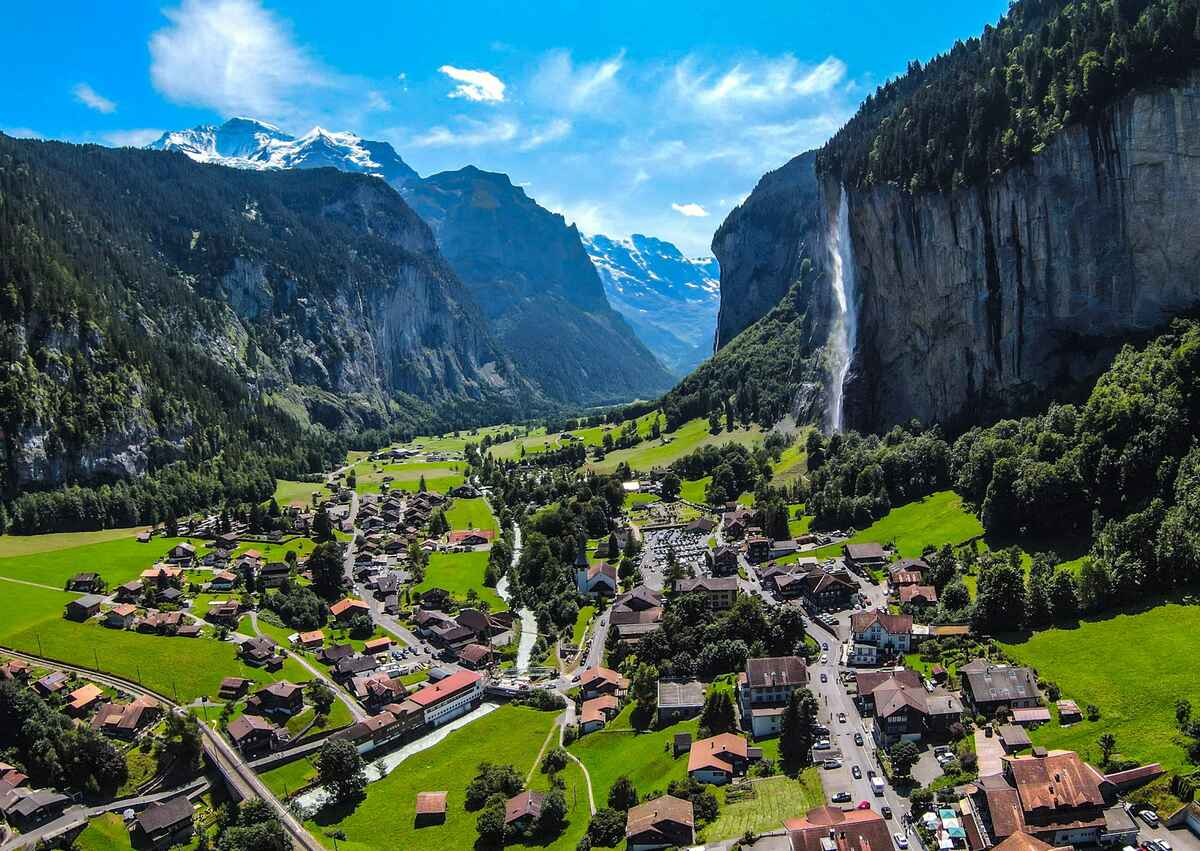
Visit Lauterbrunnen: Imagine a deep, U-shaped valley carved by ancient glaciers, lined by towering, sheer rock walls, and punctuated by the roar of dozens of spectacular waterfalls plunging hundreds of meters to the valley floor.
This isn’t a scene from a fantasy novel; it’s the reality of Lauterbrunnen, Switzerland. Often hailed as one of the world’s most breathtaking valleys, this Alpine haven easily lives up to its fairytale reputation.
For the adventurous soul, the history buff, or anyone simply seeking pure, raw natural beauty, a journey here is transformative.
This ultimate travel guide is designed to unlock the secrets of this majestic destination. We’ll show you how to navigate the famous “Valley of 72 Waterfalls,” explore the car-free mountain villages perched high above, and maximize your time and budget while experiencing the best of the Bernese Oberland.
From the powerful subterranean marvel of Trümmelbach Falls to the peaceful, flower-filled meadows, visit Lauterbrunnen and discover why this Swiss treasure captures the imagination of everyone who sets foot here. Get ready to plan your perfect Alpine escape!
Visit Lauterbrunnen: How did a deep glacial trough evolve from a monastic holding and mining region into a world-famous tourist destination?
The dramatic, sheer-sided landscape of the Lauterbrunnen Valley is not just a beautiful sight; it is a profound testament to ancient geological forces and a rich human history stretching back centuries.
Its distinctive U-shape was carved out not by a river, but by massive glaciers during the last Ice Age, leaving behind towering, vertical rock faces from which the 72 famous waterfalls now plunge.
The village’s very name speaks to this geography: first documented in 1240 as in claro fonte (“clear spring”), it later evolved into Lauterbrunnen, widely interpreted as “many springs” or “loud springs” (lauter Brunnen)—an unmistakable reference to the roaring cascades.
Initially, the valley was under the ownership of local nobility and the powerful Interlaken Monastery. However, by the 14th century, Walser-speaking settlers, known for establishing communities in high-alpine regions, began to populate the upper terraces, including settlements like Mürren and Gimmelwald, maintaining a degree of independence from the monastic rule.
For a time, the valley was also a small industrial hub, with iron ore mining taking place in the upper reaches of Trachsellauenen starting in the 16th century. The significant shift in the region’s trajectory and the true catalyst for the modern travel era came in the 19th century.
As the “Golden Age of Alpinism” took hold, foreign climbers and adventurers began to visit Lauterbrunnen as a base for scaling the formidable peaks of the Eiger, Mönch, and Jungfrau.
The arrival of the railway in 1890 sealed its fate, transforming this remote, glacier-carved valley into the easily accessible, world-renowned Alpine paradise it remains today, celebrated by figures from Goethe to J.R.R. Tolkien.
Visit Lauterbrunnen: Why is the Lauterbrunnen Valley dubbed “The Valley of 72 Waterfalls,” and which ones are the essential stops for a first-time visitor?
The awe-inspiring nickname, “The Valley of 72 Waterfalls,” is no exaggeration; this magnificent trough valley is a spectacular showcase of natural power, with torrents of water plunging from sheer limestone cliffs carved by ancient glaciers.
For any traveler seeking a truly unforgettable experience, the two absolute must-see waterfalls are Staubbach Falls and Trümmelbach Falls.
Staubbach, the more visible and iconic of the two, dramatically cascades nearly 300 meters right into the valley floor near the village, often dissolving into a fine spray or “dust” in the summer breeze, which is how it earned its name (Staub means ‘dust’ in German).
You can even follow a carved-out path to stand behind the falls during the warmer months, offering an utterly unique perspective of the water’s immense power and the valley’s sheer scale.
However, the true subterranean marvel is Trümmelbach Falls, a UNESCO World Heritage site and the only glacier waterfalls in the world accessible underground by lift, galleries, tunnels, and paths.
Witnessing 20,000 litres of water per second thundering through the mountain’s interior is a visceral experience that puts the immense forces of nature into sharp focus.
To truly visit Lauterbrunnen is to be captivated by these extraordinary natural features, which collectively define the region’s dramatic landscape.
The sheer number of cascades makes this one of the most remarkable natural settings in the Swiss Alps, offering boundless opportunities for exploration and photography on your Swiss journey.
Visit Lauterbrunnen: How can an adventurer easily access the car-free alpine villages of Mürren and Wengen from the valley floor?
One of the great charms of the Jungfrau Region is the presence of several idyllic, car-free settlements perched high above the valley, providing uninterrupted serenity and breathtaking panoramas.
The picturesque village of Mürren and its counterpart, Wengen, on the opposite side of the valley, are integral parts of any proper travel itinerary to the region, and thankfully, reaching them from the valley floor is a well-oiled operation relying on efficient Swiss public transport.
To reach Mürren, the adventure begins with a short walk or bus ride to the cable car station. From here, a spectacular aerial tramway ascends steeply to Grütschalp, where you transfer to a quaint, narrow-gauge railway that hugs the cliff face all the way to Mürren.
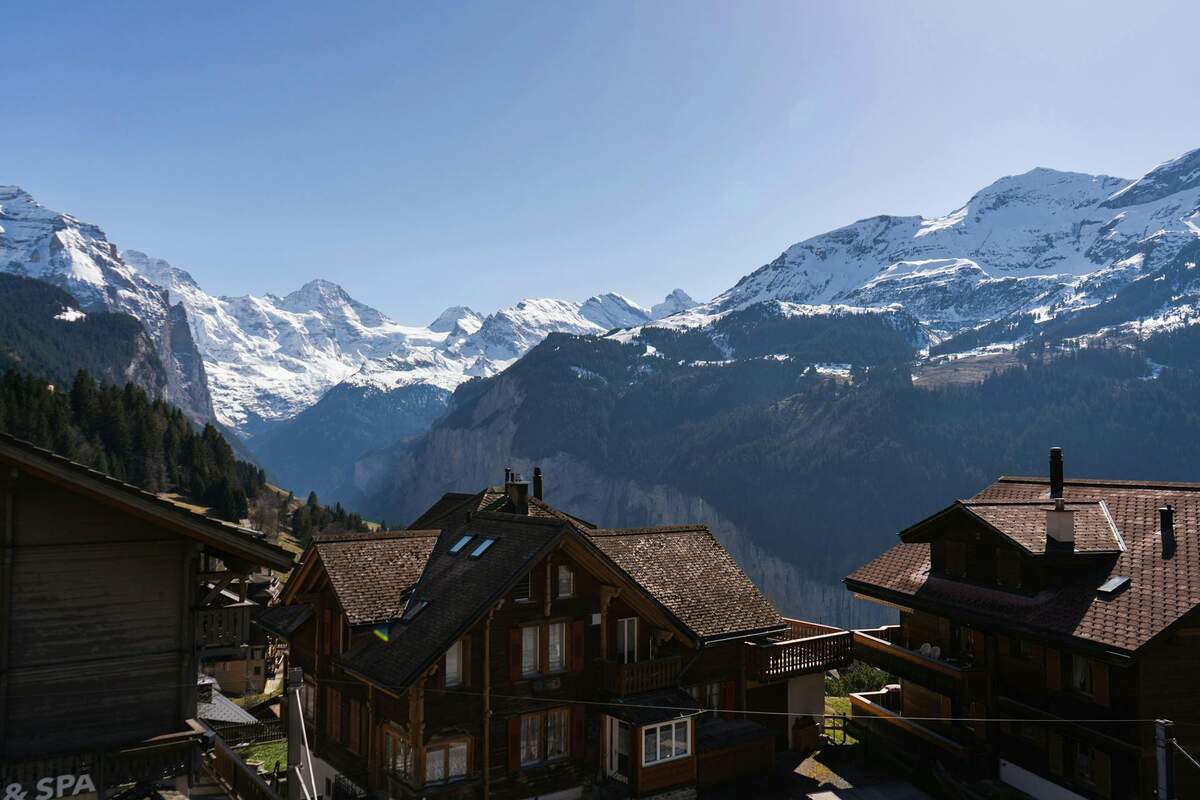
This route offers dazzling, high-altitude views of the “Big Three”—Eiger, Mönch, and Jungfrau—making the ascent an attraction in itself. Wengen is accessed via a charming cogwheel railway (the Wengernalpbahn) directly from the Lauterbrunnen train station.
This train slowly spirals up the mountainside, delivering visitors to a sun-kissed village famous for its traditional wooden chalets and as a host of the International Lauberhorn World Cup ski races.
Both routes are not just means of transport, but part of the scenic mountain exploration, easily linking the valley’s tranquility with the alpine peaks’ majesty, allowing for seamless high-altitude excursions.
Visit Lauterbrunnen: What are the best, most accessible hiking trails for visitors wishing to soak in the valley’s scenery without intense climbing?
The Lauterbrunnen Valley is a paradise for hikers of all levels, offering spectacular views without demanding summit climbs, particularly on the valley floor itself. The absolute best and most accessible route is the relatively flat, paved walk from the village center south toward Stechelberg.
This leisurely path meanders between towering cliff faces and lush alpine meadows, tracing the White Lütschine River as it flows past numerous waterfalls.
This gentle walk offers continuous, iconic vistas of the valley, including close-up views of Staubbach Falls and the stunning Mürrenbach Falls, one of the tallest waterfalls in the entire country.
This approximately four-kilometre stroll (one way) is ideal for families, casual hikers, and anyone wanting to capture the quintessential picture-postcard Swiss scenery. For a slightly higher-altitude, yet still easy, option, consider the scenic trail between Grütschalp and Mürren.
After taking the cable car up, this path runs along the cliff edge, offering relatively level terrain with utterly unparalleled views across the entire valley toward Wengen and the snow-capped Eiger.
This segment of your mountain journey allows you to appreciate the scale and drama of the Bernese Oberland without breaking too much of a sweat. No proper travel plan should skip these panoramic, low-effort walks that perfectly embody the region’s serene beauty and accessibility.
Visit Lauterbrunnen: Is this fairytale village an ideal destination for winter sports, and what specific activities are on offer during the colder months?
While Lauterbrunnen is globally famous for its lush green, waterfall-studded valley in the summer, the village and its surrounding region transform into an exceptional winter sports destination when the snow falls.
Unlike some areas that shutter their services, this region thrives in winter, becoming a snowy haven for skiers and snowboarders. Although the valley floor itself doesn’t host extensive slopes, it serves as the perfect, easily accessible gateway to the vast, interconnected Jungfrau ski region.
The car-free villages of Wengen and Mürren, which sit high on the cliffs, are your winter playgrounds, offering diverse slopes for all skill levels. Wengen is known for its challenging World Cup runs and extensive, sunny slopes, perfect for classic Alpine skiing.
Mürren, on the other hand, provides a more relaxed, authentic atmosphere with incredible high-alpine views, plus it is the starting point for the famous Schilthorn experience.
Beyond downhill skiing, visitors can enjoy winter hiking trails that are specifically groomed for walking, offering a tranquil travel experience through the snow-laden landscape.
Tobogganing is another major draw, with thrilling runs like the one down from the Sulwald cable car station providing family-friendly fun.
To visit Lauterbrunnen in winter is to embrace a serene, snow-draped Swiss wonderland, where the valley’s cliffs are capped in white, and the air is crisp and invigorating, presenting a completely different, yet equally magical, side of the Alps.
Visit Lauterbrunnen: Where are the most breathtaking photo spots to capture the iconic view of the village and Staubbach Falls?
Capturing the postcard-perfect image of the village set against the towering cliffs and the majestic Staubbach Falls is a key objective for many visitors, and fortunately, the ideal vantage points are easily accessible.
The most iconic perspective, the one that graces nearly every travel brochure, is best found by walking down the main road, Dorfstrasse, away from the train station and toward the falls.
Specifically, the area around the iconic Lauterbrunnen Church offers an unparalleled composition, framing the quaint spire with the colossal cliff face and the ribbon-like waterfall as the dramatic backdrop.
This is where you get the perfect blend of charming Swiss architecture and raw natural grandeur. Another highly recommended spot is the viewpoint at the Ägerten Bridge, which crosses the river shortly before you reach Staubbach Falls.
This location allows you to capture the water, the river, and the vast, U-shaped valley stretching out behind the cascade, often with the famous Swiss cows grazing in the foreground meadows during the summer.
For those willing to venture slightly higher, taking the cable car up to Grütschalp and walking a short distance along the trail towards Mürren will reward you with a sweeping, elevated vista that showcases the entire valley floor and the dramatic scale of the surrounding peaks.
To visit Lauterbrunnen is to find a photo opportunity at every turn, but these specific locations guarantee those ‘money shots’ that truly encapsulate the valley’s magic.
Visit Lauterbrunnen: What kind of once-in-a-lifetime mountain excursions can be taken from the valley, such as to Jungfraujoch or Schilthorn?
The village serves as a strategic launching pad for some of the Swiss Alps’ most renowned high-altitude adventures, making it an ideal base for mountain exploration. The two major, bucket-list excursions are the Jungfraujoch, the “Top of Europe,” and the Schilthorn, famed for its James Bond connection.
The Jungfraujoch journey is a marvel of railway engineering, involving a spectacular cogwheel train ride from Kleine Scheidegg that tunnels through the Eiger and Mönch mountains, eventually reaching Europe’s highest railway station at 3,454 meters.
Up there, the travel experience includes walking through an Ice Palace, visiting the Sphinx Observatory for panoramic views over the Aletsch Glacier (a UNESCO World Heritage site), and standing among the massive peaks. The other thrilling option is the trip up the Schilthorn (Piz Gloria).
Accessible via a series of cable cars from Stechelberg (at the end of the Lauterbrunnen Valley), the summit features a revolving restaurant that offers a 360-degree vista of over 200 mountains, including the Eiger, Mönch, and Jungfrau.
This location was famously featured as the villain’s lair in the 1969 James Bond film On Her Majesty’s Secret Service, complete with a dedicated ‘Bond World’ exhibition.
To truly visit Lauterbrunnen and its greater region is to ascend to these legendary peaks, offering perspectives on the Alpine landscape that defy description and provide memories for a lifetime.
Visit Lauterbrunnen: Where can a traveler find authentic Swiss dining experiences, and what local specialties should they sample?
The culinary scene, though cozy and small, offers delightful opportunities to sample hearty and authentic Swiss cuisine, a perfect reward after a day of mountain adventures.
While the village of Lauterbrunnen itself is modest, the surrounding area, including the mountain villages, provides charming eateries where traditional flavors take center stage.
For a truly authentic and unpretentious experience, look for local guesthouses or smaller restaurants known for serving classic Rösti (a grated potato dish, often served with eggs or bacon) and hearty alpine soups.
Cheese is, of course, a star: seeking out a traditional Fondue or Raclette experience is a must. Fondue, melted cheese mixed with white wine, is typically served in a communal pot, perfect for sharing, while Raclette involves melting cheese over a heater and scraping it onto potatoes and pickles.
For a unique mountain setting, several of the mountain restaurants atop Mürren or Wengen, and particularly the revolving Piz Gloria on Schilthorn, offer not only spectacular views but also elevated dining, though prices will naturally be higher.
When planning your daily excursions, be sure to incorporate lunch or dinner plans at one of these spots. To truly visit Lauterbrunnen is to pair the incredible natural sights with the comforting taste of traditional Swiss fare, adding another rich layer to your Swiss travel narrative.
Visit Lauterbrunnen: What is considered the optimal season for a visit, depending on a traveler’s interest in hiking, waterfalls, or snow sports?
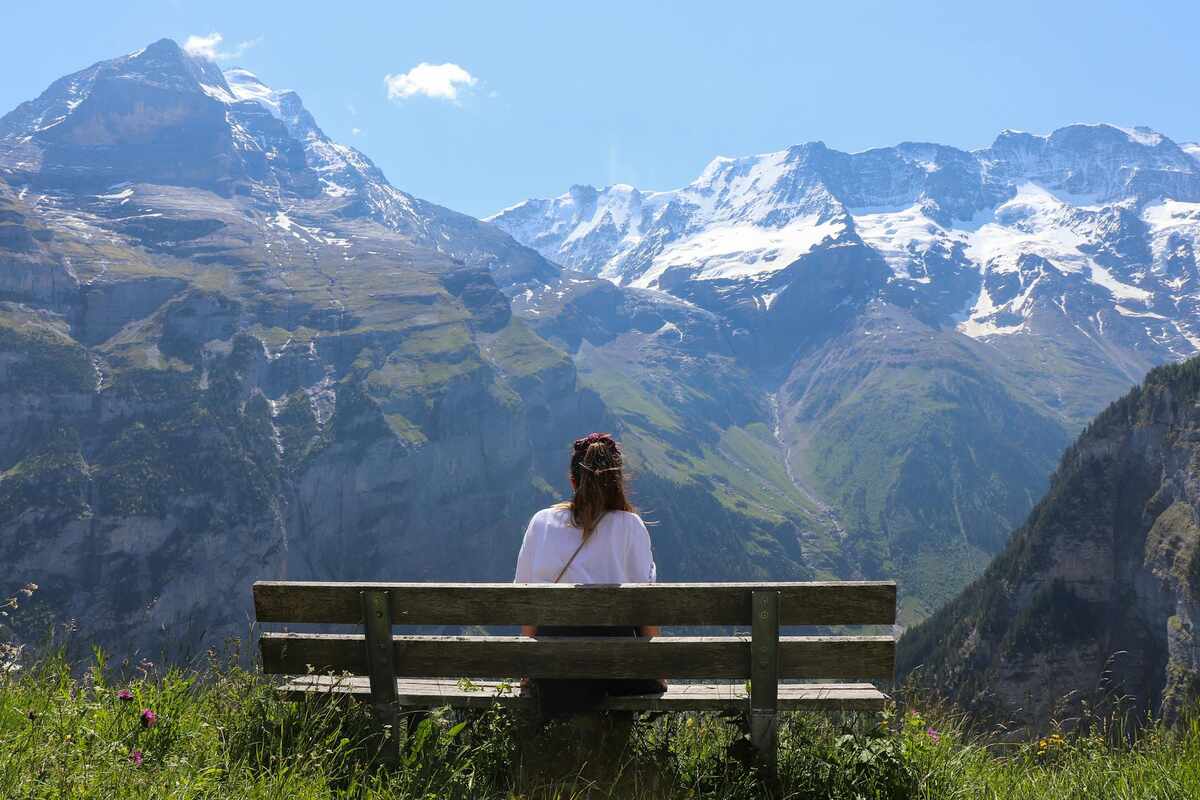
Choosing the best time to visit Lauterbrunnen truly depends on the kind of Alpine adventure you are seeking, as the valley transforms dramatically with each season.
For peak hiking conditions and the most spectacular display of the 72 waterfalls, the period from late spring to early autumn (June through September) is widely considered optimal.
During these summer months, the glacial melt is at its maximum, making the cascades, particularly Staubbach and Trümmelbach Falls, roar with impressive power.
The entire Lauterbrunnen Valley floor is lush and green, and all high-altitude trails, including those around Mürren and Wengen, are accessible, making it the perfect setting for extended outdoor travel and walking.
Conversely, for enthusiasts of snow sports, winter (December through March) is the ideal season. While the main valley floor is quieter and some smaller waterfalls may be frozen, the surrounding high-altitude resorts become bustling hubs for skiing, snowboarding, and winter hiking, offering a quintessential ‘white Switzerland’ experience.
Spring and Autumn serve as shoulder seasons, offering fewer crowds, but with the possibility of intermittent rain and trail closures at higher elevations.
September, in particular, offers a fantastic balance of mild weather, vibrant autumn colors, and thinner crowds, making the early autumn a personal favorite for many seasoned travelers seeking an intimate experience.
Visit Lauterbrunnen: How can a budget-conscious traveler save money on accommodation, food, and the notoriously expensive mountain transport?
The perception of high Swiss prices is accurate, but a clever traveler can significantly reduce costs, particularly on the frequently used but expensive mountain transport, which is essential to fully explore the region beyond the main valley.
The single most important money-saver is a Swiss Half Fare Card or a regional pass like the Jungfrau Travel Pass.
While an initial outlay is required, these passes drastically reduce the cost of all trains, cable cars, and post buses by 50% or more, paying for themselves quickly if you plan multiple excursions to places like Mürren, Wengen, or Grindelwald.
For accommodation, skipping hotels and opting for a campsite like Camping Jungfrau (located right in the valley), or booking a self-catered apartment (Airbnb, etc.) allows for major savings.
Cooking your own meals from groceries purchased at the local Coop supermarket is the biggest money-saving strategy for food. Dining out, especially on the mountains, is a major expense.
Furthermore, focusing on free activities—like the beautiful, flat valley-floor walk from Lauterbrunnen to Stechelberg, or the short but spectacular walk up behind Staubbach Falls—will ensure you get stunning scenery without spending a cent.
To truly visit Lauterbrunnen affordably means planning your transport wisely and embracing a self-catered approach to your meals.
Visit Lauterbrunnen: Beyond hiking and sightseeing, what unique, adrenaline-pumping activities are available for thrill-seeking visitors?
For the traveler whose perfect holiday includes a major rush of adrenaline, the dramatic landscape of the Lauterbrunnen Valley is more than just a beautiful backdrop; it’s a world-renowned playground for extreme sports.
Due to the high, sheer cliff faces that define the valley, it has become a global hotspot for base jumping and wingsuit flying, though these are strictly for highly experienced professionals (and spectacular to watch from the valley floor!).
For the adventurous tourist, a tandem paragliding flight is a must-do, offering the safest and most accessible way to experience the thrill of flying between the massive cliff faces and waterfalls.
Launching from Mürren or Wengen, you glide gently down to the valley floor in Lauterbrunnen, providing an utterly unique, bird’s-eye perspective on the Swiss Alps.
Another exciting activity for the physically fit is the Mürren Via Ferrata, a protected climbing route that traverses the cliff face from Mürren down to Gimmelwald. This route involves clipping into steel cables, traversing dizzying suspension bridges, and climbing ladders fixed directly into the rock face.
While guided, it is a demanding and exhilarating experience that offers incredible views. To truly visit Lauterbrunnen is to realize that its beauty is matched only by the incredible opportunities for high-octane adventure that it provides, catering to every level of thrill-seeker on their Swiss travel journey.
What is the appeal of the smaller, often-overlooked settlements like Gimmelwald and Isenfluh, and how do they differ from the main village?
While the main village of Lauterbrunnen is the valley’s central hub, the surrounding, smaller settlements offer a quieter, more authentic glimpse into traditional Swiss alpine life, perfect for a peaceful side travel excursion.
Gimmelwald, in particular, is a favorite among those seeking an untouched, idyllic mountain village experience. Accessible only by cable car from Stechelberg, this tiny, car-free hamlet is known for its quiet charm, lack of commercialization, and spectacular views across to the Eiger.
It’s a place where life moves at a genuinely slow pace, offering a true escape from modern bustle, with cozy guesthouses and trails leading to the Mürren Via Ferrata.
It’s smaller and far less polished than its neighbor Mürren, retaining a rugged, agricultural feel. Isenfluh, another hidden gem, is perched high on a sun-drenched terrace above the Lauterbrunnen Valley, accessible via a tiny, winding road or a funicular from the valley floor.
It provides some of the most dramatic and panoramic perspectives of the Big Three (Eiger, Mönch, and Jungfrau) and the entire valley below. Its appeal lies in its seclusion; it’s a wonderfully quiet base for hiking and a world away from the busy village center.
To fully visit Lauterbrunnen and its environs is to explore these quieter corners, finding a deeper sense of tranquility and the unspoiled charm of the Swiss mountains.
What are the best recommended indoor or low-weather activities for a rainy or misty day in the valley?
Even in a place as beautiful as the Swiss Alps, weather can be unpredictable, but a rainy or misty day doesn’t mean your travel plans need to be completely derailed; the Lauterbrunnen Valley offers several fantastic indoor and low-weather options.
The absolute best choice for a damp day is Trümmelbach Falls. As the world’s only accessible glacier waterfalls inside a mountain, this attraction is largely protected from the elements.
The raw, thundering power of the 10 falls is even more dramatic when the rivers are swollen with rain or meltwater, and exploring the tunnels and galleries provides an exhilarating experience while keeping you mostly sheltered.
Another excellent low-weather option is to visit Lauterbrunnen‘s local museum, the Talmuseum Lauterbrunnen (Lauterbrunnen Valley Museum).
This small, charming museum offers insight into the local history, culture, and traditional life of the valley inhabitants, featuring antique artifacts, farming tools, and historical exhibits, providing a fascinating cultural break from the outdoor activities.
For a luxurious escape, consider a day trip to the nearby city of Interlaken, which offers indoor shopping, spas, or a visit to the St. Beatus Caves (weather permitting), which are extensive caverns perfect for exploration.
Embrace the mist; it often enhances the mysterious, fairytale atmosphere of the valley, and a cozy local café with a hot drink is always a perfect way to wait for the clouds to pass.
Conclusion
As we’ve journeyed through the sheer cliffs and lush meadows of this iconic destination, it’s clear that the Lauterbrunnen Valley offers much more than just stunning scenery.
It is a destination that perfectly balances dramatic natural beauty with accessible adventure, whether you’re seeking the tranquil pace of a valley floor walk or the heart-pounding heights of a Schilthorn excursion.
We’ve covered everything from mastering the complex mountain transport system and finding the best hidden photo spots, to uncovering the fascinating history that shaped this unique landscape.
Ultimately, to visit Lauterbrunnen is to step into a real-life masterpiece—a place that demands to be experienced firsthand, not just seen in photographs.
No matter the season or your travel style, this corner of the Swiss Alps promises unforgettable moments and views that will reset your standards for natural wonder. Start planning your journey today; the adventure of a lifetime is waiting in this magical Swiss valley. Happy travel!
FAQ
The optimal time to visit Lauterbrunnen depends on your activities. Summer (June to September) is best for hiking, lush green scenery, and seeing the waterfalls at their peak flow. Winter (December to March) is ideal for snow sports, with easy access to the Mürren and Wengen ski areas. Shoulder seasons offer fewer crowds and unique charm.
No, the main village of Lauterbrunnen is accessible by car and has paid parking lots. However, the popular, picturesque mountain villages situated on the cliffs above the valley—like Mürren and Wengen—are entirely car-free and must be reached by cable car or mountain train.
The two most famous waterfalls are Staubbach Falls, which is the iconic cascade right next to the village, and Trümmelbach Falls, which is the only glacier waterfall in the world accessible underground via lifts and tunnels. Both are essential stops on your visit.
The journey from Interlaken Ost (East) train station to Lauterbrunnen is very quick and efficient. It takes approximately 20 minutes via the regular mountain train service, making the valley an easy day trip destination.
The local currency is the Swiss Franc (CHF). While larger tourist spots may accept Euros (EUR), change is typically given in Francs, so it’s best to use CHF. The official language is Swiss German, but English is very widely spoken in all tourist areas, hotels, and restaurants.
Yes, the mountain transport (trains and cable cars) is expensive. If you plan to take more than two high-altitude excursions (like Schilthorn or Jungfraujoch), a Swiss Half Fare Card or a regional pass like the Jungfrau Travel Pass is highly recommended to significantly reduce the cost of your journey and make your visit Lauterbrunnen itinerary more affordable.
Yes, it is possible, but the classic route involves a mix of transport and walking. You can take the cable car from Lauterbrunnen up to Grütschalp, and then enjoy a beautiful, relatively flat scenic hike along the cliff edge to Mürren. Hiking straight up the cliff face is extremely challenging and not recommended for the casual visitor.
While a day trip allows you to see the village and the main valley floor, we recommend 2 to 3 full days to truly experience the region. This allows enough time to explore the high-altitude villages (Wengen, Mürren, Gimmelwald) and complete a major peak excursion like the Schilthorn or Jungfraujoch without feeling rushed.
If you are arriving by car, you must use one of the designated paid parking lots. The main parking facility is located directly at the train station (Bahnhof) in Lauterbrunnen. Parking can be very busy during peak summer and winter seasons, so arriving early is advised.
Most hotels, large restaurants, and major attractions readily accept credit cards. However, for small shops, local mountain huts, or self-service roadside stands (like those selling local cheese), it is always best to carry a small amount of Swiss Franc cash (CHF) just in case.

Author: Horeca Health
Horeca Health














Leave a Reply