Visit Hallstatt: Introduction
Visit Hallstatt: Have you ever gazed at a postcard and wondered if a place that beautiful could truly exist? Hallstatt, a stunning jewel nestled in Austria’s breathtaking Salzkammergut region, is that place.
It is a village that effortlessly transcends the boundary between reality and fantasy, with its pastel-coloured houses clinging dramatically to the mountainside, perfectly reflected in the serene, glassy waters of Lake Hallstatt.
For centuries, this settlement has quietly stood as a testament to human resilience and natural majesty, its fortunes built on the precious “white gold”—salt—mined from the surrounding peaks.
While its iconic beauty has turned it into a globally recognized sensation, Hallstatt offers far more than just a fleeting photo opportunity. It’s a profound journey through 7,000 years of history, a gateway to high alpine adventures, and a peaceful escape into the heart of the Alps.
This guide is designed to take you beyond the famous viewpoint, offering expert tips on the best ways to explore the ancient salt mine, uncover prehistoric secrets, wander the charming narrow streets, and truly immerse yourself in the authentic character of this UNESCO World Heritage treasure.
If a deeply rewarding blend of history, culture, and nature is what you seek for your next travel adventure, then planning to visit Hallstatt is the only decision you need to make.
Visit Hallstatt: What makes this small village a major site in European prehistory?
The enduring charm and spectacular beauty that draw millions of people to visit Hallstatt today are rooted in a history that stretches back millennia, making it a place of profound significance in European prehistory.
This small, seemingly isolated settlement on the shores of the lake is, in fact, the namesake of an entire historical epoch: the Hallstatt Period (roughly 800–450 BC).
This designation stems from the incredible archaeological finds unearthed in the local salt mines and burial grounds, revealing a sophisticated Iron Age culture that thrived on the wealth generated by “white gold”—salt.
The perfectly preserved conditions within the mine allowed archaeologists to discover an astonishing array of artifacts, including intricate tools, textiles, and weapons, that provided unparalleled insight into early Iron Age life, trading networks, and artistic expression across Central Europe.
This ancient wealth laid the foundation for the community’s continued survival in a geographically challenging location, perched precariously between the sheer rock face and the deep lake.
Even after the Hallstatt Period, the salt continued to flow, ensuring the village’s prosperity through the Roman era and into the Middle Ages.
Understanding this ancient, salt-driven legacy is key to appreciating the entire region; the picturesque houses and churches you see today sit atop layers of history that predate Rome.
For those interested in deep cultural travel, recognizing that Hallstatt is a site of such monumental historical importance adds an invaluable layer of depth to the experience, transforming a beautiful sightseeing stop into a meaningful historical pilgrimage.
Visit Hallstatt: What is the must-see iconic postcard view and how do you get there?
The very first image that springs to mind for most globetrotters is that iconic, picture-perfect panorama, a hallmark of Austrian alpine beauty.
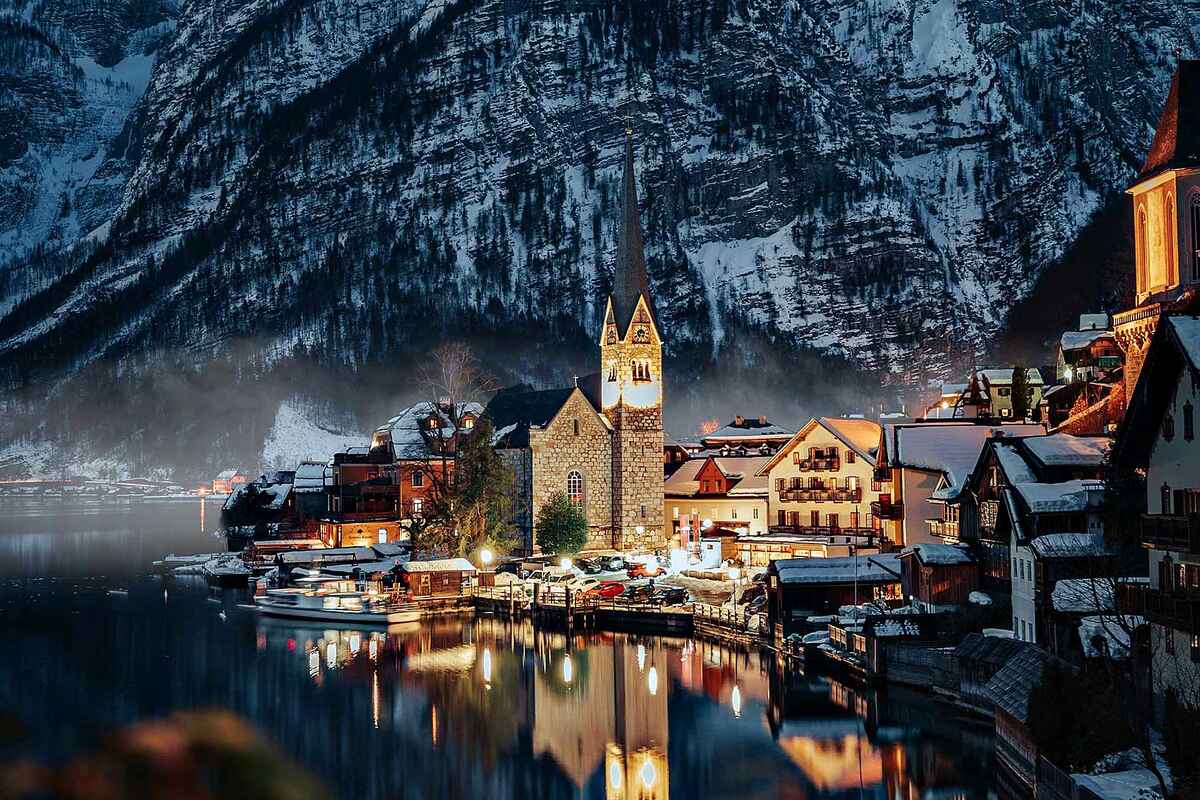
It’s the view that has graced countless screens and magazine covers, featuring the pastel-coloured houses clinging to the mountain, the prominent spire of the Lutheran church, and the serene, glassy surface of Hallstätter See reflecting it all back.
This globally renowned vantage point is not hard to find, but it’s an experience that truly sets the tone for your whole sojourn. The “Classic Hallstatt Viewpoint” is located just north of the Market Square, easily accessible via a short stroll along the lake promenade.
Our top tip for securing the best photo is to arrive early; the calm morning light, often accompanied by a gentle mist rising from the lake, provides that magical, ethereal quality you see in professional photographs, and crucially, you’ll beat the rush of day-trippers.
Furthermore, the light plays a significant role in showcasing the dramatic contrast between the deep blue lake and the majestic Dachstein mountains that form the breathtaking backdrop.
Remember that capturing this beautiful scene is only the beginning; take a moment to simply absorb the tranquility of the environment. You’ll quickly understand why so many people make the dedicated effort to visit Hallstatt, as it’s a destination that fully delivers on its promise of unparalleled scenery.
Your whole travel itinerary will benefit from prioritizing this photographic pilgrimage, setting a high standard for the stunning sights yet to come in this charming Upper Austrian region.
Visit Hallstatt: Is the Skywalk viewpoint worth the trip up the mountain?
Absolutely, making the journey up to the World Heritage Skywalk, perched high above the village, is a non-negotiable activity for anyone visiting this region.
Located on the Salzburg (Salt Mountain), the Skywalk, also known as the “World Heritage View,” extends outwards 360 meters above the roofs of the houses below, offering a dizzying, yet spectacular, perspective.
From this platform, the entire glacial lake, the sprawling village of Hallstatt, and the surrounding peaks of the Salzkammergut region unfold beneath you in a stunning 360-degree spectacle.
You have two main options for the ascent: the swift and comfortable Salzbergbahn funicular, or, for the more adventurous soul, a roughly one-hour hike up the old salt trail.
If you choose to hike, you are rewarded with ever-changing, spectacular views and a true sense of having earned the panorama. The viewpoint itself is a modern, triangular metal structure that provides excellent photo opportunities, but its true value lies in the expansive geographical context it provides.
It’s here that you truly grasp the isolated, dramatic setting of this ancient settlement, tucked precariously between water and rock. It is a stunning perspective that provides a powerful sense of scale, highlighting the human endeavor of building a community in such a challenging, yet beautiful, environment.
When you visit Hallstatt, incorporating this elevated view gives depth to your appreciation of the surrounding natural wonders.
Visit Hallstatt: What is the story behind the unique Bone House (Beinhaus)?
The small, somewhat macabre, yet deeply fascinating Bone House, or Beinhaus, housed within St. Michael’s Chapel, is an unusual and very specific feature that profoundly reflects the village’s constrained geography.
Due to the very limited amount of flat land and, consequently, cemetery space, the people of Hallstatt historically had to reuse burial plots every 10 to 15 years.
This unusual practice led to the exhumation of remains, which were then cleaned, bleached in the sun, and stored in the small charnel house to make way for the newly deceased.
What makes this collection truly remarkable is the tradition of artistically decorating over 600 of the skulls with painted wreaths of flowers, crosses, and ivy, often including the name and date of death of the deceased.
These paintings served not just as decoration but as a final, permanent mark of remembrance for individuals whose final resting place had to be moved.
It’s a powerful, intimate, and somewhat chilling display of local history and necessity, offering a unique insight into the community’s relationship with life, death, and memorialization in a confined space.
This tradition has largely been replaced by modern burial methods, but the Beinhaus remains a powerful, poignant reminder of the village’s heritage.
A quick side-trip here is a must when you visit Hallstatt, as it shows a very real, human side to this picturesque location, offering a profound moment of reflection during your Austrian travel itinerary.
Visit Hallstatt: Where are the most beautiful historic churches in the village?
The religious architecture in the village of Hallstatt stands as a beautiful testament to the long, rich history of the area, and two churches, in particular, anchor the community both physically and spiritually.
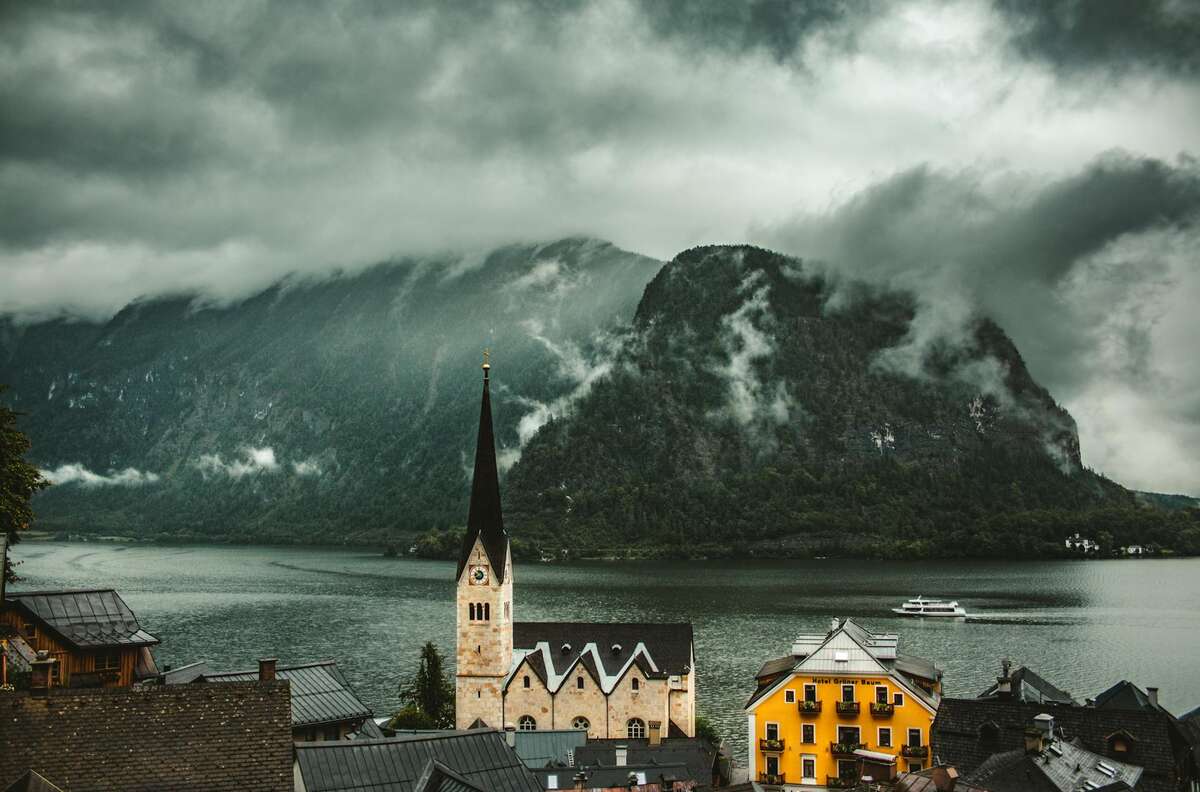
The most prominent is the beautiful Catholic Parish Church of the Assumption (Pfarrkirche Mariä Himmelfahrt), which sits slightly elevated on the hill above the market square, offering commanding views.
Its late-Gothic spire and architecture are instantly recognizable, and inside, visitors can admire the magnificent late-Gothic altar and its striking painted panels. Located right next to this church is the afore-mentioned, unique Bone House, which is part of the overall historical site.
Meanwhile, lower down, closer to the lake and dominating the iconic postcard view, is the prominent Evangelical Church.
This Protestant church, built in the mid-19th century, is known for its elegant, neo-Gothic spire and clean, impressive interior architecture, contrasting slightly with the older Catholic structure.
Together, these two places of worship symbolize the religious history of the Salzkammergut region and contribute significantly to the overall charm and character of the townscape. Wandering the narrow, winding paths that connect them is a rewarding part of any visit to the village.
Taking the time to explore the history of these sites is a wonderful way to enrich your travel experience. When you visit Hallstatt, these structures are not just photo opportunities; they are deep cultural landmarks.
Visit Hallstatt: How can you best explore the charming, narrow streets and Market Square?
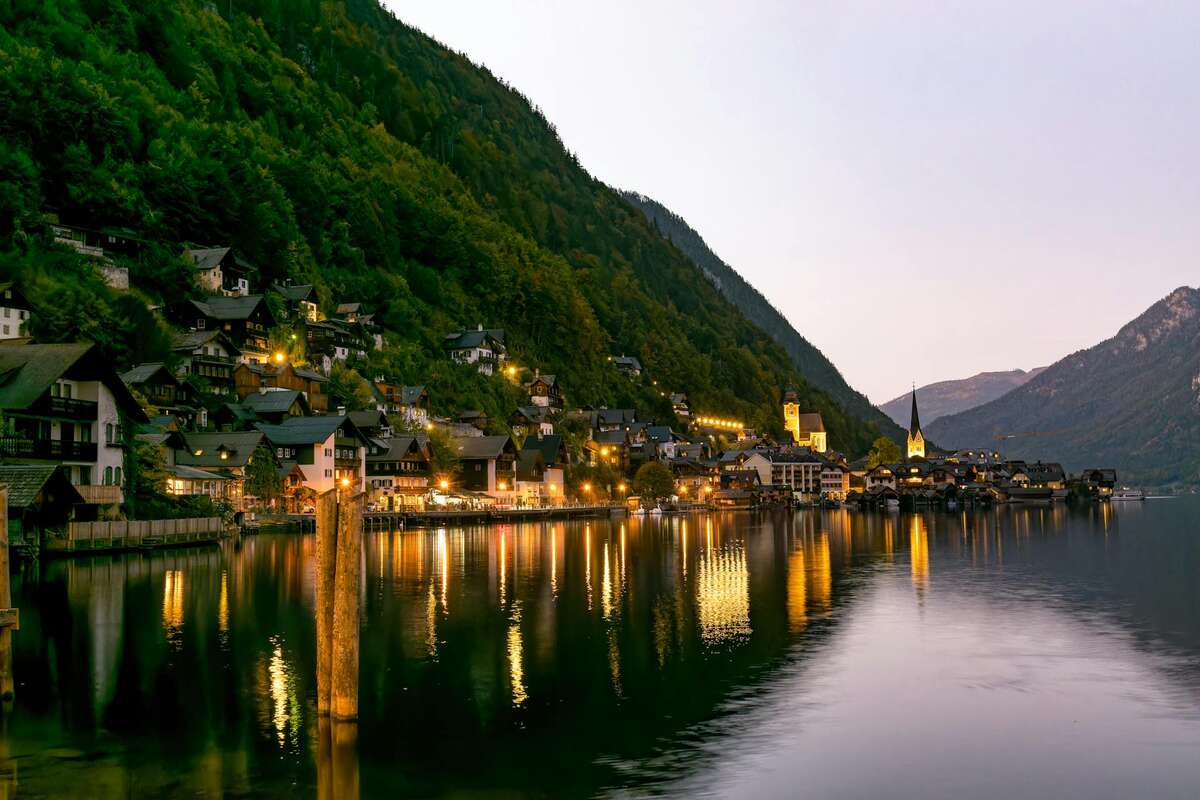
The very best way to immerse yourself in the storybook atmosphere of this Alpine gem is to simply lose yourself in the village’s narrow, winding passageways and pedestrianized streets.
These beautifully preserved lanes are one of the core reasons people yearn to visit Hallstatt, as they connect the lakeside promenade with the higher, quieter parts of the village, revealing charming corners at every turn.
The focal point of this exploration will invariably be the Marktplatz, or Market Square. This picturesque, cobblestone plaza is the beating heart of Hallstatt, surrounded by brightly painted, timber-framed houses adorned with colourful flowers, often featuring intricate local carvings and design.
It’s here that you will find cosy cafes, small restaurants serving traditional Austrian fare, and boutique shops offering local crafts, salt products, and souvenirs. The square is a perfect place to take a moment, sit at an outdoor table, and soak up the peaceful atmosphere, watching the world go by.
Beyond the main square, it’s worth exploring the hidden staircases and small paths that climb the mountainside. These less-travelled routes offer stunning, unexpected perspectives overlooking the rooftops and the lake, far away from the main hubbub.
This deliberate, unhurried wandering is essential to any fulfilling travel itinerary here, allowing you to discover the small details—like the traditional wooden boathouses lining the shore—that make this destination so deeply special and unique.
Visit Hallstatt: What are the best ways to experience Lake Hallstatt (Hallstätter See)?
The crystalline waters of Lake Hallstatt (Hallstätter See) are an integral part of the village’s stunning landscape, and no visit is complete without spending time on the water itself.
Experiencing the lake offers a whole new perspective on the village, revealing the scale of the mountains and the unique way the buildings hug the shoreline. A popular option, particularly during the warmer months, is to rent an electric or rowboat.
This allows you to set your own pace, glide silently across the water, and capture completely unobstructed photographs of the classic view. Alternatively, for a more structured experience, you can take a scenic ferry cruise.
For those arriving by train, the ferry across the lake from the train station is a mandatory and beautifully memorable part of the journey. Beyond formal rentals, there are opportunities for kayaking and paddle boarding, inviting a more active engagement with the environment.
Early morning is an especially magical time to be on the water, as the surface is often completely still, offering a near-perfect mirror-like reflection of the village and the surrounding peaks—a truly ethereal sight.
This connection with nature is central to the overall travel experience in the Salzkammergut region, and when you visit Hallstatt, getting out on the water should be a top priority for pure, unfiltered enjoyment of the scenery.
Visit Hallstatt: Why should you visit the World Heritage Museum?
The World Heritage Museum (Welterbemuseum Hallstatt) is a compact, yet remarkably comprehensive institution that serves as the key to understanding the deep historical roots that underpin the charm of the modern village.
While the breathtaking scenery is what initially attracts people to visit Hallstatt, this museum provides the vital context that elevates the experience from a simple photo opportunity to a profound historical encounter.
It meticulously documents over 7,000 years of the area’s history, focusing heavily on the pivotal role of salt mining, which gave rise to the prehistoric Hallstatt Culture (Iron Age).
Inside, you’ll find impressive archaeological finds unearthed from the nearby salt mine, including incredibly well-preserved artefacts that provide detailed insights into the daily life, trade, and burial customs of the Bronze and Iron Age settlers.
The exhibits use modern, interactive displays to bring this ancient history to life, connecting the relics directly to the current topography of the region. Taking the time to explore these exhibits enriches your understanding of the surrounding landscape.
The museum’s proximity to the Market Square makes it an easy and essential stop to integrate into your sightseeing itinerary. This deep dive into the past is an essential element of a fulfilling travel experience, moving beyond the surface-level beauty of Hallstatt to its powerful cultural legacy.
Visit Hallstatt: What outdoor adventures await in the surrounding Dachstein Salzkammergut region?
The setting of Hallstatt within the larger Dachstein Salzkammergut region places it at the epicenter of a stunning natural playground, offering incredible outdoor adventures for every type of enthusiast.
This area, recognized as a UNESCO World Heritage site, is a haven for hikers, with hundreds of kilometers of well-maintained trails catering to all fitness levels.
One popular and moderately challenging hike leads to the Waldbachstrub Waterfall in the Echerntal Valley, a beautiful trek through lush forest to a tiered cascade.
For a truly unique experience, you can take the cable car up the Dachstein-Krippenstein mountain. Once there, you can explore the stunning Dachstein Giant Ice Cave, an unbelievable underground world of frozen waterfalls and massive caverns.
Nearby, the “Five Fingers” viewing platform offers an unparalleled, exhilarating view across the entire Lake Hallstatt region and the dramatic Alps.
In the warmer months, the mountain paths offer opportunities for mountain biking and gentle walking, while winter transforms the area into a superb destination for skiing, snowshoeing, and other alpine pursuits.
Integrating these high-altitude exploration and adventure elements into your travel plans is crucial for appreciating the magnificent scale of the landscape that surrounds the small village. To truly embrace the Austrian Alps, you must visit Hallstatt and use it as a base for these unforgettable outdoor excursions.
Visit Hallstatt: When is the best time of day and season to avoid the major crowds?
Managing the crowds is perhaps the biggest consideration for a peaceful and authentic experience when you visit Hallstatt, as its fame has led to a significant influx of tourists, particularly day-trippers.
To truly savor the village’s fairytale charm without the constant flow of people, time is your greatest ally. The key is to be an early riser; the hours between sunrise and 9:00 AM are often the most magical and quietest part of the day.
During this time, the morning light is soft, the lake is often perfectly still for reflections, and the village truly feels like a tranquil, ancient settlement. Similarly, the late evening, after the last tour buses have departed (typically after 5:00 PM), offers a wonderful opportunity to enjoy a quiet dinner and a peaceful stroll under the evening lights.
In terms of season, avoiding the peak summer months of July and August is highly recommended. The shoulder seasons—late spring (May and early June) and early autumn (September and October)—offer pleasant weather, stunning scenery (especially the autumnal colors on the mountains), and significantly fewer visitors.
Winter provides a completely different, snow-dusted, and highly atmospheric experience, though some high-mountain attractions may be closed.
Strategically planning your day to embrace the early mornings and late evenings is the most effective travel hack for any visitor wishing to experience the genuine, unhurried atmosphere of Hallstatt.
Which hidden corners and secret viewpoints offer the best photos?
While the main postcard spot is essential, the true joy of photography in Hallstatt lies in discovering its myriad of less-visited, yet equally captivating, viewpoints that capture the village’s unique architecture and character.
Beyond the famous lakeside location, start by seeking out the upper streets and stairways on the mountainside, particularly the paths behind the Catholic Church. These elevated spots provide stunning, unexpected perspectives of the colorful rooftops tumbling down to the lake.
The quiet lanes and charming stone steps, draped with flowers in the warmer months, offer intimate compositions away from the crowds. Another excellent spot is the small peninsula where the ferry docks; from here, you get a beautiful side view of the village, framed by the whole sweep of the lake.
It’s also worth walking to the very end of the main lake promenade, away from the central Market Square, to look back at the village from a different angle, capturing the impressive scale of the surrounding cliffs.
For a more dynamic shot, try framing the houses through the traditional wooden boathouses that line the waterfront. The true essence of travel photography here is moving beyond the main square and taking the time to explore these quiet, high-angle spots.
When you visit Hallstatt, remember that the best pictures are often found where the crowds aren’t, allowing you to capture the intimate, authentic beauty of this unforgettable Austrian settlement.
What local delicacies should you try at the lakeside restaurants?
Your gastronomic journey in Hallstatt is an essential part of the Austrian cultural experience, focusing on fresh, regional specialties that draw deeply from the surrounding environment—particularly the lake and the alpine meadows.
Given the village’s location right on Hallstätter See, the freshest and most authentic dish to try is undeniably Fangfrischer Fisch (freshly caught fish) from the lake itself.
Trout (Forelle) and char (Saibling) are common catches, often prepared simply—grilled or pan-fried—to let the natural, pure flavour of the fish shine through.
This is best enjoyed at one of the lovely lakeside restaurants, where you can literally eat what you see being caught, right in front of the spectacular view.
Beyond seafood, you should definitely sample traditional Austrian comfort food. Look for Kaiserschmarrn, a delicious, fluffy, scrambled pancake often served with a fruit compote, which is perfect as a sweet lunch or dessert.
Also, try various local dumplings (Knödel) or a hearty Gulaschsuppe (Goulash soup) to fuel up after a long day of sightseeing and travel. Finally, being in the Salzkammergut region, you’ll find plenty of local products derived from the famous salt mine, making for unique culinary souvenirs.
When you visit Hallstatt, make sure to savor a quiet meal by the water; it is the perfect way to cap off a day of exploring this beautiful, historic village.
Conclusion
We’ve travelled through seven millennia of history, soared high above the Hallstatt rooftops, and drifted across the tranquil surface of its pristine lake.
What becomes abundantly clear is that this Austrian gem is much more than just a destination for beautiful photographs; it is a meticulously preserved portal to the past, a vibrant centre of alpine culture, and a starting point for unforgettable outdoor exploration in the majestic Dachstein region.
From the ancient tunnels of the world’s oldest salt mine and the poignant history of the unique Bone House, to the simple joy of sampling fresh trout at a lakeside café, every experience here is rich with context and stunning scenery.
To truly capture the spirit of this village, remember the golden rule: slow down. Embrace the early mornings, wander the side streets, and use the insights from this guide to move beyond the main square.
Don’t just see the postcard; live the story. If your travel heart yearns for a place where history meets dramatic natural beauty, then the time to visit Hallstatt is now. Start planning your journey to this unforgettable fairytale village—the Alps are calling.
FAQ
While it’s possible to see the main sights of the village on a day trip, we strongly recommend an overnight stay if you genuinely wish to experience its unique atmosphere. The true magic of Hallstatt is revealed in the early morning and late evening hours, after the day-trippers have departed. This is when the streets are quiet, the light is soft, and you can peacefully enjoy the lakeside restaurants. To truly soak up the tranquility and history, planning to visit Hallstatt for at least one night provides a far more rewarding experience.
The most iconic view is the classic postcard panorama of the village, the church spire, and the lake reflection. To find it, simply walk north along the lakeside promenade from the Market Square towards the Classic Village Viewpoint (Aussichtspunkt Hallstatt). Arriving before 9:00 AM is essential for the best light and to secure a spot before the crowds arrive. This view is a must-see when you visit Hallstatt.
The most popular and scenic way to get to Hallstatt without driving is by train to the Hallstatt Bahnhaltestelle station, followed by a short, picturesque ferry ride across the lake directly to the village centre. The train and ferry connection is very well-coordinated. If you drive, be aware that parking is very limited and often located outside the main village area, requiring a shuttle or a walk.
Entry to the Salzberg funicular, which takes you up to the Skywalk and the Salt Mine area, typically costs around €22–€25 for a return trip. A combined ticket that includes the funicular ride and the guided Salt Mine tour usually costs between €36–€40. You can often find current pricing and book tickets online before you visit Hallstatt to save time.
Absolutely! The surrounding Dachstein Salzkammergut region is a paradise for hikers. For a popular adventure, take the funicular up to the Skywalk area and then explore the historic Salzberg (Salt Mountain) trails. For a beautiful walk without the altitude, explore the scenic Echerntal Valley located just a short distance from the village, which features the impressive Waldbachstrub Waterfall.
The Hallstatt Skywalk and the Salzberg funicular generally operate throughout the winter, offering breathtaking views of the snow-covered village and mountains. However, hours may be reduced, and operations can be temporarily suspended due to extreme weather conditions, such as high winds or heavy snowfall. Always check the official operating times before you plan to visit Hallstatt during the colder months.
The Bone House is significant because it uniquely illustrates the village’s constrained geography. Due to limited burial space, skulls and bones were exhumed after 10–15 years, cleaned, and artfully painted for storage. It offers a poignant, intimate insight into the historical customs and respect for the dead within this small community. It’s a powerful cultural stop when you visit Hallstatt.
For a thorough exploration of the village itself—including the Market Square, the churches, the lakeside promenade, and a visit to the World Heritage Museum—you should allocate at least 4 to 5 hours. If you plan to include the Salt Mine and Skywalk, you will need a full day (6-8 hours), making an early start essential.
Yes, while traditional Austrian cuisine often features meat, the lakeside restaurants and cafes are increasingly accommodating and offer good vegetarian options, often focusing on local produce and excellent soups or salads. Given the focus on fresh lake fish, many establishments can also cater to simple dietary needs. Don’t hesitate to ask your server when you visit Hallstatt.
Compared to larger cities in Austria, accommodations and restaurants in Hallstatt can be slightly more expensive due to its remote location and high tourism demand. Booking your lodging well in advance is crucial to securing better rates. However, many of the best activities—like hiking, enjoying the famous views, and wandering the streets—are free, making it possible to enjoy your trip without breaking the bank if you budget wisely before you visit Hallstatt.

Author: Horeca Health
Horeca Health
















Leave a Reply