Tromso: Introduction
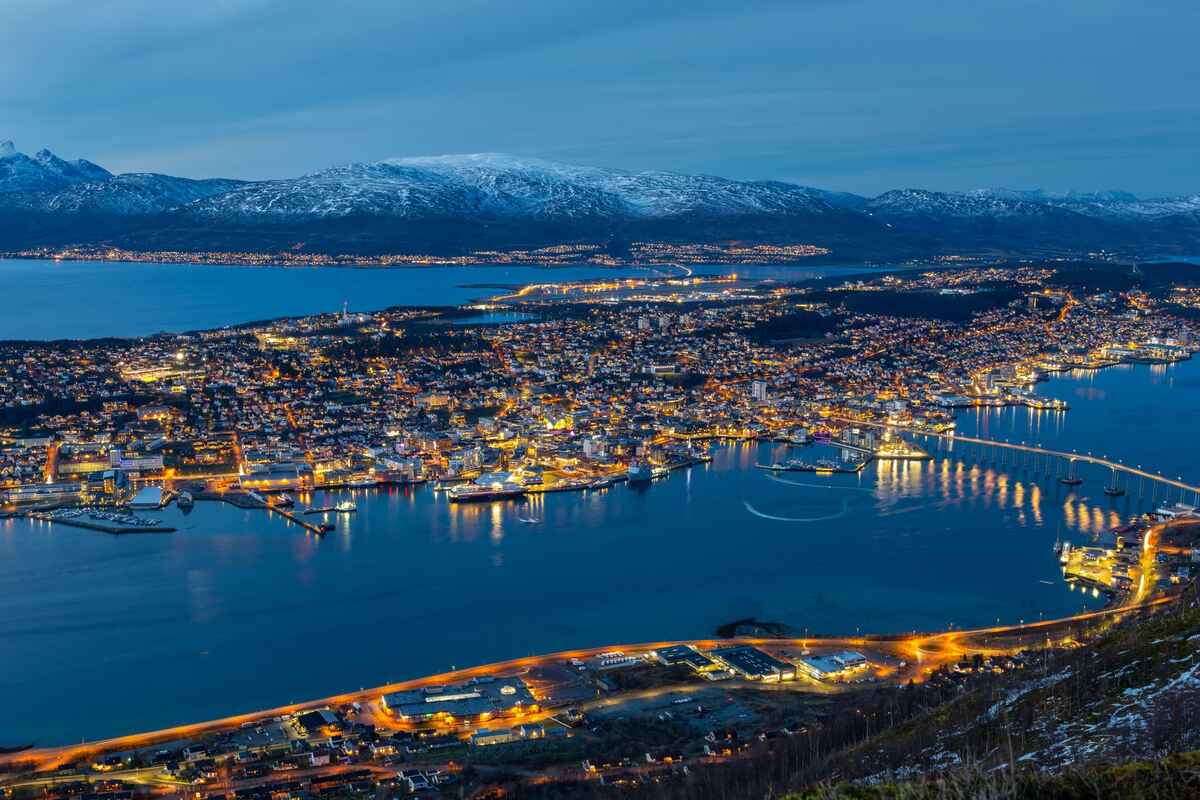
Tromso, Norway’s Arctic capital, hardly fits the image of an unreachable outpost at the edge of the map. The first time you see its colorful wooden houses reflected in a dark, still harbor, with snow-dusted mountains rising straight from the water, the city declares itself not as an ending but as a prologue.
There is something deeply magnetic about a place that lives with polar night and midnight sun as equal truths, where life hums at 69 degrees north with a warmth that surprises every visitor.
It is not just the Northern Lights, though they are a reason enough to make the journey. It is the sense that you have crossed a threshold into a different rhythm – one shaped by centuries of Sami culture, daring polar exploration, and a modern relationship with winter that feels like an art form.
Many guidebooks reduce Tromso to a runway for aurora hunters, but that framing misses too much. The city is a living archive of Arctic history, a surprisingly cosmopolitan university town, and a culinary powerhouse that turns reindeer, cod, and cloudberries into stories on a plate.
It is equally compelling under the soft pastels of a January noon or during the relentless daylight of a July evening when nobody wants to sleep.
This Tromso travel guide walks you through that layered reality. We will explore the history that shaped this improbable city, plan the best time to visit, track the lights, navigate the fjords, and sit down at tables where the food tastes like landscape.
By the end, you may find that the so-called end of the world actually feels like a beginning – and you will know exactly how to start your own Arctic chapter.
Where Is Tromso and How to Get There?
Getting a clear sense of location rewrites the scale of your trip. Tromso sits on an island in northern Norway, roughly 350 kilometers north of the Arctic Circle, surrounded by jagged peaks and deep fjords. It is the largest city in Northern Norway and functions as the logistical heart of the region.
The island of Tromsoya, connected to the mainland by the Tromso Bridge and a tunnel network, hosts most of the urban area, while the airport lies on the western side.
Flying is the most practical entry method for international visitors. Tromso Airport, a surprisingly well-equipped facility for its latitude, handles direct flights from Oslo, Bergen, and several European hubs like London, Frankfurt, and Helsinki.
The approach through the mountains is an experience in itself: you drop through clouds and see dark water, snowy ridges, and scattered lights that feel impossibly remote. From the airport, the city center is a 10-minute bus ride or a quick taxi trip.
If you prefer a slower, scenic arrival, the Norwegian coastal ferry Hurtigruten calls at Tromso daily on its journey between Bergen and Kirkenes. Watching the city appear from the deck as the ship navigates the sound is unforgettable.
Alternatively, driving the E8 from Finland or taking the E6 north from Narvik brings you through Sami heartlands and reindeer country, though winter driving demands caution and good preparation.
Once in Tromso, the compact center is walkable. Buses connect the main areas, and for longer excursions, car rental or guided tours are common. Ferries and express boats link the city with the surrounding islands and coastal communities, making island-hopping a viable addition.
No matter how you arrive, the geography immediately reshapes your sense of distance, reminding you that the Arctic has its own rules about time and movement.
The History of Tromso: From Arctic Outpost to Cultural Hub
Understanding Tromso’s past transforms a sightseeing trip into something more meaningful. The area has been inhabited for thousands of years by the Sami people, who moved with the reindeer and lived along the coast.
The first Christian church on Tromsoya was built in the 13th century, but the official founding of the city came in 1794, when Tromso received its town charter from King Christian VII. At the time it was a tiny trading post with fewer than 100 residents.
The nineteenth century turned this quiet settlement into a booming Arctic center. Tromso became a major base for fishing, sealing, and, most importantly, polar expeditions.
Hunters and explorers heading to Svalbard, Greenland, and the North Pole stopped here to provision, recruit crew, and wait for the ice. That legacy earned Tromso the nickname “Gateway to the Arctic,” a title that still appears on tourism posters.
Roald Amundsen and Fridtjof Nansen were among the legendary figures who walked these streets, and you can still sense that pioneering energy in museums and harborfront buildings.
World War II brought darker chapters. While much of Northern Norway was devastated, Tromso escaped heavy bombing and became a temporary capital of Free Norway after Oslo fell. The city’s old wooden buildings survived when others burned.
Today, that architectural heritage creates a historic center that feels intimate and layered, with trading houses, warehouses, and traditional homes that have been carefully preserved while housing modern cafés and galleries.
Post-war development transformed Tromso into the region’s main educational and research hub. The University of Tromso, founded in 1968 and now Norway’s Arctic University, brought a young, international population and strengthened the city’s role in climate science, marine biology, and Sami studies.
This blend of old seafaring grit and intellectual curiosity gives Tromso a character you rarely find in cities three times its size – a place where a fisherman’s shack and a cutting-edge biotech lab might share the same waterfront view.
What Is the Best Time to Visit Tromso?
The best time to visit Tromso depends entirely on what you want to experience: the aurora, the midnight sun, or the snowy wonderland in between. Each season delivers a radically different Arctic.
From late September to early April, dark skies bring prime Northern Lights conditions, with peak viewing between November and February when the nights are longest. The trade-off is cold weather, though the coastal influence keeps temperatures milder than many expect, often around -5°C to -15°C in winter.
If you dream of skiing, dog sledding, and the deep silence of snow-covered landscapes, January through March offers the most reliable conditions. March is a favorite among locals: longer daylight makes it easier to combine outdoor activities with evening aurora hunts.
By April, the snow begins to soften, and while the midnight sun has not yet arrived, the days grow dramatically long, giving you golden-hour light that lasts for hours.
Summer in Tromso, from late May to late July, brings the phenomenon of the midnight sun. The sun never sets, and the city hums at all hours. This is prime time for hiking, kayaking, and fjord exploring, with temperatures typically between 10°C and 18°C.
The landscape explodes in green, and the surrounding islands become accessible in ways that winter cannot offer. However, this is not the season for Northern Lights, and accommodation prices rise sharply.
Autumn offers a quieter window, especially September and early October. The tourist crowds thin, the foliage turns, and the first dark nights return, occasionally gifting you an early aurora. Prices drop, and you can enjoy both hiking and the possibility of lights without the deep freeze.
For many seasoned travelers, these shoulder months offer the best balance. The table below summarizes seasonal considerations:
| Season | Months | Highlights | Average Temp | Crowd Level |
|---|---|---|---|---|
| Winter Aurora | Nov–Feb | Northern Lights, snow activities | -5°C to -15°C | High |
| Late Winter | Mar–Apr | Longer days, skiing, still aurora | -3°C to 5°C | Moderate |
| Midnight Sun | Late May–Jul | Endless daylight, hiking, fjords | 10°C to 18°C | Very High |
| Autumn Shoulder | Sep–Oct | Fall colors, first auroras, fewer tourists | 3°C to 10°C | Low |
Chasing the Northern Lights in Tromso
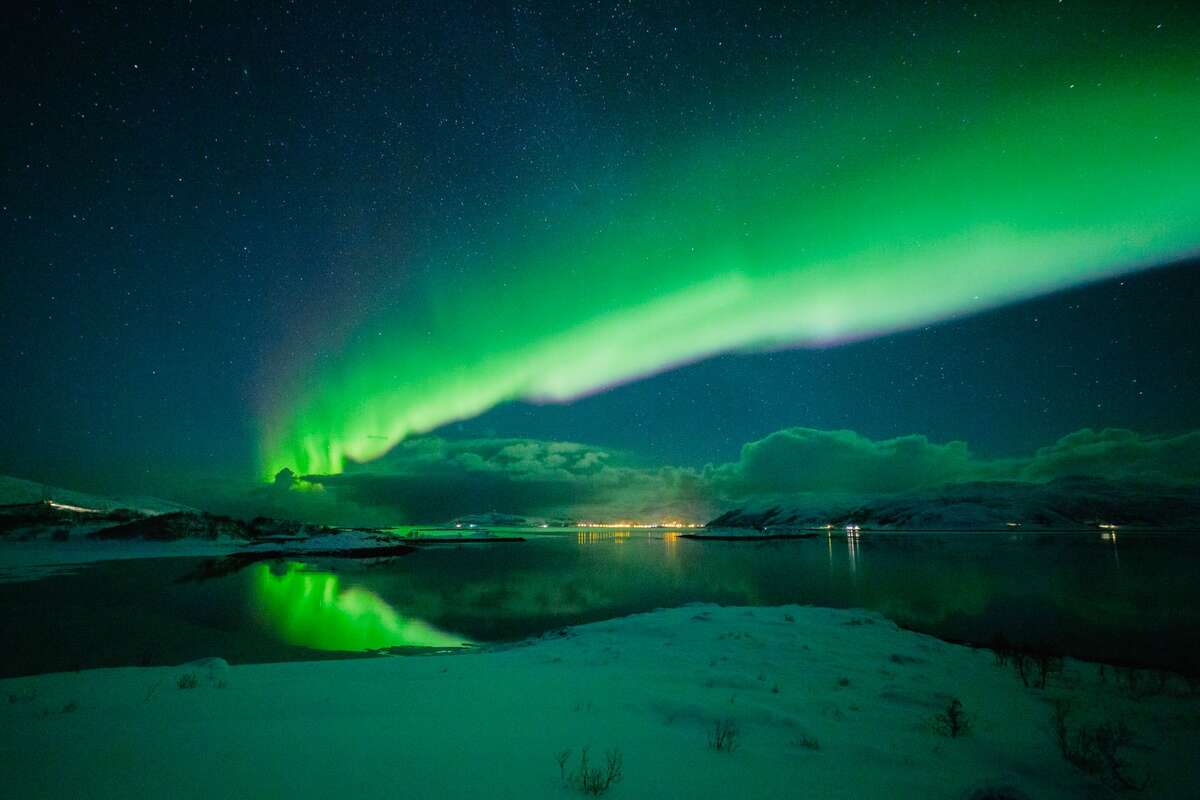
Few places on earth offer a better base for aurora hunting than Tromso, and that reputation is built on geography and infrastructure. The city lies directly under the auroral oval, a ring-shaped zone around the magnetic North Pole where Northern Lights activity concentrates.
Combined with a relatively mild coastal climate and a well-developed tour industry, this makes Tromso one of the most accessible and reliable destinations for seeing the lights.
The aurora season runs from mid-September to early April, but the darkest months provide the longest viewing windows. You need clear skies, solar activity, and darkness.
Tromso’s microclimate can be tricky: it is often cloudy over the city, but because of the surrounding mountains and varied terrain, guides can drive to microclimates with gaps in the cloud cover. This local knowledge is what makes guided tours so valuable compared to DIY attempts standing on a windy bridge.
A wide range of options exists. Minibus chases are popular and flexible, taking small groups deep into the inland valleys near the Finnish border or out to the coast. Some tours combine aurora viewing with bonfires, thermal suits, and photography help.
For a more adventurous experience, you can join a dog sledding or snowmobile tour under the lights, though these depend heavily on weather and require a different kind of patience. Alternatively, rent a car and use apps to track activity, but respect the challenging winter roads.
Patience is the real secret to a successful Northern Lights night in Tromso. The aurora rarely appears on schedule. It can flare up for ten minutes and vanish, or slowly dance for hours. Bring layers, hot drinks, and realistic expectations.
Many visitors consider a three-to-four-night stay a good window to maximize chances. Even when the sky stays dark, the Arctic nightscape – with its star-filled silence and occasional reindeer crossing your path – becomes a memory of its own.
How Many Days Do You Need in Tromso?
A common mistake is treating Tromso as a two-night stopover. To experience the city meaningfully, including at least one dedicated Northern Lights chase, you need a minimum of four full days.
This allows you to settle into the Arctic rhythm, manage the unpredictability of aurora viewing, and explore beyond the city center. Less than that, and you risk leaving with a checklist of missed opportunities and a feeling that the place only half-revealed itself.
A four-day itinerary works well: Day one, explore the city on foot, visit the Polar Museum and the Arctic Cathedral, and take the cable car up Mount Storsteinen for panoramic views. Day two, join a Northern Lights tour in the evening, leaving the daytime open for leisurely walks or the Troll Museum.
Day three, venture on a fjord cruise or a dog sledding excursion, and reserve the evening for a second aurora attempt if needed. Day four, visit the Polaria aquarium and do last-minute souvenir shopping before your flight.
If you have a week, Tromso transforms into a hub for deeper Arctic exploration. Add a day trip to the Lyngen Alps for hiking or skiing, take the coastal ferry to nearby islands like Sommaroy, or spend a night in a wilderness camp.
The additional time also buffers against weather disruptions, which are common in northern Norway. Having that flexibility means you can shift outdoor activities by a day without sacrificing the highlights.
For those on a tight schedule, three days can still work if you prioritize ruthlessly. Fly in early, spend one evening on an aurora tour, and use the remaining day for a half-day activity like a reindeer sled ride or a city walk.
However, this pace leaves little room for error and no time to absorb the city’s slower, more contemplative side. Tromso rewards those who let go of urgency, and that usually takes longer than a weekend.
Top Things to Do in Tromso
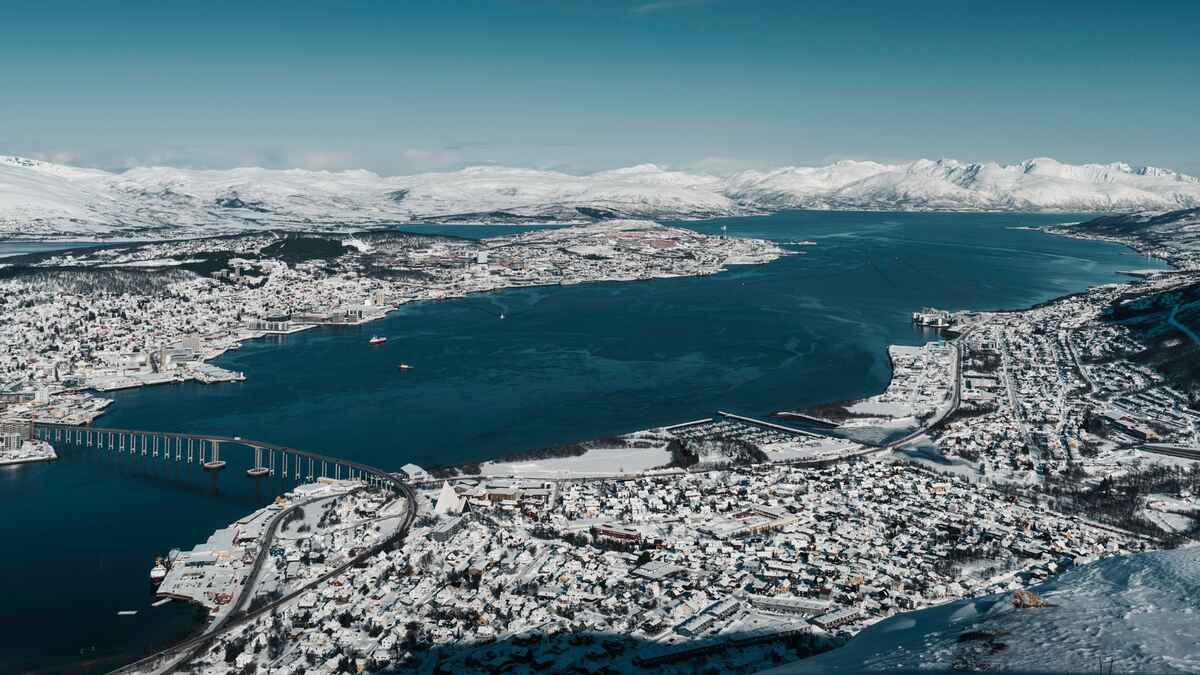
The activities on offer in Tromso cover a spectrum from adrenaline-fueled Arctic adventures to quiet cultural deep dives. You could easily fill a week without repeating yourself. Start with the Fjellheisen cable car, which whisks you to the top of Mount Storsteinen in under four minutes.
From the viewing platform at 421 meters above sea level, all of Tromso unfolds beneath you – the island, the bridges, the mountains, and the fjord stretching toward an infinite horizon.
For those drawn to wildlife, a reindeer sledding experience with Sami guides offers direct contact with both the animals and an ancient culture.
Operators near Tromso provide visits to reindeer camps where you can feed the animals, learn about Sami traditions, and take a slow, soulful sled ride through snowy forests. It is a gentle contrast to the high-speed rush of dog sledding, which is equally accessible.
Teams of enthusiastic huskies pull your sled across frozen landscapes, and the sound of the runners cutting through snow is hypnotic.
Museum lovers will find a surprisingly rich circuit. The Polar Museum recounts the era of Arctic trapping and expeditions with authentic objects and gripping photography.
The Troll Museum, a recent addition, brings Norwegian folklore to life with interactive, family-friendly exhibits. For contemporary art, the Nordnorsk Kunstmuseum highlights regional artists and often features Sami voices.
Together, these cultural stops reveal that Tromso is not simply a scenic backdrop but a place with deep intellectual and creative roots.
Other highlights include a visit to the Arctic Cathedral, whose striking triangular architecture evokes ice and mountains.
In winter, the midnight concerts here are magical. In summer, kayaking on the fjord at midnight under a sun that never sets becomes an experience that reframes your entire concept of time. Whale watching tours run from November through January, offering encounters with orcas and humpbacks.
Every season writes its own list of possibilities, and the only mistake is to leave without doing something you cannot do anywhere else.
Tromso’s Unique Culinary Scene
The food in Tromso tells the story of the Arctic with every bite. A gastronomic renaissance over the past two decades has transformed the city into a serious culinary destination, one that rivals much larger European capitals.
Chefs here work with ingredients that are profoundly local: king crab from the Barents Sea, reindeer from the tundra, Arctic char pulled from cold, clear rivers, and cloudberries that ripen under the midnight sun. The result is a cuisine that tastes unmistakably of this latitude.
You cannot talk about Tromso dining without mentioning the importance of seafood. The daily catch arrives at the docks and often reaches plates within hours.
Smoked salmon, stockfish (the traditional dried cod), and fresh scallops feature on menus across the city. For a splurge, restaurants like Mathallen offer tasting menus that pair Arctic ingredients with innovative techniques.
Meanwhile, casual spots serve fish soup that warms you from the inside out, exactly what you need after a long aurora night.
Reindeer is a staple that connects modern dining with Sami traditions. Prepared as tender fillet, smoked heart, or in a hearty stew, it has a lean, slightly gamey character that pairs well with lingonberries and root vegetables.
Whale meat, historically controversial, also appears on some menus as a traditional product of Norwegian coastal communities. Whether you choose to eat it is a personal decision, but its presence reflects the city’s historical relationship with the sea.
For a more casual immersion, visit the Full Steam restaurant in the harbor or try a local bakery for skolebrød, a cardamom-scented bun filled with custard. The city’s cafés embrace koselig, the Norwegian concept of coziness, with candlelit interiors and strong black coffee.
Tromso also boasts an impressive craft beer scene, with Mack Brewery, the world’s northernmost brewery, and the excellent Ølhallen pub, where the beer taps read like a map of Arctic ambition. Eating and drinking here becomes a cultural act, not just fuel.
Exploring Tromso’s Surrounding Fjords
Leaving the city center opens up landscapes that feel prehistoric in their scale. The fjords around Tromso cut deep into the coastline, with near-vertical walls rising from black water and occasional waterfalls that freeze mid-air in winter.
Exploring these waterways by boat, car, or kayak is not an add-on; it is an essential thread in the fabric of any visit. The silence out there rewires something in you.
The most accessible fjord is Balsfjorden, a short drive south, where you find quieter waters and the chance to spot sea eagles. Grøtfjord, on the western side of Kvaløya island, offers a dramatic beach setting with mountains plunging directly into the sea.
In winter, the contrast between snow-covered peaks and dark, reflective water creates a monochrome palette that photographers chase relentlessly. In summer, these same spots invite picnics and long, warm-lit evenings.
Renting a car and driving the coastal roads of Kvaløya and Ringvassøya is one of the best ways to absorb the scale of the landscape. The roads are quiet and well-maintained, winding past small fishing villages, Sami settlements, and viewpoints that demand you stop the car.
Keep your eyes open for reindeer herds that often graze near the road. They move slowly and have absolute right of way in their own country, a reminder that you are the visitor here.
Guided fjord cruises provide a different perspective, taking you into narrow inlets where the boat’s wake is the only sound. Some tours include fishing for cod or visits to remote cabins for a seafood lunch right on the shore.
Kayaking is another option, especially in summer, and the midnight sun makes it possible to launch at 10 p.m. with full daylight and a stillness that feels sacred. Whichever mode you choose, the fjords become the soul of Tromso once you leave the harbor behind.
Where to Stay in Tromso: Neighborhood Guide
Choosing where to base yourself in Tromso shapes the rhythm of your days. The city is compact, but each neighborhood offers a distinct character, and picking the wrong location can mean unnecessary taxi rides and missed aurora windows.
The key areas are the city center, the Tromsoya island neighborhoods, and the mainland side near Tromsdalen. Each has trade-offs in terms of convenience, views, and atmosphere.
The city center is the obvious choice for first-time visitors. You are within walking distance of restaurants, museums, and tour pickup points.
Hotels like the Clarion Hotel The Edge offer waterfront views right on the harbor, while boutique options such as Thon Hotel Polar provide Scandinavian design and hearty breakfasts. Staying centrally means you can pop back to your room between activities and easily step outside for an evening stroll under the lights without logistical hassle.
For a quieter, more residential feel, the southern part of Tromsoya near the University of Tromso offers guesthouses and Airbnb apartments. This area is greener, closer to forest trails, and often more affordable.
The bus ride to the center takes about 15 minutes, but you gain silence and a better chance of seeing the aurora directly from your window if light pollution is lower. Similarly, the mainland side in Tromsdalen, home to the Arctic Cathedral, provides spectacular views back toward the city island, especially at night when the reflections dance on the water.
Budget-conscious travelers often stay a bit further out, near Tromso Airport or in the suburbs along the island’s edges.
While this requires relying on public transport, the savings can be significant during peak season. we advise against booking accommodations on the outer islands unless you have a rental car and specific excursion plans.
Proximity to the city center and to pick-up spots for Northern Lights tours matters more than you might expect, especially when you return at 2 a.m. exhausted and cold.
What to Pack for an Arctic Trip to Tromso
Packing for Tromso is not about fashion; it is about survival, comfort, and the ability to stand still outdoors for hours while waiting for the aurora. The layering principle is your foundation: a moisture-wicking base layer, an insulating mid-layer like fleece or wool, and a windproof, waterproof outer shell.
Cotton is dangerous in cold, wet conditions because it holds moisture and loses insulating power. Stick to merino wool and synthetic fabrics designed for the outdoors.
Your extremities need special attention. A warm hat, insulated gloves or mittens, and thick wool socks are non-negotiable. For footwear, bring waterproof winter boots with good grip.
Tromso’s streets and trails can be icy, and nothing ruins a trip faster than cold, wet feet during a six-hour aurora chase. Consider packing hand and toe warmers, which are small but transformative when you are standing inactive in freezing temperatures.
Beyond clothing, a few gear items make a difference. A headlamp is useful not just for outdoor excursions but also for navigating dimly lit streets during polar night. A reusable water bottle and a thermos for hot drinks save money and lift spirits on long tours.
Camera enthusiasts should bring a tripod, spare batteries, and a lens cloth because cold drains battery life rapidly and condensation can be a problem. A portable power bank keeps phones alive during long nights out.
Even in summer, the weather shifts quickly. A compact rain jacket and a warm mid-layer remain essential. The sun may be up 24 hours, but temperatures can still drop to single digits.
Packing sunscreen and sunglasses for the midnight sun months might seem absurd, but the constant light is intense. Ultimately, your packing list should reflect the unpredictable Arctic reality: you can experience three seasons in one day around Tromso, and the traveler who adapts dresses for all of them.
Tromso on a Budget: Is it Possible?
Tromso is not a cheap destination, but it is possible to manage costs without sacrificing the soul of the experience. Norway’s reputation for high prices is justified, yet a strategic approach can keep a visit within a realistic budget.
The biggest costs are accommodation, guided tours, and dining out, so targeting these areas yields the most savings. Traveling in the shoulder seasons of September-October or March-April can also lower prices significantly compared to the peak winter holidays and summer months.
Accommodation is the first area to address. Book well in advance, especially if you travel during the Northern Lights high season. Consider Airbnb apartments with kitchen facilities, which allow you to prepare your own meals.
Grocery stores like Rema 1000 and Kiwi offer reasonable prices, and cooking even half your meals can save a substantial amount. Hostels and guesthouses provide another affordable tier, though they fill up quickly and require early planning.
Tour costs can be daunting. A single Northern Lights chase often runs between 100 and 200 euros per person. However, many operators offer a “next trip free” policy if no lights appear, which increases value.
You can also reduce costs by booking package deals that bundle several activities, or by sharing a rental car for a self-guided aurora hunt, though you sacrifice local expertise. Free activities like hiking, walking the city, and visiting the Arctic Cathedral exterior or exploring the Tromso public library help balance the budget.
Eating out can be managed by focusing on lunch specials instead of dinner. Many high-end restaurants offer dagens lunsj that provides the same quality at a fraction of the evening cost. Bakeries and markets are your friends for affordable, authentic food.
Public transport is efficient and reasonably priced, so you can skip taxis entirely. With careful planning, a four-day Tromso trip can work within a mid-range budget without making you feel like you are missing out on the Arctic magic.
Safety and Travel Tips for Tromso
Tromso is a remarkably safe city by global standards, but the Arctic environment presents its own set of risks that demand respect. Violent crime is rare, and solo travelers, including women, generally feel comfortable walking alone even at night.
The main dangers arise from weather, road conditions, and natural landscapes. Understanding these risks ahead of time ensures your trip remains memorable for all the right reasons.
Winter driving is the single greatest hazard. Roads can be icy, narrow, and poorly lit. If you rent a car, make sure it is equipped with proper winter tires, and drive slowly, especially on rural routes and mountain passes.
Reindeer and moose can appear suddenly, and a collision is dangerous for both you and the animal. Always check road status via the Vegvesen app, and never head out in a snowstorm without a full tank of fuel, warm clothing in the car, and someone who knows your planned route.
Outdoor activities require common sense and preparation. Hiking in summer still means carrying a map, rain gear, and sufficient food and water, because weather can change within minutes. In winter, never venture onto frozen lakes or fjords unless you are with a guide who has tested the ice.
Dog sledding and snowmobile tours are generally safe when operated by reputable companies, but listen carefully to safety briefings. The sea can be unpredictable, so fjord cruises and kayaking should be booked with certified operators who monitor marine forecasts closely.
Health-wise, pharmacies are well-stocked, and the University Hospital of North Norway in Tromso is a major medical facility. The tap water is exceptionally clean, so refill your bottle freely. It is wise to have travel insurance that covers medical evacuation, given the remote location.
Check official Norwegian travel advisory and weather sites for current conditions before and during your stay. Tromso rewards the prepared traveler, and that preparation begins long before you board the plane. Conditions, regulations, and schedules can change, so verify important details closer to your departure date.
Conclusion
Tromso lives in the imagination long after the trip ends. It is not simply a destination on a map but a shift in how you understand light, darkness, and the resilience of communities that have thrived at the top of the world.
From the aurora’s ghostly dance to the midnight sun’s endless golden hour, the city offers experiences that rearrange your internal compass. And beyond the spectacle, there is a sophisticated, warm-hearted place with deep history, inventive food, and an openness that feels genuinely rare.
If you take one thing from this Tromso guide, let it be the permission to slow down. The Arctic does not respond to hectic itineraries. Give yourself enough days, pack the right layers, and trust that waiting in the cold for a green flash in the sky is worth more than a dozen rushed attractions.
The city’s real gift is its ability to make you present – really present – in a landscape that demands attention and gives back quiet awe.
As you plan your journey, remember that travel conditions, weather, tour availability, and prices evolve. While this article reflects general patterns and experiences, official sources like the Norwegian tourism board, local operators, and government travel advisories should be consulted before booking.
The Arctic is unpredictable, and that is precisely its magic. Go prepared, go open, and go knowing that Tromso is not the end of the world – it is where a new kind of wonder begins.
FAQ
When can you see the Northern Lights in Tromso?
The Northern Lights season in Tromso typically runs from mid-September to early April. The best months are usually November through February, when nights are longest and darkest. However, the aurora is a natural phenomenon and cannot be guaranteed on any particular night, even during peak season.
Do you need a car in Tromso?
You do not need a car if you stay within the city center and book guided tours for aurora chasing and fjord excursions. The city is compact and walkable, with a reliable bus network. A rental car offers more flexibility for exploring remote areas but requires confidence in winter driving conditions.
How cold does it get in Tromso in winter?
Winter temperatures in Tromso generally range from -5°C to -15°C (23°F to 5°F). Because of the coastal location, it rarely becomes as brutally cold as inland Arctic areas. Wind can make it feel significantly colder, so proper layering remains essential.
Is Tromso safe for solo travelers?
Yes, Tromso is considered very safe for solo travelers, including women. Violent crime is extremely rare, and the city center is well-lit and active even late into the evening. The main safety concerns are related to weather and outdoor activities, not personal security.
Can you see the midnight sun in Tromso?
Yes, the midnight sun is visible in Tromso from approximately late May to late July. During this period, the sun never sets below the horizon, creating 24-hour daylight. It is a surreal experience that attracts many summer visitors for hiking, kayaking, and late-night outdoor dining.
How many days are enough for a first visit to Tromso?
For a first visit that includes city sightseeing, a Northern Lights chase, and one major outdoor activity, four full days is the recommended minimum. This gives you enough time to handle weather disruptions and truly settle into the Arctic pace.
What is the local cuisine like in Tromso?
Tromso’s cuisine centers on Arctic ingredients such as reindeer, king crab, salmon, Arctic char, and cloudberries. The city has a strong restaurant scene that combines traditional Norwegian cooking with modern Nordic techniques. Seafood is particularly fresh and widely available.
Do I need a visa to visit Tromso, Norway?
Norway is part of the Schengen Area. Visa requirements depend on your nationality. Citizens of many countries can enter visa-free for up to 90 days, but travelers from other nations must obtain a Schengen visa. Check the official Norwegian Directorate of Immigration website for current rules before booking your trip.
Is English widely spoken in Tromso?
Yes, English is widely spoken and understood throughout Tromso, from hotel staff and tour guides to restaurant servers and bus drivers. Communication is rarely a problem for English-speaking visitors, though learning a few Norwegian phrases is always appreciated.
Can you visit Tromso on a tight budget?
Visiting Tromso on a tight budget is challenging but possible with careful planning. Book budget accommodation or apartments with kitchen access, use supermarkets for meals, focus on free outdoor activities, and look for tour operators offering guaranteed aurora chase conditions. Traveling during shoulder seasons can also reduce costs considerably.

Author: Horeca Health
Horeca Health
Leave a Reply