Visit Warsaw: Introduction
Visit Warsaw: Are you ready to explore a city that is the very definition of resilience and reinvention? Forget what you think you know about European capitals; Warsaw, the vibrant heart of Poland, offers a travel experience unlike any other.
This destination seamlessly weaves centuries of dramatic history, from royal grandeur to unimaginable tragedy, with a dynamic, cutting-edge contemporary culture.
It is a metropolis where meticulously reconstructed historical landmarks stand proudly beside sleek modern skyscrapers and socialist-realist monuments.
If you are planning your next European adventure, this comprehensive guide is your essential roadmap. We’re diving deep into the must-see historical sites that tell the incredible story of the city’s rebirth, uncovering the best spots for traditional Polish cuisine, navigating the surprisingly green urban parks, and showing you exactly how to explore its thriving arts and nightlife scenes.
Whether you are chasing the echoes of Chopin’s music, seeking out world-class museums, or simply looking to enjoy the efficient charm of a modern city, Warsaw promises an enriching and unforgettable journey. Get ready to discover why this Polish gem should be at the very top of your travel list.
Visit Warsaw: What Are the Key Historical Milestones That Define Poland’s Capital?
Visit Warsaw: The history of this remarkable city is a turbulent yet profoundly inspiring saga of destruction, resilience, and rebirth, shaping it into the vibrant capital it is today.
While the settlement was first officially established in the 13th century, its rise to prominence began in 1596 when King Sigismund III Vasa moved the Polish capital here from Kraków, instantly elevating its political and cultural significance.
For the next two centuries, Warsaw flourished as the heart of the Polish-Lithuanian Commonwealth, reaching a golden age characterized by grand baroque and neoclassical architecture, much of which formed the basis for the later reconstruction.
The city endured a period of foreign partitions in the late 18th century, leading to over a century of foreign rule, primarily under the Russian Empire, yet it remained a vital center for Polish resistance and national identity. The 20th century, however, brought the greatest trials.
The city was a major battlefield during World War I and then suffered unimaginable devastation during World War II. The Warsaw Ghetto Uprising in 1943 and the larger Warsaw Uprising in 1944 resulted in the systematic leveling of over 85% of the city by Nazi forces, an act intended to erase the Polish nation’s cultural heart.
The post-war era saw an extraordinary and unprecedented act of reconstruction. The decision was made to meticulously rebuild the Old Town based on historical paintings and documents—a powerful symbol of defiance and a deep connection to the past.
Since shedding communist rule in 1989, the city has rapidly evolved into a modern, democratic European capital, blending its preserved historical core with a dynamic, contemporary skyline.
This deep, complex history ensures that every street and building here carries a profound story, making the journey to explore the city’s past an unforgettable experience.
Visit Warsaw: How Has the City’s Diverse Architecture Shaped Its Modern Identity?
Visit Warsaw: The architectural landscape of the Polish capital is a compelling, layered narrative, reflecting centuries of royal ambition, devastating wartime destruction, and ambitious post-war ideological reconstruction.
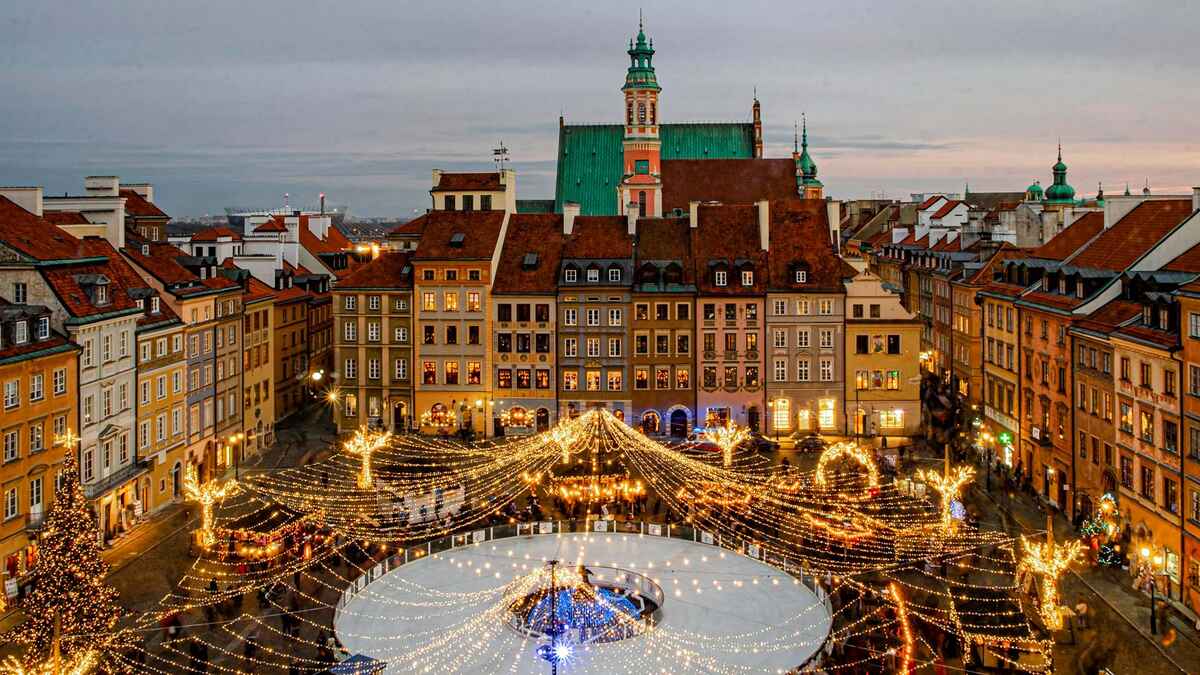
When you visit Warsaw, you witness a city that is fundamentally a mosaic of styles. Start with the meticulously reconstructed Old Town (Stare Miasto), a triumph of conservation that recreates the Baroque and Renaissance splendor that existed before 1944.
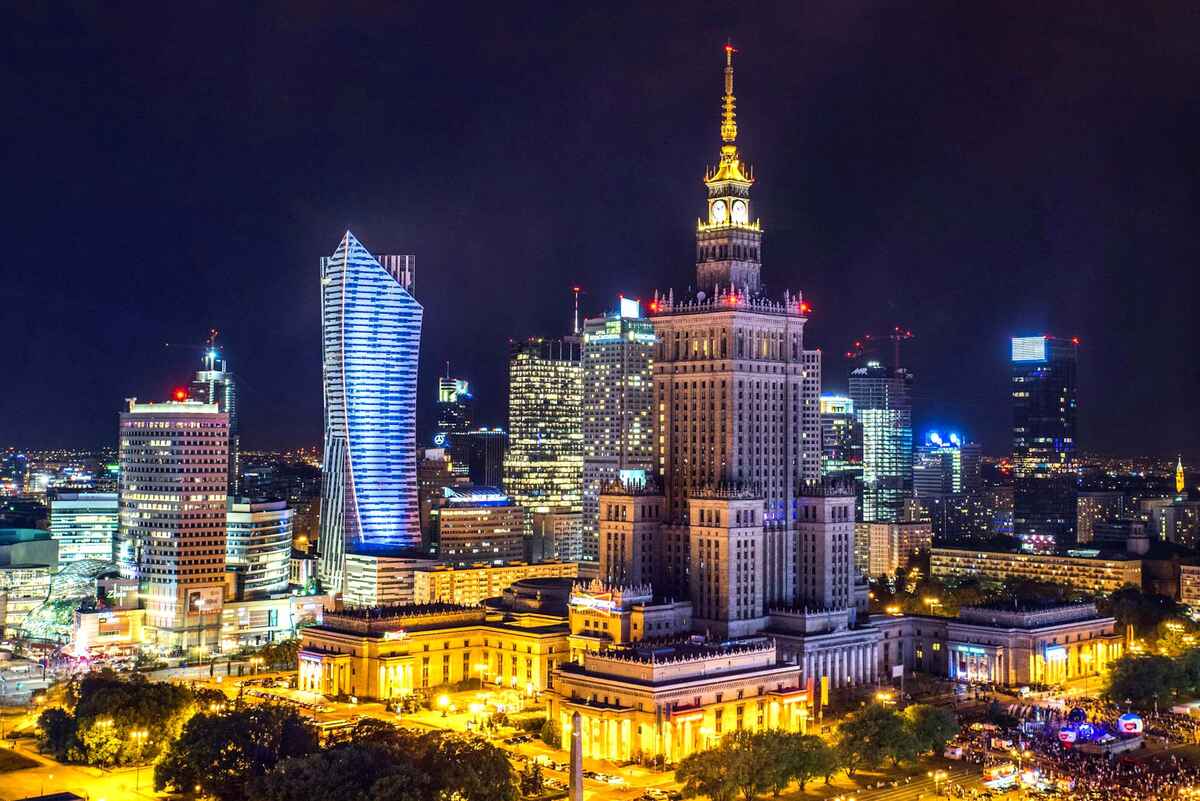
This area is the foundation of the city’s historical identity, yet it sits in stark contrast to the architecture of the immediate post-war period. The 1950s and 60s brought the era of socialist realism, exemplified most prominently by the colossal Palace of Culture and Science (Pałac Kultury i Nauki).
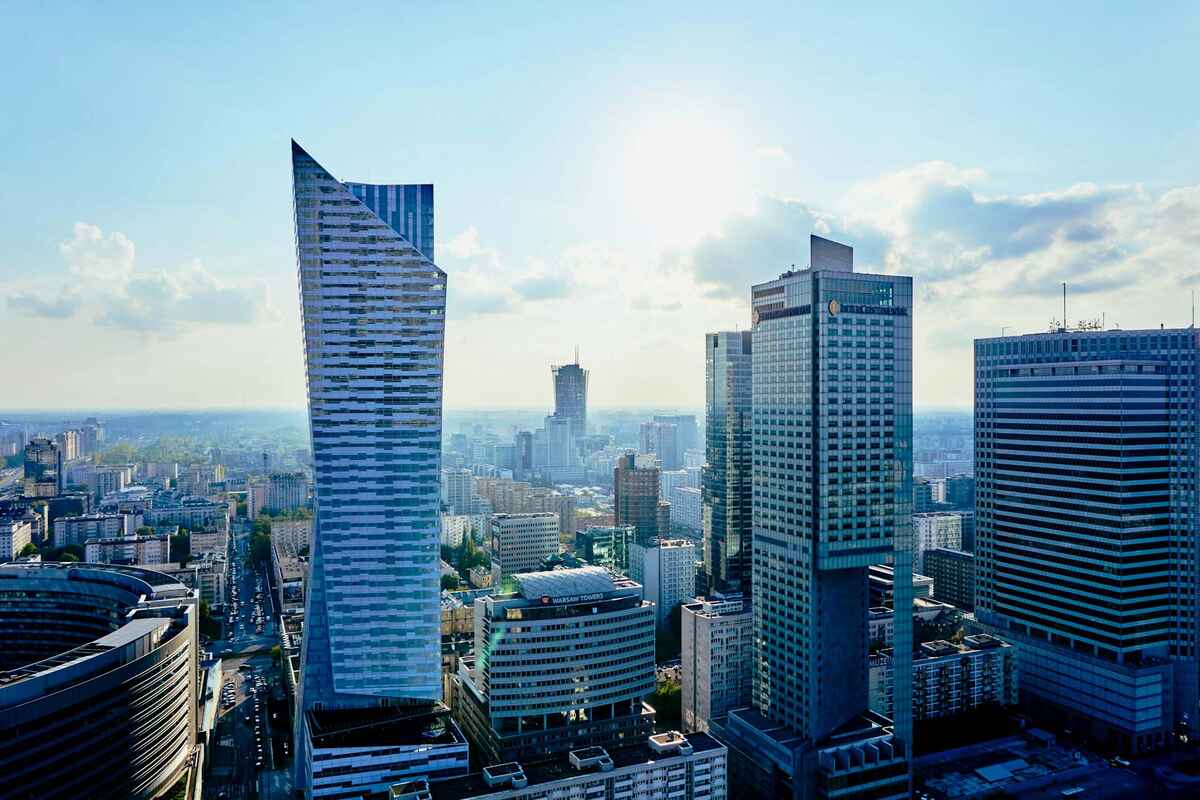
Moving into the 21st century, the skyline has exploded with modern, high-tech skyscrapers, particularly in the central business districts, signaling Poland’s rapid economic transformation since the fall of communism.
Structures like the Warsaw Spire and the Varso Tower (the tallest building in the European Union) represent a confident, forward-looking capital eager to establish itself as a global financial center.
This dynamic blend—from the quaint historical streets to the imposing communist monuments and the sleek glass towers—tells a unique story of resilience and constant reinvention, making the architectural tour an essential part of any exploration of Warsaw.
Visit Warsaw: What Are the Must-See Historical Landmarks in Poland’s Capital?
Visit Warsaw: While the city’s story is one marked by immense tragedy, particularly the near-total destruction during World War II, its miraculous post-war reconstruction is a testament to the resilient spirit of the Polish people.
You simply cannot begin your exploration without immersing yourself in the Old Town (Stare Miasto), a UNESCO World Heritage site.
Despite being meticulously rebuilt brick by brick based on 18th-century paintings and detailed records, the Old Town perfectly captures the pre-war charm and architectural splendor. Start your journey at the Castle Square (Plac Zamkowy), dominated by the majestic Royal Castle.
This former residence of Polish monarchs and the seat of the government is now a museum that houses stunning state rooms and royal apartments.
Just a short walk away is the Old Town Market Place (Rynek Starego Miasta), the heart of the district, featuring brightly colored merchant houses and the iconic Warsaw Mermaid Statue, the official symbol of the city, which legend says is the protector of this vibrant urban center.
Beyond the Old Town, the poignant history of this destination extends to the Polin Museum of the History of Polish Jews, a striking modern building that offers a comprehensive and deeply moving narrative spanning a thousand years.
Its interactive exhibits present a balanced view of Jewish life in Poland, from its flourishing times to the Holocaust. Another crucial, albeit somber, site is the Warsaw Rising Museum, which powerfully commemorates the 1944 uprising against Nazi occupation.
It is an intense, immersive experience that helps visitors grasp the sheer sacrifice made by the city’s inhabitants.
To truly understand the soul of Warsaw, one must appreciate both its historical tragedy and its triumphant rebirth, making every reconstructed cobblestone and restored façade a symbol of hope. Visit Warsaw and allow its history to speak to you through its magnificent monuments.
Visit Warsaw: Where Can I Find the Best Green Spaces and Relaxing Parks?
Visit Warsaw: Despite its image as a bustling, modern European metropolis, a significant portion of the city is dedicated to lush green spaces and expansive public parks, providing perfect havens for relaxation and escape from the urban tempo.
The undisputed crown jewel is Łazienki Park, often referred to as the Royal Baths Park. This 76-hectare complex is the largest park in the city and an exquisite example of Polish classical architecture and landscaping.
Centered around the elegant Palace on the Water (Pałac na Wyspie), it was the summer residence of Poland’s last king, Stanisław August Poniatowski.
Visitors can enjoy strolling along the picturesque canals, feeding the friendly squirrels, or attending the renowned free Chopin concerts held next to the composer’s monument every Sunday during the summer months—a truly unforgettable experience when you visit Warsaw.
Another essential green area is the Saxon Garden (Ogród Saski), one of the oldest public parks in the world, which was opened to the public in 1727.
Located right in the city center, adjacent to the Tomb of the Unknown Soldier, it features magnificent baroque sculptures, a beautiful fountain, and meticulously maintained flower beds.
For a more untamed, natural feel, the Vistula River Boulevards offer miles of pathways perfect for cycling, jogging, or simply sitting by the river to watch the sunset over the Praga district.
These boulevards have recently been revitalized, featuring modern infrastructure and cultural installations, making them a contemporary spot for socializing and recreation.
The sheer amount of accessible nature makes this capital a remarkably livable and attractive destination, showcasing a commitment to balancing historical reconstruction with modern urban well-being.
The abundance of parks demonstrates that the city is not only focused on its past but also on the quality of life for its residents and tourists who decide to explore this remarkable destination.
Visit Warsaw: What Are the Top Traditional Polish Dishes and Where Should I Eat Them?
Visit Warsaw: The culinary scene here is a vibrant blend of hearty, traditional Polish fare and modern, globally inspired cuisine, offering something to tantalize every palate. When you visit Warsaw, immersing yourself in the local food culture is a non-negotiable part of the experience.
The foundation of Polish gastronomy rests on staples like potatoes, root vegetables, and meat, and the first dish you must try is pierogi.
These are delicious dumplings, usually boiled or pan-fried, filled with a variety of ingredients, such as kapusta i grzyby (sauerkraut and mushrooms), minced meat, or the classic ruskie (potato and cottage cheese). You can find fantastic pierogi at pierogarnie (specialized pierogi restaurants) across the city.
Next on your list should be żurek, a sour rye soup served with white sausage and a hard-boiled egg, often presented dramatically inside a bread bowl. It is the ultimate comfort food, particularly satisfying on a chilly day.
For meat lovers, the classic schabowy (breaded pork cutlet, similar to schnitzel) and bigos (hunter’s stew, a rich mix of sauerkraut, fresh cabbage, and various meats) are essential choices that reflect the traditional home-style cooking of Poland.
To experience authentic, unfussy, and incredibly affordable Polish meals, seek out a Bar Mleczny (Milk Bar). These subsidized cafeterias, a relic of the communist era, offer simple, delicious, and traditional dishes served cafeteria-style.
While not glamorous, they provide a genuine glimpse into everyday Polish life and cuisine. For a more sophisticated dining experience that showcases modern interpretations of classic dishes, explore the restaurants in the Śródmieście and Praga districts, where talented chefs are elevating Polish flavors with global techniques.
The variety and depth of the food culture in this incredible European city ensure that every meal is an adventure.
Visit Warsaw: Which Cultural Venues Offer the Best Music and Performance Experiences?
Visit Warsaw: As a city with a profound history of cultural and artistic contribution, this capital offers a dynamic array of venues for music, theater, and performance that cater to every taste, from classical connoisseurs to avant-garde enthusiasts.
The foremost cultural institution is undoubtedly the Grand Theatre – National Opera (Teatr Wielki-Opera Narodowa). With its magnificent neoclassical façade and richly decorated interiors, it is one of the largest and most important opera houses in Europe, staging world-class performances of opera and ballet throughout the season.
Attending a performance here is a quintessential experience when you visit Warsaw. Given that this city was home to one of the world’s greatest composers, Frédéric Chopin, the classical music scene is particularly robust.
The Fryderyk Chopin Museum provides a technological and interactive journey through the life and work of the master, but for a live experience, the National Philharmonic (Filharmonia Narodowa) is the premier concert hall, offering a year-round program of symphonic music and major international soloists.
For a different vibe, the city’s lively theater scene is easily accessible, even for non-Polish speakers. The Teatr Studio and the TR Warszawa are known for their innovative, often challenging, and contemporary productions, pushing the boundaries of modern performance art.
In the rapidly gentrifying Praga district, a vibrant nightlife and live music scene have emerged. Clubs and smaller venues often feature local Polish jazz bands, indie rock acts, and electronic music DJs, providing a gritty, alternative counterpoint to the city’s grand classical halls.
Exploring the diversity of the performing arts available here—from the solemnity of a symphonic concert to the energy of a hidden jazz club—is key to appreciating its modern cultural identity.
Visit Warsaw: Where Can I Go for Unique Shopping and Souvenir Hunting?
Visit Warsaw: Whether you’re a dedicated shopper looking for high-end designer goods or a traveler searching for authentic, locally crafted souvenirs, the city provides a diverse and rewarding retail experience.
The shopping landscape here expertly blends historic marketplaces with sleek, modern commercial centers.
For a mainstream, large-scale experience, the Złote Tarasy (Golden Terraces) is a spectacular mall located right next to the central railway station. Its distinctive glass roof and wide array of international and Polish brand stores make it a convenient and popular hub.
However, for a more distinctive and enriching shopping trip, you’ll want to stray from the massive malls. To find the unique mementos of your journey, head to the Old Town and the surrounding streets.
While many shops in the Old Town cater to tourists, you can find high-quality amber jewelry, a Baltic specialty, and beautifully crafted Polish pottery (Bolesławiec ceramics) that make for excellent gifts. These items are distinct markers of this region’s craftsmanship.
When you visit Warsaw, don’t miss the chance to explore local markets and independent boutiques. The area around Mokotowska Street is known for its upscale, independent fashion boutiques, interior design stores, and artisan shops, offering a taste of contemporary Polish design that is both stylish and often more unique than global brands.
For vintage finds, the Kolo Flea Market (Bazar Na Kole), held on weekends in the Wola district, is a treasure trove of antiques, retro clothing, and quirky memorabilia. Searching through the stalls here is a thrilling activity that can yield surprising finds, from Soviet-era gadgets to unique artistic pieces.
This capital provides a truly varied shopping experience, proving that a trip here can satisfy both the casual observer and the serious collector.
Visit Warsaw: Are There Fun and Engaging Activities for Families and Children?
Visit Warsaw: This European destination is surprisingly family-friendly, offering a wide array of engaging, educational, and fun activities that cater specifically to children of all ages. Planning a trip here with the whole family is easy due to the sheer variety of kid-oriented attractions.
The absolute must-see is the Copernicus Science Centre (Centrum Nauki Kopernik), an interactive, hands-on museum dedicated to making science accessible and fun.
With hundreds of exhibits covering physics, chemistry, and biology, children can experiment and discover scientific principles through play, making it a highlight for both kids and curious adults. It is widely regarded as one of the best science museums in Europe.
Another fantastic option is the Warsaw Zoo (Miejski Ogród Zoologiczny), which played a heroic role during World War II, famously sheltering hundreds of Jews who were hidden by the zoo directors, Jan and Antonina Żabiński—a story documented in the book and film The Zookeeper’s Wife.
Today, it is a modern zoo home to diverse species and educational programs. For a bit of active fun, the Multimedia Fountain Park (Multimedialny Park Fontann) near the Old Town offers spectacular water, light, and sound shows on Friday and Saturday evenings during the warmer months, creating a magical atmosphere that captivates younger audiences.
Moreover, the city’s beautiful parks, such as Łazienki, provide ample space for running, picnicking, and letting off steam. When you visit Warsaw, consider taking a ride on the historic tram lines or a boat trip on the Vistula River for a simple yet memorable adventure.
The city’s commitment to culture extends to its youngest visitors, ensuring that a family vacation here is not just educational but also a genuinely joyful experience for everyone.
Visit Warsaw: What is the Coffee Culture Like, and Where Can I Find the Best Cafes?
Visit Warsaw: The coffee culture in this cosmopolitan capital has flourished in recent years, moving far beyond the simple espresso to embrace specialty brewing, artisan roasters, and a vibrant third-wave scene.
It’s a city where a leisurely afternoon spent in a stylish café is considered a cherished pastime. Finding a high-quality, meticulously crafted cup of coffee is now effortless, whether you prefer a classic flat white or a perfectly pulled V60 pour-over.
The city center and the areas around the Old Town are dotted with charming establishments, but the best spots often reside in the more residential or student-heavy neighborhoods like Mokotów and Żoliborz.
These districts offer a cozier, more local atmosphere away from the main tourist crowds. Many of the top-tier cafes now roast their own beans, providing a truly unique and fresh product.
Look for places that emphasize single-origin beans and offer detailed information about their sourcing and roasting process—a sure sign of a serious coffee purveyor. Beyond the coffee itself, the cafe culture provides an excellent opportunity to sample superb Polish pastries.
Don’t leave without trying a pączek (a rich, jam-filled doughnut, especially popular before Lent) or a slice of sernik (Polish cheesecake). When you visit Warsaw, seek out cafes that double as co-working spaces or art exhibition areas, as they often blend delicious beverages with creative community hubs.
This capital’s cafe scene is a dynamic reflection of its modern energy, making it a delightful place to relax, people-watch, or plan the next step of your Polish adventure. The sheer number of independent, quality establishments makes a coffee break here an essential part of the travel itinerary.
Visit Warsaw: Which Art Galleries and Museums Should I Prioritize for Polish Art?
Visit Warsaw: As a city that has served as a central hub for Polish intellectual and artistic life for centuries, the capital boasts an impressive array of art galleries and museums that showcase the depth and evolution of Polish creativity.
To truly appreciate the nation’s aesthetic soul, one must delve into these cultural institutions. The most important institution is the National Museum in Warsaw (Muzeum Narodowe w Warszawie).
This massive museum houses one of the largest collections of art in Poland, spanning from antiquity to modern times.
Its highlights include the Gallery of Polish Art, which features masterpieces from the Middle Ages to the early 20th century, including works by Jan Matejko and Stanisław Wyspiański, and a dedicated collection of decorative arts. It provides a comprehensive overview of the national artistic narrative.
For those interested in 20th and 21st-century works, the Museum of Modern Art (Muzeum Sztuki Nowoczesnej), though currently in various temporary locations while its new building is constructed, showcases contemporary Polish and international art, reflecting the more recent artistic dialogues and challenges faced by the nation.
Another fascinating space when you visit Warsaw is the Centre for Contemporary Art (Centrum Sztuki Współczesnej) at Ujazdów Castle.
Situated within a beautiful baroque castle, it is a multidisciplinary space that hosts cutting-edge exhibitions, performances, and residency programs, making it a key venue for understanding the current avant-garde.
The focus on preserving and promoting Polish art—from historical paintings that illustrate national pride to challenging contemporary installations—demonstrates the city’s profound respect for its cultural heritage.
A visit to these major galleries provides invaluable context for understanding the Polish identity through the lens of its most profound artistic expressions.
What is the Nightlife Scene Like and Where Are the Best Areas to Go Out?
Visit Warsaw: The city’s nightlife is as diverse and energetic as any major European capital, offering everything from sophisticated cocktail lounges and high-energy dance clubs to cozy pubs and underground music venues.
The evening atmosphere here is welcoming and vibrant, ensuring that your exploration doesn’t stop when the sun goes down. The nightlife tends to be concentrated in several distinct areas, each offering a unique flavor.
The Old Town and Nowy Świat (New World Street) area are excellent for starting the evening. Here you’ll find numerous elegant bars and classic pubs perfect for enjoying a glass of Polish vodka or a locally brewed craft beer in a picturesque setting.
For a more intense clubbing experience, head to the city center and the streets surrounding the Central Railway Station. This is where many of the larger, mainstream nightclubs are located, often featuring international DJs and electronic music.
However, one of the most exciting areas to visit Warsaw after dark is the Praga district, particularly the areas around ulica Ząbkowska. Once an industrial and slightly rough-around-the-edges neighborhood, it has transformed into a bohemian hub for artists, students, and young professionals.
Praga is the place to find alternative bars, quirky venues, and small, intimate music spots that champion local bands and a more independent vibe.
Polish craft beer has experienced a revolution in recent years, so be sure to look for dedicated craft beer pubs (multi-taps) where you can sample inventive local brews.
This city offers an electrifying and varied nighttime environment that caters to a multitude of tastes, whether you seek a quiet cultural evening or an all-night dance party.
What Are the Best Self-Guided Walking Routes for First-Time Visitors?
Visit Warsaw: The layout of the city, particularly its central and historic areas, makes it a perfect place for exploration on foot, offering a multitude of self-guided walking routes that allow you to absorb its beauty and history at your own pace.
For a first-time visitor, a structured walk is the best way to connect the dots between the city’s major landmarks. The most essential route is the Royal Route (Trakt Królewski). This historic path stretches for several kilometers, connecting the Royal Castle in the Old Town to the Wilanów Palace in the south.
While too long to walk in one go, the central segment is a perfect half-day itinerary. Start at Castle Square, proceed through the Old Town, and then continue south along Krakowskie Przedmieście and Nowy Świat.
This section is lined with beautiful churches, statues (including the famous statue of Polish astronomer Nicolaus Copernicus), the University of Warsaw, and numerous historical buildings, many of which house elegant cafes and boutiques.
This route provides a narrative spine to the city, linking the medieval core with later 18th-century expansion. Another vital walking tour when you visit Warsaw should focus on the poignant history of the Former Jewish Ghetto.
Starting near the POLIN Museum, you can follow the historical markers that outline the ghetto walls, offering a somber but necessary look at the city’s wartime tragedy.
This is not a walk for sightseeing, but for reflection and understanding. For a lighter, more contemporary perspective, explore the Vistula River Boulevards on the west bank and cross the river to walk through the colorful, street-art-laden streets of the Praga district, which survived the war’s destruction largely intact and offers a fascinating architectural contrast to the rebuilt Old Town.
This great European city rewards those who take the time to wander its diverse streets and avenues.
How Do I Best Navigate the City Using Public Transportation?
Visit Warsaw: Navigating this large, geographically sprawling city is remarkably straightforward, thanks to its efficient, comprehensive, and well-integrated public transportation system.
Unlike many older European capitals, the system is modern and easy to use, even for non-Polish speakers. The main components are the Metro (Subway), Trams, and Buses. The Warsaw Metro currently consists of two main lines, M1 (north-south) and M2 (east-west), which intersect at the Świętokrzyska station.
The metro is clean, fast, and the best way to cover long distances quickly. It’s particularly useful for traveling between the central districts and the farther reaches of the city.
Trams are the workhorses of the urban network, providing extensive coverage and running mostly above ground, offering a great way to sightsee while traveling. Buses fill in the gaps, serving local neighborhoods and linking major hubs.
Tickets are valid across all modes of transport (metro, tram, and bus), which greatly simplifies the process. You can buy time-based tickets (e.g., 20-minute, 75-minute, or 90-minute) or a 24-hour, 72-hour, or monthly pass, depending on the length of your stay.
For most tourists who plan to visit Warsaw for a few days, the 72-hour ticket provides the best value and flexibility. Tickets can be purchased from automated machines at metro stations, at some tram stops, and on most buses and trams.
Remember to validate your ticket immediately upon boarding a bus or tram, or before descending onto the metro platform, to avoid fines.
The efficiency and reliability of the public transport system make this capital a breeze to explore without the need for taxis or rental cars, ensuring your entire itinerary is easily accessible.
Conclusion
As our journey through this magnificent capital concludes, we hope you feel inspired by the sheer depth and diversity of experiences that await you.
From the historical gravity of the meticulously reconstructed Old Town to the pulsating energy of its modern cafes and evolving nightlife in districts like Praga, this city is a testament to the enduring human spirit. It is a destination that demands more than a casual glance; it asks you to pause, reflect on its history, and then celebrate its triumphant present.
Whether you’ve come for the world-class museums, the comforting flavors of pierogi and żurek, or the vibrant pulse of its contemporary art scene, Warsaw promises a rich, rewarding, and often surprising adventure. It is a city of layers—historical, architectural, and cultural—waiting for you to peel them back.
So, pack your bags, book your flight, and get ready to experience a European capital that is truly forging its own unique future while honoring a powerful past. Your exploration starts now.
FAQ
The best time to visit Warsaw is generally during the late spring (May and June) and early autumn (September). During these months, the weather is pleasantly mild, perfect for walking tours, and the city hosts numerous cultural festivals. Summer (July and August) is also popular, offering warm weather and the famous free Chopin concerts in Łazienki Park.
No, Warsaw is generally considered one of the more affordable major European capitals. While the Old Town and high-end restaurants can be pricey, accommodations, public transport, and local food (especially at Milk Bars) offer excellent value, making it budget-friendly for those looking to visit Warsaw.
To fully appreciate the key historical sites, museums (like the Warsaw Rising Museum and POLIN), and major districts (Old Town, Praga), we recommend setting aside a minimum of 3 to 4 days. This duration allows sufficient time to truly experience the depth of culture when you visit Warsaw.
The official currency in Poland is the Polish Złoty (PLN), not the Euro. Credit and debit cards (Visa, Mastercard) are widely accepted in almost all restaurants, shops, and museums, though it is always wise to have some local currency on hand for smaller markets or tipping when you visit Warsaw.
Absolutely. The public transport system—comprising the Metro, Trams, and Buses—is modern, efficient, and easy to navigate. Purchasing a 72-hour pass is the simplest and most cost-effective way for tourists to easily explore all the highlights when they visit Warsaw.
Yes, Warsaw is generally considered a very safe city, even for solo female travelers. Standard precautions should always be observed, but major tourist areas and public transport are well-lit and monitored. You can feel secure when planning to visit Warsaw.
You absolutely must try pierogi (dumplings with various fillings), żurek (sour rye soup), and schabowy (pork cutlet). For a quick, authentic experience, seek out a traditional Bar Mleczny (Milk Bar) to enjoy hearty, local dishes when you visit Warsaw.
Yes, the city’s main attractions, including the Royal Castle, Łazienki Park, and the major museums, are conveniently located near Metro or Tram stops, making it easy to hop between sites. Public transit ensures a seamless journey for those who visit Warsaw.
The Palace of Culture and Science (PKiN) is a massive skyscraper gifted by the Soviet Union. While controversial, it remains an iconic landmark and cultural hub. It represents the socialist realist era and offers a stunning viewing deck—a key stop for those who visit Warsaw for its architecture.
While learning a few basic Polish phrases is appreciated, English is widely spoken in all tourist areas, hotels, restaurants, and museums. Navigating the city and communicating with younger generations is generally very easy, so you can confidently plan to visit Warsaw without language barriers.

Author: Horeca Health
Horeca Health









Leave a Reply