HORECA Startups: Introduction
HORECA Startups: Launching a café or bar is a dream shared by many, yet turning that vision into a profitable reality requires more than just a great espresso machine or a stylish interior.
The world of HORECA startups is fast-paced, demanding, and incredibly rewarding for those who get the details right from day one. In such a competitive landscape, your success depends on your ability to blend creative passion with a disciplined, data-driven business strategy.
Navigating the complexities of the HORECA industry means staying ahead of trends while mastering the fundamentals of service, finance, and operations.
This guide is designed to provide you with a comprehensive blueprint for success, covering everything from initial concept validation to long-term scaling. If you are ready to transform your hospitality idea into a thriving local landmark, let’s dive into the essential steps for building a standout brand.
HORECA Startups: How do you validate your business concept before investing?
HORECA Startups: Entering the vibrant world of hospitality requires more than just a passion for great coffee or craft cocktails; it demands a rigorous validation of your core concept to ensure it stands the test of market reality.
When launching new HORECA startups, entrepreneurs often fall into the trap of building a business based on personal preference rather than data-driven demand. To avoid this, you must begin with deep market research that goes beyond looking at what the café across the street is doing.
Start by identifying a specific gap in the local ecosystem—perhaps the neighborhood lacks a high-quality brunch spot that caters to remote workers, or maybe there is a total absence of late-night bars with a focus on sustainable, locally sourced ingredients.
Understanding the local demographic is the cornerstone of the HORECA industry, as your success depends entirely on how well you serve the people living and working within a three-mile radius of your front door.
Conducting surveys, analyzing foot traffic patterns, and even running small-scale pop-up events can provide invaluable feedback before you sign a long-term lease. You want to ensure that your “unique selling proposition” is actually something people are willing to pay for repeatedly.
This stage is about being honest with yourself regarding the feasibility of your menu, your pricing strategy, and the overall atmosphere you intend to create. By focusing on a lean approach early on, you can pivot your ideas without losing a fortune.
Remember that the most successful ventures in this space are those that solve a problem or fulfill a desire that hasn’t been addressed by existing players.
Validating your concept through actual engagement with your target audience ensures that when you finally open your doors, you aren’t just hoping for customers—you are welcoming a community that has been waiting for exactly what you have to offer.
HORECA Startups: Why is a strong brand identity crucial for long-term success?
HORECA Startups: Creating a brand is not merely about choosing a catchy name or a pretty logo; it is about crafting an emotional connection and a narrative that resonates with every guest who walks through your door.
For modern HORECA startups, branding serves as the invisible thread that ties the interior design, the menu choices, and the service style into a cohesive experience.
In the highly competitive HORECA landscape, where consumers are overwhelmed with choices, a strong identity acts as your primary differentiator.
Your brand should tell a story: Is your bar a hidden speakeasy reflecting the grit and glamour of the 1920s, or is your café a bright, minimalist sanctuary focused on the purity of Nordic roasting techniques?
Consistency is the secret sauce here. If your social media promises a high-end, sophisticated evening, but your physical space feels cluttered or casual, you create a cognitive dissonance that drives customers away.
Think about your brand voice—how do you speak to your audience in captions, on your website, and through your staff? Every touchpoint is an opportunity to reinforce who you are. This identity helps in building a loyal tribe of followers who become your brand ambassadors.
When people feel like they belong to the world you’ve created, they are more likely to forgive minor hiccups and more eager to share their experiences online. A well-defined brand also makes your operational decisions easier; if a new trend doesn’t fit your core identity, you simply ignore it.
Investing time in your visual and philosophical branding from day one ensures that you aren’t just another shop on the corner, but a destination with a soul that people genuinely care about and want to support for years to come.

HORECA Startups: How do you choose the perfect location for your café or bar?
HORECA Startups: Location is often cited as the most critical factor in the survival of a new hospitality business, yet finding the “perfect” spot involves a complex balance of visibility, affordability, and neighborhood synergy.
For HORECA startups, the search for a venue must be guided by the specific needs of their target audience rather than just the lowest rent or the trendiest zip code. You need to look at the micro-environment: Is there enough foot traffic during your peak hours?
If you are opening a morning-focused coffee shop, being on the “commuter side” of the street can make a massive difference in daily sales. Conversely, a craft bar might thrive in a slightly tucked-away location that offers a sense of exclusivity and intimacy.
It is also essential to consider the technical aspects of the HORECA sector, such as zoning laws, waste management access, and the capacity for heavy-duty kitchen ventilation.
Before committing, spend several days at the potential site at different times—observe who walks by, check the noise levels, and see if the neighboring businesses complement your offering.
A great location should feel like it belongs to the fabric of the community while offering enough “stopping power” to entice passersby. High visibility is great, but it usually comes with a high price tag, so you must calculate whether the projected volume justifies the overhead.
Accessibility is another key pillar; if your customers can’t find parking or easy public transport links, they might choose a more convenient competitor. Don’t rush this process.
Waiting a few extra months for the right space is far better than launching in a location that forces you to fight against the current every single day. The right four walls will act as a silent partner in your business, naturally drawing people in and setting the stage for everything else you do.
HORECA Startups: What legal requirements and permits should you prioritize?
HORECA Startups: Navigating the bureaucratic maze of licenses and regulations is arguably the least glamorous part of the journey, but it is the foundation upon which your entire operation legally rests.
New HORECA startups must be incredibly diligent about compliance, as a single missing permit can lead to heavy fines or, worse, a forced closure right after your grand opening.
The requirements vary significantly depending on your jurisdiction, but typically, you will need to secure health department approvals, business licenses, and specific alcohol permits if you plan to serve spirits or wine.
In the HORECA world, food safety is non-negotiable; you must ensure that your kitchen meets all sanitary codes and that your staff is properly trained in handling produce and equipment.
Fire safety and occupancy permits are also vital, as they dictate how many guests you can legally host at one time. Beyond the standard licenses, you might need music permits if you plan to have a DJ or live bands, and sidewalk café permits if you want to offer outdoor seating.
It is highly recommended to consult with a legal professional who specializes in hospitality to ensure you haven’t missed any local ordinances. You should also look into insurance policies that cover general liability, workers’ compensation, and liquor liability.
Being proactive about these legalities shows that you are a serious professional and protects your investment from unforeseen legal challenges. Start this process as early as possible, as government agencies often have long processing times that can delay your launch by months.
While it feels like a mountain of paperwork, getting your legal house in order allows you to focus on the creative and operational aspects of your business with total peace of mind, knowing that you are fully protected and compliant with all local standards.
HORECA Startups: How does an efficient floor plan impact your daily operations?
HORECA Startups: The layout of your café or bar is a silent conductor that dictates the flow of guests and the efficiency of your staff, directly impacting your bottom line and the overall customer experience.
For HORECA startups, designing a floor plan is a delicate dance between maximizing seating capacity and ensuring that your team can move quickly without bumping into each other or the patrons.
You need to think about the “customer journey” from the moment they step inside: Where do they order? Where do they wait for their drinks? Is the path to the restroom clear? In the HORECA industry, every square meter costs money, so wasted space is essentially wasted profit.
The “back of house” is just as important; an awkwardly designed kitchen or bar prep area can lead to slower service times and increased staff fatigue. You want to minimize the number of steps a barista or bartender has to take to complete a task.
Strategic placement of point-of-sale systems, glasswashers, and ingredient storage can shave seconds off every order, which adds up to significant gains during a busy rush.
Lighting and acoustics also play a major role in how the space feels; a floor plan that looks great on paper but feels like a noisy warehouse in practice will struggle to retain customers.
Consider the “dead zones” where people might feel uncomfortable sitting and try to turn them into cozy nooks or functional storage. An efficient layout doesn’t just improve the speed of service; it creates a sense of ease and comfort that makes guests want to linger and order that second round.
By investing in professional design or using specialized software to simulate movement within the space, you can create an environment that supports your staff’s hard work rather than hindering it.
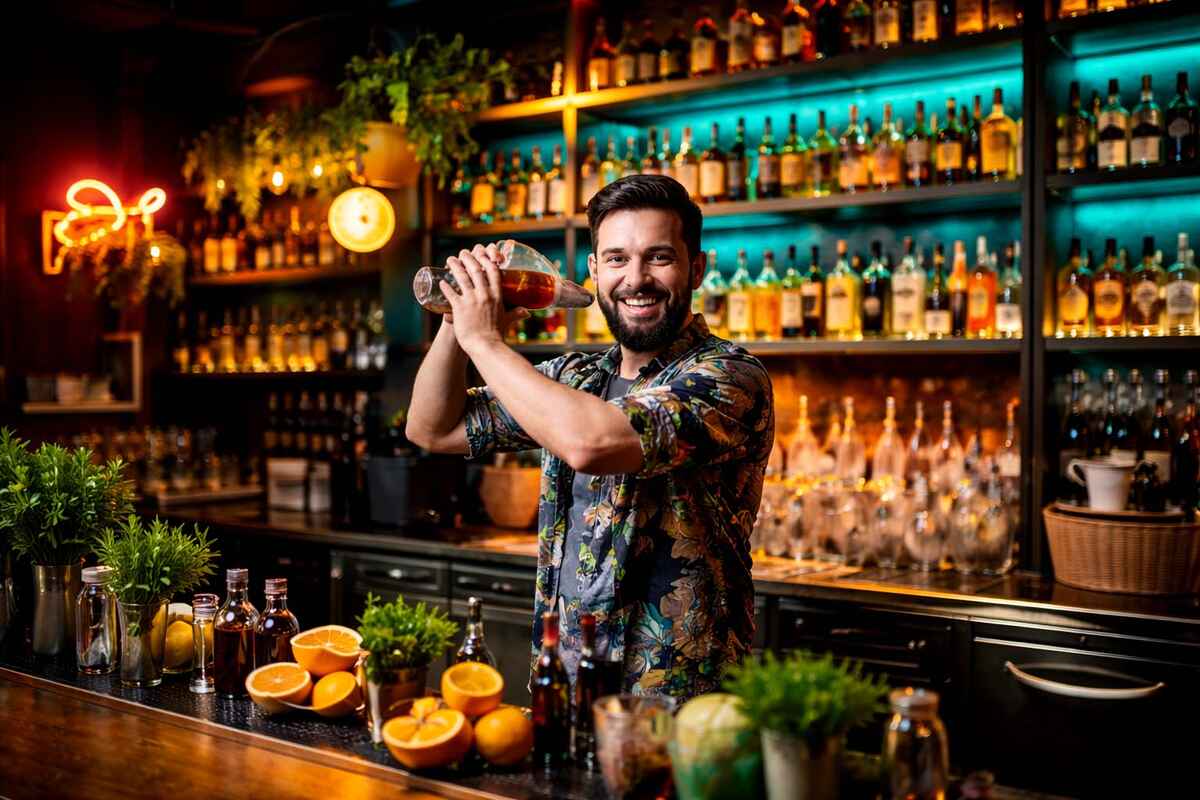
HORECA Startups: How do you recruit and train a team that embodies your values?
HORECA Startups: Your staff members are the living, breathing representation of your brand, and in an industry defined by service, your ability to build a great team is perhaps your most valuable skill.
When hiring for HORECA startups, it is often better to hire for personality and “soft skills” rather than just technical experience. You can teach someone how to pull a perfect espresso shot or mix a classic negroni, but you cannot easily teach them how to be genuinely warm, observant, and resilient under pressure.
The HORECA sector is notorious for high staff turnover, so creating a positive, supportive work culture is essential for retention. Start by clearly defining your core values: Do you prioritize speed and efficiency, or are you focused on deep product knowledge and slow, personalized service?
Once you have the right people, a comprehensive training program is a must. This shouldn’t just be a one-day walkthrough; it should be an ongoing process that covers everything from the technicalities of the menu to the nuances of conflict resolution.
Empower your team to make decisions—if a customer is unhappy, give your staff the authority to fix it on the spot. This builds trust and makes them feel like partners in the business rather than just cogs in a machine.
Regular check-ins and feedback loops help identify issues before they become toxic, and offering clear paths for career growth can turn a part-time job into a long-term career for your best employees.
Remember, a happy, well-trained team provides better service, which leads to happier customers and higher tips. Your team’s energy is contagious; if they love being there, your guests will feel that positivity, and it will become one of the primary reasons they keep coming back to your establishment.
HORECA Startups: How do you choose the right suppliers for quality and consistency?
HORECA Startups: The quality of your final product is only as good as the raw ingredients you bring into your building, making your choice of suppliers one of the most strategic decisions you will make.
For HORECA startups, building a reliable supply chain is about finding a balance between premium quality, consistent delivery, and manageable costs. You need partners who understand the fast-paced nature of the HORECA world and who are willing to grow with you.
Start by identifying your “hero” ingredients—the coffee beans for your signature roast or the specific spirits for your cocktail menu—and find specialists for these items.
For more general goods like dairy, produce, or dry goods, you might opt for a larger broadline distributor to simplify invoicing and logistics.
However, don’t overlook local artisans; sourcing bread from a neighborhood bakery or honey from a nearby farm can add a unique story to your menu that customers love. When vetting suppliers, don’t just look at the price list.
Ask about their delivery schedules, their return policies for sub-par items, and their reliability during peak seasons. A supplier who offers a slightly lower price but frequently misses delivery windows will cost you more in the long run through lost sales and stress.
It is also wise to have backup options for your most critical items to avoid being left empty-handed if a primary vendor has a supply chain issue. Building strong, transparent relationships with your reps can often lead to better deals, early access to new products, and extra support during tough times.
Treat your suppliers as extensions of your team, and they will often go the extra mile to ensure you have exactly what you need to keep your kitchen or bar running smoothly every single day.
HORECA Startups: How should you manage your initial capital and daily cash flow?
HORECA Startups: Financial literacy is the difference between a passion project that drains your bank account and a thriving business that provides a sustainable income.
Most HORECA startups fail not because their food or drinks are bad, but because they run out of cash before they hit their break-even point.
You must start with a realistic and detailed budget that accounts for every possible expense, from the obvious ones like rent and equipment to the hidden ones like permit fees, marketing, and a three-to-six-month “runway” of operating capital.
In the HORECA field, margins can be notoriously thin, so every percentage point matters. You need to have a deep understanding of your Prime Cost—the combined cost of your goods sold and your labor. Ideally, this should stay below 60% of your total revenue.
Daily cash flow management is equally critical; you need to know exactly how much money is coming in and going out every single day. Using modern accounting software that integrates with your point-of-sale system can automate much of this, giving you real-time insights into your financial health.
Be disciplined about your inventory—overstocking leads to waste and tied-up capital, while understocking leads to lost sales. Keep a close eye on your labor costs, adjusting schedules based on peak and slow periods to avoid paying for staff who are standing around.
It is also important to build a “rainy day” fund for unexpected repairs or slow months. Being frugal without compromising quality is an art form.
By staying on top of your numbers and being willing to make tough financial adjustments when necessary, you ensure that your business has the staying power to weather the initial storm of opening and eventually reach a state of consistent profitability.

HORECA Startups: Which tech tools are essential for modern hospitality operations?
HORECA Startups: In the digital age, technology is no longer a luxury but a fundamental necessity for staying competitive and providing the level of service that modern consumers expect.
For HORECA startups, choosing the right tech stack can drastically reduce manual errors and free up your time to focus on what matters: the guests. The heart of your technology should be a robust Point of Sale (POS) system that does more than just process transactions.
Today’s best HORECA systems offer integrated inventory management, labor scheduling, and detailed sales analytics that tell you exactly which items are your best sellers and which are just taking up space on the menu.
Beyond the POS, consider using a cloud-based kitchen display system (KDS) to replace messy paper tickets and improve communication between the front and back of house.
Customer Relationship Management (CRM) tools are also becoming vital; they allow you to track regular customers, offer personalized rewards, and run targeted email or SMS marketing campaigns.
If you offer reservations, an automated booking platform can reduce the time your staff spends on the phone while providing you with valuable data on guest preferences.
Don’t forget the importance of your digital presence—a fast, mobile-friendly website and an active presence on social media are your primary marketing tools. Even internal communication can be improved with apps that allow your team to swap shifts or receive updates instantly.
While it might be tempting to go with the cheapest options, investing in high-quality, scalable technology will save you countless headaches as your business grows.
The goal is to use tech to enhance the human experience, not replace it, ensuring that your operations are as slick and professional as the drinks and food you serve.
HORECA Startups: How do you build an effective marketing strategy on a budget?
HORECA Startups: Attracting your first hundred customers is often the hardest part of the journey, requiring a creative marketing strategy that relies more on community engagement than expensive advertising.
For HORECA startups, your most powerful tool is social media, particularly platforms like Instagram and TikTok, where visual storytelling can turn a simple dish or drink into a viral sensation.
You don’t need a professional film crew; a modern smartphone and a good eye for lighting are enough to showcase the “vibe” of your space and the quality of your offerings.
Within the HORECA world, word-of-mouth remains the gold standard of marketing, so focus on creating “Instagrammable” moments within your venue—whether it’s a unique mural, a beautifully garnished cocktail, or an interesting floor tile pattern.
This encourages guests to do your marketing for you by sharing their experiences with their own followers. Local SEO is another critical, often free, component; ensure your Google Business Profile is fully optimized with high-quality photos, accurate hours, and a link to your menu.
Engaging with your local community is also vital—partner with nearby businesses, host a “soft opening” for local influencers and neighbors, or sponsor a small community event.
Don’t underestimate the power of an email list; offering a small incentive for people to sign up allows you to reach them directly with news about special events or new menu items.
The key is to be authentic and consistent. Rather than trying to reach everyone, focus on reaching the right people—those who live and work nearby and are most likely to become your regulars.
By being active, present, and genuinely engaged both online and offline, you can build a loyal following without needing a massive marketing budget.
How do you maintain quality and consistency as you scale up?
HORECA Startups: The biggest challenge for any successful venture is maintaining the exact same level of excellence on day 300 as you had on day one, especially as you begin to see higher volumes of customers.
For HORECA startups, consistency is the foundation of trust; if a guest comes back for their favorite sandwich and it tastes different every time, they will eventually stop coming. To combat this, you must implement Standard Operating Procedures (SOPs) for every single task in the building.
This includes everything from the exact recipe for a signature sauce to the specific way a table is wiped down or how a guest is greeted at the door. In the HORECA industry, these standards ensure that even if your head chef or star bartender is away, the quality remains unchanged.
Regular training and “refreshers” for your staff are essential to prevent “standard creep,” where small corners start being cut over time. Use checklists for opening and closing duties to ensure nothing is missed, and conduct regular taste tests and quality audits of your products.
Feedback is your best friend here; pay close attention to online reviews and listen to what your regulars are saying. If you notice a recurring complaint, address it immediately and update your procedures to prevent it from happening again.
Technology can also help; some systems allow you to track the consistency of your coffee extractions or the temperature of your walk-in fridges in real-time.
Maintaining high standards is exhausting and requires constant vigilance, but it is what separates the flash-in-the-pan businesses from the local institutions. By being obsessed with the details and refusing to compromise on quality, you create a brand that people know they can rely on, no matter when they visit.
What are the most common pitfalls that lead to early failure?
HORECA Startups: Understanding why others fail is just as important as knowing how to succeed, and in the hospitality world, the same few mistakes tend to trip up even the most well-intentioned entrepreneurs.
Many HORECA startups struggle because they are undercapitalized from the start; they spend their entire budget on a beautiful fit-out and have nothing left for the first six months of slow sales. Another major pitfall is ignoring the importance of a strong management presence.
Owners who think they can just “set it and forget it” often find their standards slipping and their staff becoming unmotivated. In the HORECA sector, you need to be present, especially in the first year, to set the tone and catch problems early.
Over-complicating the menu is another common error; it’s better to do five things perfectly than twenty things average. A massive menu leads to higher food waste, slower service, and customer confusion. Poor location choice, as mentioned before, is a “silent killer,” but so is failing to adapt to feedback.
If your customers are telling you the music is too loud or the chairs are uncomfortable, and you ignore them because of your “artistic vision,” you are choosing ego over profit.
Finally, neglecting the boring side of the business—the accounting, the inventory, and the legal compliance—is a recipe for disaster. Success in this industry is a marathon, not a sprint, and it requires a balance of creative passion and disciplined business management.
By being aware of these common traps and proactively working to avoid them, you significantly increase your chances of building a café or bar that not only survives the first year but thrives for many years to come.
Conclusion
Building a name for yourself in the world of HORECA startups is an intense, exhilarating journey that tests both your creativity and your grit.
While the challenges are real—from securing the right permits to maintaining day-to-day consistency—the reward of seeing your space filled with happy guests makes every effort worthwhile.
Success in the HORECA sector doesn’t happen by accident; it’s the result of a solid foundation, a dedicated team, and a relentless focus on quality.
As you take your first steps, keep your vision clear and your operations lean, and you’ll be well on your way to creating a destination that becomes a true staple in your community.
FAQ
The startup costs vary significantly based on your location and the size of your venue. Generally, most HORECA startups should budget anywhere from $100,000 to $350,000 for a standard café or bar. This includes everything from interior renovations and kitchen equipment to your initial inventory and a few months of working capital to keep things running while you build your customer base.
Success for HORECA startups often comes down to differentiation. Instead of trying to be everything to everyone, look for a “gap” in your local neighborhood. You might find a lack of high-quality specialty coffee in a residential area or a need for a cocktail bar that focuses on sustainable, zero-waste practices. Market research and observing foot traffic are key to finding that sweet spot.
Most HORECA startups struggle due to undercapitalization and poor cash flow management. It’s common to spend the entire budget on the “opening day” look and feel, leaving nothing for the slower months that follow. Additionally, failing to maintain consistent service quality or ignoring customer feedback can lead to a quick decline in reputation.
Yes, a professional business plan is essential. Not only does it help HORECA startups secure loans or attract investors, but it also serves as a strategic roadmap. It forces you to think through your pricing, staffing, and marketing strategies before you start spending money, which can save you from costly mistakes later on.
At a minimum, HORECA startups need a robust, cloud-based Point of Sale (POS) system that tracks sales and inventory in real-time. Additionally, having a mobile-friendly website and using staff scheduling software can drastically improve efficiency. For those focusing on food, a Kitchen Display System (KDS) is a great tool to minimize errors and speed up service.
The hospitality industry is known for turnover, but HORECA startups can beat the trend by focusing on culture and training. By offering competitive pay, clear paths for career growth, and a supportive environment where staff feel valued, you can build a loyal team that stays with you long-term, reducing the high costs of constant rehiring.
For most HORECA startups, Instagram and TikTok are the most effective channels. Hospitality is a visual business, and high-quality photos or short videos of your space and products can go viral locally. Combining this with a strong Google Business Profile for local SEO ensures that people searching for “café near me” find you first.
Every business is different, but most HORECA startups expect to reach a break-even point within 12 to 24 months. The first year is usually about building brand awareness and refining operations, which is why having an emergency fund or “runway” of cash is so important for survival during the early stages.
While chains have massive budgets, HORECA startups have the advantage of personality and community. You can offer a level of personalized service, local storytelling, and a unique atmosphere that corporate chains simply cannot replicate. Guests often prefer supporting local businesses that feel authentic and have a “soul.”
You will typically need a general business license, a health department permit, and a fire safety certificate. If you plan to serve alcohol, a liquor license is mandatory and often takes the longest to acquire. For HORECA startups, it is vital to start the permit application process months before your planned opening date to avoid delays.

Author: Horeca Health
Horeca Health

















Leave a Reply