HORECA Future: Introduction
HORECA Future represents a thrilling new era where traditional hospitality meets the fast-paced world of digital innovation and sustainable living.
As we look at the modern HORECA landscape, it is clear that the industry is undergoing a massive transformation to meet the needs of a more tech-savvy and conscious generation of travelers.
This shift is not just about adopting new gadgets; it is about reimagining how we connect with guests on a deeper, more personalized level while maintaining operational excellence.
Staying relevant in the HORECA Future requires a proactive approach to understanding these emerging trends, from the integration of smart AI to the rise of eco-friendly practices.
In this post, we will explore the key drivers that are currently shaping the way hotels and restaurants operate globally.
By looking at the HORECA industry through the lens of innovation, we can better prepare for a landscape that values efficiency, creativity, and authenticity above all else. Let’s dive into the twelve essential questions that define the next decade of service and hospitality.
HORECA Future: How is Artificial Intelligence redefining the guest experience?
HORECA Future is no longer a distant concept found in science fiction novels; it is actively unfolding through the integration of sophisticated artificial intelligence within our favorite hotels and dining establishments.
When we look at the current landscape of the HORECA sector, we see AI-driven chatbots handling complex reservations and personalized concierge services that anticipate a traveler’s needs before they even articulate them.
This shift toward automation doesn’t mean the human touch is disappearing; rather, it is being augmented. By offloading repetitive administrative tasks to smart algorithms, staff members are freed to focus on genuine hospitality and emotional connection, which remains the heartbeat of the industry.
These technological advancements ensure that every interaction is tailored to individual preferences, from room temperature settings to curated menu recommendations based on dietary history.
As we lean further into this digital transformation, the overall efficiency of operations improves, reducing wait times and minimizing human error in booking systems.
This evolution within the HORECA world represents a commitment to excellence and modernization, ensuring that the service industry remains competitive in an increasingly fast-paced global market.
Ultimately, the goal is to create a seamless journey where technology acts as a silent, helpful partner in every guest’s adventure.
HORECA Future: Can sustainability become the primary driver of profitability?
HORECA Future initiatives are increasingly centered around the concept of “green profit,” where ecological responsibility and financial success go hand in hand.
In the modern HORECA environment, guests are no longer satisfied with just a comfortable bed or a tasty meal; they want to know that their patronage supports ethical sourcing and waste reduction.
This shift in consumer behavior is forcing businesses to rethink their supply chains, moving away from single-use plastics and toward local, regenerative agriculture.
Implementing energy-efficient lighting, smart HVAC systems, and comprehensive composting programs might require an initial investment, but the long-term savings and brand loyalty they generate are immense.
By positioning sustainability at the core of their business model, hospitality leaders are discovering that being “eco-friendly” is a powerful marketing tool that resonates with the values of Gen Z and Millennial travelers.
The HORECA industry has a significant environmental footprint, and addressing this through circular economy principles is both a moral imperative and a savvy business move.
When a restaurant reduces food waste through predictive analytics, it isn’t just saving the planet—it is directly improving its bottom line. This holistic approach to management ensures that the industry can thrive for decades to come while preserving the very destinations that attract visitors in the first place.
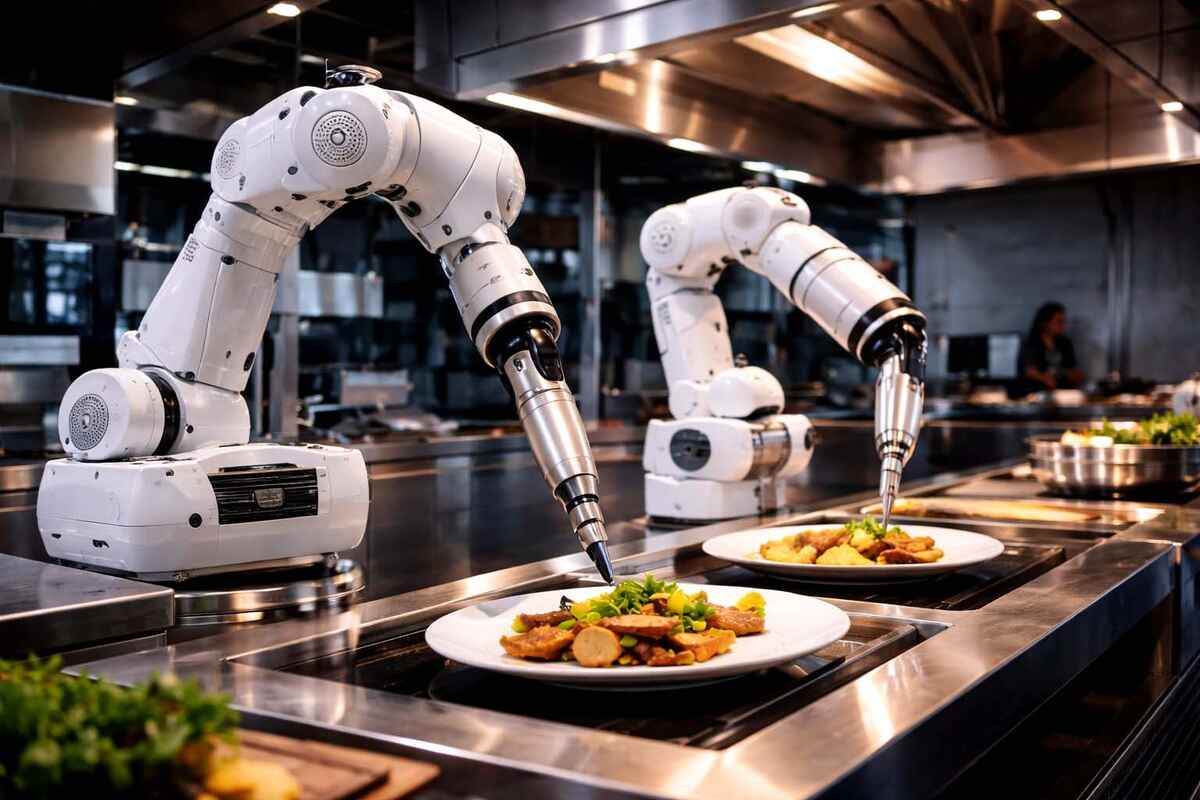
HORECA Future: Will robotic automation solve the ongoing labor shortage?
HORECA Future solutions are frequently turning toward robotics as a pragmatic answer to the persistent staffing challenges that have plagued the service sector in recent years.
Within the broader HORECA landscape, we are seeing the rise of “cobots”—collaborative robots—that work alongside human servers to carry heavy trays, deliver room service, or even flip burgers in high-volume kitchens.
This transition isn’t about replacing people, but rather about filling the gaps where manual labor is difficult to find or retain.
By automating the most physically demanding and repetitive parts of the job, businesses can create a more attractive work environment for their human employees, focusing their talents on creative culinary arts or high-level guest relations.
These machines are becoming more affordable and sophisticated, capable of navigating crowded dining rooms with ease and interacting with guests in a friendly, non-intrusive manner.
As the HORECA industry evolves, the sight of a robotic delivery unit in a hotel hallway will become as commonplace as a coffee machine. This technological bridge allows businesses to maintain high service standards even during peak seasons when labor is scarce.
Far from being cold or impersonal, well-integrated automation can actually enhance the “wow factor” of a guest’s stay, providing a glimpse into a high-tech future that is efficient, reliable, and surprisingly engaging.
HORECA Future: How is the “Bleisure” trend changing hotel design?
HORECA Future design philosophies are being drastically overhauled to accommodate the “bleisure” traveler—those who blur the lines between business and leisure.
In the contemporary HORECA scene, the traditional hotel room is being reimagined as a multifunctional space that serves as both a high-tech office and a sanctuary for relaxation.
We are seeing a move away from cramped desks in the corner of a room toward ergonomic workspaces, high-speed fiber-optic internet, and communal co-working hubs within hotel lobbies.
These spaces are designed to foster networking and productivity, featuring stylish aesthetics that look great on a video call while providing the comfort of a luxury lounge.
This trend reflects a wider societal shift toward remote work and digital nomadism, where professionals choose their destinations based on the quality of the “work-from-anywhere” infrastructure.
Hotels that successfully adapt to this HORECA shift are seeing higher occupancy rates during mid-week periods that were previously slow.
By offering amenities like soundproof pods for private calls and 24-hour access to high-quality coffee and snacks, these establishments become more than just a place to sleep; they become essential lifestyle partners for the modern professional.
The focus is on flexibility and versatility, ensuring that the physical environment can transition seamlessly from a morning of intense meetings to an evening of cocktails and socialization.
HORECA Future: What role will Hyper-Personalization play in guest loyalty?
HORECA Future success is increasingly dependent on the ability of a brand to provide hyper-personalized experiences that make every guest feel like the only person in the room.
Throughout the HORECA industry, data analytics is being used to move beyond simple “first name” greetings toward a deep understanding of individual habits, cravings, and quirks.
Imagine walking into a hotel room where the playlist is already set to your favorite genre, the minibar is stocked with your preferred snacks, and the pillows are the exact firmness you requested during a stay three cities ago.
This level of detail creates an emotional bond that is incredibly difficult for competitors to break. It’s about using technology to remember the things that humans sometimes forget, ensuring a consistent and delightful experience every time a customer interacts with the brand.
This data-driven approach allows HORECA operators to offer targeted promotions and rewards that actually matter to the recipient, rather than generic discounts that get lost in an inbox.
In a world where consumers are overwhelmed with choices, the winner is the one who makes the guest feel seen, heard, and valued.
By leveraging CRM systems and guest feedback loops, businesses can refine their offerings in real-time, ensuring that their service remains relevant and deeply personal in an increasingly automated world.
HORECA Future: Is the “Ghost Kitchen” model here to stay for restaurants?
HORECA Future culinary landscapes have been forever altered by the rise of ghost kitchens—facilities designed exclusively for delivery with no traditional dining room.
This segment of the HORECA market has exploded as consumer demand for high-quality food at home continues to soar, driven by the convenience of mobile apps.
For entrepreneurs, this model offers a lower barrier to entry, eliminating the high overhead costs associated with prime real estate and front-of-house staffing.
It allows chefs to experiment with multiple brands and cuisines from a single location, pivoting their menu based on real-time data and trending flavors.
While some feared this would signal the death of the traditional restaurant, it has instead created a hybrid ecosystem where brick-and-mortar spots use ghost kitchens to expand their delivery radius without straining their main kitchen.
The HORECA sector is learning that convenience doesn’t have to come at the expense of quality; with specialized packaging and optimized logistics, a delivery-only meal can be just as impressive as one served on a ceramic plate.
As we look forward, we can expect to see these digital-first brands becoming even more sophisticated, using AI to predict order volumes and minimize prep times. This evolution proves that the essence of hospitality is about providing great food and service, regardless of where the table is actually located.
HORECA Future: How will Contactless Technology impact hospitality’s “Human Touch”?
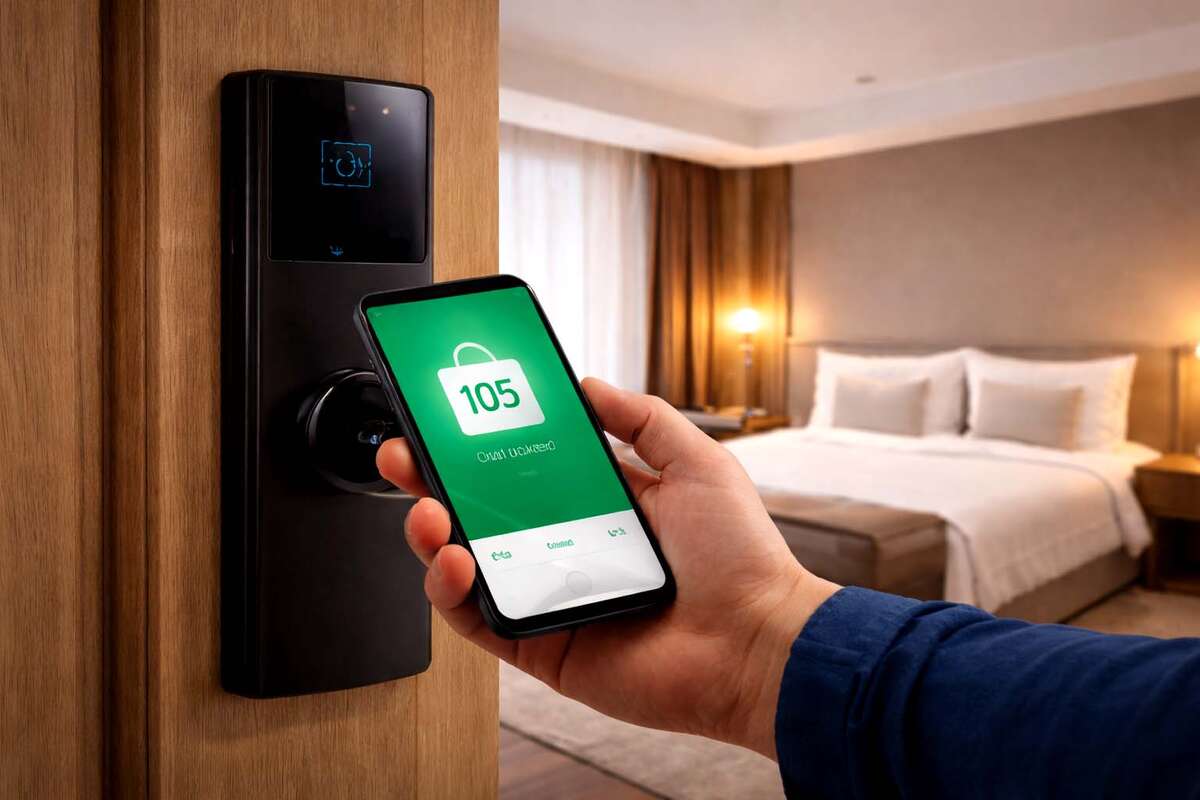
HORECA Future developments in contactless technology were accelerated by global health concerns, but they have remained because of the sheer convenience they offer.
In the modern HORECA landscape, mobile check-ins, digital keycards, and QR code menus have become standard expectations rather than futuristic novelties.
Many wondered if removing the physical interaction at the front desk would make the experience feel cold, but the opposite has often proven true.
By removing the friction of waiting in lines and filling out paperwork, guests can start their vacation or business trip immediately, leading to higher satisfaction levels. This shift allows the HORECA staff to move away from being “transaction processors” and toward being “experience curators.”
Instead of asking for a credit card and ID, a staff member can meet a guest in the lobby with a glass of water and a conversation about local hidden gems. The technology handles the logistics, while the humans handle the hospitality.
This balance is key to the industry’s progression, ensuring that efficiency does not come at the cost of warmth.
As biometric scanning and facial recognition become more integrated, the process will become even more invisible, allowing the focus to remain squarely on the guest’s comfort and enjoyment during their stay or dining experience.
HORECA Future: Why is “Locavore” dining becoming a requirement rather than a trend?
HORECA Future gastronomy is rooted in the “locavore” movement, which emphasizes the use of ingredients sourced within a very short radius of the establishment.
This isn’t just a marketing gimmick for the HORECA industry; it’s a response to a global desire for authenticity, freshness, and transparency in the food chain.
When a restaurant sources its vegetables from a farm five miles away, it reduces its carbon footprint and supports the local economy while offering diners flavors that are peak-season and vibrant.
This “farm-to-fork” philosophy is becoming a standard expectation for modern foodies who want to know the story behind their meal. They want to know the name of the farmer and the conditions in which the livestock was raised.
By embracing this transparency, HORECA operators can build trust and create a unique sense of place that cannot be replicated by chains using globalized supply chains.
This movement also encourages culinary creativity, as chefs must adapt their menus to the rhythm of the seasons rather than relying on frozen imports. The result is a more dynamic and exciting dining scene that celebrates regional identity and traditional heritage.
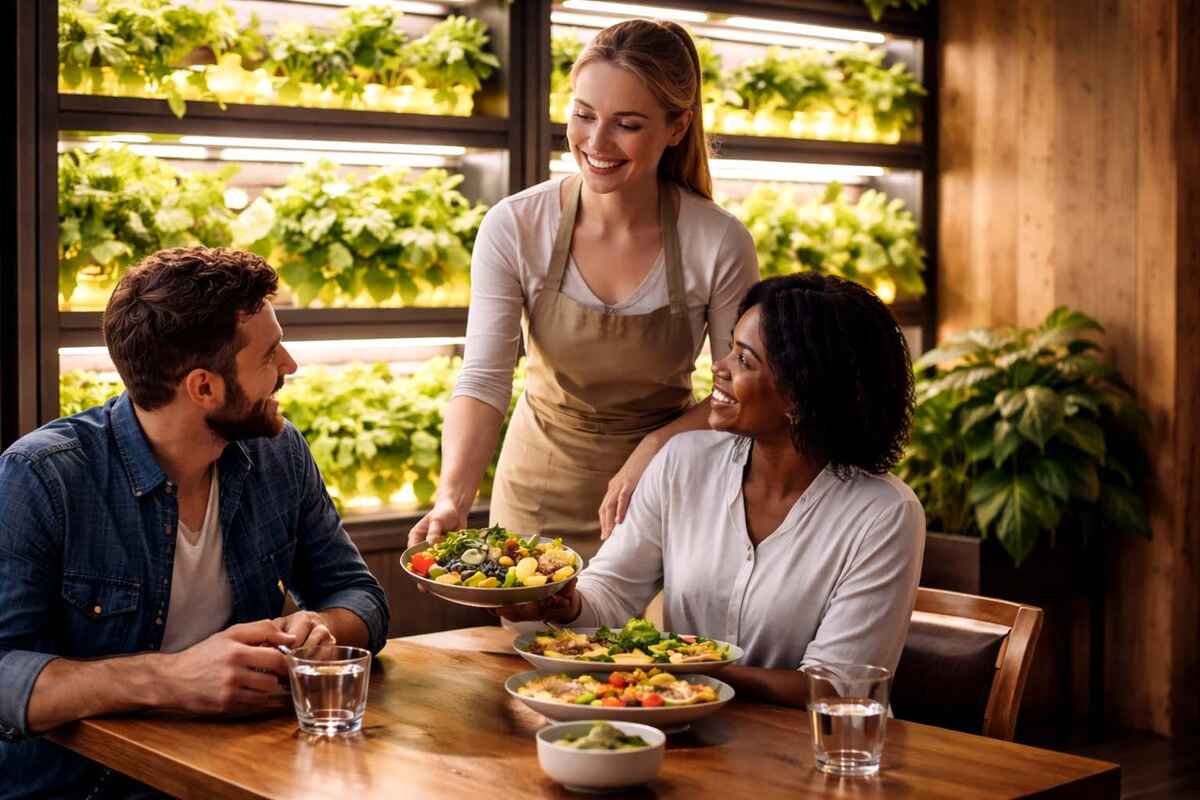
As we move forward, the integration of urban vertical farming within hotel and restaurant buildings will further bridge the gap between production and consumption, making “local” a truly literal term.
HORECA Future: How will Virtual Reality change how we book our travels?
HORECA Future marketing strategies are increasingly incorporating Virtual Reality (VR) and Augmented Reality (AR) to give potential guests a “try before you buy” experience.
Within the HORECA sector, high-end resorts and event spaces are using VR tours to allow travelers to walk through their suites or inspect a ballroom from the comfort of their living room thousands of miles away.
This technology removes the guesswork from booking, reducing the anxiety of “expectation vs. reality” that often accompanies online travel planning. For the restaurant industry, AR menus can project a 3D image of a dish onto the table, allowing diners to see the portion size and presentation before they order.
This level of interactivity is a game-changer for the HORECA world, providing a competitive edge in a crowded digital marketplace. It’s an immersive way to tell a brand’s story and highlight unique features that photos simply can’t capture.
As VR headsets become more accessible to the general public, we can expect a surge in virtual travel experiences that serve as high-converting advertisements for the real thing.
This digital window into the physical world is a powerful tool for building anticipation and ensuring that the guest’s first physical step onto a property feels like a homecoming rather than an introduction to a stranger.
HORECA Future: Is Wellness Tourism the next big frontier for hotels?
HORECA Future growth is heavily tied to the explosion of wellness tourism, as travelers prioritize physical and mental health during their journeys. The HORECA industry is shifting from offering a simple gym in the basement to integrating wellness into every aspect of the guest stay.
We are seeing the rise of “sleep hygiene” rooms equipped with circadian lighting, soundproof walls, and air purification systems designed to optimize rest.
Beyond the physical environment, hotels are partnering with mental health apps and offering on-site meditation, yoga, and nutrition workshops.
This holistic approach recognizes that the modern traveler is often stressed and looking for a “reset” rather than just a place to sleep.
In the HORECA dining space, this translates to menus that focus on functional foods, adaptogens, and non-alcoholic “mocktails” that offer sophisticated flavors without the hangover.
By positioning themselves as centers of rejuvenation, hospitality brands can tap into a high-spending demographic that views health as the ultimate luxury.
This trend isn’t just for high-end spas; even budget-friendly brands are finding ways to incorporate wellness, such as offering healthy “grab-and-go” snacks or providing in-room workout videos.
As society becomes more health-conscious, the ability to support a guest’s well-being will be a defining characteristic of successful hospitality businesses.
How can Big Data improve operational efficiency in kitchens?
HORECA Future operations are becoming increasingly scientific, with Big Data playing a crucial role in how kitchens and dining rooms are managed. In the HORECA world, data is being used to track everything from food waste and energy consumption to peak foot traffic and menu item popularity.
By analyzing these metrics, managers can make informed decisions that drastically reduce overhead and improve service speed.
For example, predictive modeling can tell a chef exactly how many steaks to prep for a Tuesday night based on historical data, weather patterns, and local events, significantly cutting down on food spoilage.
This level of precision is transforming the HORECA sector from a game of intuition into a data-driven science. It also allows for better labor management, ensuring that enough staff are on hand during busy periods without overspending on payroll during slow hours.
When data is used correctly, it doesn’t stifle creativity; it provides a stable foundation that allows the creative side of the business to flourish without the constant threat of financial instability.
As software becomes more intuitive, even small independent operators will have access to these powerful tools, leveling the playing field and raising the standard of efficiency across the entire hospitality landscape.
Will the “Subscription Model” work for restaurants and hotels?
HORECA Future business models are experimenting with the “subscription economy,” a trend that has already conquered the worlds of software and entertainment.
We are now seeing HORECA brands offering monthly memberships that provide unlimited coffee, daily lunch specials, or even a set number of hotel nights per year for a flat fee.
This approach provides businesses with a predictable, recurring revenue stream, which is incredibly valuable in an industry known for its seasonal volatility. For the consumer, it offers convenience and perceived value, encouraging loyalty to a single brand rather than shopping around.
Within the HORECA space, these clubs create a “member-only” feel that fosters a sense of community and exclusivity. Imagine a neighborhood restaurant where locals pay a monthly fee for a guaranteed table and a special “off-menu” dish every time they visit.
This model deepens the relationship between the brand and the customer, turning occasional diners into dedicated patrons. While it requires a shift in mindset and robust tracking systems, the subscription model represents a bold new chapter for the HORECA industry.
It’s an innovative way to secure market share and build a resilient business that can weather economic shifts by relying on a core group of committed members who see the brand as an essential part of their lifestyle.
Conclusion
HORECA Future is ultimately about the perfect harmony between cutting-edge innovation and the timeless warmth of human hospitality.
Throughout the modern HORECA landscape, we see that success no longer depends solely on location or price, but on the ability to adapt to a digital-first, sustainable, and hyper-personalized world.
Embracing the HORECA Future requires a mindset that views technological integration not as a replacement for staff, but as a tool to enhance the guest’s journey. As the HORECA sector continues to evolve, those who prioritize flexibility and authentic connection will lead the way in this new era.
The trends we have discussed provide a roadmap for navigating the complexities of tomorrow’s market with confidence and creativity.
FAQ
The HORECA future is primarily driven by rapid digital transformation, the rise of the conscious consumer who demands sustainability, and the integration of AI to solve labor shortages and enhance personalization.
In the HORECA future, technology levels the playing field, allowing independent hotels to use cloud-based management systems and AI chatbots to provide the same level of efficiency as global hotel chains.
While not always legally mandated yet, the HORECA future dictates that sustainability is a commercial necessity, as modern guests increasingly choose brands based on their environmental and social impact.
AI is central to the HORECA future because it enables hyper-personalization, predictive maintenance in facilities, and smarter inventory management that significantly reduces food and energy waste.
Robots in the HORECA future serve as collaborative tools that handle repetitive tasks like cleaning or delivery, allowing human employees to focus on delivering high-value guest experiences.
Yes, the HORECA future is heavily influenced by remote work, leading hotels to redesign their spaces to cater to guests who combine professional duties with leisure travel.
The HORECA future of dining includes a mix of ghost kitchens for efficiency, farm-to-table transparency for authenticity, and interactive AR menus that enhance the storytelling of each dish.
As the HORECA future becomes more data-driven, maintaining guest trust through transparent data collection and robust cybersecurity will be a defining characteristic of successful brands.
Wellness will transition from a niche offering to a core pillar of the HORECA future, with hotels offering specialized rooms and menus that support the guest’s mental and physical health.
The HORECA future will see a rise in subscription-based services, as they provide businesses with recurring revenue and offer guests consistent value and a sense of belonging to a community.

Author: Horeca Health
Horeca Health
















Leave a Reply