Visit Trogir: Introduction
Visit Trogir: Stepping into the stone-paved streets of Trogir feels like stepping back in time. This stunning UNESCO World Heritage site, nestled on a small island in the heart of the Adriatic, is more than just a destination; it’s a living museum.
With its well-preserved Romanesque and Gothic architecture, vibrant waterfront, and sun-drenched squares, this charming city captivates everyone who wanders through its ancient walls.
From the moment you cross the bridge, the history and unique character of this Dalmatian gem will enchant you. Whether you’re a history buff, a foodie, or simply seeking a beautiful place to relax, the allure of Trogir is impossible to resist.
This ultimate Trogir Croatia guide is your essential resource for planning the perfect trip. We’ve compiled everything you need to know, from the must-see sights and exploring its fascinating history to discovering the best local eats and finding the perfect beaches to unwind.
We’ll also cover practical tips on getting around, where to stay, and the best day trips to make your visit unforgettable. So, get ready to unlock the secrets of this mesmerizing coastal town and prepare for an incredible journey. Your adventure starts here—let’s discover the best of Trogir together.
Visit Trogir: How can I explore the rich history of the city?
Visit Trogir: To truly appreciate this enchanting city, you must delve into its rich and layered history. Its story began more than two millennia ago when it was founded by Greek colonists from the island of Vis in the 3rd century BC.
They called it Tragurion, meaning “goat hill,” a name that hints at the rugged landscape. After the Greeks, the Romans took control, turning it into an important port and a thriving settlement. The most significant historical period, however, came during the Middle Ages.
The city flourished under Venetian rule, which lasted for several centuries. The Venetians left an indelible mark on the urban fabric, building the impressive stone walls, fortifications, and many of the beautiful palaces and churches you see today.
The Cathedral of St. Lawrence, for example, is a prime example of this Venetian influence, blending Romanesque and Gothic architectural styles. The carving on its main portal, created in 1240, is considered one of the finest works of Croatian medieval art.
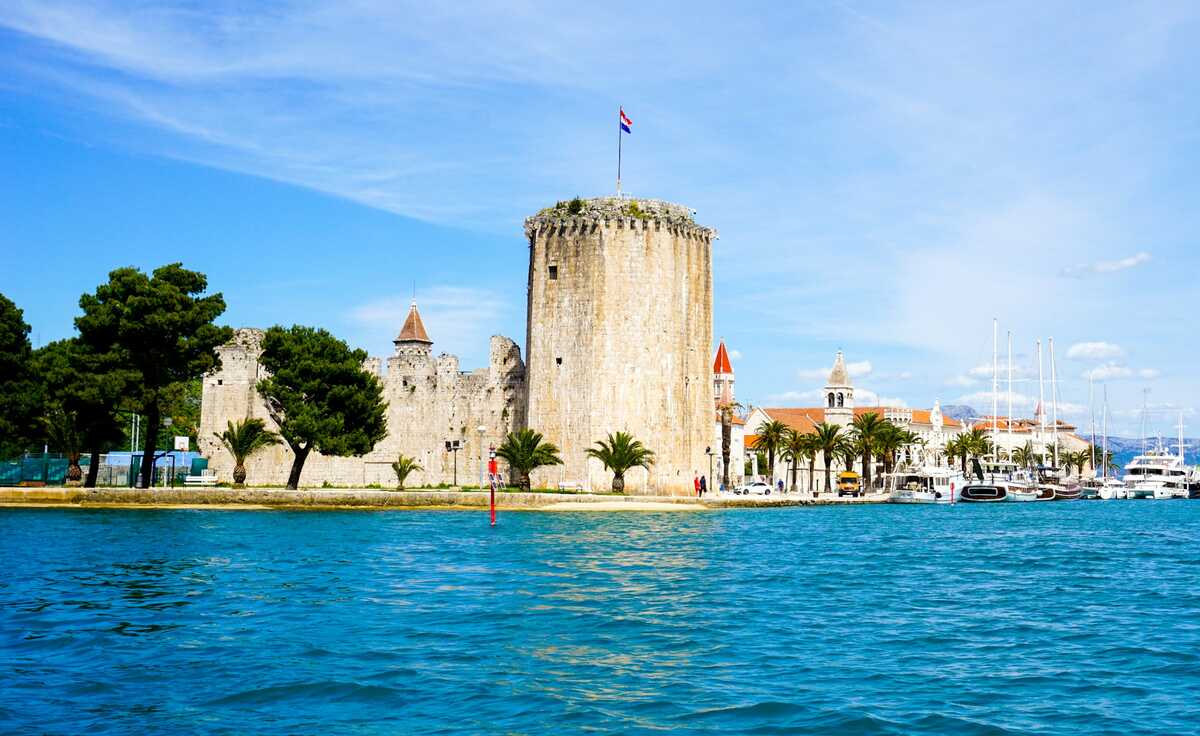
As you wander the streets, you’re walking through a living testament to these different eras. The Kamerlengo Fortress and the St. Mark’s Tower are remnants of the city’s defensive past, built to protect it from Ottoman invaders.
The City Loggia, which once served as a public courthouse, still displays the Lion of St. Mark, a symbol of Venetian authority. Even the layout of the streets, a classic Hellenistic and Roman grid plan, has been preserved to this day.
This continuity is one of the main reasons the entire historic center of Trogir was designated a UNESCO World Heritage site in 1997. Exploring the city’s history is not just about visiting monuments; it’s about feeling the centuries of stories embedded in the stone walls and narrow alleys.
The city’s history is a captivating journey through time, and a visit to Trogir is a chance to walk in the footsteps of ancient Greeks, Romans, and Venetians.
Visit Trogir: What are the best things to do in the city?
Visit Trogir: When you arrive in the stunning historic city, the sheer number of things to do can be overwhelming. The best way to start your journey is by simply wandering through the narrow, stone-paved streets of the old town.
This UNESCO World Heritage site is an open-air museum, and every corner reveals a new story. The main square, Trg Ivana Pavla II, is the beating heart of the city and a great place to begin.
Here, you’ll find the impressive Cathedral of St. Lawrence, with its famous Romanesque portal, a masterpiece carved by Master Radovan. Climbing the bell tower is a must-do; the panoramic views of the red-tiled rooftops, the Adriatic Sea, and the surrounding islands are simply breathtaking.
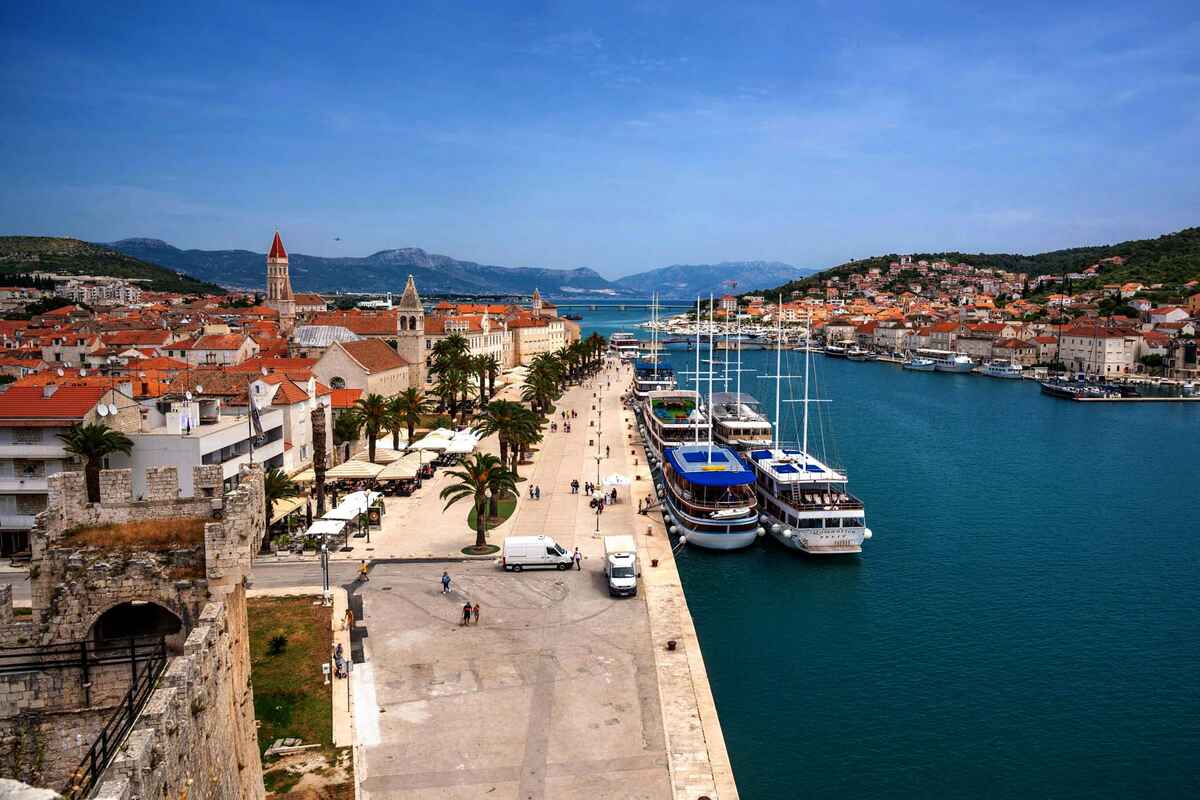
Another essential activity is a stroll along the Riva, the beautiful waterfront promenade. This is the perfect spot to enjoy a coffee or a delicious meal while watching the boats gently sway in the harbor.
The Kamerlengo Fortress, located at the end of the promenade, offers another fantastic viewpoint and a glimpse into Trogir’s defensive past.
The city’s small size makes it incredibly walkable, so you can easily explore all these sights in a single day, but we highly recommend taking your time to soak in the atmosphere.
The market, just across the bridge from the old town, is a vibrant hub of activity where you can find fresh local produce, souvenirs, and a true taste of Dalmatian life. Beyond the old town walls, you can explore the quieter residential areas or hop on a boat for an excursion to nearby islands.
Don’t forget to visit the Cipiko Palace, a complex of buildings with rich facades, and the City Loggia, a former public court and meeting place.
Whether you’re a history buff, a foodie, or simply looking for a beautiful place to relax, this little city has something for everyone. From exploring ancient fortifications to savoring local cuisine, the array of activities ensures an unforgettable stay in Trogir.
Visit Trogir: How can I explore the rich history of the city?
Visit Trogir: To truly appreciate this enchanting city, you must delve into its rich and layered history. Its story began more than two millennia ago when it was founded by Greek colonists from the island of Vis in the 3rd century BC.
They called it Tragurion, meaning “goat hill,” a name that hints at the rugged landscape. After the Greeks, the Romans took control, turning it into an important port and a thriving settlement. The most significant historical period, however, came during the Middle Ages.
The city flourished under Venetian rule, which lasted for several centuries. The Venetians left an indelible mark on the urban fabric, building the impressive stone walls, fortifications, and many of the beautiful palaces and churches you see today.
The Cathedral of St. Lawrence, for example, is a prime example of this Venetian influence, blending Romanesque and Gothic architectural styles. The carving on its main portal, created in 1240, is considered one of the finest works of Croatian medieval art.
As you wander the streets, you’re walking through a living testament to these different eras. The Kamerlengo Fortress and the St. Mark’s Tower are remnants of the city’s defensive past, built to protect it from Ottoman invaders.
The City Loggia, which once served as a public courthouse, still displays the Lion of St. Mark, a symbol of Venetian authority. Even the layout of the streets, a classic Hellenistic and Roman grid plan, has been preserved to this day.
This continuity is one of the main reasons the entire historic center of Trogir was designated a UNESCO World Heritage site in 1997. Exploring the city’s history is not just about visiting monuments; it’s about feeling the centuries of stories embedded in the stone walls and narrow alleys.
Visit Trogir: Where can I find the best food and drink?
Visit Trogir: Your visit wouldn’t be complete without indulging in the fantastic culinary scene, a true highlight of the Dalmatian coast. The local cuisine is based on fresh, seasonal ingredients, with a strong emphasis on seafood, olive oil, and herbs.
The best place to start your gastronomic journey is at the Trogir green market, located just across the bridge from the old town. Here you can find fresh fish, locally grown vegetables, cheeses, and cured meats. This is where locals shop, so you know you’re getting the best quality.
For a memorable dining experience, seek out one of the city’s konobas, traditional taverns that serve authentic, home-style Dalmatian dishes. Look for staples like “pašticada,” a slow-cooked beef dish with gnocchi, or “peka,” meat or octopus cooked under a bell-shaped lid.
These are dishes that have been passed down through generations and are a must-try. Seafood lovers will be in heaven, as restaurants along the Riva and in the small alleys offer freshly grilled fish, calamari, and shellfish, often caught that very morning.
Don’t be afraid to ask the waiter what the catch of the day is. To accompany your meal, try some of the excellent local wines. The region produces high-quality red wines from Plavac Mali grapes and crisp white wines from Pošip or Debit.
Another local specialty is the olive oil, a staple of every meal. Most restaurants will serve a small bottle of their own, often family-made, olive oil with fresh bread. For a more casual bite, you can grab a delicious “burek,” a savory pastry filled with meat or cheese, from a local bakery.
Finding a good meal in this charming city is easy, but finding the truly exceptional spots requires a bit of exploration and a willingness to try something new.
The food scene here perfectly reflects the city’s character: rich, authentic, and full of life. So, when you visit Trogir, come with an appetite and prepare to be delighted.
Visit Trogir: Are there any great day trips from the city?
Visit Trogir: This enchanting city serves as an ideal base for exploring the stunning Dalmatian coastline and its beautiful islands. The proximity to many popular destinations makes day trips a breeze and a fantastic way to add variety to your vacation.
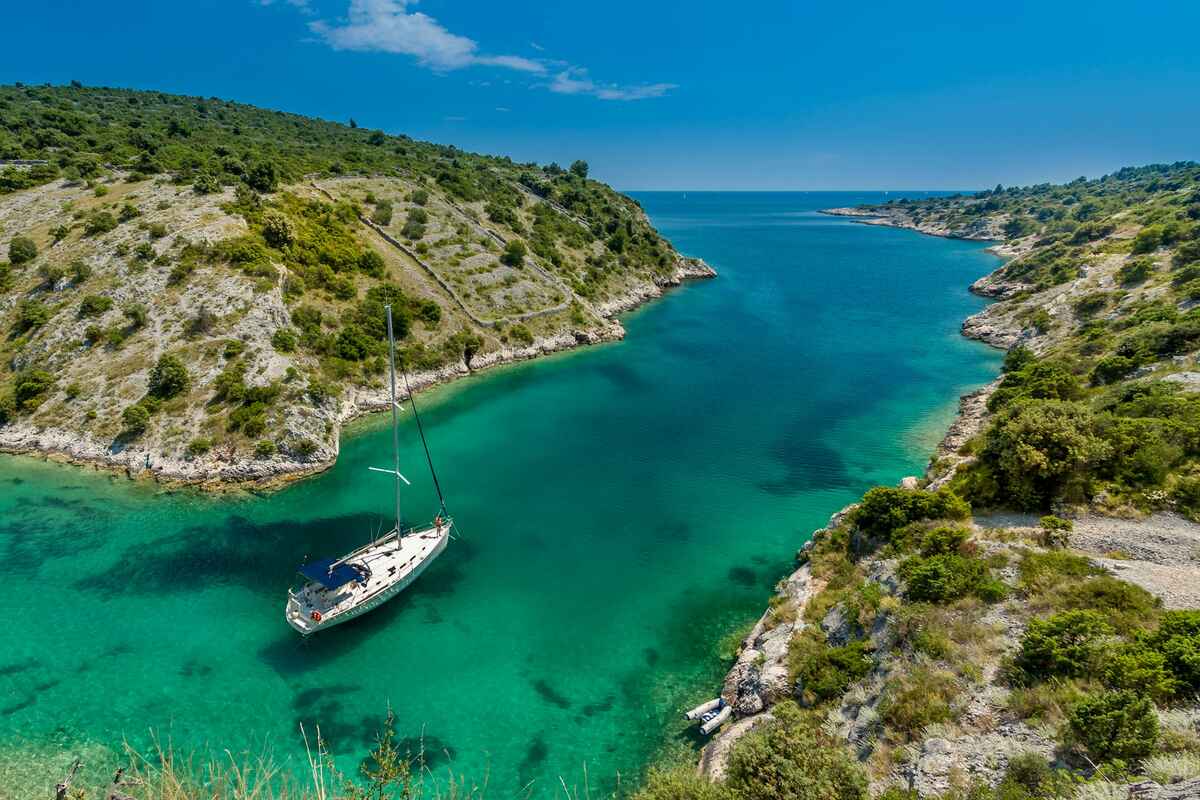
One of the most popular excursions is a boat trip to the Blue Lagoon on the island of Drvenik Veli. This serene bay is famous for its crystal-clear turquoise waters, perfect for swimming, snorkeling, and simply relaxing on the boat.
Many tour operators offer half-day or full-day trips that often include stops at other small, uninhabited islands. Another must-do day trip is a visit to the Krka National Park. Just a short drive away, this park is home to a series of magnificent waterfalls, including the famous Skradinski Buk.
You can walk along wooden paths that wind through the lush greenery, past a number of smaller cascades, and even take a dip in designated swimming areas. The natural beauty of Krka is truly a sight to behold.
For those interested in more history and culture, the city of Split is only a 30-minute drive away. This bustling metropolis is famous for Diocletian’s Palace, a UNESCO World Heritage site and one of the world’s most complete Roman palaces.
You can spend an entire day exploring its intricate streets, bustling squares, and vibrant Riva. If you want to see another charming coastal town, a visit to Šibenik is a great option. This city is home to the stunning Cathedral of St. James, another UNESCO site, and offers a different feel from Trogir or Split.
For a more active adventure, consider renting a scooter or bicycle to explore the island of Čiovo, which is connected to the city by a bridge. This island offers beautiful, quieter beaches and hidden coves away from the main tourist crowds.
With so many options at your fingertips, you can easily create a memorable itinerary. When you visit Trogir, remember that its central location makes it the perfect launching point for countless adventures.
Visit Trogir: What are the best beaches in and around the city?
Visit Trogir: While the historic old town is the main attraction, the city and its surroundings offer a number of beautiful beaches that provide the perfect escape from the summer heat. The most convenient beach is Okrug Gornji, often referred to as “Copacabana” by locals.
This popular pebble beach is located on the nearby island of Čiovo, connected to the mainland by a bridge, making it easily accessible by car, bus, or even a pleasant walk. The beach is well-developed with numerous cafes, restaurants, and beach bars, creating a lively atmosphere.
You can rent sun loungers and umbrellas, and there are plenty of water sports activities available, from jet skiing to paddleboarding. The clear, shallow waters are ideal for families with children. For a quieter and more relaxed experience, head to the western part of Čiovo to beaches like Mavarštica or Kava.
These coves are more secluded and offer a peaceful environment surrounded by pine trees and rocky shores. The water here is incredibly clear, making it a great spot for snorkeling.
Another fantastic option is the beach in Seget Donji, just a short boat ride or a pleasant stroll along the coastal path from the city. This stretch of coastline offers a mix of pebble beaches and paved sunbathing areas, and the sea views are spectacular.
For an authentic and unspoiled beach experience, take a boat trip to some of the smaller islands in the archipelago, such as Drvenik Veli or Drvenik Mali. These islands have hidden coves and pristine beaches where you can truly get away from it all.
The azure waters and natural beauty are simply breathtaking. Whether you’re looking for a vibrant, family-friendly beach or a secluded, tranquil spot, this area has a beach to suit every preference. So, when you visit Trogir, don’t forget to pack your swimsuit and discover the stunning coastal offerings.
Visit Trogir: Where should I stay for the best experience?
Visit Trogir: Choosing the right accommodation can significantly enhance your experience in this charming city. The best place to stay depends on your preferences, whether you want to be in the heart of the action, close to a beach, or in a quieter, more local area.
For those who want to be immersed in history and culture, staying within the UNESCO-protected old town is an unforgettable experience.
Imagine waking up to the sound of church bells, stepping out your door onto ancient stone streets, and being just a few steps away from all the major sights, restaurants, and cafes.
There are many boutique hotels and beautifully restored guesthouses housed in historic buildings, offering a unique and authentic stay. These accommodations often have a limited number of rooms, so booking well in advance is highly recommended, especially during peak season.
On the other hand, if you prefer a more modern stay with easy access to beaches and a bit more space, consider staying on the island of Čiovo. This island is connected to the old town by a bridge, making it incredibly convenient.
Areas like Okrug Gornji offer a wide range of apartments and villas, many with private pools and stunning sea views. This is a great option for families or those who want to split their time between sightseeing and relaxing on the beach.
Another excellent choice is the area of Seget Donji, just a short walk or taxi boat ride from the old town. This area has a number of large hotels and resorts that often come with more amenities like pools, spas, and larger restaurants.
It provides a good balance between proximity to the historic center and the comfort of a resort-style stay. No matter where you choose to stay, the city’s small size and excellent transportation links mean you’re never too far from the main attractions.
When you plan to visit Trogir, consider what kind of vacation you’re looking for, and you’ll find the perfect place to rest your head.
Visit Trogir: What are the best ways to get around the area?
Visit Trogir: Getting around this beautiful coastal city and its surroundings is relatively easy, thanks to its compact size and well-connected transport links. The historic old town itself is a pedestrian-only zone, which is a big part of its charm.
The best way to explore its narrow streets, hidden squares, and ancient landmarks is simply on foot. You can wander at your own pace, discover new sights around every corner, and truly soak in the unique atmosphere.
For travel between the old town and the island of Čiovo, where many accommodations and beaches are located, there are two bridges. The main bridge is used by vehicles and pedestrians, while a newer drawbridge handles the main traffic flow.
The journey is short and offers beautiful views of the harbor. When you need to venture a bit further, the local bus system is a great option. Bus lines connect the city with nearby towns and villages, including Split, and are an affordable and reliable way to get around.
You can find the main bus station just across the bridge from the old town. For more flexibility, renting a car is a popular choice, especially if you plan on taking day trips to places like Krka National Park or exploring more of the Dalmatian coast.
Be aware that parking in the old town can be difficult, so it’s often best to park in one of the designated lots on the mainland or on Čiovo. If you’re staying on Čiovo, a scooter or bicycle can be a fun and efficient way to explore the island’s quieter roads and hidden beaches.
Another popular mode of transport is the taxi boat. These small boats operate regularly between the city and nearby beaches, offering a scenic and enjoyable alternative to land-based travel. Whether you’re walking, biking, or taking a boat, getting around this stunning city is part of the adventure.
So, as you plan to visit Trogir, you can be confident that navigating the area will be a seamless and enjoyable experience.
Visit Trogir: What can I find at the Trogir Market?
Visit Trogir: A trip to this vibrant city would be incomplete without a visit to its bustling green market. Located just across the bridge from the main bus station, the market is a lively hub of activity and a feast for the senses.
It’s where locals go to do their daily shopping, and it provides an authentic glimpse into Dalmatian life. The market is a treasure trove of fresh, locally sourced produce. You’ll find stalls piled high with seasonal fruits and vegetables, from juicy figs and sun-ripened tomatoes to crisp cucumbers and fragrant herbs.
The colors and smells are simply captivating. It’s the perfect place to pick up some healthy snacks for your day of sightseeing or to buy ingredients if you’re staying in an apartment with a kitchen. In addition to fresh produce, the market offers a wide variety of other local goods.
You can find stalls selling homemade cheeses, including the famous “paški sir” from the island of Pag, as well as cured meats like prosciutto (“pršut”). These are perfect for creating your own delicious picnic. The market also has a great selection of local honey, olive oil, and spirits like “rakija,” a strong fruit brandy.
For those looking for souvenirs, you’ll find a range of handmade crafts, lace, and small bottles of local liqueurs. The atmosphere is friendly and welcoming, with vendors often happy to let you sample their products.
It’s a great place to practice a few words of Croatian or simply to enjoy the lively chatter. Even if you don’t plan on buying anything, the experience of wandering through the market and observing the daily rhythm of life is a reward in itself. This market embodies the spirit of Trogir: lively, authentic, and full of local charm.
Visit Trogir: What are the best views of the city?
Visit Trogir: This stunning city is a photographer’s dream, with countless opportunities to capture breathtaking views. The best part is that many of the most spectacular vantage points are easily accessible and don’t require any special equipment.
One of the most iconic and rewarding views is from the top of the Cathedral of St. Lawrence bell tower. While the climb is steep and the steps can be narrow, the panoramic reward at the top is more than worth the effort.
From this elevated position, you get a 360-degree view of the entire historic center, its red-tiled roofs, the busy harbor with its boats, and the surrounding blue waters of the Adriatic Sea. You can also see the island of Čiovo and the beautiful coastline stretching out in both directions.
Another fantastic viewpoint is from the top of the Kamerlengo Fortress. Located at the end of the Riva, this fortress offers a different perspective, focusing more on the harbor, the sea, and the promenade.
The view from the top is especially beautiful during sunset, when the sky is painted in hues of orange and pink, and the old town is bathed in a golden light. For a great shot of the entire old town from a distance, head over the bridge to the mainland and walk along the waterfront.
From here, you can capture the entire city island, with the fortress and bell tower creating a magnificent silhouette against the sky. This is a classic postcard view of Trogir. If you have a car, drive up the road on the island of Čiovo to gain some elevation.
From various points on the hills, you can find spots that offer stunning, sweeping views of the city, the sea, and the nearby islands. Finally, a less common but equally beautiful view can be enjoyed from a boat.
Taking a short trip around the bay gives you a unique perspective of the city’s waterfront, its ancient walls, and its intricate architecture from the water. Whether you’re climbing a bell tower or simply strolling along the promenade, finding a great view in Trogir is an effortless delight.
Visit Trogir: What is there to do in the evening?
Visit Trogir: As the sun begins to set, the city transforms into an even more magical place. The daytime crowds disperse, and a different, more relaxed energy fills the air. The evening is the perfect time to experience the city’s vibrant nightlife, which is more about a leisurely pace than late-night clubbing.
The most popular evening activity is a “đir,” a traditional Croatian evening stroll. The Riva, the beautiful waterfront promenade, is the heart of this nightly ritual. As you walk along the promenade, you’ll pass charming cafes and restaurants, with people enjoying a pre-dinner drink or a delicious meal.
The view of the boats in the harbor, illuminated by the city lights, is simply captivating. Dining al fresco is a must-do. Many restaurants have tables set up in the narrow, stone-paved streets or in small, intimate courtyards.
Enjoying a meal under the stars, surrounded by ancient architecture, is an experience you won’t soon forget. After dinner, you can find a cozy wine bar to sample some local wines. Croatian wines are excellent, and a glass of Plavac Mali or Pošip is the perfect way to unwind.
Many of these bars are located in small, atmospheric alleys, offering a quiet and intimate setting. For those who enjoy a bit of music, some bars have live performances, often featuring traditional Dalmatian music known as “klapa.”
This acapella singing is a beautiful and soulful art form that is a true part of the local culture. The Kamerlengo Fortress often hosts summer concerts and events, providing a unique and historic backdrop for performances.
The city also has a number of small, late-night cafes where you can enjoy a cocktail or a local craft beer. The atmosphere is always relaxed and friendly, making it easy to strike up a conversation with locals and fellow travelers. No matter what your preference, the evenings in Trogir offer a perfect blend of romance, culture, and relaxation.
What are the best tips for a first-time visitor?
Visit Trogir: A first visit to this stunning UNESCO gem can be an unforgettable experience, but a few key tips can help you make the most of your trip. First and foremost, embrace the art of getting lost.
The historic old town is small and a pedestrian-only zone, so don’t be afraid to wander away from the main streets. You’ll often discover hidden squares, charming courtyards, and beautiful details that you might otherwise miss.
The true magic of this city lies in its winding alleys and unexpected corners. Secondly, wear comfortable shoes. The old town’s stone-paved streets and cobblestones are beautiful but can be challenging to walk on in anything other than flats or sneakers.
You’ll be doing a lot of walking, from exploring the city’s monuments to climbing the bell tower, so comfortable footwear is essential. Another important tip is to visit the green market.
Located just across the bridge, this vibrant market is not only a great place to buy fresh local produce and souvenirs but also an excellent way to experience the local culture and interact with the people who make this city so special.
Don’t be afraid to try some samples and chat with the vendors. When it comes to dining, try to eat a bit earlier or later than the peak lunch and dinner times to avoid the biggest crowds.
Also, look for restaurants in the smaller side streets, as they often offer a more authentic and intimate dining experience than those directly on the main square. Don’t forget to take a break from the sightseeing and enjoy the simple pleasures.
Find a cafe along the Riva, order a coffee, and simply watch the boats and the people go by. This is the essence of the Dalmatian lifestyle. Finally, remember to bring cash.
While credit cards are widely accepted in most restaurants and shops, smaller vendors at the market or in souvenir stalls often prefer cash. You can find ATMs easily, but it’s always good to have some local currency on hand. These simple tips will ensure you have a smooth and memorable visit to Trogir.
What are some fun facts about the city?
Visit Trogir: This enchanting city is not just a beautiful sight; it’s also a place with a quirky and fascinating past that adds to its charm. One of the most interesting facts is its name. T
he city was founded by Greek colonists in the 3rd century BC and was called Tragurion, which translates to “goat hill.” This name is a nod to the area’s geography and history, long before it became the bustling port city it is today.
Another fun fact is about its famous main portal on the Cathedral of St. Lawrence. It was carved by a local master artist, Master Radovan, in 1240. What makes this so special is that it is considered one of the most important monuments of Romanesque-Gothic art in all of Croatia.
The incredible detail and artistry are a testament to the skill of the artisans who lived and worked in this region centuries ago. Did you know that the entire old town is actually an island? It’s separated from the mainland and the island of Čiovo by narrow sea channels, which are connected by two bridges.
This unique geographical feature is a major reason why the historic center has remained so well-preserved and why its layout is so distinctive.
The city has also served as a filming location for several movies and TV shows, including the popular series “Game of Thrones.” Its medieval walls, ancient streets, and stunning architecture make it a perfect backdrop for historical dramas and fantasy series.
The Kamerlengo Fortress, in particular, has been featured in a number of productions. Another intriguing fact is about the City Loggia. This open-sided building, located on the main square, once served as a public court where judges would hear cases.
Today, you can still see the stone table where judgments were made, and it’s a great place to imagine the city’s past life. These tidbits of history and culture make exploring the city even more fun, turning every corner into a discovery.
So when you visit Trogir, you’re not just seeing beautiful buildings; you’re walking through a story that has been unfolding for more than two thousand years.
Conclusion
As our guide comes to a close, it’s clear that Trogir is a destination that offers something truly special. More than just a collection of historical buildings and beautiful beaches, it’s a place where every narrow street and sun-drenched square tells a story.
From wandering through the ancient, stone-paved alleys and climbing the bell tower for breathtaking views, to savoring fresh seafood along the bustling Riva and exploring the crystal-clear waters of the Adriatic, a visit to this city is an immersive journey through time and culture.
The timeless charm of this coastal gem is what makes it so unforgettable. Whether you’re here for the history, the food, or simply the chance to relax in a stunning setting, the magic of Trogir will stay with you long after you’ve left.
So, pack your bags, lace up your walking shoes, and get ready to experience the unique blend of past and present that defines this incredible city. We hope this guide has inspired you to visit Trogir and create memories that will last a lifetime.
FAQ
Compared to some Western European cities, a visit to Trogir is generally more affordable. Accommodation prices can vary, but you can find a wide range of options from budget-friendly apartments to luxury hotels. Food and drink costs are reasonable, especially if you dine at local konobas or buy fresh produce at the market. Overall, it’s a great value for a stunning European destination.
We recommend spending at least two to three days in Trogir to fully experience the city. This gives you enough time to explore the old town, visit the main sights, and enjoy the local restaurants. For those who want to take day trips or relax on the nearby beaches, a four to five-day stay is ideal.
The best time to visit Trogir is during the shoulder seasons—May, June, September, and October. The weather is warm and sunny, but the crowds are smaller than in the peak summer months of July and August. The sea is also warm enough for swimming during this time.
The easiest way to get to Trogir is by flying into Split Airport (SPU), which is only about 6 kilometers away. From the airport, you can take a taxi, an airport shuttle bus, or a local bus. The city is also well-connected by bus to other major cities in Croatia.
Yes, Trogir is an excellent destination for families. The historic old town is a pedestrian-only zone, making it safe for children to explore. The nearby beaches, especially on the island of Čiovo, have shallow, clear waters and plenty of amenities that are perfect for kids.
While the immediate old town doesn’t have a swimming beach, you can easily swim in the clear waters on the nearby island of Čiovo. The most popular beach is Okrug Gornji, which is a short walk or quick taxi boat ride away. There are many other quiet coves and beaches to explore as well.
The main attractions in Trogir are centered around its UNESCO-listed old town. Don’t miss the Cathedral of St. Lawrence and its famous bell tower, the Kamerlengo Fortress, and the lively Riva promenade. Simply wandering the city’s ancient streets is an attraction in itself.
While traditional Dalmatian cuisine is heavy on meat and fish, you can easily find vegetarian and even vegan options in Trogir. Many restaurants offer pasta dishes, grilled vegetables, and salads. The local market is also a fantastic place to buy fresh, plant-based ingredients.
The official language is Croatian. However, because Trogir is a major tourist destination, English is widely spoken and understood in hotels, restaurants, and shops. Many locals also speak German and Italian.
A car is not necessary to explore the old town of Trogir, as it is a car-free zone and very walkable. If you plan to take day trips to places like Krka National Park or Split, having a car can be convenient, but you can also rely on the excellent local bus system or organize guided tours.

Author: Horeca Health
Horeca Health









Leave a Reply