Visit Bruges: Introduction
Visit Bruges: Few places in Europe feel as instantly magical as Bruges, the pocket‑sized Belgian treasure that wraps visitors in cobblestone lanes, stepped‑gable houses, and mirror‑like canals.
A single stroll through its UNESCO‑listed historic centre feels like stepping into a 15th‑century oil painting, complete with the sound of carriage horses and the distant melody of the Belfry carillon.
Planning a visit Bruges trip is less about ticking boxes and more about slowing down to savour a city that has perfected the art of lingering.
Bruges wears its medieval legacy with gentle pride, yet it never feels stuck in the past. Alongside the ancient spires you’ll find contemporary art, Michelin‑starred tables, and a vibrant craft‑beer scene that keeps evenings buoyant.
Whether you’re a first‑time traveller or a returning admirer, you’ll discover fresh layers every time you wander beyond the Markt square. This guide unites history, practical know‑how, and insider favourites so you can craft a deeply personal experience.
Our complete travel guide to Belgium’s fairytale medieval city starts with the story behind its gilded façades and then walks you through every essential detail: where to step, when to go, what tastes to chase, and how to stretch a budget without diluting the romance.
We’ve also turned the lens on quieter corners, so your visit Bruges adventure includes hidden beguinages, hushed canalside benches, and the best chocolatiers that never make the glossy brochures.
Whether you’re plotting a day trip or a long weekend, this resource will feel like having a well‑connected local at your side. By the time you finish reading, you’ll know exactly why Bruges remains one of Europe’s most enchanting open‑air museums – and how to make your own journey unforgettable.
What Is the History Behind Bruges’ Medieval Charm?
Bruges’ medieval charm stems from its golden age as a 13th‑ to 15th‑century trading hub, when Flemish cloth and commerce filled the canals with ships and wealth that financed breathtaking Gothic architecture; its sudden decline after the Zwin estuary silted up effectively froze the city in time, preserving the fairytale aesthetic you see today.
During the 1300s, Bruges was northern Europe’s liveliest mercantile centre, drawing merchants from the Hanseatic League, Italy, and Spain.
The Bourse building on the current Vlamingstraat hosted what many historians consider the world’s first stock exchange, and luxury goods such as lace, tapestries, and illuminated manuscripts flowed out of its workshops.
That wealth poured directly into landmarks: the soaring Belfry tower, the ornate Stadhuis on the Burg, and the vast churches that still dominate the skyline. When you visit Bruges, you walk over the same flagstones that bankers and artists treaded six centuries ago.
The city’s fortunes reversed sharply in the late 15th century as the Zwin silted up and the political climate shifted toward Antwerp.
Bruges entered a prolonged “sleeping” phase that lasted until the 19th century, when Romantic travellers and British exiles rediscovered its untouched medieval core.
This quirk of history meant that unlike many cities, Bruges was never gutted by industrial‑era expansion or war‑time reconstruction; the gabled guildhalls, narrow canals, and hidden courtyards remained startlingly intact.
Today, the entire historic centre is a UNESCO World Heritage site, protected not as a sterile museum but as a living city that honours its past while welcoming millions of guests every year.
Understanding this backstory transforms a simple sightseeing itinerary into a richer, more meaningful journey – because each cobblestone tells a tale of ambition, wealth, and resilience that still echoes when you plan your visit Bruges expedition.
How to Get to Bruges and Navigate the City Center
You can reach Bruges easily by train from Brussels (around one hour), by car via well‑marked motorways, or by organised coach tour; once you arrive, the compact medieval core is a pedestrian haven best explored on foot, with bicycles and public buses serving the outskirts effortlessly.
The most seamless option for international visitors is the Belgian rail network. Direct trains from Brussels Airport‑Zaventem run roughly every hour, and the journey from Brussels Midi – where Eurostar, TGV, and ICE services converge – takes under 60 minutes.
Upon stepping out of Bruges station, you’re a gentle 20‑minute stroll or a five‑minute city bus ride from the Markt. Travellers arriving via Eurostar from London can book a single “any Belgian station” ticket that includes the Bruges leg, making a visit Bruges extension refreshingly straightforward.
If you’re driving, park on the edge of the old town in an underground facility such as Centrum‑Station or Pandreitje; the narrow streets inside the ring road are progressively restricted to cars.
Day trips often run from Amsterdam, Paris, or Brussels, and while they’re a glass‑bubble introduction, extending your stay allows you to see the city after the tour coaches depart.
Once you’ve stored your luggage, lace up comfortable shoes – the real reward of navigating Bruges is getting purposefully lost among its cobbled alleys.
Cycling is a beloved local tradition, and rental shops cluster around the station and Burg square. A bike lets you glide to sights like the windmills along the Kruisvest or the green ribbon of Minnewater without breaking a sweat.
Bus line 1 links the station to the centre in minutes, and taxis are available, though they are rarely necessary inside the main loop. Essentially, when you visit Bruges, leave the car keys behind and adopt the city’s rhythm.
When Is the Best Time to Visit Bruges?
Spring (April to May) and early autumn (September to October) deliver the most comfortable weather, thinner crowds, and a golden light that makes the canals shimmer; however, Bruges exerts an undeniable pull in every season, from snowy winter scenes to festive summer squares.
April and May bring tulips, fresh‑leafed canal‑side willows, and daytime temperatures that hover between 12°C and 18°C, perfect for walking tours.
May also sees the Procession of the Holy Blood, a deeply rooted religious pageant that fills the city with costumed re‑enactors and a palpable sense of tradition. Hotel prices begin to climb from late May, so an early‑spring visit Bruges trip tends to reward you with availability and value.
Summer is lively and long‑lit, with the Markt terraces buzzing until well past ten in the evening. Special events such as the Cactus Festival and the Klinkers open‑air theatre season animate the parks.
You’ll need to book accommodation weeks ahead and expect busier canal boats, but the heat rarely grows oppressive. If you don’t mind sharing the city with fellow romantics, July and August still deliver the full‑fat Belgian experience: waffles, beer gardens, and balmy evenings.
Winter paints Bruges in frosted fantasy strokes, especially if you plan a visit Bruges trip during the Christmas market season (late November to early January).
The ice‑skating rink on the Markt, the warm glow of market chalets, and the scent of spiced glühwein make the cold feel intentional.
Late autumn and late winter are the slowest months, gifting you with serene museums and crackling fireside cafés. Each window of the year transforms the city differently, so the best time truly depends on the mood you seek.
Top Attractions You Must See When You Visit Bruges
Bruges packs a dizzying array of UNESCO‑grade landmarks into a walkable postcode, so prioritising key stops helps you build a travel flow that feels rewarding rather than rushed. The following table introduces the core sights, and the paragraphs beneath weave in the context that makes them unforgettable.
| Attraction | Type | Why You Should Visit |
|---|---|---|
| Markt Square (Belfry) | Historic plaza & tower | Climb 366 steps for a panoramic medieval skyline and feel the pulse of the city. |
| Burg Square | Civic ensemble | Admire the Gothic Stadhuis, the Renaissance Old Recorders’ House, and the sacred Basilica of the Holy Blood. |
| Groeningemuseum | Fine‑art museum | Stand before masterpieces by Jan van Eyck, Hans Memling, and Hieronymus Bosch in one intimate gallery. |
| Beguinage (Begijnhof) | Historic convent complex | Enter a tranquil courtyard of whitewashed houses that has sheltered lay religious women since the 13th century. |
| Minnewater (Lake of Love) | Natural park & landmark | Stroll the tree‑shaded paths and capture the iconic bridge view, especially at dawn when the mist rolls off the water. |
The Belfry rises above the Markt as the city’s most recognisable silhouette, and the climb – though steep – rewards you with a horizon stitched with stepped gables and green countryside. Directly behind it, Burg Square layers centuries of power and devotion in a single breathtaking arc.
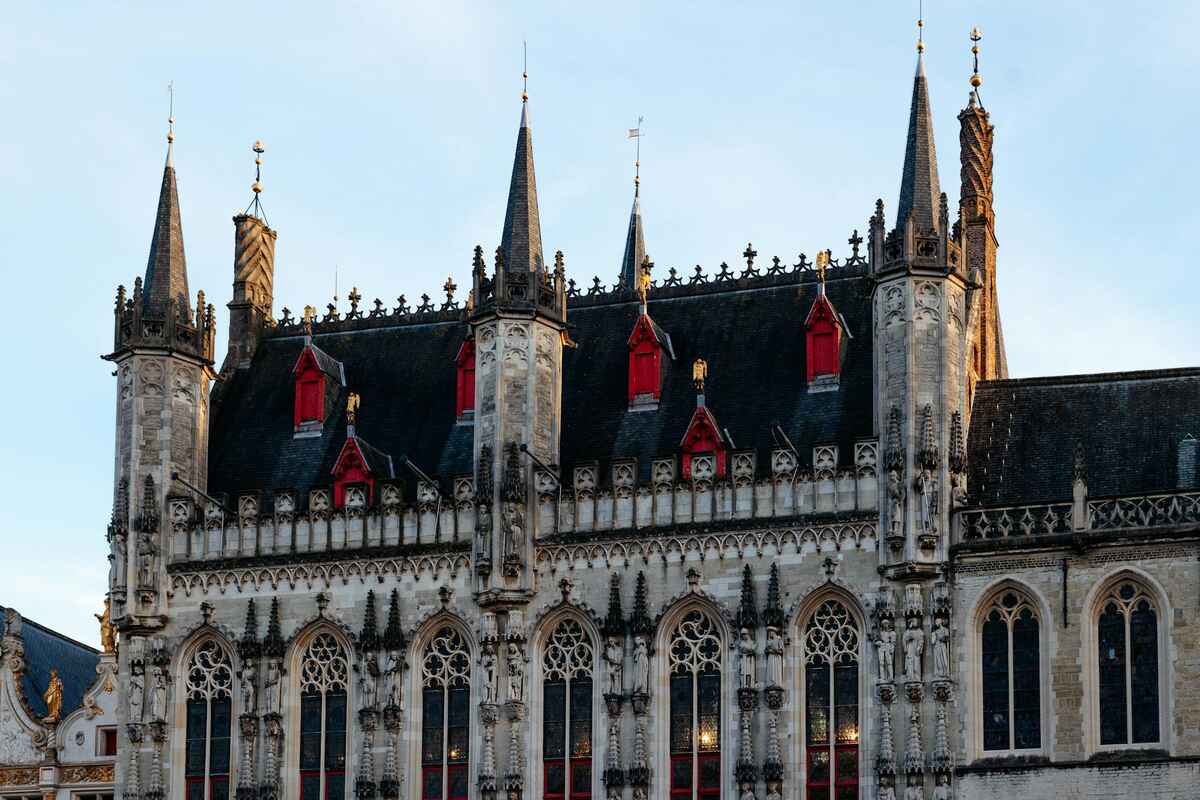
The Stadhuis, with its lacy Gothic facade and polychrome vaulted hall, alone justifies a long pause, and the Basilica of the Holy Blood preserves a venerated relic inside a jewel‑like upper chapel.
For art lovers, the Groeningemuseum is an unmissable pilgrimage. Its collection covers six centuries yet remains compact enough to enjoy in an afternoon, with “The Madonna with Canon van der Paele” and “The Last Judgment” providing transcendent encounters.
Walking east from the museum along the Dijver canal, you’ll find charming antiques markets on weekends and quiet benches tailor‑made for sketching.
The Beguinage and Minnewater lie just south of the old core, forming a serene greenbelt that feels miles away from the souvenir shops.
During a visit Bruges stay, set aside a morning simply to circle the Minnewater, watch the swans, and enter the beguinage courtyard while the nuns’ morning prayers still hang in the air. It’s these slivers of calm, sandwiched between the grand monuments, that turn a checklist into a deeply personal discovery.
How Can You Explore Bruges’ Famous Canals?
The most enchanting way to explore Bruges’ canals is by boarding a half‑hour guided boat tour that glides under low stone bridges, past weeping willows, and alongside centuries‑old merchants’ houses, delivering a water‑level perspective you simply cannot capture from the street.
Five different landing stages dot the inner ring, with the most popular docks at Nieuwstraat, Katelijnestraat, and Rozenhoedkaai. Boats depart constantly from March to November, and the multilingual guides mix dry Flemish humour with sharp historical anecdotes.
The city’s medieval network was once a working transport grid, and it’s easy to imagine barges loaded with woollen cloth, spices, and wine navigating these same waterways when the port was Europe’s heartbeat. For photographers, the late‑afternoon run catches the gables glowing in low‑angle sunlight.
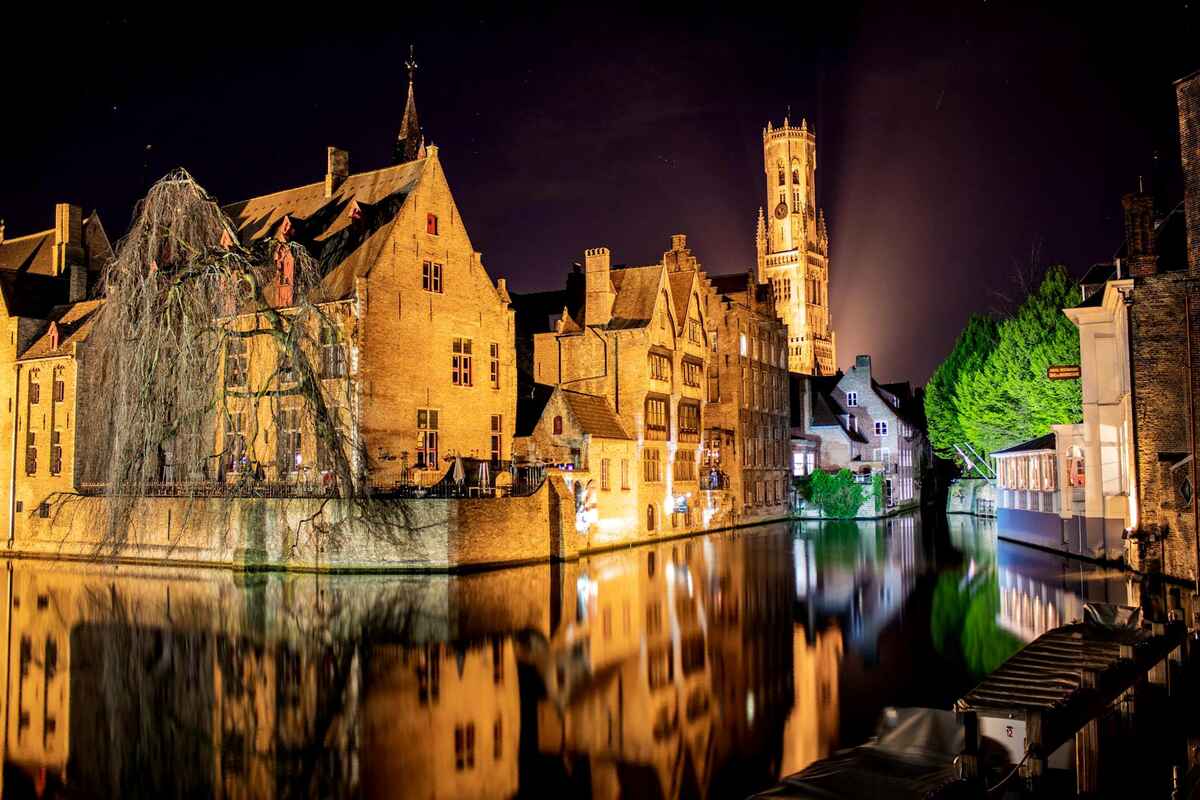
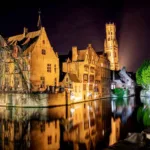
If you prefer a self‑guided rhythm, lace up your walking shoes and trace the canal paths. The Rozenhoedkaai‑Dijver loop is the picture‑postcard stretch, where the Belfry and Stadhuis reflect in the green‑black water.
For a longer ramble, follow the Sint‑Annarei and Groenerei towards the Folklore Museum, where laundry‑draped terraces and climbing roses drape the water’s edge. Every season paints the scene differently: spring cherry blossom, autumn copper foliage, and winter chocolate‑box stillness.
For an active twist, a handful of local outfitters now offer kayak and stand‑up paddleboard rentals along the outer canals near the windmills, allowing you to dip under bridges at your own pace. After sunset, the illuminated bridges and the quiet lap of water create a hushed, almost private Bruges.
Whenever you visit Bruges, commit at least one excursion to the waterways – it’s the city’s original open‑air salon, and it never fails to enchant.
Discovering Bruges’ Culinary Delights: Chocolate, Waffles, and Beer
Bruges doesn’t just feed you; it seduces you with butter‑laden waffles, truffles so fresh they gleam, and Trappist ales brewed within monastery walls. Gastronomy is a core identity here, and every alleyway seems to hold a tiny shop window that stops you in your tracks.
The city’s chocolate pedigree is formidable, with more than 50 chocolatiers crafting pralines by hand. The Chocolate Line, ran by “shock‑olate” pioneer Dominique Persoone, serves unexpected flavour marriages – wasabi, bacon, or cola – alongside classic ganaches.
Dumon, Van Oost, and Chocolatier Sukerbuyc excel in small‑batch perfection using cocoa grown on single‑origin estates.
The Choco‑Story Museum on Wijnzakstraat tells the story from bean to bar, culminating in a tasting that makes the history digestible. For most visitors, a visit Bruges trip is incomplete without a dedicated chocolate crawl along Wollestraat and Simon Stevinplein.
Between sweet bites, savoury Flemish classics stake their claim. Golden, crisp frites with a dollop of andalouse sauce, steaming bowls of Gentse waterzooi, and the deep, malt‑laced Flemish beef stew known as carbonnade flamande appear on blackboard menus throughout the city.
The morning ritual of a warm Liège waffle – dense, pearly with sugar crystals, and needing no topping – is available at any streetside stand. For a sit‑down meal with regional flavour, the area around Sint‑Amandsstraat and the Vismarkt offers tucked‑away bistros where locals outnumber tourists.
Beer culture runs deep, anchored by De Halve Maan brewery whose pipeline pumps Blonde Brugse Zot directly to the bottling plant outside town. Their rooftop terrace delivers panoramic views alongside a tasting flight of Brugse Zot, Straffe Hendrik, and seasonal specials.
Cellar bars such as ’t Brugs Beertje and Le Trappiste stock hundreds of Belgian bottles, from Westvleteren pourings to gueuze lambics. Dining in Bruges is a slow, sensory act, so give yourself permission to linger over every plate and pint.
Where to Experience Bruges’ Art and Culture Scene?
The Groeningemuseum houses an exceptional collection of Flemish Primitive paintings, including works by Jan van Eyck and Hans Memling, while St. John’s Hospital, the Concertgebouw, and a cluster of intimate churches transform a simple visit Bruges itinerary into a rich art pilgrimage spanning seven centuries.
At the Groeningemuseum, six rooms of sheer genius await. Jan van Eyck’s “Madonna with Canon van der Paele” anchors the collection with its hyper‑real drapery and devotional stillness, while Memling’s “Moreel Triptych” and Hieronymus Bosch’s “The Last Judgment” triptych reward slow, unflinching viewing.
The ticket is modest, and the crowds rarely overwhelm, leaving you space to absorb the lapis‑blue robes and gold‑leaf halos that once defined northern Renaissance ambition.
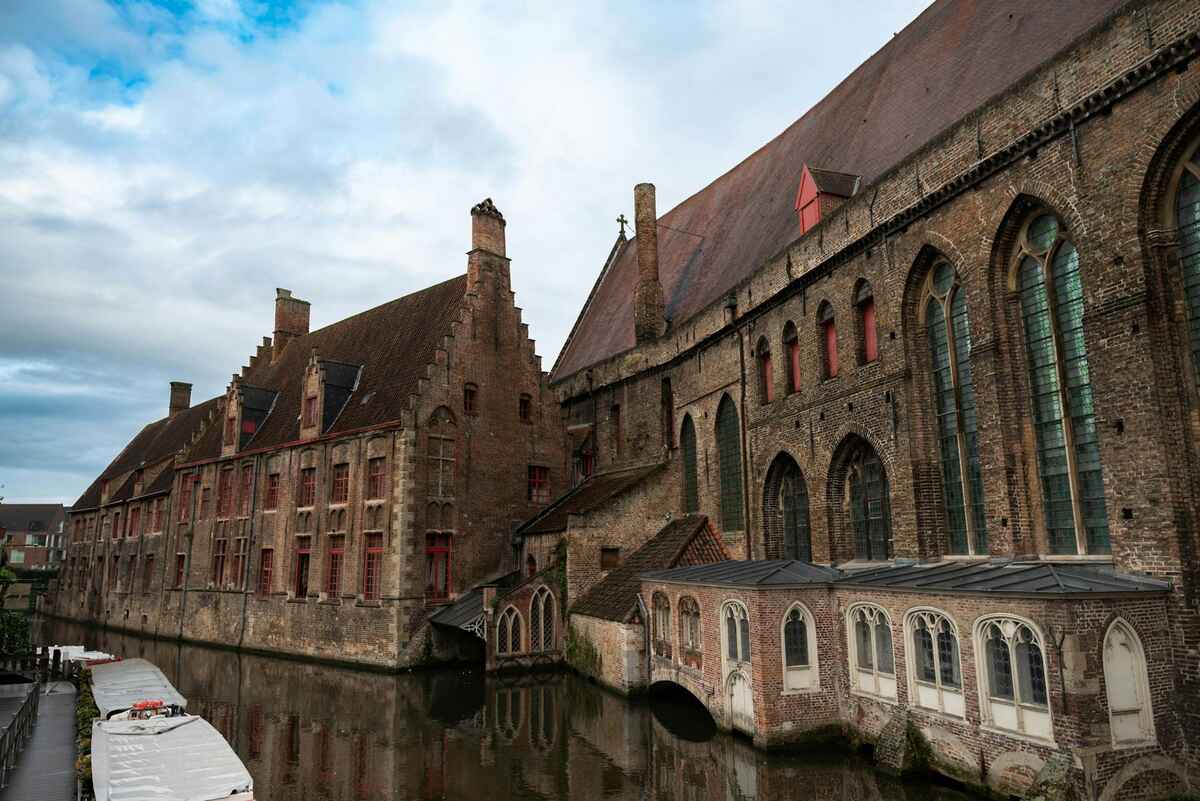
St. John’s Hospital, one of Europe’s oldest surviving hospital buildings, now houses the Memling Museum within its medieval sick wards.
Here, Memling’s luminous “St. Ursula Shrine” – a gilded reliquary that unfolds like a picture book – is displayed alongside medical instruments and archival records that tell the story of compassionate care going back to the 12th century.
The experience juxtaposes fragile beauty with tangible history in a way that feels deeply human. Nearby, the Church of Our Lady stands sentinel over Michelangelo’s “Madonna and Child”, the only sculpture by the master to leave Italy during his lifetime.
Contemporary culture thrives too: the Concertgebouw on ’t Zand programmes world‑class classical, jazz, and dance in a light‑flooded arena, while smaller galleries such as Arentshuis and the Frietmuseum (yes, a museum devoted to fries) celebrate everything from fin‑de‑siècle prints to carnival masks.
Festivals punctuate the calendar, from the MA Festival’s early‑music performances to the summer Klinkers open‑air theatre. Wherever your artistic compass points, Bruges wraps creativity in medieval stone and invites you to stay a while.
Day Trips from Bruges: Exploring Flanders Beyond the City
Bruges makes an impeccable launchpad for discovering the wider Flemish tapestry, with Ghent’s rebellious spirit, the North Sea coast, and poignant WWI battlefields all within a short train or car journey. A multi‑night visit Bruges stay allows you to alternate canal‑gazing mornings with these richly contrasting excursions.
Ghent lies just 25 minutes away by direct train, offering a grittier, university‑charged energy. Its three‑tower skyline – composed of St. Nicholas’ Church, the Belfry, and St. Bavo’s Cathedral – rivals Bruges in scale but feels decidedly lived‑in.
Inside St. Bavo’s, the Van Eyck brothers’ “Adoration of the Mystic Lamb” altarpiece rewards advance‑booked visitors with luminous detail.
The Graslei and Korenlei quays, lined with medieval guildhalls, provide a riverfront rival to the Rozenhoedkaai, and the city’s vegan‑friendly, multicultural food scene adds a fresh twist to a day‑trip menu.
For a salty lungful of sea air, the coastal tram links Knokke‑Heist, Blankenberge, and Ostend in under an hour from Bruges station.
Knokke’s Zwin Nature Park protects a sweeping salt marsh where storks and avocets nest, while Ostend’s Mu.ZEE museum dives into Belgian modernism alongside the sturdy promenades that once lured royalty.
In warmer months, cycling the polder roads between Damme and the coast reveals a flat, breezy landscape dotted with cattle, poplar rows, and roadside estaminets.
History runs deep at Ypres, accessible by a combination of train and bus or a 45‑minute drive. The In Flanders Fields Museum inside the reconstructed Cloth Hall delivers a haunting multimedia record of World War I, and the evening Last Post ceremony at the Menin Gate, held every single night since 1928, is a deeply moving tribute.
Using Bruges as your base means you can absorb such weighty history during the day and return to a twinkling Markt terrace by dinner, blending solemn remembrance with the city’s gentle comfort.
What Are the Best Shopping Streets and Markets in Bruges?
Steenstraat and the Markt‑side arcades cater to high‑street fashion and polished souvenirs, but the real treasure hunt happens along Wollestraat, Katelijnestraat, and the weekly Wednesday market on ’t Zand, where artisanal lace, handmade chocolates, and vintage curios beckon.
Lace has defined Bruges craftsmanship since the 16th century, and today’s offerings range from delicate, expensive bridal pieces to affordable bobbin‑lace bookmarks.
The Lace Centre on Balstraat demonstrates the painstaking technique, while shops like Rococo and Lace Jewel sell handmade works directly from the women who stitch them.
Resist the temptation of mass‑produced knock‑offs near the Markt; genuine Bruges lace is light, intricate, and carries a certification tag when authentic. A visit Bruges souvenir haul feels far more meaningful when it supports living heritage.
The Markt hosts a small daily food and flower market, but the Wednesday spectacle on ’t Zand steals the show. Under the shadow of the Concertgebouw, stalls overflow with local cheeses, dried sausages, seasonal vegetables, and freshly cut blooms.
Arrive before 10 a.m. to watch the vendors arrange their displays and snag a still‑warm pastry from the bakery truck. A flea market joins on weekends from April to October, drawing dealers in silver, porcelain, and vintage Belgian advertising posters.
For edible gifts, the artisan chocolate shops on Katelijnestraat offer prettily boxed selections that survive the journey home, while De Bruges Biermuseum and 2be Beer Wall provide beer‑themed hampers and glassware.
Books, fashion, and design‑led homewares cluster around the Noordzandstraat area. The key is to leave the main square – where mark‑ups peak – and wander the quieter cobbled lanes where a bell‑jangled door reveals a family‑run atelier that has traded here for generations.
Where to Stay in Bruges: From Boutique Hotels to Riverside Inns
Accommodation in Bruges spans converted canal‑side mansions, intimate boutique hotels tucked inside medieval brickwork, and sleek modern stays just outside the ring, giving you a wide choice of atmosphere and budget during your visit Bruges holiday.
The most evocative options sit within the historic centre’s egg‑shaped loop. Hotels like Relais Bourgondisch Cruyce, whose half‑timbered facade reflects in the Groenerei, and Hotel de Orangerie on the Dijver marry heritage interiors with crisp Belgian linens and generous breakfasts.
Staying here places you steps from the Belfry, yet the lane‑side rooms remain remarkably quiet after the day‑trippers leave. Advance booking is essential, particularly for canal‑view rooms that book out months ahead for peak weekends.
For a cozier, more personal welcome, the B&B scene flourishes in the Ezelstraat quarter and the Sint‑Gillis district. These family‑run homes often occupy 17th‑century townhouses with steep staircases, exposed beams, and garden terraces where hosts serve homemade jam and local cheeses.
They tend to cost a fraction of the five‑star addresses while providing a deeper connection to everyday Bruges life. Additionally, aparthotels such as The Notary and Côté Canal deliver kitchenettes and living areas that suit longer stays.
Budget‑conscious travellers are not overlooked: Snuffel Hostel and Charlie Rockets combine lively common areas with central locations, while the Ibis near the station provides a reliable chain option.
If you don’t mind a 15‑minute walk or a quick bus ride, the suburbs of Sint‑Andries and Assebroek offer larger hotels with free parking, making them practical if you’re touring Flanders by car.
Wherever you sleep, booking directly with the property often includes little courtesies – a complimentary museum ticket or a canal cruise – that elevate a simple room into a memorable stay.
How to Visit Bruges on a Budget Without Missing the Magic?
You can experience Bruges affordably by focusing on free landmarks such as the Beguinage and Minnewater, purchasing a Bruges Museum Card, picnicking from the Wednesday market, and choosing accommodation just outside the ring road – all without sacrificing the city’s storybook atmosphere.
Many of Bruges’ most atmospheric moments cost nothing. Walking the entire length of Rozenhoedkaai at dawn, photographing the windmills along the Kruisvest, and sitting inside the Beguinage courtyard are priceless rituals.
The Sint‑Salvatorskathedraal and the Church of Our Lady ask only a modest fee to view their treasuries, but the main naves remain free and reward with soaring Gothic vaults. With a picnic from supermarket Delhaize or the cheese stalls on ’t Zand, you can lunch on a canal‑side bench for under five euros.
Smart ticketing makes cultural highlights accessible. The Musea Brugge Card, valid for three days, unlocks the Groeningemuseum, St. John’s Hospital, the Belfry, and several more, offering substantial savings if you plan to visit Bruges’ core exhibits.
The city also runs a free walking tour scheme (tips‑based) that meets at the Markt, providing a solid historical primer in under two hours. For beer lovers, many abbey‑affiliated tasting rooms pour sample‑sized drafts at modest prices, letting you sample trappist ales without full‑pour expense.
Dining out cleverly slashes costs further. Skip the canal‑side terraces with their premium mark‑ups and duck into streets like Geldmuntstraat and Philipstockstraat for lunchtime “dagschotel” (dish of the day) often priced around €15.
Frites stands near the Belfry provide a hot, filling meal for pocket change, and bakeries such as Patisserie Schaeverbeke sell gourmet tarts to enjoy on the go.
If you travel in low season, accommodation rates can drop by 40%, and the quiet streets feel every bit as romantic – proof that a budget‑friendly visit Bruges escape can still feel thoroughly indulgent.
Practical Travel Tips for a Smooth Visit Bruges Experience
A few strategic pointers transform a good trip into a seamless one, covering everything from cobblestone‑ready footwear to the little language courtesies that warm Belgian hearts. These practicalities help you move through Bruges with the relaxed confidence of a regular.
First, dress for the streets. Bruges’ medieval core is paved with cobblestones that chew through flimsy soles, so supportive, waterproof shoes are non‑negotiable. Pack a compact umbrella and a light scarf – weather can shift from sun to drizzle within an hour, even in summer.
Layers are your friend, whether you’re climbing the Belfry or settling onto an outdoor terrace in the evening chill. If you plan a visit Bruges trip in winter, thermal underlayers and a warm coat let you enjoy the Christmas market long after dark.
Language matters: Dutch is the official language, but nearly everyone in hospitality speaks excellent English. Greeting with a cheerful “Goedemorgen” or “Goedenavond” and saying “Dank u wel” (thank you) earns genuine smiles.
Tipping is appreciated but not compulsory – rounding up the bill or leaving 5–10% in restaurants is customary. ATMs are plentiful, though cards (including contactless) are accepted almost everywhere, so carry minimal cash for market stalls.
Most attractions open from 9:30 or 10:00 and close by 17:00, with extended hours in summer and reduced Monday schedules for some museums. Book the Belfry, Groeningemuseum, and popular canal cruises online during peak periods to avoid queueing.
Pharmacies, post offices, and the tourist office on ’t Zand provide English‑speaking assistance. Public restrooms exist, but carry a few 50‑cent coins for the turnstiles.
When you respect these everyday rhythms, your visit Bruges chapter unfolds with the ease of a seasoned traveller, leaving you free to chase sunsets rather than logistics.
Conclusion
Bruges remains one of those rare travel destinations that actually exceeds the postcard.
Its medieval silhouette, cradled by a ring of quiet canals, doesn’t just serve up history – it invites you to step inside it, to smell the old timber, hear the carillon notes drift across the Markt, and taste chocolate still warm from the mould. A visit Bruges journey is a surrender to beauty, a pause button that modern life rarely offers.
Our complete guide has walked you from the city’s mercantile golden age through its artistic treasures, culinary pleasures, and practical back‑alley shortcuts. We’ve balanced the iconic – the Belfry, the Beguinage, the Groeningemuseum – with quieter charms that make a weekend feel personal rather than packaged.
When you finally lace up your shoes and set out, you’ll carry more than an itinerary; you’ll carry a sense of place that colours every cobblestone you cross.
The real gift of Bruges is its scale. In a single day you can admire Van Eyck’s genius, cruise timber‑lined canals, savour carbonnade and a Westmalle, and still have time to lose yourself in a second‑hand bookshop or a hidden city garden.
Return visitors know that the city changes with the light, each hour bending the gables into new compositions, so allow yourself that unhurried rhythm. Your visit Bruges story doesn’t need to be jam‑packed to feel full.
Whether you arrive for a day trip carrying a pastry in one hand and a museum pass in the other, or settle in for a long weekend of spires and slow evenings, Belgium’s fairytale medieval city stands ready to enchant you.
Pack lightly, bring an appetite, and let Bruges do what it has done for centuries: open its lantern‑lit lanes and welcome you home.
FAQ
Is Bruges safe for tourists at night?
Yes, Bruges is exceptionally safe. The well‑lit historic centre and the presence of locals and visitors until late evening create a secure atmosphere. Standard urban precautions apply, but solo travellers and families routinely enjoy the canalside after dark without concern.
What’s the best way to reach Bruges from Brussels Airport?
The direct train from Brussels Airport‑Zaventem to Bruges takes approximately 90 minutes, with a connection at Brussels Midi. Trains run hourly, and a single ticket covers the entire journey, making it the most convenient option for international arrivals.
How many days do I really need for a visit Bruges trip?
Two full days allow you to see the key landmarks, cruise the canals, and enjoy a leisurely dinner. Three days brings a museum‑deep dive, a day trip to Ghent or Damme, and time to savour the city’s slower rhythm without feeling time‑pressed.
Do locals speak English in Bruges?
English is widely and fluently spoken in shops, restaurants, hotels, and museums. While the official language is Dutch, you’ll encounter no language barrier in tourist‑facing areas. A few phrases in Dutch are appreciated but never required.
Which is the most photographed spot in Bruges?
Rozenhoedkaai, the quay where the Dijver and Groenerei canals meet, is the iconic composition. From here, the Belfry and Stadhuis reflect in the water, framed by weeping willows. Sunrise and just after sunset offer the softest light and fewest onlookers.
Can you enjoy Bruges as a day trip from Brussels?
Absolutely. With a train ride of roughly one hour, you can arrive by 9 a.m., see the Markt, Belfry, Burg, and a canal tour, and still catch the evening train back. However, staying overnight reveals the city’s intimate evening ambience.
Is the historic centre wheelchair‑friendly?
While many streets are cobbled and some narrow, major attractions, hotels, and restaurants increasingly offer step‑free access. The city’s accessibility map and low‑floor buses help, but planning routes in advance is recommended for a smooth visit Bruges experience.
What is Bruges most famous for?
Bruges is celebrated for its perfectly preserved medieval architecture, romantic canals, Flemish Primitive art, world‑class chocolate, and lace‑making heritage. Its UNESCO‑listed centre and storybook atmosphere draw millions of visitors each year.
When do the Christmas markets open in Bruges?
The Bruges Christmas market typically opens during the last week of November and runs through the first few days of January. The Markt hosts an ice rink, wooden chalets, and a festive light trail that wraps the city in holiday spirit.
Should I book canal boat tours in advance?
For most of the year you can simply show up, as departures are frequent. During peak summer weekends and holiday periods, booking an early‑morning slot online ensures a shorter wait and a more serene ride, especially if you seek the best photography light.

Author: Horeca Health
Horeca Health










Leave a Reply