Visit Seville: Introduction
If you are looking for a destination that blends centuries of Moorish heritage with the passion of flamenco, the scent of orange blossoms, and sun-drenched plazas, it is time to visit Seville.
This Andalusian capital is not just another Spanish city — it is an experience that stays with you long after you leave. From the intricate tilework of the Alcázar to the sheer ambition of the world’s largest Gothic cathedral, every corner tells a story.
When you visit Seville, you step into a living museum where Roman, Islamic, and Christian influences have layered onto each other to create something utterly unique.
The rhythm of castanets, the taste of jamón ibérico in a shaded courtyard, and the sight of a horse-drawn carriage clattering over cobblestones all work together to make the city unforgettable.
Planning a trip around the idea of “why visit Seville” often reveals a more profound truth: the city is a masterclass in the art of living well. Its tapas culture encourages slow dining, the summer siesta still structures the day, and spontaneous guitar performances can turn an ordinary evening into a private concert.
This guide goes beyond the typical checklist, offering a deep, expert-level exploration of Seville’s history, architecture, gastronomy, and hidden pockets of authenticity.
Whether you are a first-time traveler or a seasoned explorer, you will discover practical insights and cultural context that elevate your journey from a simple sightseeing trip to a genuine immersion in Andalusian soul.
We will walk you through everything from deciphering the city’s complex historical layers to finding the best local taverns in Triana.
By the time you finish this guide, you will understand not only what to see, but also why these places matter, how to avoid common pitfalls, and when to visit for the most rewarding experience. Ready to discover why you should absolutely visit Seville? Let’s begin.
What Makes Seville’s History So Captivating?
Seville’s history reads like an epic novel, and understanding it transforms the way you experience the city. Few places on earth have been shaped so dramatically by the shift from Roman rule to Visigothic influence, more than five centuries of Islamic governance, and then the resurgent might of the Catholic Monarchs.
When you visit Seville, you are walking through a timeline that spans over 2,200 years, and every monument, street name, and local dish carries a trace of that layered past. The city’s ability to absorb and reinterpret each cultural wave is precisely what gives it such extraordinary depth.
The Romans first recognized the strategic value of the Guadalquivir River, founding Hispalis and turning it into a thriving port.
Amphorae filled with olive oil were shipped from here to all corners of the empire. Later, under the Umayyad Caliphate, the city became Ishbiliya, a dazzling Islamic metropolis renowned for its scholarship, commerce, and gardens.
It is during this era that the foundational elements of Seville’s soul — its courtyard houses, elaborate water features, and narrow, winding lanes designed for shade — were firmly established. Even today, the influence of al-Andalus lives on in the language, the agriculture, and the architectural rhythm of the old quarters.
Perhaps the most transformative moment came after the Reconquista in 1248, when King Ferdinand III claimed the city. But rather than erasing the past, Seville embarked on a centuries-long process of adaptation, building the world’s most ambitious Gothic cathedral directly atop the grand mosque.
The Giralda tower, originally a minaret, was repurposed as a bell tower, symbolizing this complex fusion. One more seismic event cemented Seville’s global status: the discovery of the Americas.
The city held a monopoly on trade with the New World, and the Archivo General de Indias now preserves that history in unparalleled archives that still fuel scholarly research today.
The Architectural Marvels You Should See
The built environment of Seville is not a static museum collection; it is a vibrant, inhabited stage where centuries of artistic vision come to life.
The interplay between Islamic geometric precision and later Mudejar, Gothic, Renaissance, and Baroque flourishes creates a visual language that feels unmistakably Sevillian.
To truly answer the question of why visit Seville, you need only look up at the soaring ceilings of the Alcázar or stand within the immense shadow of the cathedral. Here, architecture is not just decoration — it is a narrative in stone, wood, and tile.
The UNESCO-listed trio of the Cathedral, the Alcázar, and the Archivo de Indias forms the historic heart of the city and demands thoughtful exploration.
The Seville Cathedral is a declaration of power and faith, built to be so immense that those who saw it would consider the builders mad. Inside, the tomb of Christopher Columbus, held aloft by four allegorical figures, is a must-see, as is the breathtaking main altarpiece, the largest in the world.
The climb up the Giralda, up a series of ramps designed for a horse guard, rewards you with panoramic views that put the entire city into perspective.
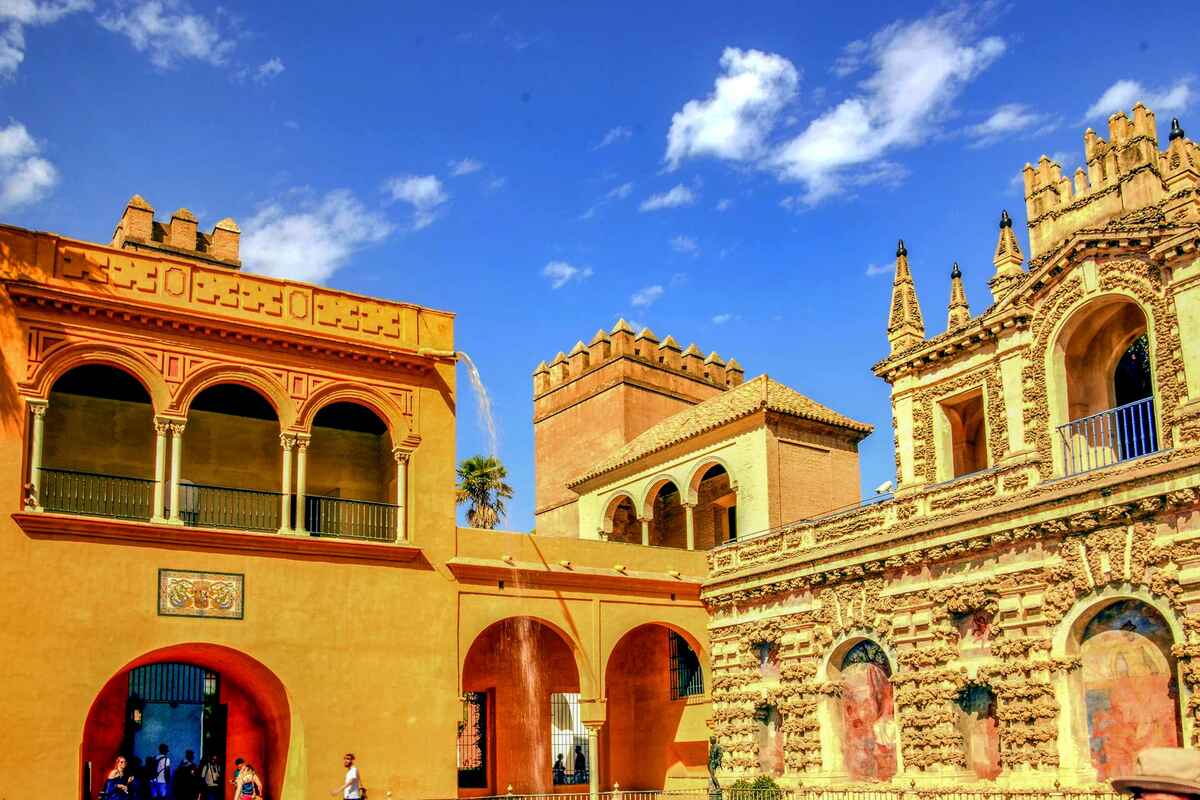
Adjacent to it, the Real Alcázar is a royal palace still in use today, making it the oldest continuously inhabited royal residence in Europe. Its sequence of sun-dappled patios, such as the Patio de las Doncellas, exhibits some of the finest examples of Mudejar craftsmanship you will ever encounter.
The fusion of carved cedar, intricate plasterwork, and cool marble floors creates a sensory experience that is both opulent and serene.
For a deeper understanding, walk through the palace slowly and notice how the spaces deliberately transition from public grandeur to private intimacy, a design principle rooted in Islamic palace architecture.
| Monument | Architectural Style | Notable Feature |
|---|---|---|
| Alcázar of Seville | Mudejar, Gothic, Renaissance | Ambassador’s Hall wooden dome |
| Seville Cathedral | Gothic | Tomb of Columbus & Giralda views |
| Plaza de España | Regionalist Revival | Semicircular canal and ceramic alcoves |
| Casa de Pilatos | Italian Renaissance, Mudejar | Mix of Genoese marbles and azulejo tiles |
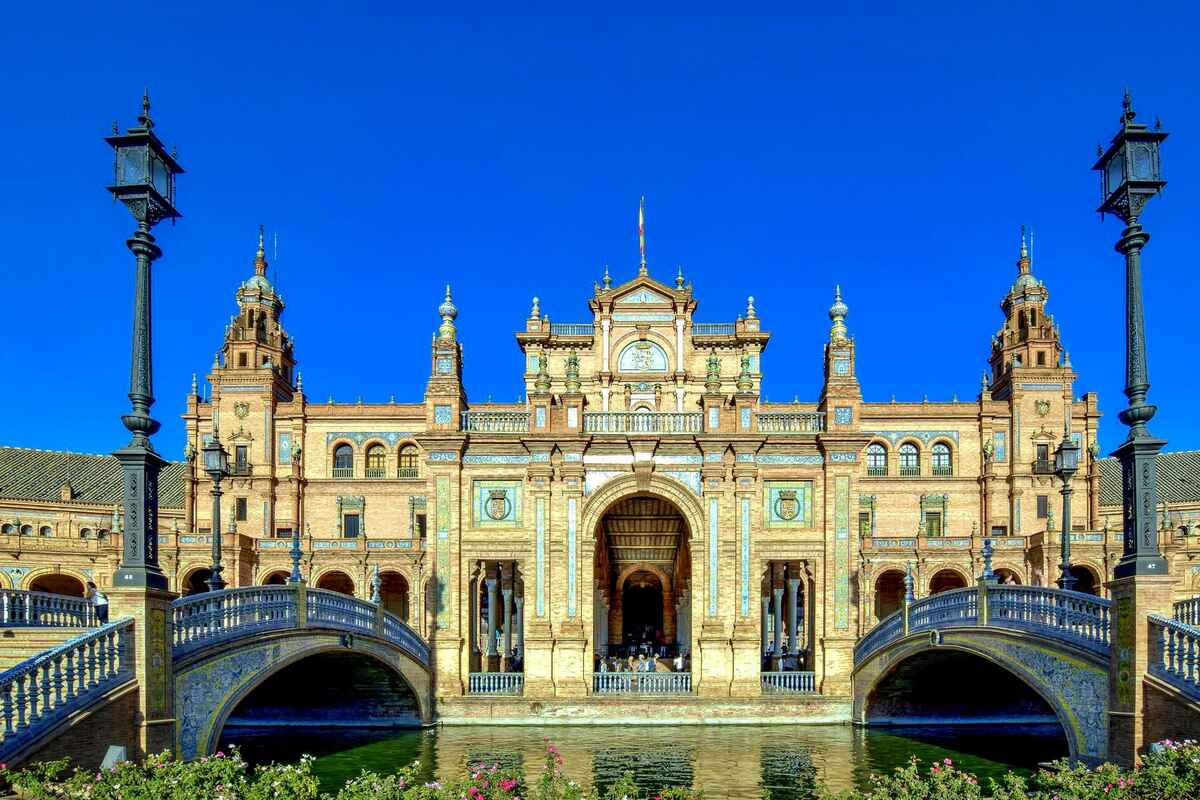
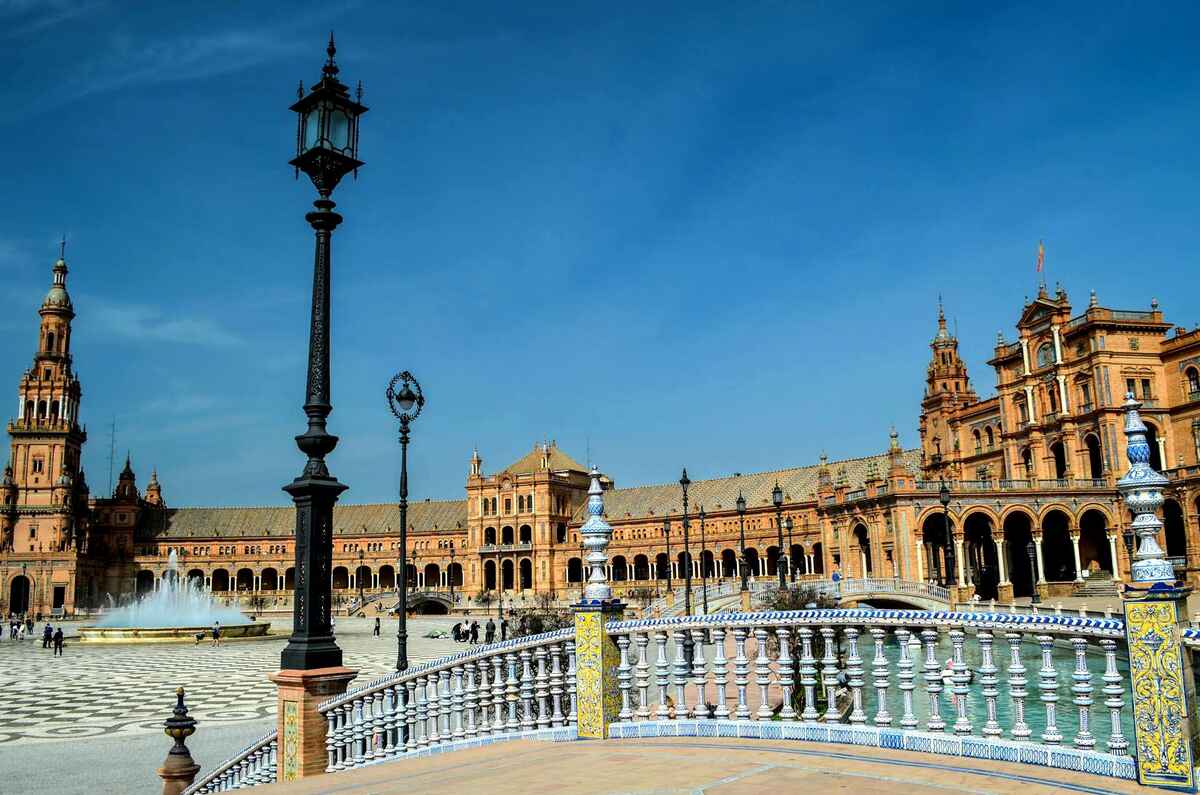
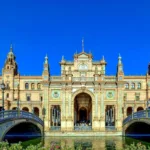
A ten-minute walk leads to the Plaza de España, a 1929 masterpiece of Regionalist Revival architecture that blends Art Deco, Neo-Mudéjar, and Renaissance influences.
The semicircular building, with its moat-like canals and ornate bridges, functions as a love letter to all of Spain’s provinces, each represented by a beautifully tiled alcove.
Renting a small rowboat or simply strolling under the arched galleries here is one of those simple pleasures that makes a visit to Seville so visually spectacular and deeply memorable.
Why Does Flamenco Originate in Seville?
Flamenco is more than a performance in Seville — it is the raw, emotional heartbeat of Andalusian culture, and the city is widely regarded as one of its crucibles.
The art form emerged from a deep crucible of sorrow, resilience, and celebration, born from the mixing of Roma, Moorish, Jewish, and Andalusian folk traditions in the lower Guadalquivir valley during the 18th century.
When you visit Seville, you are standing at the geographical and spiritual center of cante jondo, the “deep song” that expresses profound human emotion with a guttural power that can leave audiences breathless.
The Triana neighborhood, in particular, holds a mythical status in flamenco history. For centuries, it was home to a large Roma community whose forges and courtyards gave birth to legendary singers, guitarists, and dancers.
The bars and patios of Triana were intimate settings where flamenco was not a tourist spectacle, but a communal, almost ritualistic expression.
Today, while many tablaos operate commercially, the authentic spirit persists in peñas, members-only clubs where aficionados gather to share performances in an atmosphere of profound respect.
Securing an invitation to one or attending a carefully vetted authentic venue is one of the most culturally significant things you can do.
It is essential to distinguish between a tourist-oriented tablao with a dinner menu and a genuine recital. An expert-level tip is to look for venues that advertise “recital de cante” without a flashy dinner package, or to time your visit to coincide with the Bienal de Flamenco, the city’s most prestigious festival held every even-numbered year.
At its best, a flamenco performance in Seville is an uncomfortable, beautiful, and transcendent art — the dancer’s feet hammering the worn wooden floor, the singer’s voice cracking with age and pain, and the guitarist weaving a tense, intricate conversation.
It is an experience that defines why you must visit Seville if you care about living culture, not just monuments.
Exploring the Enchanting Santa Cruz Neighborhood
Once you have absorbed the grand monuments, the most rewarding part of your journey is getting lost in the labyrinth of Santa Cruz.
This former Jewish quarter, located in the shadow of the cathedral, is a winsome tangle of whitewashed houses, wrought-iron balconies overflowing with geraniums, and tiny squares that seem to appear out of nowhere.
Walking through Santa Cruz is like stepping into a sepia-toned photograph, where the scent of orange blossom hangs heavily in the spring air and the sound of water trickling from a ceramic fountain lulls you into a slower pace. It is, without a doubt, one of the most photogenic reasons to visit Seville.
The history of this area is as poignant as it is beautiful. Before the expulsion in 1492, it was a thriving Jewish community with synagogues, schools, and a vibrant intellectual life.
The narrowness of the streets was not merely aesthetic; it provided crucial shade and a defensive maze-like quality. Today, you can still visit the Iglesia de Santa María la Blanca, a church that was once a synagogue and later a mosque, its interior a stunning testament to the successive layers of faith.
The small Callejón del Agua, running along the Alcázar walls, is named after a water channel that once flowed through here and is perfect for a quiet, reflective stroll.
While Santa Cruz is undeniably popular and can become crowded, a little insider knowledge transforms the experience. Arrive just after dawn, when the light floods the narrow alleys with a warm, golden glow and the only people around are residents walking their dogs.
This is the time to visit the Plaza de Doña Elvira, a romantic square with tiled benches and a central fountain, without the buskers and crowds.
In the evening, the neighborhood reveals its sophisticated side with intimate courtyards converted into gourmet restaurants and wine bars, where you can dine under the stars in a setting that feels like a secret garden.
What Culinary Delights Await When You Visit Seville?
Seville’s culinary scene is an integral part of its identity, and understanding the tapas culture is essential to unlocking the city’s social rhythm.
The local way of eating is fundamentally social and iterative — you move from bar to bar, ordering a small plate and a drink at each, standing at the counter or chatting at a high table.
This ritual, known as “ir de tapas,” is a vibrant expression of Sevillian life, and you will quickly learn that a tapa is not just food; it is a pretext for conversation. When you visit Seville, abandon the idea of a formal three-course meal and embrace the spontaneity of the tapeo.
Start with the classics. Presa ibérica, a succulent cut from the acorn-fed Iberian pig, is an absolute must-try, often served grilled to pink perfection with a little sea salt.
Another icon is espinacas con garbanzos, a hearty Moorish-influenced stew of spinach and chickpeas spiced with cumin, which you will find in most traditional bars like El Rinconcillo, the city’s oldest.
Seville is also the birthplace of the rebujito, a refreshingly crisp cocktail of manzanilla sherry and lemon-lime soda that is synonymous with the spring Feria. Do not leave without sampling salmorejo, a thick, cold tomato and bread soup garnished with hard-boiled egg and jamón, far creamier than its gazpacho cousin.
To eat like a true local, head to the Triana Market, where you can sit at a market stall and order freshly shucked oysters or a grilled cuttlefish while watching the vendors.
In the Arenal neighborhood, seek out the bars that still use chalk to tally your bill on the counter, a charming anachronism that signals an old-school establishment.
The key to navigating the scorching summer climate is timing: lunch starts around 2:00 PM, and dinner rarely kicks off before 9:00 PM, with prime tapas hours stretching well past 10:00 PM.
This late rhythm means the city lights up at night, filling terraces and squares with a convivial energy that makes every evening feel like a celebration.
The Vibrant Triana District and Its Ceramic Legacy
Cross the Isabel II bridge from the city center and you step into Triana, a quarter that considers itself a distinct entity, fiercely proud and unapologetically authentic. Triana was historically the home of sailors, potters, bullfighters, and flamenco artists, and this working-class soul still defines its character.
The neighborhood’s ceramic tradition is world-renowned, rooted in the clay-rich banks of the Guadalquivir River and centuries of Islamic and Renaissance ceramic artistry. To visit Seville without spending an afternoon in Triana is to miss the earthy, creative core of the city.
The best starting point is the Centro Cerámica Triana, a living museum housed in the former Santa Ana pottery factory.
Here, you can see the original kilns and watch artisans demonstrate the ancient techniques of cuerda seca and arista that produce the stunning azulejo tiles adorning everything from bar countertops to the grand altars of the cathedral.
Walking through Triana’s streets, notice the facades decorated with the neighborhood’s own production — intricate ceramic glazing in cobalt blue, green, and ochre.
This is a legacy that directly connects the modern craftsman to the alarifes of al-Andalus and the Renaissance workshops that supplied Europe with luxury tiles.
Triana also offers some of the city’s finest informal dining and a nightlife scene that feels entirely local. Calle Betis, the waterfront street painted in a cheerful row of colorful houses, is lined with bars and restaurants where you can sip a chilled fino sherry while watching the sun set behind the cathedral.
The Triana Market, rebuilt on the ruins of the Castle of San Jorge, is less touristy than its central counterparts and a perfect spot for breakfast.
This blend of artisanal heritage, flamenco roots, and genuine Sevillian neighborhood life makes Triana an essential chapter in any expert-curated itinerary, proving time and again why a deeper connection to a place enriches every visit.
How to Navigate the City: Transportation and Walkability
Seville is a remarkably compact city, and its historic core is best conquered on foot, allowing you to stumble upon hidden plazas and impromptu performances. However, understanding the transport network helps you bridge longer distances, especially in the intense summer heat.
The flat terrain and extensive pedestrianized zones make it one of the most walkable large cities in Spain. When you visit Seville, you will find that the experience of simply wandering, unburdened by rigid itineraries, often yields the most memorable discoveries.
For journeys beyond the immediate center, the modern tram line (MetroCentro) connects the Plaza Nueva area to San Bernardo station, and it runs frequently and reliably.
The single-line metro system is useful for accessing the Nervión district or reaching outlying bus stations but will rarely be needed for sightseeing within the core tourist zone.
The city’s extensive network of dedicated bike lanes and the public bike-share service, Sevici, make cycling an excellent option from October to May. Gliding along the river path on a bicycle, with the breeze in your face and the Torre del Oro in the distance, offers a uniquely liberating perspective of the city.
A few critical logistical insights will save you time and stress. The airport bus (EA line) provides a direct, cost-effective link from San Pablo Airport to the city center, terminating near the Plaza de Armas bus station.
If you are arriving by high-speed AVE train at Santa Justa station, a short taxi ride or a 20-minute walk will get you into the historic center. Crucially, download a reliable offline map before you arrive, because the medieval street plan is intentionally confusing and GPS signals can waver in the narrowest alleys.
During the ferocious midday sun, do not hesitate to take a white taxi, which is metered and surprisingly affordable for crossing the city — a practical tip that seasoned visitors rely on.
Seasonal Events and Festivals You Shouldn’t Miss
Timing your trip to align with Seville’s festival calendar can elevate your visit from remarkable to transcendent.
The city’s two biggest events, Semana Santa (Holy Week) and the Feria de Abril (April Fair), are world-famous for good reason, but they represent opposite ends of the emotional and social spectrum.
Experiencing these traditions is to witness the profound duality of Andalusian culture: deeply solemn religious devotion followed by an explosion of unbridled celebration. If your goal is to understand why so many people visit Seville and return year after year, these festivals hold the key.
During Semana Santa, elaborate processions of penitents and enormous, candle-lit floats depicting scenes from the Passion fill the streets from Palm Sunday to Easter Sunday.
The haunting sound of a lone saeta — a flamenco-style lament sung from a balcony — cutting through the silent night is one of the most moving cultural experiences you can have in Spain.
Accommodation books up a year in advance, and the city becomes intensely crowded, but the atmosphere of collective reverence is astonishing.
A week or two later, the city transforms completely for the Feria de Abril, a week-long party of private casetas, colorful flamenco dresses, and an illuminated fairground.
The Feria is a closed, family-oriented society event, but several public casetas now welcome visitors, offering a chance to dance sevillanas until dawn.
Beyond these titans, other moments on the calendar offer incredible value without the peak-season pressure.
The Corpus Christi procession in June features an ancient ritual where altar boys dance before the monstrance. In autumn, the Bienal de Flamenco draws the world’s greatest artists for a month of performances.
Winter, meanwhile, brings the charming nativity scenes and a more relaxed, intimate city. Aligning your visit with these events requires meticulous planning, but the reward is a visceral, first-hand experience of Sevillian identity that no sightseeing tour can replicate.
Accommodation Options for Every Budget
Selecting the right place to stay fundamentally shapes your experience, as Seville’s neighborhoods each offer a distinct character and pace of life.
The city has seen a boom in high-quality hospitality across all segments, from opulent palace hotels to thoughtfully designed hostels that reflect the local aesthetic.
Understanding the layout of the different barrios will ensure that your home base aligns with your travel style. If you are planning to visit Seville, investing time in choosing the right accommodation is as important as planning your itinerary.
For first-time visitors who want to be in the thick of the action, the streets radiating from the Cathedral and the Alfalfa area place you steps from major landmarks and nightlife, but be prepared for noise late into the night.
A more romantic and serene, albeit pricier, option is to stay in a converted palace within Santa Cruz, where you can sleep inside a 17th-century mansion with a private interior courtyard.
The El Arenal neighborhood, close to the bullring and river, offers a sophisticated mix of upscale hotels and charming guesthouses, with a slightly more relaxed vibe while still being centrally located.
If you seek an authentic, bohemian atmosphere with better value, look across the river to Triana. Here, a number of boutique hotels and stylish Airbnb apartments have transformed old ceramic workshops and shipping offices, offering rooftop pools with direct views of the cathedral.
The Macarena district, north of the center, is a resolutely local, more affordable area where you can live among Sevillians and discover an edgier art and culinary scene.
When booking, always verify whether the property has reliable air conditioning — it is non-negotiable from June through September — and check if it is located within the low-emission zone if you are driving, as access is restricted.
Safety Tips and Travel Etiquette
Seville is generally a very safe city, and violent crime against tourists is extremely rare. However, like any major European destination, it requires situational awareness, especially in crowded areas where opportunistic pickpocketing can occur.
The main risk is distraction theft, often by a team working to divert your attention while another person lifts a wallet or phone. When you visit Seville, adopting a few precautionary habits will ensure your trip remains worry-free and that you blend in more naturally with the savvy local population.
Keep your valuables secure in a zipped, cross-body bag worn to the front in tourist-heavy zones like the Cathedral steps, the Alcázar entrance queue, and the crowded nightlife streets around Calle Betis.
Never leave your phone sitting on an outdoor table, as a classic trick involves someone placing a map or petition over it and sweeping it away.
An expert travel tip: carry only one credit card and a limited amount of cash for the day, leaving the rest in a hotel safe. This minimizes the impact if you are targeted and provides peace of mind as you navigate bustling plazas.
Beyond safety, understanding local etiquette greatly enriches your interactions. The Sevillian pace is more relaxed, and a warm “buenos días” or “buenas tardes” when entering a shop or requesting a table is non-negotiable.
During the scorching afternoon hours, note that many smaller shops close for siesta, roughly from 2:00 PM to 5:00 PM, so plan your shopping accordingly.
When attending a flamenco performance, silence during the performance is critical — loudly talking or filming with a flash is considered deeply disrespectful to the artists. Respecting these cultural norms transforms you from a passive observer into a welcome guest.
Why Visit Seville in Spring or Autumn?
The question of timing is critical, and the expert consensus is clear: the shoulder seasons of spring and autumn provide the most sublime conditions for experiencing the city.
Seville’s inland location creates a continental climate that can be mercilessly hot in summer, with daytime temperatures regularly exceeding 40°C (104°F), making sightseeing physically draining.
Winter is mild and often beautifully sunny, but the city truly bursts into life and sensory overload when the orange trees blossom in March and April. If you have the flexibility, this is precisely when you should visit Seville.
Spring is synonymous with the aroma of azahar, the intoxicating scent of orange blossom that envelops entire neighborhoods. The gardens of the Alcázar and the María Luisa Park are lush and vibrant, and the light has a soft, golden quality that photographers dream of.
This season also packs the monumental Semana Santa and Feria de Abril, so you must book everything far in advance and expect premium prices. However, the weeks between these two events are often magical, with the city adorned in festive red and white bunting but with slightly thinner crowds.
Autumn, from late September through early November, offers an equally compelling and often more affordable alternative. The brutal heat has finally broken, replaced by warm, pleasant days and crisp evenings perfect for terrace dining.
The cultural calendar picks up with a slate of theater, opera, and the prestigious Bienal de Flamenco. October brings the Feria de San Lucas, the city’s oldest fair, with livestock exhibitions and a more rustic, traditional feel than the glitzy April Feria.
Whether you choose the blooming exuberance of spring or the golden tranquility of autumn, timing your visit to avoid the furnace of July and August will transform your physical comfort and your ability to explore the city from dawn until well past midnight.
Planning Your Perfect Itinerary
Crafting an itinerary that moves beyond the obvious checklist requires balancing the must-see monuments with the unstructured leisure that defines Sevillian life.
A common mistake is to over-schedule every minute, leaving no time for the chance encounter — the impromptu rooftop concert, the hidden courtyard that invites you in, or the long, lazy lunch that stretches into the afternoon.
A well-designed plan for when you visit Seville should function as a loose framework, not a rigid military operation, allowing space for spontaneity.
For a classic three-day framework, dedicate your first day entirely to the monumental core: an early morning visit to the Alcázar (pre-booked tickets are non-negotiable), followed by the Cathedral and a climb up the Giralda before the midday sun peaks.
After lunch, escape the heat with a visit to the Hospital de los Venerables, a lesser-known Baroque gem with a Velázquez-focused art center, and then wander Santa Cruz.
On day two, cross the bridge to Triana for the morning market and ceramics tour, and return to the city center for a sunset aperitivo along the river. Reserve your final day for the Plaza de España and the lush María Luisa Park, followed by an authentic flamenco recital in the evening.
If you have additional days, slow down. Add a half-day trip to the Roman ruins of Itálica, an easy 20-minute bus ride, where you can walk on the same amphitheater sands where gladiators once fought.
Enthusiasts of art should seek out the Museo de Bellas Artes, the second most important public gallery in Spain after the Prado, housed in a stunning former convent.
Most importantly, build in at least one completely unscheduled afternoon to simply sit in a plaza with a café con leche, watch the world go by, and internalize the Sevillian art of “desahogarse” — the act of unwinding and letting go of haste.
Conclusion
The decision to visit Seville is an invitation to a deeper, slower, and richer way of traveling. This is not a city that reveals its secrets all at once; it unfolds in layers, rewarding the curious with hidden patios, the echo of a saeta in a narrow street, and the unforced warmth of its people.
From the monumental grandeur of the cathedral and Alcázar to the earthy, creative energy of Triana and the refined tapas bars of El Arenal, Seville offers a complete sensory immersion in history and contemporary culture. It demands that you engage, taste, listen, and feel, rather than merely see.
Throughout this guide, we have unpacked the reasons why Seville stands apart, exploring its architectural marvels, its profound flamenco heritage, and the culinary traditions that turn a simple meal into a social ritual.
We have offered expert-level insights on navigating the seasons, choosing the right neighborhood to stay in, and blending into the local rhythm rather than fighting against it.
The city’s allure is not rooted in a single monument but in the sum of its experiences — the scent of orange blossom in spring, the cool shade of a cathedral interior on a blazing afternoon, and the shared laughter over a perfect montadito de pringá late at night.
Ultimately, to visit Seville is to learn something about the art of living well. The Sevillian approach to life — valuing conversation over haste, tradition over novelty, and community over isolation — is palpable in every tapa bar and every evening paseo.
So book your tickets, pack light clothing and comfortable shoes, and arrive with an open heart and an empty stomach.
The city is waiting to show you its soul, and once you have been, you will understand why so many travelers leave a piece of themselves behind and return, time and again, to the luminous heart of Andalusia.
FAQ
Is Seville a walkable city for tourists?
Yes, Seville is one of the most walkable cities in Spain, with the majority of its major attractions, restaurants, and charming plazas grouped within the compact historic center and easily connected on foot. The flat terrain and pedestrianized streets make it ideal for exploring without needing a car, though you may use trams or taxis during the hottest midday hours.
How many days do I need to properly visit Seville?
Most travelers find that three full days allow you to comfortably experience the essential monuments like the Alcázar, Cathedral, and Plaza de España, while also leaving time for Triana, tapas hopping, and a flamenco show. With five days, you can add day trips to Itálica or Córdoba and truly absorb the city’s slower, more authentic rhythm.
What is the best time of year to visit Seville?
The ideal times are March to early June and September to November, when the weather is warm but not extreme, and the city is either blooming with orange blossoms or enjoying an energetic autumn cultural calendar. Avoid July and August unless you can tolerate temperatures above 40°C and plan all activities for early mornings and evenings.
Can I drink the tap water in Seville?
Yes, the tap water in Seville is safe to drink and meets all public health standards, though some visitors notice a slight mineral taste due to the local water profile. To cut down on plastic waste, carry a reusable bottle and refill it at the numerous public drinking fountains dotted across the city.
What should I wear when visiting religious sites in Seville?
When entering the Cathedral, churches, or any religious procession during Semana Santa, you should cover your shoulders and knees as a sign of respect. Light scarves are a practical, portable solution for the summer, allowing you to adapt instantly and comfortably.
Are tickets to the Alcázar and Cathedral worth booking in advance?
Absolutely. Pre-booking online with a specific time slot is essential, especially during peak seasons, as the queues for on-the-day tickets can stretch for hours. This small act of planning saves you immense time and guarantees entry to Seville’s two most iconic monuments.
Where can I find authentic, non-touristy flamenco in Seville?
Look for peñas or intimate venues in Triana and the Alameda area that advertise “recital de cante” instead of a dinner-and-drinks package. Attending a show at La Casa de la Memoria or securing an invitation to a local peña will provide a raw, deeply authentic experience far removed from commercial tablaos.
Is Seville a good destination for families?
Yes, Seville is wonderfully accommodating for families, with horse-drawn carriage rides, the Plaza de España’s rowboats, the interactive aquarium, and parks like the Alamillo offering green space. The late dining culture can be adapted by taking part in the early evening “merienda” and visiting more casual tapas bars.
Do I need to speak Spanish to enjoy a visit to Seville?
While you can certainly navigate the main tourist sites with English, learning a few basic Spanish phrases like “por favor,” “gracias,” and “la cuenta, por favor” goes a long way in establishing a warm connection with locals. Sevillians are famously hospitable and will appreciate any attempt to speak their language.
How do I get from Seville airport to the city center?
The EA airport bus runs every 15 to 30 minutes from San Pablo Airport and will drop you at the Prado de San Sebastián or Plaza de Armas terminals in about 35 minutes for a flat fare. A taxi ride costs a fixed rate of around €25-30 and takes approximately 20 minutes, depending on traffic.

Author: Horeca Health
Horeca Health












Leave a Reply