Nordic walking: Introduction
Nordic walking: For decades, running has reigned supreme as the gold standard of accessible cardio—the go-to method for weight loss, endurance building, and getting a quick, effective workout.
But what if we told you there’s an activity rapidly gaining global recognition that offers a better return on investment for your overall health?
An exercise that delivers a powerful cardiovascular punch, burns a surprising number of calories, and provides a full-body strength workout, all while drastically lowering the impact on your knees and joints? Enter Nordic walking.
Once dismissed as just “walking with ski poles,” this European fitness phenomenon is actually a highly efficient, science-backed form of locomotion that engages nearly 90% of your body’s muscles.
For anyone sidelined by running injuries, tired of the gym, or simply looking for a smarter, more sustainable path to fitness, this is a game-changer.
In this deep dive, we’re going beyond the basics to compare the full-body benefits, calorie-burning potential, and injury-prevention prowess of Nordic walking against traditional running.
Get ready to explore a revolutionary way to move that could transform your weekly routine and elevate your long-term well-being. The finish line awaits—let’s find out if it’s time to trade in your running shoes for a pair of poles.
Is Nordic walking truly a full-body workout unlike traditional running?
One of the most compelling arguments for embracing Nordic walking over a standard jog is the dramatic difference in muscle engagement.
Unlike running, which is predominantly a lower-body activity, this pole-assisted exercise transforms a simple stroll into a comprehensive conditioning session that works almost 90% of your skeletal muscles.
By actively pushing off the ground with the specially designed poles, you engage major upper body muscle groups, including the chest, back, shoulders, triceps, and biceps—all of which remain largely passive during a typical run.
This concurrent upper and lower body effort necessitates more oxygen consumption and a higher heart rate than regular walking at the same pace, providing a superior cardiorespiratory workout without the perception of increased exertion.
Many who find the high-impact nature of running stressful on their joints discover that the rhythmic, cross-lateral movement of Nordic walking offers an equally effective, low-impact alternative for boosting their overall physical fitness.
This full-body activation is invaluable for individuals seeking balanced muscle development, improved posture, and a better caloric burn rate, all while contributing positively to their long-term general well-being.
The consistent, purposeful use of the poles promotes better spinal alignment and helps to reduce the common tension knots that accumulate in the neck and shoulders, which are often exacerbated by the forward lean associated with running.
This holistic approach to physical activity ensures that your entire kinetic chain is working in harmony, leading to improved functional strength and enhanced core stability, both foundational pillars of good health.
How does Nordic walking’s low impact nature protect your joints compared to running?
The brutal, repetitive shock absorbed by the body during running is a major factor contributing to high injury rates, with statistics suggesting over half of all regular runners may experience an injury annually.
Every time a runner lands, their body must absorb an impact force equivalent to roughly three times their body weight, a stress that accumulates over time, particularly affecting the knees, ankles, and hips. In contrast, the methodology of Nordic walking is inherently designed to mitigate this joint strain.
Because one foot is always in contact with the ground, and the poles share the load and provide a form of mechanical propulsion, the vertical forces transmitted through the lower body joints are significantly reduced.
The strategic planting and pushing of the poles effectively transfers some of the weight and impact to the upper body, acting almost like a gentle cross-trainer that moves with you outdoors.
This makes Nordic walking an ideal choice for those with pre-existing joint conditions, arthritis, or those recovering from past athletic injuries who still want to maintain a high level of cardiovascular fitness.
The ability to engage in a strenuous, calorie-burning activity that is gentle on the musculoskeletal system is a massive health advantage that running simply cannot match. It allows for longer, more frequent sessions of physical activity, which is crucial for consistency in any fitness regime.
By protecting your joints now, you are investing in a longer, more active life, demonstrating that high intensity doesn’t always have to equate to high impact for achieving your fitness goals.
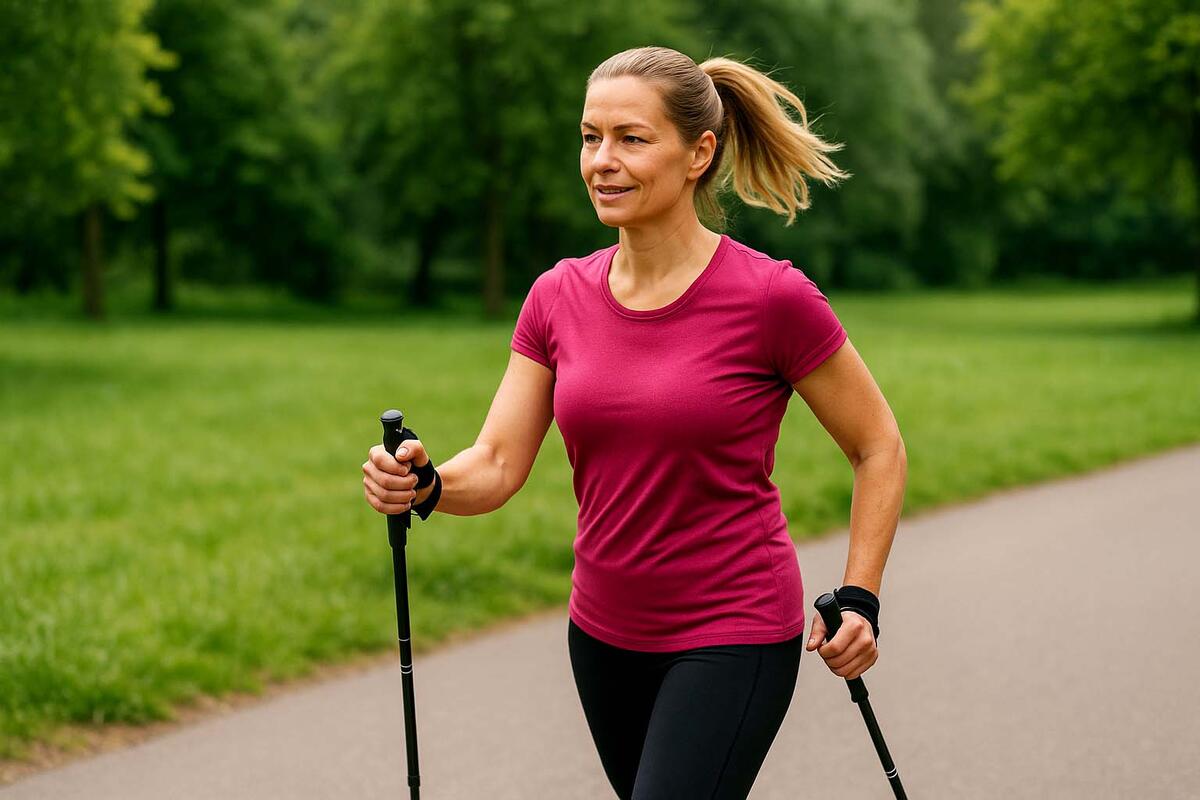
Can Nordic walking burn a comparable number of calories to a standard run?
It’s a common misconception that because running is a high-speed activity, it is automatically the superior choice for caloric expenditure.
While a high-speed run undeniably burns a large number of calories per minute, the full-body engagement inherent in Nordic walking narrows this gap considerably, especially when considering the reduced risk of injury.
Research indicates that using the proper technique in Nordic walking can increase calorie consumption by 20% to 46% compared to regular walking without poles.
This substantial boost is achieved because activating the large muscle groups in the upper body, back, and core requires significantly more energy to sustain the movement, forcing the heart and lungs to work harder.
Crucially, the poles also aid in propelling the walker, allowing for a faster pace and a longer stride than typical walking, which further contributes to a higher energy output.
For many individuals, especially those who find sustained running challenging or painful, Nordic walking allows them to maintain a higher intensity level for a longer duration, resulting in a greater total calorie burn over the course of an hour.
The efficiency of a full-body workout, combined with its accessibility, makes Nordic walking a pragmatic and powerful tool for weight management and metabolic health.
This sustained, moderate-to-vigorous activity level, achieved without excessive pounding, is often a more sustainable pathway to long-term fitness and a healthier body composition than the stop-start nature of an injury-prone running habit.
What specific improvements does Nordic walking offer for upper body strength?
The unique design and deliberate technique of Nordic walking provide strength-training benefits that running completely overlooks, focusing instead on lower body endurance.
The poles are not merely aids for balance; they are dynamic tools used to actively push off the ground, effectively engaging a wide array of muscles in the arms, shoulders, and upper back.
With every stride, the user’s arms swing back fully, and the action of pushing down and back on the pole provides a resistance workout for the triceps, while the engagement needed to stabilize the core works the abdominals and back muscles.
This consistent, rhythmic resistance is a fantastic way to tone and strengthen the entire upper kinetic chain, helping to combat the common issue of “bingo wings” and improving overall shoulder girdle health.
This balanced development is not just cosmetic; it significantly contributes to functional strength, making everyday tasks like lifting and carrying easier, and enhancing overall body stability.
Furthermore, for those looking to cross-train or simply add a low-impact strength element to their routine, Nordic walking is an excellent choice that complements other forms of exercise.
By actively engaging the upper body, you not only increase your metabolic rate during the activity but also ensure a more symmetrical and injury-resistant physique. It is this whole-body strengthening that truly sets Nordic walking apart from the single-plane workout offered by running.
How does Nordic walking aid in improving posture and reducing back pain?
Poor posture is a silent epidemic, often worsened by sedentary lifestyles or the forward-leaning gait that some runners adopt, leading to chronic upper back and neck pain.
Nordic walking, however, actively promotes and trains the body to adopt a more upright, beneficial posture. The technique requires the walker to maintain a tall stance and a slight forward lean from the ankles (not the hips) to effectively engage the core and push off with the poles.
This constant need to extend the arms and activate the trunk muscles encourages the shoulders to pull back and the chest to open, counteracting the common rounded-shoulder position associated with desk work.
The rhythmic, diagonal movement of the poles also encourages spinal rotation, mobilizing the spine and strengthening the deep core stabilizing muscles in a gentle, dynamic manner that static exercises often fail to achieve.
By strengthening the postural muscles in the back and abdomen, Nordic walking helps to maintain the spine’s natural curvature and alleviate undue pressure on the lower back, a common complaint for both non-exercisers and high-impact athletes.
This continuous reinforcement of correct biomechanics is a long-term investment in spinal health. The act of consistently walking tall, supported by the poles, can translate into a significantly improved everyday posture, showcasing the therapeutic and preventative health benefits of this activity.
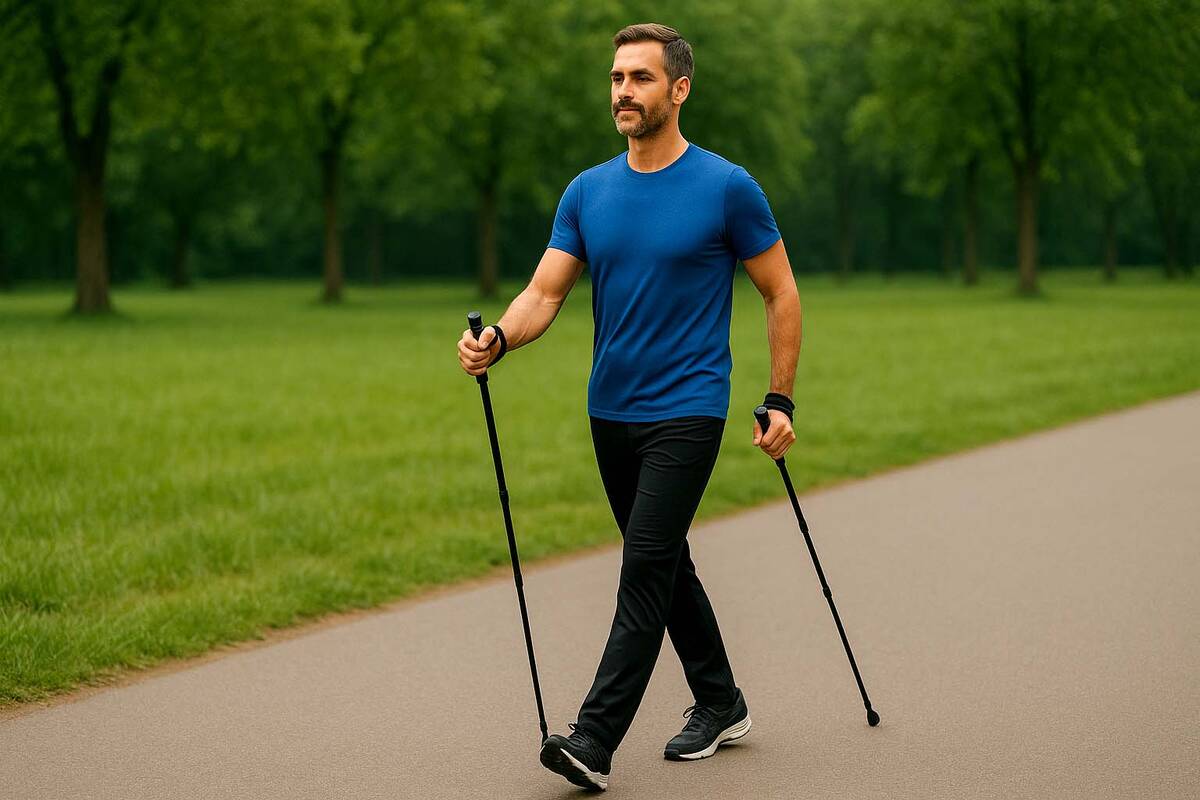
Is learning the proper Nordic walking technique difficult for a beginner?
While the concept of simply walking with poles might appear straightforward, mastering the correct Nordic walking technique is essential to unlock its maximum full-body and caloric benefits.
Fortunately, the technique is not overly complicated and is highly intuitive, making it accessible to individuals of all fitness levels, unlike the often complex gait mechanics required for efficient and injury-free running.
The key lies in coordinating the arm and leg movements in a natural, opposite rhythm—left leg forward, right arm forward, mirroring the natural walking motion.
The specific poles, which have a glove-like strap, are designed to be briefly released and caught in the backswing, ensuring the push comes from the triceps and back muscles rather than just the grip. This crucial detail is what differentiates it from trekking or hiking with poles.
Taking an introductory lesson from a certified instructor is highly recommended for beginners, as they can quickly correct common errors and ensure the pole plant is correctly positioned for maximum propulsion and muscle activation.
Once the fundamentals are grasped, the movement quickly becomes second nature. The ease of learning and the rapid progress in fitness and health often make Nordic walking a more appealing and less intimidating starting point for many individuals compared to the steep learning curve and higher intensity required to begin a running program.
How does Nordic walking benefit cardiovascular endurance and heart health?
The true value of any fitness regimen is its capacity to improve cardiovascular health, and here, Nordic walking provides a surprisingly potent workout that rivals moderate running, but with a kinder touch on the body.
Because the activity engages the large muscle groups in both the upper and lower body simultaneously, the heart has to pump blood to a much larger volume of working tissue than it does during regular walking or running.
This results in a higher heart rate and oxygen consumption for a given speed compared to walking without poles.
Studies have consistently shown that participants in Nordic walking programs experience significant improvements in their cardiorespiratory fitness, often on par with or even exceeding the benefits of conventional walking and resistance training.
This efficiency means you are getting an excellent aerobic workout that strengthens your heart and lungs, improves circulation, and contributes to the lowering of blood pressure and cholesterol levels, all critical components of robust health.
The ability to maintain this elevated heart rate for extended periods without experiencing the peak impact stresses of running allows for highly effective, sustained endurance training.
Thus, the consistent practice of Nordic walking is a powerful tool for bolstering long-term heart function and reducing the risk of chronic diseases.
What are the advantages of Nordic walking for core stability and balance?
A strong, stable core is the linchpin of all athletic movement and a vital component in preventing falls, especially as we age. While running engages the core for stabilization, the action in Nordic walking is more deliberate and rotational, providing a superior workout for the trunk muscles.
The continuous, diagonal coordination of opposite limbs (right arm and left leg) and the act of pushing the poles into the ground force the body’s core muscles, including the deep abdominals and back stabilizers, to engage rhythmically to maintain balance and transmit power from the upper body to the poles.
This constant, dynamic stabilization improves proprioception—the body’s sense of position and movement—which is crucial for balance.
For individuals with balance deficits or those concerned about fall prevention, the poles also serve as an external stability aid, increasing the walker’s base of support and boosting confidence, particularly on uneven terrain.
This dual function of providing both a strengthening workout and immediate stability makes Nordic walking uniquely beneficial.
By consistently working these deep stabilizing muscles, individuals can achieve a stronger center of gravity, which translates into better coordination, a reduced risk of injury, and significantly improved long-term functional health.
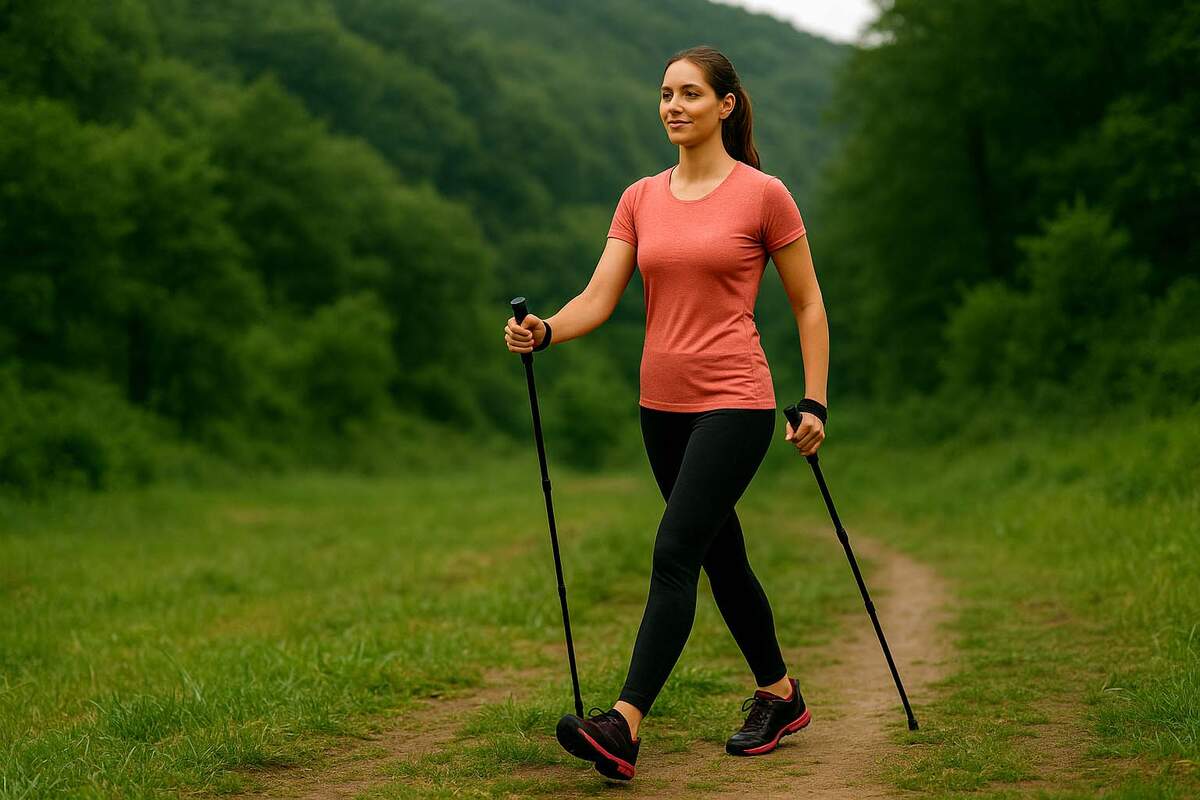
Why is Nordic walking considered a superior activity for social engagement?
Fitness is not just a physical pursuit; mental and social well-being are equally important components of overall health, and here, Nordic walking holds a distinct advantage over running.
While running is often a solitary activity, or one where conversation is difficult due to high-intensity breathing, Nordic walking is perfectly suited for group participation.
The moderate-to-vigorous pace it encourages allows participants to comfortably maintain a conversation, fostering social connection and camaraderie.
This is a critical factor for adherence to an exercise program; people are far more likely to stick with an activity they enjoy and look forward to, particularly when it involves friends or a community group.
The social atmosphere of a Nordic walking group provides mutual encouragement and accountability, transforming exercise from a chore into a rewarding social outing.
This community aspect has been shown to have profound positive effects on mental health, helping to combat loneliness, reduce stress, and boost mood.
The activity’s accessibility across all ages and fitness levels means that friends and family members who might not be able to run together can easily participate in Nordic walking as a shared health pursuit, further strengthening those interpersonal bonds.
How can low-impact exercise enhance an individual’s mental and emotional well-being?
It is widely known that any form of physical activity can significantly boost mental health by releasing endorphins, the body’s natural mood elevators, but low-impact exercises offer unique psychological benefits.
For many, the high pressure to perform or the physical discomfort associated with high-impact activities like running can sometimes lead to feelings of stress or anxiety.
Nordic walking, by contrast, provides a challenging yet gentle form of exercise that is inherently meditative and enjoyable. The rhythmic, poles-assisted stride creates a repetitive, almost trance-like cadence that can be deeply calming, allowing the mind to quiet down and focus on the present moment.
This movement pattern, combined with the proven mood-boosting effects of exercising outdoors in natural environments, creates a potent anti-stress formula.
Furthermore, the low-impact nature means less time spent recovering from muscle soreness or injuries, leading to a more consistent routine, which is key for maintaining a stable and positive mood.
By offering a sustainable, non-competitive path to physical fitness, this form of exercise supports long-term emotional well-being and is a fantastic tool for managing daily life stresses. It’s an approach to personal health that prioritizes longevity and mental serenity alongside physical strength.
Is the initial investment in equipment for this pole-walking technique justified by the long-term fitness results?
The initial purchase of specialized poles is the primary equipment cost associated with this unique form of exercise, and some may question if this is a worthwhile investment compared to the simple requirement of a pair of shoes for running.
However, when viewed through the lens of long-term health and injury prevention, the justification for the purchase becomes crystal clear. High-quality Nordic walking poles are a durable piece of equipment that, when used correctly, effectively transform a regular walk into a full-body conditioning machine.
They are the tool that provides the added resistance, transfers the load away from the joints, and enables the engagement of the upper body muscles—benefits that are otherwise unattainable.
Considering the potential costs saved from avoiding running-related injuries, such as physical therapy or specialist visits, the poles represent an affordable preventative measure.
Moreover, their use allows individuals to maintain a high level of cardiovascular fitness and muscle tone throughout their lives, making the cost-per-use for a lifetime of activity remarkably low.
This modest initial investment is a one-time gateway to an accessible, all-weather, and highly efficient fitness routine, cementing its value as a powerful enabler of lifelong physical well-being.
How does low-impact full-body movement support a sustained, active lifestyle as we age?
One of the most valuable aspects of choosing a sustainable fitness path is its ability to support an active lifestyle well into our later years, and here, a moderate, full-body activity like pole-assisted walking truly shines.
High-impact sports, while exhilarating in youth, often become unsustainable due to the cumulative wear and tear on joints and cartilage.
The brilliance of Nordic walking is its capacity to deliver a challenging, comprehensive workout—engaging the heart, lungs, and 90% of the body’s muscles—all while remaining gentle on the musculoskeletal system.
This low-impact approach is vital for preserving joint function and bone density, which are critical factors for independent living and mobility in older adulthood.
The practice not only improves cardiovascular and muscular health but also enhances crucial elements like balance and coordination, significantly reducing the risk of falls, which are a major concern for aging populations.
By choosing a form of exercise that builds strength without causing undue stress, individuals are far more likely to remain consistent and active for decades, rather than being sidelined by injury.
Nordic walking is, therefore, more than just a fitness trend; it’s a strategic choice for protecting and enjoying lifelong mobility and functional capacity.
Conclusion
We set out to determine whether Nordic walking truly offers a better path to fitness than running, and the answer, for a significant majority of people, is a resounding yes.
While running will always be a potent, high-speed calorie burner, its high-impact nature comes with an undeniable cost to joint health and a high risk of injury that often leads to burnout or forced rest.
Nordic walking, in contrast, is a masterclass in efficiency, proving that you don’t need to pound the pavement to achieve peak fitness.
By harnessing the power of specially designed poles, this activity transforms a simple walk into a comprehensive, full-body workout that engages up to 90% of your muscles—an engagement level that running simply cannot match without adding extensive, separate resistance training.
From improving core stability and posture to boosting cardiovascular capacity and mental well-being, the benefits of Nordic walking are holistic and, most importantly, sustainable.
It is a powerful, low-impact tool that allows you to train harder and longer, protecting your joints and ensuring that you can maintain an active lifestyle for decades to come.
Whether you are a dedicated runner seeking a cross-training tool or a beginner looking for the safest, most effective entry point into total-body fitness, embracing Nordic walking is one of the smartest investments you can make in your long-term health and mobility.
FAQ
The biggest advantage is the total-body engagement. Nordic walking uses specially designed poles to actively engage your upper body (arms, chest, shoulders, and core) with every stride, turning it into a “four-wheel drive” exercise that utilizes up to 90% of your muscles.
Yes, absolutely. Nordic walking is significantly lower-impact than jogging or running. The poles help distribute your body weight, reducing the strain on your knee, hip, and ankle joints, making it ideal for injury recovery or long-term joint health.
Yes. Studies show that properly executed Nordic walking can burn up to 46% more calories compared to normal walking at the same pace, thanks to the increased muscle activation in the upper body and core.
The difference is crucial and lies primarily in the strap system. Nordic walking poles feature a specialized glove-like strap that allows you to release your grip and push through the strap, propelling yourself forward with your arms. Hiking poles are designed only for support and stability.
No. One of the best features of Nordic walking is its accessibility. It can be adapted to any fitness level, from gentle rehabilitation to high-intensity cardiovascular training. You can set the pace and intensity that suits you.
Yes. The correct Nordic walking technique naturally encourages a more upright posture and proper spinal alignment. Actively engaging the poles helps to strengthen the core and back muscles, often relieving chronic tension in the neck and shoulders.
A general rule is to calculate 68% of your height in centimeters. When holding the pole vertically with the tip on the ground, your elbow should form roughly a 90-degree angle, or slightly less, when your hand is on the grip.
The basic technique is easy to grasp, as it mimics your natural walking pattern (opposite arm moves with the opposite leg). However, taking a lesson from a certified instructor is highly recommended to master the “pole push” for maximizing the full-body benefits of Nordic walking.
Absolutely. It is an excellent form of cross-training that provides a great cardiovascular workout with almost zero impact, allowing muscles and joints typically stressed by running to recover while maintaining high fitness levels.
Yes. Nordic walking is incredibly versatile. It can be practiced on almost any surface—pavement, grass, forest trails, or beaches—making it a convenient and enjoyable outdoor activity regardless of your location.

Author: Horeca Health
Horeca Health
DISCLAIMER
All content provided on this website is for informational purposes only and should not be considered a substitute for professional advice, diagnosis, or treatment. Always consult qualified healthcare professionals regarding any questions or concerns you may have about your health or any medical condition.




















Leave a Reply