Brushing Teeth with Braces: Introduction
Brushing Teeth with Braces: Getting braces is an exciting step toward achieving the smile you’ve always wanted. It’s a significant investment in your oral health and confidence.
However, with the new brackets and wires comes a whole new set of rules for your daily routine—especially when it comes to keeping your teeth clean. Many people find the idea of brushing teeth with braces to be a daunting task, and it’s easy to feel overwhelmed by the extra work.
Plaque and food particles can get trapped in places they never could before, increasing your risk of cavities and gum disease. But don’t worry, you’re not alone, and it’s much easier than you think!
This detailed beginner’s guide is designed to take the mystery out of oral hygiene with braces, providing you with all the essential tips, tools, and techniques you need to protect your teeth and ensure your final smile is not only straight but also brilliantly healthy.
Why is Brushing Teeth with Braces So Important?
Wearing braces is a big step towards achieving a beautiful, healthy smile, but it also introduces new challenges to your oral hygiene routine. The brackets and wires create small nooks and crannies where food particles and plaque can easily get trapped.
If not removed properly, this buildup can lead to a host of problems, including gum disease, tooth decay, and unsightly white spots on your teeth once your braces are removed. This is why mastering the art of brushing teeth with braces is not just recommended, it’s absolutely crucial.
A regular, thorough routine prevents these issues and ensures that all your hard work and investment in orthodontics pay off. Neglecting to clean your teeth properly can lead to a less-than-perfect result, with your new, straight teeth surrounded by unhealthy gums or stained enamel.
Proper cleaning techniques protect your gums from inflammation and bleeding, which are common signs of gingivitis. Furthermore, keeping your teeth and braces clean helps prevent the demineralization of enamel, a process that can leave permanent, chalky-white marks on your teeth.
Beyond the health benefits, a clean mouth with sparkling braces simply looks and feels better. It helps you maintain confidence throughout your orthodontic journey, knowing that your smile is not only being corrected but is also staying healthy.
The small effort you put into perfecting your brushing teeth technique each day will have a massive impact on your long-term oral health and the final aesthetic result of your treatment.
What tools do you need for a proper Brushing Teeth with Braces routine?
To effectively clean your teeth and braces, you’ll need a specific set of tools beyond just a standard toothbrush and toothpaste. The right equipment makes all the difference in reaching every single surface and keeping your mouth pristine.
First, consider an orthodontic toothbrush, which often features a V-shaped bristle pattern designed to clean both the teeth and the braces at the same time.
While a soft-bristled manual toothbrush can work, many find an electric toothbrush with a small, round head to be much more effective at navigating around the brackets and wires. Look for models with a specific orthodontic brush head.
Next, interdental brushes (also known as “proxabrush” or “Christmas tree” brushes) are non-negotiable. These tiny brushes can slide under the archwire and into the small gaps between the brackets to dislodge food and plaque that a regular brush can’t reach.
Another essential tool is floss threaders or orthodontic floss, as regular floss is nearly impossible to use with a continuous wire running across your teeth. These tools help you guide the floss under the archwire to clean between your teeth and under the gumline.
A water flosser (or oral irrigator) is a fantastic supplementary tool, as the pressurized stream of water can blast away loose food particles and plaque from around the brackets and wires.
Lastly, an antimicrobial mouthwash can help rinse away any remaining debris and kill bacteria, providing an extra layer of protection.
Having these tools on hand is the foundation of a successful brushing teeth regimen and is essential for anyone who is serious about maintaining their oral health while undergoing orthodontic treatment.
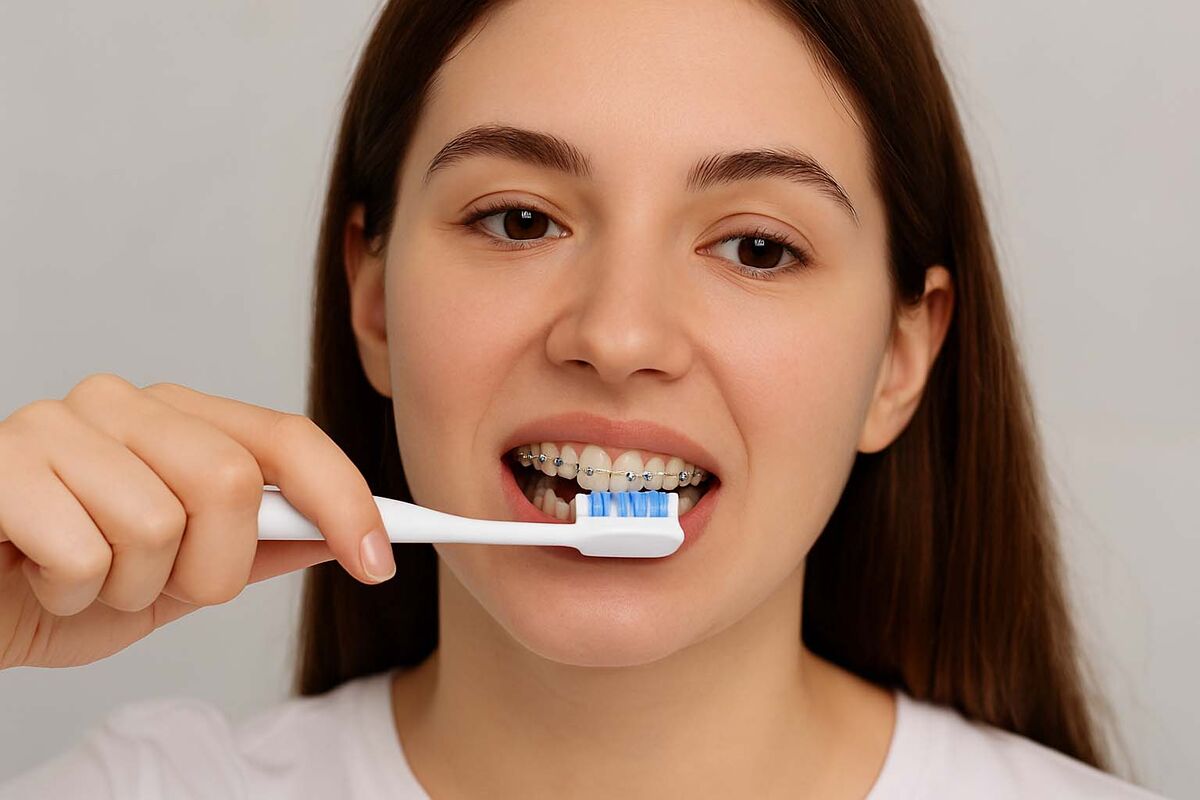
How to use a toothbrush to clean around your braces?
Mastering the technique for brushing teeth with braces is a game-changer for your oral hygiene. The goal is to clean every surface of each tooth and all components of your braces without damaging them.
Start by rinsing your mouth with water to dislodge any large food particles. Apply a pea-sized amount of fluoride toothpaste to your orthodontic toothbrush.
Begin by holding the toothbrush at a 45-degree angle pointing upwards toward your gums, gently brushing the area between the brackets and the gum line. Use small, circular motions and a light touch to avoid damaging your gums.
Once you have cleaned the top part of the brackets and the area above them, reposition the toothbrush. Now, angle it downwards at a 45-degree angle, brushing the bottom of the brackets and the tooth surface below them.
Again, use gentle, circular movements. Next, focus on cleaning the top and bottom of each bracket itself. By placing your brush head directly on the bracket and wiggling it gently, you can dislodge food and plaque.
This three-step process—above, below, and on the bracket—ensures comprehensive cleaning. Don’t forget to brush the chewing surfaces of your molars and the back of your front teeth. A common mistake is to brush too hard, which can wear down enamel or irritate gums.
Remember, it’s about thoroughness, not force. For a proper brushing teeth routine, dedicate at least two full minutes to this process, covering all areas systematically. This meticulous approach prevents plaque buildup and keeps your smile healthy throughout your orthodontic journey.
How do you properly floss with braces?
Flossing is an absolutely critical step in your daily oral hygiene, and while it may seem daunting with braces, it is far from impossible. In fact, learning how to properly floss is perhaps the most important skill to master to prevent cavities and gum disease during your orthodontic treatment.
The wires and brackets create new challenges, but with the right tools, you can navigate them effectively. The key to successful flossing with braces is using a floss threader or a special orthodontic floss that has a stiff end.
To begin, take a length of dental floss, about 18 inches long. Thread one end of the floss through the eye of the floss threader. Now, carefully guide the floss threader under the main archwire, between two of your teeth.
Once the threader is through, you can pull the floss through so that a section of it is resting against your tooth. Gently move the floss up and down, cleaning the side of one tooth, and then slide it down and up again to clean the side of the adjacent tooth.
Make sure to get slightly under the gumline, forming a “C” shape around the tooth. Do this for every single tooth. This might sound tedious, but it’s the only way to remove the plaque and food debris that a toothbrush can’t reach.
A water flosser can also be a great addition to your routine for flushing out loose debris, but it is not a substitute for traditional flossing, which is crucial for removing sticky plaque from the tooth surfaces. A proper brushing teeth routine must be complemented by daily flossing to be truly effective.
How can a water flosser enhance your Brushing Teeth with Braces routine?
A water flosser, also known as an oral irrigator, is an excellent addition to your oral care arsenal, especially when you have braces.
While it does not replace the need for traditional brushing and flossing, it can significantly enhance your cleaning routine by reaching areas that are difficult to access with other tools.
The water flosser works by directing a stream of pressurized water to dislodge food particles and plaque from around the brackets, wires, and between your teeth. This is particularly beneficial for those hard-to-reach spots where plaque loves to hide.
To use it, simply fill the reservoir with water (or a dentist-recommended mouthwash), aim the nozzle at the gumline, and turn it on. Guide the tip along the gumline, pausing briefly between each tooth and around each bracket.
The pulsating water effectively washes away loose debris and bacteria, providing a fresh, clean feeling. A water flosser is a great tool for a quick rinse after meals when you are not able to do a full brushing teeth session.
It can also be very helpful for individuals who find traditional flossing with a threader too cumbersome or time-consuming.
While a water flosser is a valuable supplement for anyone considering a comprehensive brushing teeth with braces routine, it’s important to remember that manual flossing is still the gold standard for removing the sticky plaque biofilm that adheres to tooth surfaces. Using both methods provides a powerful defense against dental problems.
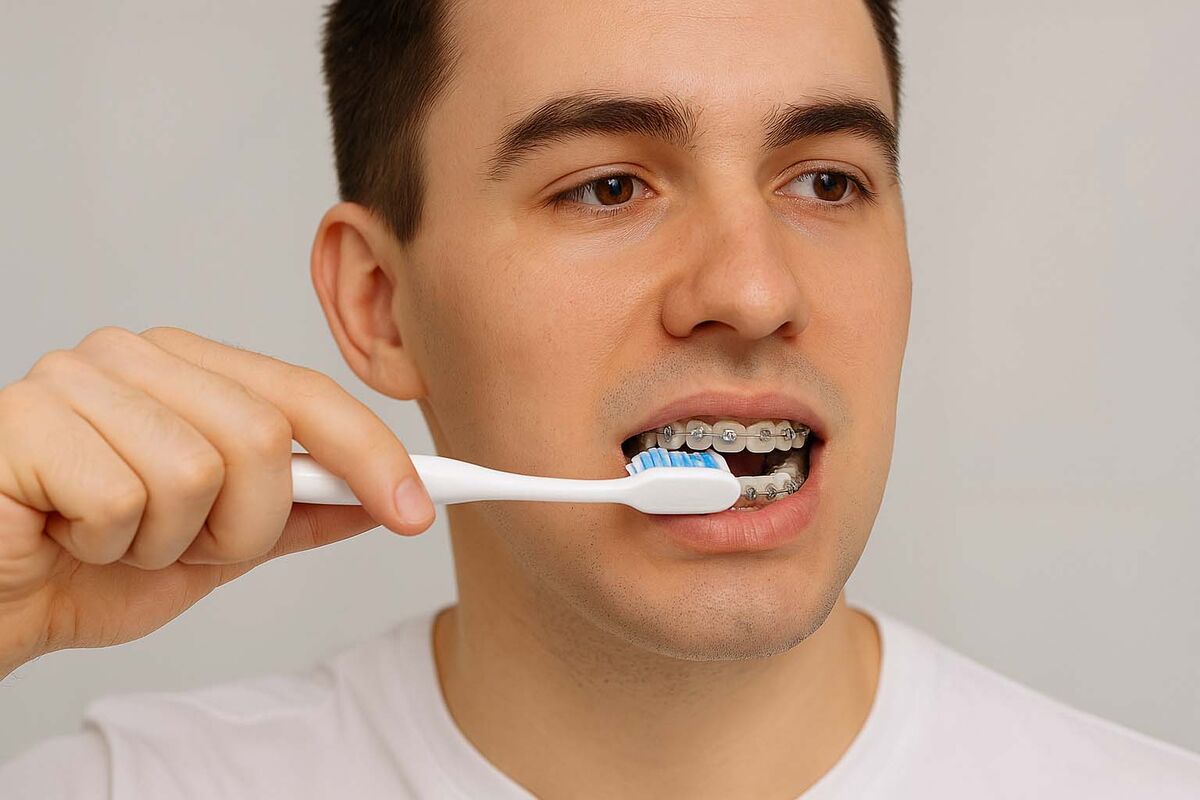
What are the best practices for maintaining oral hygiene with braces?
Beyond just the mechanics of brushing teeth with braces, there are several best practices that can help you maintain excellent oral hygiene throughout your orthodontic treatment. Consistency is key. Brushing after every meal or snack is highly recommended.
The brackets and wires trap food, and leaving it on your teeth for extended periods increases the risk of decay and white spot lesions. If brushing isn’t possible, a thorough rinse with water is a good temporary measure.
In addition to brushing and flossing, using an antimicrobial mouthwash can help control bacteria and reduce the risk of gum inflammation. Look for a mouthwash that is alcohol-free to avoid drying out your mouth. Another crucial aspect is your diet.
Sticky, chewy, and hard foods can not only damage your braces but also become easily lodged in them. Avoiding things like hard candies, caramels, and popcorn can make your cleaning routine much easier and prevent emergency trips to the orthodontist.
Make sure to drink plenty of water throughout the day, as it helps wash away food particles and bacteria naturally. Regular dental check-ups and cleanings with your dentist are also vital.
Your dental hygienist has specialized tools and training to clean around your braces and can spot any potential issues early.
Remember that your orthodontic treatment is an investment, and taking these extra steps to care for your teeth and appliances will protect that investment and ensure you achieve the best possible results.
A comprehensive approach to your dental care, including a diligent brushing teeth regimen, will lead to a healthier, more confident smile.
How can I deal with plaque buildup when brushing teeth with braces?
Dealing with plaque is a primary concern for anyone with braces, as the intricate hardware provides new surfaces for bacteria to cling to. Plaque is a sticky, colorless film of bacteria that constantly forms on your teeth.
If not removed, it hardens into tartar and can lead to gum disease and tooth decay. The first and most critical step in managing plaque when brushing teeth with braces is to be meticulous and thorough with your daily cleaning.
As we’ve discussed, this means brushing all surfaces of your teeth—above, below, and on the brackets—and flossing at least once a day. One of the best ways to combat plaque buildup is to use a disclosing tablet.
These chewable tablets stain plaque a bright color, like red or pink, making it easy to see the areas you might be missing during your brushing and flossing. Use them periodically to refine your technique and identify your problem spots.
For example, you might discover that you are consistently missing the area just below your brackets. The visible evidence provided by these tablets can be a powerful motivator to improve your technique.
Regular use of an electric toothbrush with a small, round head can also be a game-changer, as its rapid movements are highly effective at dislodging plaque. Additionally, incorporating an antimicrobial mouthwash into your routine can help kill the bacteria that form plaque.
Consistent and correct technique, combined with tools like disclosing tablets, is your best defense against plaque buildup.
Remember, preventing plaque from accumulating in the first place is far easier than trying to remove it once it has hardened into tartar. Therefore, a proactive approach to your daily brushing teeth routine is the key to a healthy smile.
What are the signs of poor oral hygiene with braces?
Recognizing the signs of poor oral hygiene is crucial for anyone with braces, as catching issues early can prevent more significant problems down the line. One of the first and most common indicators is bleeding gums when you brush or floss.
Healthy gums should not bleed, so this is a clear sign of gum inflammation (gingivitis), which is often caused by plaque buildup along the gumline. Another sign to look for is swollen, red, or tender gums.
Gums that appear puffy or are sensitive to the touch are a strong signal that bacteria are causing an infection. A persistent bad taste in your mouth or chronic bad breath can also be a red flag. This is often a result of bacteria and food particles festering in areas that haven’t been cleaned properly.
As your oral hygiene deteriorates, you might notice white spots on your teeth. These are early signs of demineralization, where the enamel has lost important minerals due to acid attacks from plaque. Once your braces are removed, these spots will be very noticeable and can be permanent.
A visual inspection can reveal other issues, such as visible plaque or tartar buildup around your brackets. Plaque is a soft, white film, while tartar is a hard, yellowish deposit that requires a professional cleaning to remove.
Finally, an increase in tooth sensitivity can sometimes indicate that plaque and bacteria are starting to affect the enamel. If you notice any of these signs, it’s essential to step up your brushing teeth routine and consult with your orthodontist or dentist.
They can provide professional guidance and a thorough cleaning to get you back on track and ensure your final smile is as healthy as it is beautiful.
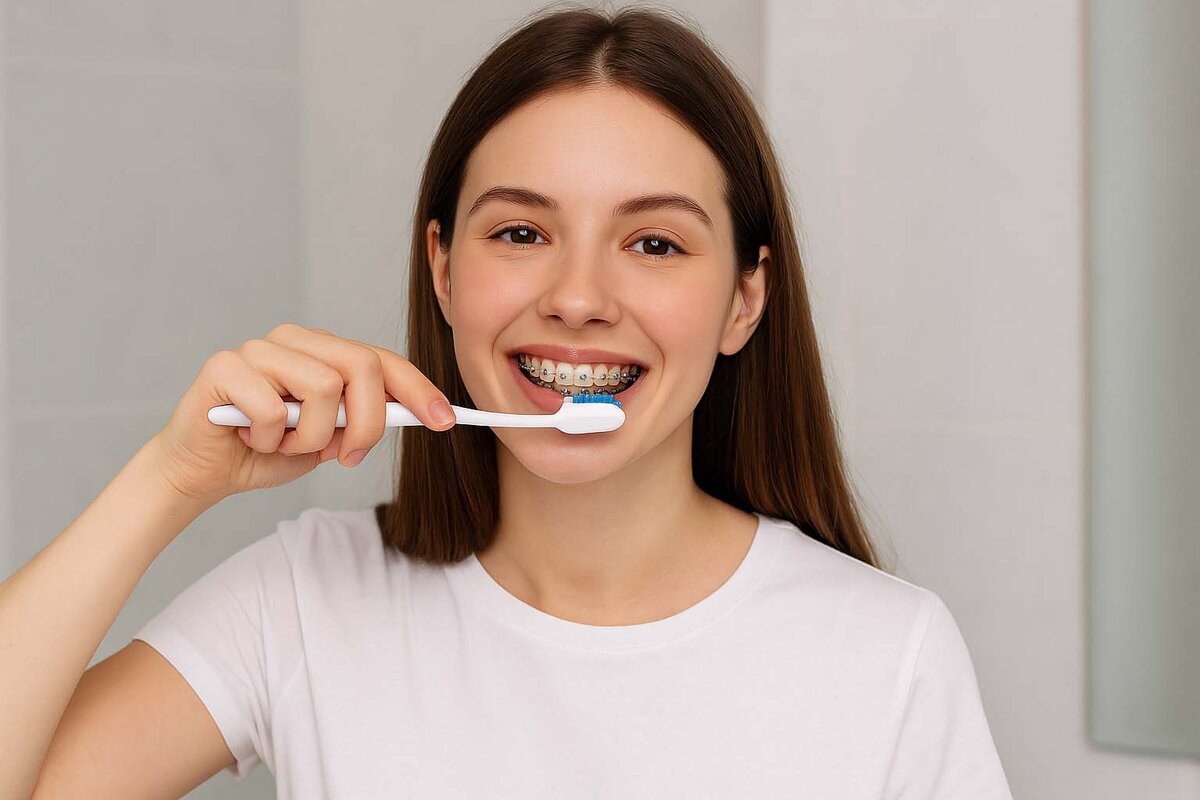
How often should you brush your teeth with braces?
Consistency is one of the most important factors for maintaining excellent oral hygiene while you have braces. The general rule of thumb for brushing teeth with braces is to brush after every meal and snack.
The brackets and wires create an ideal environment for food particles to get stuck, and leaving them there for an extended period allows bacteria to feast, producing acids that attack your tooth enamel.
Brushing three to four times a day might seem like a lot, but it’s a necessary step to protect your teeth and gums. Think of it as a quick two-minute clean-up to prevent hours of future problems.
If you’re at school or work and a full brushing session isn’t feasible, at least rinse your mouth with water to wash away loose debris. This simple action can make a big difference. In addition to brushing, you should also be flossing at least once a day, preferably before bed.
This daily flossing session is crucial for removing the sticky plaque that builds up between your teeth and below the gumline, areas that your toothbrush can’t reach. Flossing before you go to sleep ensures that your mouth is as clean as possible for the long hours you’re not eating or drinking.
Sticking to a rigorous schedule of brushing teeth and flossing, along with regular check-ups with your orthodontist, will ensure that your teeth are not only straightened but also stay healthy and cavity-free.
This diligent routine is the best way to safeguard your investment in your new smile and achieve a result you can be truly proud of.
What are the best types of toothpaste to use with braces?
Choosing the right toothpaste is an essential part of a successful oral hygiene routine, especially when you have braces. While there isn’t one single “best” toothpaste for everyone, the most crucial ingredient to look for is fluoride.
Fluoride is a naturally occurring mineral that helps to strengthen tooth enamel and protect against cavities, which are a major concern for those with orthodontics.
A high-quality toothpaste with fluoride will actively work to remineralize your teeth, fighting off the acids produced by plaque that can lead to decay and those unsightly white spots.
Beyond fluoride, look for toothpastes that are specifically designed for sensitive teeth if you experience any discomfort from the pressure of your braces. These toothpastes often contain ingredients like potassium nitrate to soothe nerve endings.
Additionally, while some people prefer whitening toothpastes, it’s generally best to avoid them while wearing braces. The whitening agent can’t reach the tooth surface directly behind the brackets, which can result in unevenly colored teeth once your braces are removed.
Therefore, it is important to focus on products that prioritize cleaning and protection over cosmetic effects. A non-abrasive formula is also beneficial, as it can help prevent enamel wear.
When brushing teeth with braces, the primary goal is a clean, healthy mouth, and the right toothpaste is your first line of defense against the unique challenges that come with orthodontic treatment.
How to avoid common mistakes when brushing teeth with braces?
Avoiding common mistakes is essential for a successful brushing teeth with braces routine. Many people fall into traps that can undermine their efforts and lead to dental problems.
A primary mistake is brushing too hard. While it might seem like a good way to scrub away plaque, aggressive brushing can damage your gums, leading to recession and sensitivity.
It can also wear down your tooth enamel over time. Instead, use a gentle, circular motion and let the bristles do the work. Another common error is not brushing for long enough. A quick 30-second sweep isn’t enough to clean all the nooks and crannies around your braces.
Aim for a minimum of two minutes, focusing on all surfaces of each tooth—top, bottom, and around the brackets. A timer on your phone or a built-in timer on an electric toothbrush can be very helpful. Neglecting to clean all surfaces is another major pitfall.
People often focus on the front of their teeth and forget to thoroughly clean the chewing surfaces of their molars and the backs of their front teeth. Equally important is to not skip flossing. As we’ve mentioned, a toothbrush simply can’t get between your teeth.
Skipping flossing can lead to plaque buildup, cavities, and gum disease in those critical areas. Using the wrong tools, such as a regular toothbrush with stiff bristles, can also be a mistake. An orthodontic toothbrush or a soft-bristled electric toothbrush is far more effective.
Lastly, not visiting your orthodontist or dentist for regular check-ups and cleanings is a significant error. They can provide professional cleanings and catch any issues early.
By avoiding these common mistakes and adopting a thorough, gentle brushing teeth technique, you can ensure your orthodontic journey is as smooth and successful as possible.
Conclusion
By now, you should feel much more confident about your oral hygiene routine with braces. While it may seem like a lot to remember at first, mastering the techniques and using the right tools will quickly become second nature.
The key takeaway is simple: consistency and thoroughness are your best friends. By dedicating a few minutes after each meal to brushing teeth with braces and making time for a daily flossing session, you are actively protecting your investment and preventing future dental issues.
The small amount of extra effort you put in now will make a world of difference when your braces finally come off, revealing the healthy, beautiful smile you’ve been working so hard for.
Remember, your orthodontist is always there to help, but your daily care is what truly shapes your journey. Keep up the great work, and enjoy the confidence that comes with a clean and healthy smile!
FAQ
You should brush your teeth after every meal and snack. The brackets and wires on your braces trap food particles, so a quick brushing session after eating is crucial for preventing plaque buildup and maintaining a healthy mouth.
Yes, an electric toothbrush is highly recommended. Many electric toothbrushes come with specific orthodontic brush heads that are designed to clean around brackets and wires more effectively than a manual toothbrush. The small, rotating head can reach difficult areas with ease.
The most important thing is to use a fluoride toothpaste. Fluoride helps strengthen tooth enamel and prevent cavities, which is especially important when you have braces. Avoid using whitening toothpastes, as they can cause uneven tooth color once your braces are removed.
Flossing with braces can be tricky, but it’s essential. You will need a floss threader or special orthodontic floss with a stiff end. This allows you to thread the floss under the archwire to clean between your teeth and under the gumline.
Bleeding gums are often a sign of gingivitis, caused by plaque buildup. It means your gums are inflamed due to inadequate cleaning. If you notice bleeding, step up your brushing teeth with braces routine by being more thorough and gentle. If it persists, consult your orthodontist or dentist.
A water flosser is an excellent supplement to your routine, as it can effectively flush out food particles and loose plaque from around your braces. However, it is not a complete substitute for traditional flossing, which is necessary to remove the sticky plaque that adheres to the tooth surface.
Signs of poor hygiene include swollen or bleeding gums, bad breath, and visible plaque or white spots on your teeth. Using disclosing tablets, which stain plaque, can help you see which areas you’re missing during your brushing teeth routine.
If a bracket comes loose, contact your orthodontist’s office immediately. They will advise you on whether you need to come in for an emergency appointment. Do not try to reattach or fix the bracket yourself, as this could cause further damage.
It is generally recommended to avoid chewing gum with braces, as it can get stuck in your brackets and wires and may even pull a bracket loose. Chewy, sticky, or hard foods are a no-go for the same reason.
The best way to combat bad breath is to maintain a meticulous cleaning routine. Brushing after every meal, flossing daily, and using a fluoride mouthwash can help remove the food particles and bacteria that cause bad breath. A clean mouth is a fresh-smelling mouth!

Author: Horeca Health
Horeca Health
DISCLAIMER
All content provided on this website is for informational purposes only and should not be considered a substitute for professional advice, diagnosis, or treatment. Always consult qualified healthcare professionals regarding any questions or concerns you may have about your health or any medical condition.




















Leave a Reply