Introduction
The Isle of Skye captivates with a rare blend of geologic drama and deep-rooted history, quickly establishing itself as one of Scotland’s most spellbinding destinations.
Jagged peaks rise above misty lochs, waterfalls tumble into crystal-clear pools, and the coastline reveals sheer cliffs carved by the North Atlantic.
Visitors come seeking the iconic Quiraing, the mystical Fairy Pools and the towering Old Man of Storr, yet the island rewards with far more than famous photo stops. Neolithic sites, clan strongholds, and working crofting communities weave a narrative that stretches back millennia.
This guide takes you beyond the day-trip checklist, offering practical insight into when to go, how to move around the island respectfully, where to stay, and how to experience Skye’s rich cultural heritage.
Whether you are a first-time hiker or a seasoned adventurer, the Isle of Skye delivers an unforgettable immersion into raw Highland nature.
The Ancient History and Clan Legacy of the Isle of Skye
Long before the first tourists arrived, the Isle of Skye was home to Mesolithic hunter-gatherers who left traces at sites like An Corran near Staffin. Standing stones, chambered cairns and Iron Age brochs dot the landscape, offering silent testimony to a complex prehistoric society.
The Dun Beag broch near Struan remains one of the best-preserved examples, its drystone walls still evoking a defensive past. Viking raiders began arriving in the ninth century, and Norse place names such as Broadford and Uig endure today, reflecting centuries of Scandinavian influence.
By the thirteenth century, the island had become a prized possession of powerful clans, whose sagas still echo across the glens.
Clan MacLeod and Clan MacDonald shaped much of the medieval and early modern history of the Isle of Skye.
Dunvegan Castle, continuously occupied by the MacLeods for over 800 years, holds the Fairy Flag, a treasured relic wrapped in legend. Meanwhile, the ruins of Duntulm Castle on the north coast recall the once-dominant MacDonalds of Sleat.
The rivalries between these clans were not mere border skirmishes; they defined land ownership, feuds and political allegiances across the Hebrides. The Massacre Cave near Inverarish and the Spoiling Cave at Rubha Hunish are stark reminders of inter-clan violence that scarred communities for generations.
Following the 1745 Jacobite Rising, the Isle of Skye entered a period of profound change. The figure of Flora MacDonald, who helped Bonnie Prince Charlie escape “over the sea to Skye,” remains etched in island folklore.
The subsequent Highland Clearances forcibly displaced many crofters, reshaping the human geography of Skye.
Abandoned townships and lazybeds, the ridges left by former cultivation, are still visible in places like the Strathaird peninsula. These physical scars remind visitors that Skye’s beauty was born from a landscape marked by both resilience and loss.
The Gaelic language and oral tradition were systematically eroded after the Clearances, yet a revival is underway. Sabhal Mòr Ostaig, the Gaelic college in Sleat, celebrates language and culture, and road signs now appear with Gaelic first.
Today, the history of the Isle of Skye is not locked behind museum glass; it lives in the names of hills, the ruins on the machair and the peat smoke that still drifts from a few croft houses. Exploring this heritage responsibly means treating historic sites with the same reverence you would give a living story.
Getting to the Isle of Skye: Transport and Entry Points
The Isle of Skye is connected to the mainland by road and ferry, giving travellers a choice between a scenic sea approach and a direct drive over the iconic Skye Bridge. The bridge links Kyle of Lochalsh to Kyleakin and is free to cross, making it the most common entry point for those arriving by car.
The main road network from Inverness or Glasgow via the A87 passes through some of the finest Highland scenery, including the banks of Loch Cluanie and the Five Sisters of Kintail. For many, the journey to the island is an integral part of the adventure, and it deserves to be taken slowly.
Travellers who prefer to arrive by sea can use the CalMac ferry from Mallaig to Armadale on the Sleat peninsula. This route offers a dramatic approach past Knoydart and the Small Isles, often accompanied by dolphins or seabirds.
The Armadale terminal is well connected to the island’s bus network, and the nearby Clan Donald Centre provides a fascinating first stop.
A second ferry service operates from Glenelg to Kylerhea during the summer months, using a small community-run turntable vessel that feels like a step back in time. Both ferry options require advance booking during peak periods, especially if you are travelling with a vehicle.
Public transport to the Isle of Skye is viable but requires patience. Citylink coaches run daily from Glasgow and Inverness, reaching Portree in several hours with stops at Kyle of Lochalsh.
The nearest railway station is at Kyle of Lochalsh, just across the bridge, with services from Inverness on a famously scenic line. From Kyle, buses connect to Broadford, Portree and beyond.
Cyclists will find that the island’s roads, though narrow and undulating, reward those with decent fitness; arriving by bike can be immensely satisfying, but careful route planning and weather awareness are essential.
Whichever gateway you choose, arriving on the Isle of Skye demands a mindset shift. Fuel up before leaving the mainland, as petrol stations are sparse and priced at a premium.
Download offline maps and confirm accommodation before you set out, because mobile signal vanishes frequently in the glens. The island’s beauty is wild and remote, so treat your arrival as the beginning of a deeper Highland experience rather than a rushed transit.
Best Time to Visit the Isle of Skye
Every season on the Isle of Skye paints a different portrait, and the right time to visit depends on what kind of experience you seek. Summer brings long daylight hours, with sunset stretching past ten in the evening in June, which allows extended hiking days and golden light for photographers.
However, July and August also bring peak crowds, midge insects in damp sheltered areas, and the highest accommodation prices. For many outdoor enthusiasts, the transitional months of May and September offer a sweet spot: quieter roads, still-reliable weather, and vibrant heather in late summer.
| Season | Pros | Cons | Best For |
|---|---|---|---|
| Spring (Mar–May) | Fewer tourists, nesting seabirds, lambing season, lower prices | Unpredictable weather, some attractions not fully staffed | Photography, birdwatching, quiet trails |
| Summer (Jun–Aug) | Long daylight, warmest temperatures, full ferry schedules | Midges, crowded car parks, higher accommodation costs | Long hikes, camping, festival events |
| Autumn (Sep–Nov) | Stunning colours, rutting stags, fewer midges | Shorter days, increased rainfall, some seasonal closures | Landscape photography, cosy pub evenings |
| Winter (Dec–Feb) | Dramatic storms, snow-capped peaks, solitude | Very short days, icy roads, limited daylight hiking | Storm watching, castle visits, quiet retreats |
Winter on the Isle of Skye should not be underestimated, but it attracts a particular kind of traveller. The low sun casts a silvery light across the Cuillin Ridge, and a dusting of snow can transform the Quiraing into an alpine wonderland.
Be aware that daylight in December lasts barely six hours, and many minor roads become treacherous. If you choose a winter visit, pack microspikes, write flexible itineraries, and look for accommodation with log fires. The pay-off is emptiness and a profound sense of wilderness.
Midges, small biting insects, are an inescapable reality of a Highland summer and will affect your enjoyment if you are unprepared. They are most active at dawn and dusk on still, damp days, especially near water.
A fine midge head net, long sleeves and a reliable repellent are essential from late May through early September.
Locals advise planning hikes on exposed ridges where the breeze keeps the midges at bay. The best time to visit the Isle of Skye is therefore as much about your tolerance for insects and rain as it is about the season itself.
Weather across the Hebrides shifts quickly, often delivering all four seasons in a single afternoon. No forecast should be trusted beyond 48 hours, and widespread microclimates mean it can be pouring in Portree while the north coast enjoys clear skies.
Always pack a waterproof shell and extra layers regardless of the forecast. Checking the Mountain Weather Information Service and local notices at the start of each day is a wise habit. Flexible planning is the secret to making any visit to the Isle of Skye successful, whatever the calendar says.
Portree: The Heart of the Isle of Skye
Portree, the island’s capital, clusters around a picturesque harbour where pastel-painted houses peer over fishing boats and the bobbing masts of tour vessels. This is the natural hub for services on the Isle of Skye, offering the widest range of restaurants, shops, banks and a tourist information centre.
Despite its modest size, Portree can feel lively in summer, with the aroma of fish and chips drifting across the square and trad music sessions spilling from pubs. Yet it retains the unhurried charm of a working Highland town rather than a theme park destination.
The harbour remains the focal point, and a short stroll up to the Lump gives sweeping views over the bay and across to the Old Man of Storr on a clear day. Boats depart from here for wildlife cruises, offering chances to spot white-tailed eagles, seals and occasionally dolphins.
The Aros Centre on the edge of town presents an interesting introduction to island culture, film screenings and a café worth a stop.
For many travellers, Portree serves as a base for day trips to the Trotternish peninsula and beyond, so booking accommodation well in advance is crucial, especially from April through October.
Walking from the square up onto Ben Tianavaig or the Scorrybreac circuit delivers excellent half-day hikes directly from the town. The latter trail traces a shoreline path with views towards Raasay and is often far less busy than the headline attractions.
After a day of exploring the Quiraing or the Fairy Pools, returning to Portree for a hot meal and a dram of Talisker whisky feels like a gentle reward. Local restaurants increasingly champion island produce, including Skye lamb, locally landed langoustines and Hebridean cheeses.
Accommodation in Portree ranges from traditional B&Bs to waterfront hotels, but the town cannot always absorb the sheer volume of summer visitors. Treat Portree as a launchpad rather than the sole focus; nights here blend seamlessly with days spent in more remote corners of the Isle of Skye.
The town’s pace slows dramatically in winter, when many establishments close or reduce hours, so check opening information before relying on a specific restaurant. Whether you are here for two nights or a week, Portree’s sheltered bay and welcoming atmosphere anchor your journey on the island.
The Fairy Pools: A Walk Through Magic and Waterfalls
Tucked below the dark slopes of the Cuillin Hills, the Fairy Pools have become one of the most photographed natural features on the Isle of Skye.
The River Brittle tumbles through a series of clear blue-green pools linked by cascading waterfalls, with the brooding gabbro peaks of Sgùrr na Banachdich and Sgùrr an Fheadain rising in the background.
On a sunny day, the water seems impossibly translucent, and the setting does indeed feel touched by folklore. However, the popularity of the Fairy Pools demands some practical realism: car parks fill early, paths become muddy, and the experience loses its magic if you arrive in the crush of midday.
The walk to the first and most famous pool takes about 20 minutes from the dedicated Forestry and Land Scotland car park near Glen Brittle. A recently upgraded path makes the route accessible for most reasonably fit walkers, though it remains rough in places.
The full linear route continues upstream, where the crowds thin out and you can discover smaller, quieter cascades.
Wild swimming is possible in a few of the deeper pools, but the water is shockingly cold year-round, fed directly by mountain runoff. Entering the water without understanding the risks of cold-water shock is dangerous, and immersion should be brief and carefully managed.
Photography at the Fairy Pools rewards those who visit early in the morning or late in the afternoon when the light is softer and tripods are fewer. Wide-angle lenses capture the interplay of water and rock, while a polarising filter helps cut through the reflections on the pools.
Overcast days can sometimes yield better colour saturation because the direct sun’s glare is reduced. Drone use on the Isle of Skye is restricted in many areas, and the Cuillin range is no exception; always check local regulations and respect the privacy of other visitors.
A visit to the Fairy Pools should be combined with an exploration of surrounding Glen Brittle, which has its own quieter beauty and a popular campsite. The nearby beach at the head of the glen offers startling black sand and views towards the Canna and Rum islands.
As with everywhere on the Isle of Skye, carry out all rubbish, stick to the path to avoid erosion, and park only in designated areas. The pools may be called fairy, but the landscape is fragile and very real.
The Quiraing: Hiking Along Skye’s Dramatic Peaks
The Quiraing is a landslip of staggering proportions, located on the northern tip of the Trotternish Ridge and responsible for some of the most iconic imagery of the Isle of Skye.
Its pinnacles, cliffs and undulating plateaus were formed by massive ancient landslides that still shift imperceptibly today, which explains why parts of the road below occasionally need repair.
The name derives from Old Norse, meaning “round fold,” likely a reference to the natural amphitheatre used to hide cattle from raiders. Walking the Quiraing is a rite of passage for any visitor to the island, offering an immersive journey into a geology that feels cinematic.
The classic Quiraing circuit covers around 7 kilometres and takes between three and four hours depending on fitness, conditions and photography stops.
It starts from the small car park at the top of the hairpin bend on the Staffin–Uig road, which fills very quickly; arriving before 8am or after 5pm in summer greatly increases your chances of a space.
The path traverses beneath the Needle, a jagged rock spire, then climbs across the Prison, a grassy fortress of weather-carved basalt. The terrain demands sturdy waterproof boots with good ankle support because sections become dangerously slippery after rain.
Navigation on the Quiraing can be deceptive. In clear weather the route is well trodden and feels straightforward, but cloud can descend rapidly, reducing visibility to a few metres.
The edge of the escarpment is exposed and unfenced, so in high winds or thick mist, even experienced hikers should exercise extreme caution. Carrying a paper map, compass and the knowledge to use them is essential, because the route is not waymarked in the conventional sense.
The reward for your effort is a panorama of the Trotternish peninsula, the Outer Hebrides on the far horizon and a profound silence broken only by the cry of a distant buzzard.
Shorter, less demanding options exist for those who prefer to taste the Quiraing without completing the full circuit. The viewpoint just a short walk from the car park delivers breathtaking photo opportunities, especially at sunrise when the light rakes across the ridges.
However, do not underestimate the drop in temperature at this elevation; the wind can be ferocious even in summer.
Layers, gloves and a waterproof jacket belong in every pack. Visiting the Quiraing is an exercise in reading the mountain as much as enjoying it, and that respect is what makes the experience on the Isle of Skye truly authentic.
The Old Man of Storr: Iconic Pinnacle on the Trotternish Ridge
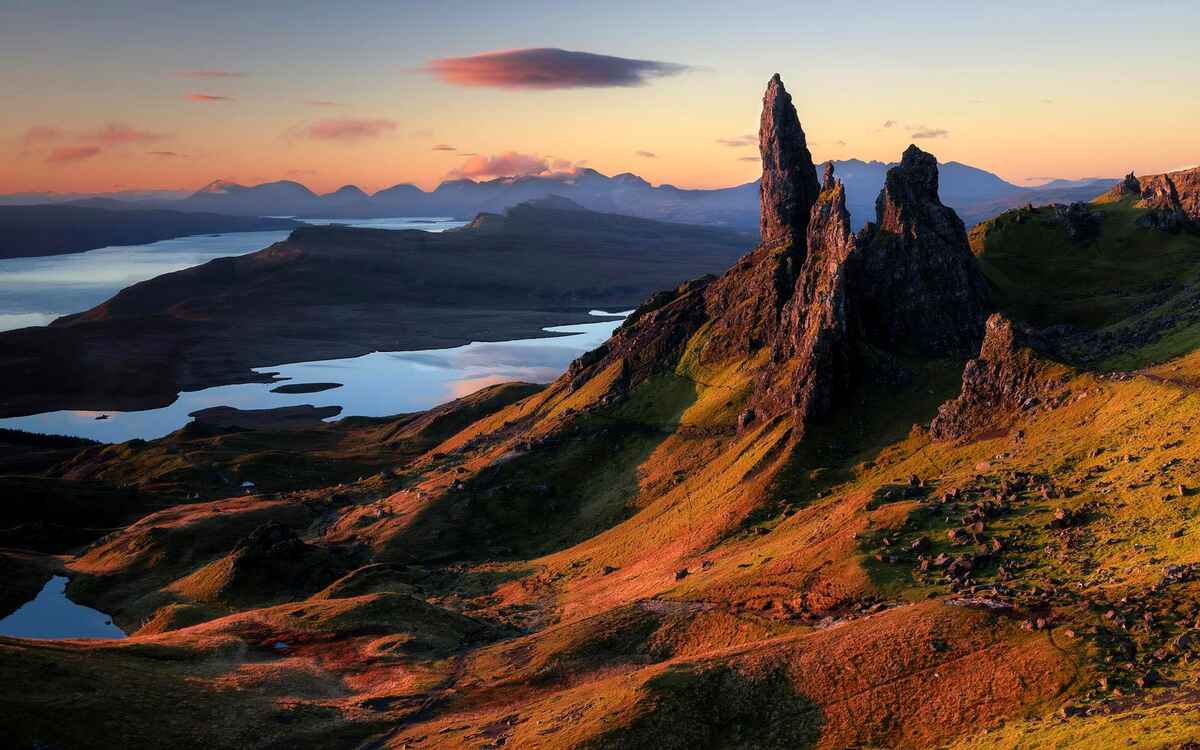
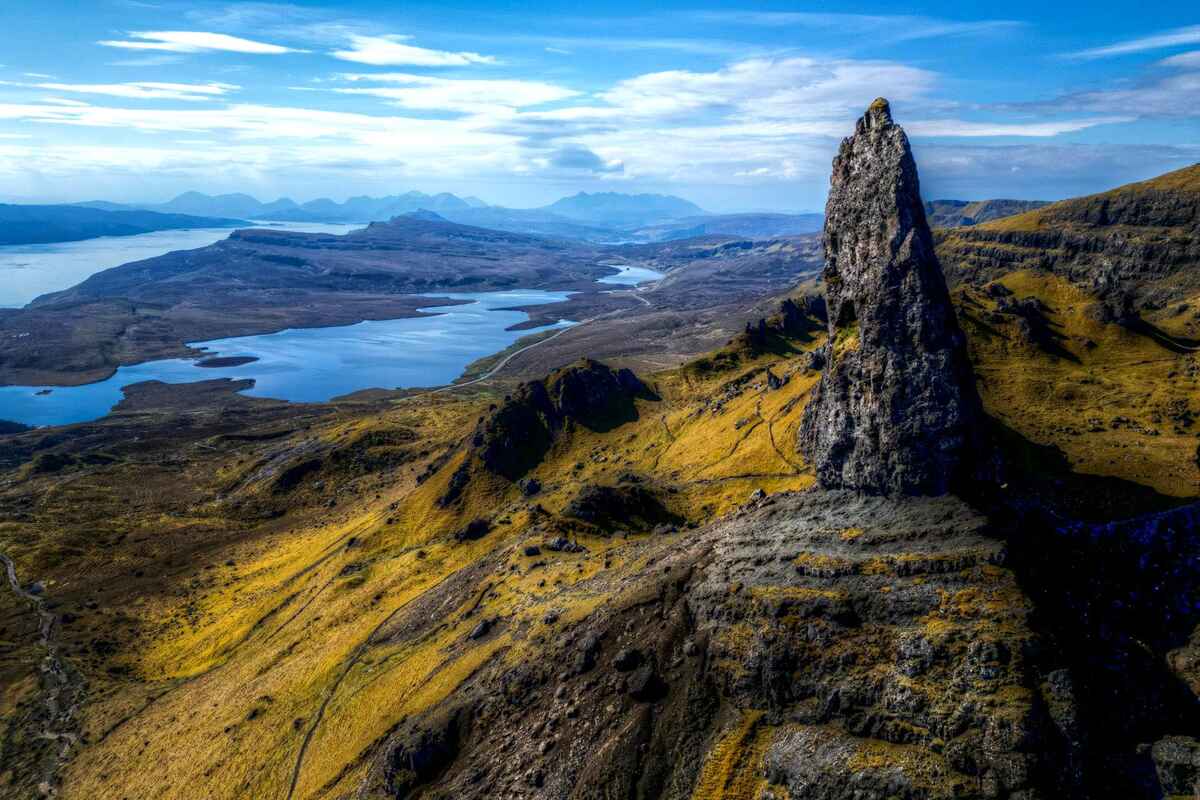
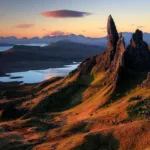
The Old Man of Storr, a towering basalt pinnacle rising above the sanctuary of the same name, is perhaps the single most recognisable landmark on the Isle of Skye.
Created by the same ancient landslip that formed the Quiraing, the 55-metre high needle stands amid a collection of smaller rock towers known as the Sanctuary, creating an almost cathedral-like aura.
The Storr looms over the road between Portree and Staffin, and its shape shifts dramatically depending on the angle and the weather. Walking up to its base is a short but steep endeavour that yields remarkable views across the Sound of Raasay and the mainland mountains.
The path to the Old Man of Storr begins from a large car park on the A855, around 11 kilometres north of Portree. The initial section was upgraded to combat erosion and now zigzags purposefully through conifer plantings before emerging onto open hillside.
As you gain height, the views unfold quickly, and the foot of the pinnacle is reached in about 45 minutes for a steady walker.
Many visitors turn back here, but continuing the circuit that loops behind the Storr reveals a completely different perspective and avoids the crowds on the return leg. Sturdy footwear is mandatory, and the upper section can be treacherously greasy after rain.
Landscape photographers cherish the Old Man of Storr for its shape against the morning light, when the rising sun illuminates the rock face from the east. Climbing the trail in the pre-dawn darkness with a head torch is a common ritual, and the effort is blessed by an almost spiritual quiet.
If you are not equipped for a dark ascent, late afternoon light also works well, especially in autumn. Bear in mind that the car park can overflow by mid-morning, and illegal roadside parking causes serious safety hazards. Using the shuttle bus or visiting at off-peak times is considerate and often more enjoyable.
Beyond the photography icon, the Storr holds a deep cultural resonance. Local folklore tells of a giant buried beneath the ridge, and the landscape seems to hold those legends close.
The entire Trotternish peninsula bears the marks of prehistoric settlement, and the walk up to the Old Man of the Storr passes through a landscape that has been shaped by generations of shepherds.
Treating it as more than just a photo stop deepens your appreciation for the history of the Isle of Skye. Respect the path margins to protect fragile vegetation, carry all waste, and leave this ancient ridge exactly as you found it.
Neist Point Lighthouse and Coastal Scenery
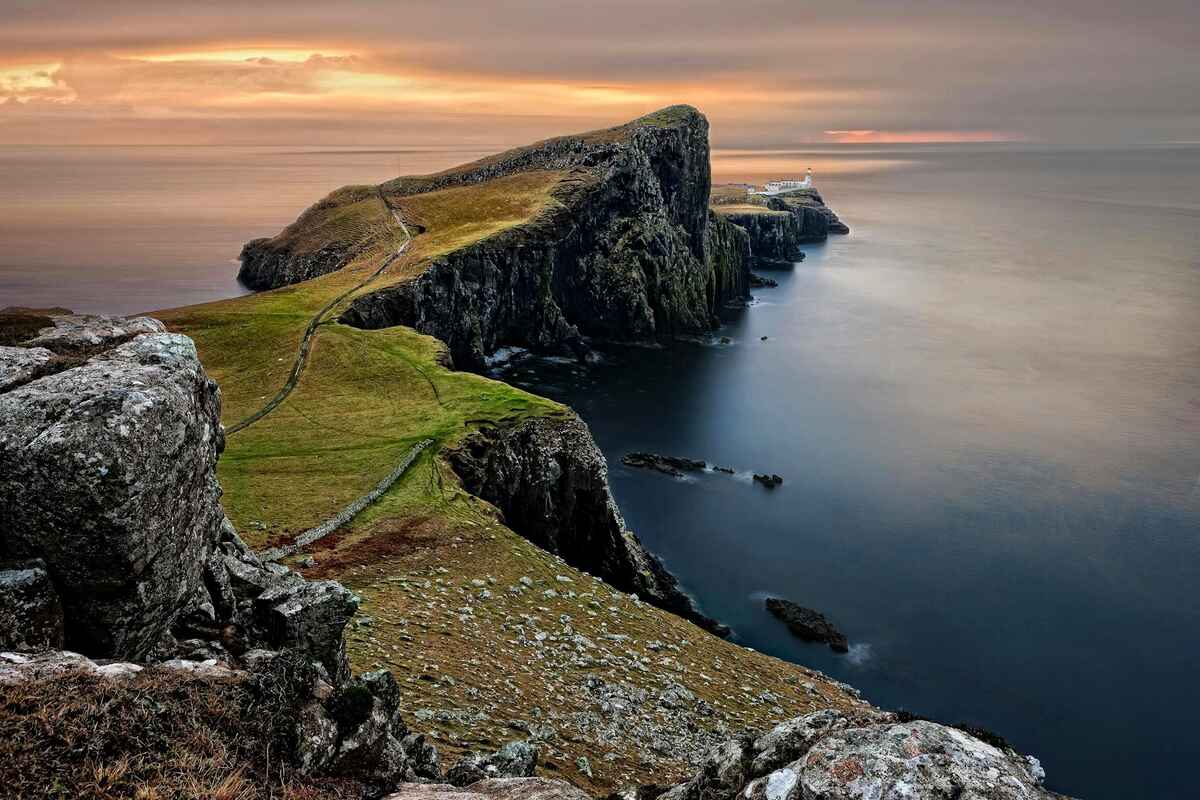
Neist Point, the westernmost tip of the Isle of Skye beyond Glendale, delivers a cliffscape that rivals the drama of the island’s mountain heart. The famous lighthouse, built in 1909 and designed by David Alan Stevenson, stands sentinel above sheer basalt drops that plunge into the Minch.
A steep but well-defined concrete path leads from the small car park down towards the headland, where the roar of the ocean and the cries of nesting fulmars fill the air. This is a place for wild Atlantic light, for a sea breeze that carries salt and for astonishing sunsets that bleed across the Outer Hebrides on the far horizon.
The walk demands caution. The steps can be slippery, and the clifftop edges are unprotected and subject to sudden gusts. Despite its short distance, Neist Point requires the same respect as any coastal walk on the Isle of Skye.
Photographers will find classic compositions from the viewing platform before the descent, from the lighthouse complex itself, and from the rough track that leads out along the grassy spine beyond the buildings.
Staying until dusk reveals the lighthouse beam sweeping across the darkening sea, a mesmerising sight that few visitors experience.
Wildlife at Neist Point is abundant. Look for gannets diving offshore, skuas patrolling the cliffs, and grey seals hauled out on the rocks below. Minke whales are occasionally spotted in the summer months, and the Minch is a known migration route.
Binoculars are rewarding, but even without them, the sheer scale of the rock architecture leaves an impression. The lighthouse itself is automated and unmanned, but the surrounding buildings have been converted into self-catering accommodation, offering a truly unforgettable place to stay.
The return climb is punishing on a hot day, so carry water and pace yourself. The drive to Glendale is narrow and winding, with passing places that require patience and good manners. Combine a visit to Neist Point with the nearby Dunvegan Castle to form a satisfying full-day itinerary.
As you stand on the westernmost rock, with nothing but ocean between you and Canada, you will understand why this corner of the Isle of Skye holds such a powerful allure.
Dunvegan Castle and the Clan MacLeod Legacy
Dunvegan Castle, seated on a rocky outcrop overlooking Loch Dunvegan, claims recognition as the oldest continuously inhabited castle in Scotland.
For over 800 years it has been the ancestral seat of Clan MacLeod, and its walls are steeped in a history that spans Norse alliances, clan warfare and careful stewardship of the Isle of Skye.
The castle’s architecture reveals its layered past, from the thirteenth-century keep to the Regency additions, creating a complex that feels alive rather than frozen in time. Inside, visitors encounter a collection of portraits, Jacobite relics and the legendary Fairy Flag, a fragile silk banner with multiple origin myths.
The Fairy Flag is one of the most evocative artefacts on the Isle of Skye. Tradition holds that it has been unfurled in times of crisis, and that its powers will protect the clan, though only a limited number of times remain.
Authentic or not, the banner speaks to a deep connection between land, heritage and belief that still resonates. The castle’s guides tell these stories with a blend of pride and care, encouraging visitors to appreciate the responsibility that comes with such a long custodianship.
The gardens at Dunvegan are a welcome contrast to the wild uplands, with woodland walks, rhododendron-lined paths and a water garden that cascades down towards the sea.
Boat trips depart from the castle jetty to the nearby seal colony on Loch Dunvegan, offering close views of common seals basking on the skerries.
These trips are popular, especially with families, and provide a gentler outing on an island known for its rugged hikes. The Castle’s MacLeod Tables Café serves simple, locally sourced food, making a visit here a comfortable half-day experience.
Dunvegan Castle not only anchors the MacLeod story but also offers an important perspective on the larger history of the Isle of Skye. The castle estate actively engages in land management, marine conservation and local employment, bridging the past with contemporary island life.
It typically opens from spring through autumn, and entry fees contribute to the upkeep of the buildings and grounds. Arriving early ensures quieter rooms and a better chance to absorb the atmosphere of a place that has watched centuries unfold.
Practical Tips for Driving and Road Safety on the Isle of Skye
Driving on the Isle of Skye is one of the most rewarding yet challenging aspects of your visit, and understanding the unwritten rules can transform your holiday.
The majority of roads outside the A87 and a few main arteries are single-track, with designated passing places marked by white diamond signs or black and white poles. These passing places are for overtaking and allowing oncoming traffic to pass, not for parking.
Blocking a passing place or failing to use it properly causes frustration and dangerous backing-up on blind corners. The simple principle is: the car nearest the passing place pulls in, while flashing headlights signals a thank you.
Motorhomes and large campervans are increasingly common on the Isle of Skye, and they demand extra consideration. Their drivers often struggle to reverse, so the smaller vehicle is expected to yield. If you are in a car, pull into the nearest passing place early and let the heavier vehicle proceed.
Always resist the urge to tailgate on single-track roads, because the lead vehicle may need to stop suddenly. The speed limit on many sections is 60 miles per hour, but that is a limit, not a target, and most narrow stretches are navigated at 20 to 30 miles per hour.
Wild parking and irresponsible camping have become severe problems. The verges of the Fairy Pools, the Quiraing and Neist Point have all suffered from vehicles churning up peat and blocking access for emergency services.
Use only designated car parks, and if one is full, be prepared to adjust your plans or return later. The island does not have infinite capacity, and the pressure on infrastructure is real.
Booking a campsite or official motorhome stop in advance is essential, and pitching a tent by the roadside is generally prohibited and environmentally damaging.
Fuel stations are limited, with the most reliable supplies in Portree, Broadford and Dunvegan. Do not rely on being able to refuel late at night or on Sundays in remote areas. Road conditions can deteriorate rapidly in winter, when ice and snow make elevated routes like the Quiraing road impassable.
Check the Traffic Scotland website and plan conservatively. On the Isle of Skye, the journey is part of the experience, and driving with patience and courtesy ensures that the roads remain safe for locals and visitors alike.
Where to Stay: Accommodation Choices Across the Isle of Skye
The accommodation landscape on the Isle of Skye ranges from luxury lodges with hot tubs overlooking the Cuillins to basic bothies and traditional B&Bs run by families whose roots run deep into island soil.
Portree, Broadford and Dunvegan serve as the main clusters, but some of the most atmospheric places to stay are scattered in remoter glens.
Booking three to six months ahead is not an exaggeration for summer, and last-minute availability is rare. Cancellations do appear, but relying on them is a gamble best avoided if you have fixed dates.
Self-catering cottages are exceptionally popular, allowing groups and families to settle into a slower rhythm. Many come with peat-fired stoves, coastal views and a sense of seclusion that hotels cannot replicate.
The Glendale and Elgol areas offer especially dramatic settings. B&Bs and guesthouses remain the backbone of Skye accommodation, often providing outstanding Scottish breakfasts and invaluable local advice from hosts who know the tides and weather intimately.
In the budget bracket, hostels exist in Portree, Glenbrittle and Broadford, while campsites at Staffin, Sligachan and Glen Brittle are well located for hikers.
A growing concern is the rise of unregulated short-term lets, which has exacerbated the housing crisis for local residents and increased pressure on fragile infrastructure.
Where possible, choose accommodation that is clearly registered, contributes to the local economy and respects planning regulations. Staying in a legal, well-managed property not only gives you peace of mind but also supports the long-term viability of communities on the Isle of Skye.
The “Skye Connect” business network and the island’s official tourism website are useful resources for finding responsible accommodation.
If you are travelling without a car, base yourself in Portree where public transport links are strongest. For those seeking walking-focused stays, Sligachan offers a superb location right beneath the Cuillin Ridge with a hotel steeped in mountaineering history.
Regardless of where you sleep, the quality of light, the sound of curlews in the morning and the sense of being surrounded by such ancient land will shape your memories as much as any sightseeing. Booking with intention rather than desperation makes the entire experience of the Isle of Skye more enjoyable.
Food, Whisky, and Local Cuisine on the Isle of Skye
The culinary identity of the Isle of Skye has matured far beyond basic pub dinners, now drawing on exceptional island produce, creative chefs and a renewed pride in Hebridean food traditions.
Seafood is the headline act: squat lobster tails, hand-dived scallops and Skye-landed langoustines feature on menus from Portree to Sleat. The Three Chimneys at Colbost, which has held international acclaim for decades, continues to showcase precise, ingredient-led cooking in a remote croft house.
At the other end of the scale, the Oyster Shed near Carbost serves fresh oysters with views of the loch on a wooden terrace, an experience that captures Skye’s unpretentious character.
Talisker Distillery, the oldest working distillery on the island, is an essential stop for whisky enthusiasts. Located in Carbost on the shores of Loch Harport, Talisker produces a famously peaty, maritime spirit that tastes of brine, cracked pepper and bonfire smoke.
Tours reveal the copper stills and the distillery’s history, but booking ahead is essential, especially in peak months. The onsite shop often stocks special distillery-exclusive bottlings unavailable elsewhere. A dram of Talisker after a long, windswept day on the Trotternish Ridge feels like the true taste of the Isle of Skye.
Beyond seafood and whisky, island lamb, venison and artisanal cheeses deserve attention. Local smokehouses cure fish and meats using traditional methods, and farmers’ markets in Portree and Broadford offer a chance to meet the producers.
Small bakeries and cafés have also elevated the coffee and cake stop to something memorable, with many proudly using Skye-milled flour and foraged berries. The growing network of community gardens and croft-based food projects reminds visitors that the connection between plate and landscape on Skye is direct and deeply felt.
Dining out on the Isle of Skye requires foresight. The most celebrated restaurants may be fully booked weeks in advance, and many smaller cafés close by early evening, especially outside summer.
Self-catering visitors can take advantage of fresh seafood vans and honesty boxes selling eggs, bread and vegetables. Wherever you eat, remember that the island’s food economy faces the same transport and cost challenges as other remote communities.
Appreciating each meal as a product of place rather than convenience will enrich your travel experience immeasurably.
Responsible Tourism and Protecting the Isle of Skye’s Fragile Landscape
The soaring popularity of the Isle of Skye has brought immense economic benefits but also placed severe strain on the island’s natural and social infrastructure.
Footpath erosion at the Fairy Pools and the Quiraing, road congestion on single-track routes and the strain on waste facilities have all prompted difficult conversations about visitor management. Responsible tourism is not an abstract concept here; it is a daily necessity.
Travellers have the power to be part of the solution by planning carefully, staying within designated paths, and recognising that the landscape is not a film set but a living ecosystem.
The Scottish Outdoor Access Code grants remarkable freedoms, including the right to wild camp in most unenclosed areas, but those rights come with duties.
Wild camping on the Isle of Skye means lightweight, discreet, leave-no-trace camping, and it does not permit parking a motorhome by a lochside and extending an awning. Camping next to roads, in quarries or without proper toilet provisions damages the environment and creates public health risks.
The code emphasises that access is for responsible enjoyment, and the local community has grown weary of those who ignore its principles. Always use official campsites or bothies where possible, and take every scrap of waste away.
Supporting the local economy in ways that genuinely benefit islanders is a core part of responsible travel. Choose locally owned accommodation, buy from independent shops, and tip guides who share their knowledge.
Avoid short-term lets that have hollowed out communities, and be mindful of photographing people without permission. The Gaelic culture and crofting way of life are not decorative backdrops; they are lived identities. A respectful visitor spends money in ways that sustain rather than extract.
The Isle of Skye is not an all-you-can-consume attraction. Its cliffs, moors and villages deserve the same courtesy you would extend to a neighbour’s home.
Before posting that perfectly filtered image, consider whether you are promoting overcrowded hot spots or revealing a delicate location that cannot handle the attention. Responsible tourism demands that we travel with humility, curiosity and care.
That ethos will not only protect the island but also transform your own experience from a superficial checklist into a genuine connection with one of Scotland’s most extraordinary places.
Conclusion
The Isle of Skye is far more than a collection of Instagram landmarks; it is a layered landscape of ancient rock, living Gaelic culture and weather that reshapes each day.
Walking the Quiraing, photographing the Old Man of Storr or dipping a wary toe into the Fairy Pools connects you to a place that has been shaped by glaciers, landslides and human stories for thousands of years.
Any journey here rewards those who slow down, who read the clouds as carefully as the map, and who treat the island with the respect it deserves. The history, from Neolithic brochs to the Clearances and the resilience of modern crofting communities, is not sealed behind museum doors but woven into every glen.
Practical choices matter: visiting in the shoulder season reduces pressure on the island, driving with patience keeps the roads safe, and spending money consciously supports the people who call Skye home.
No guide can guarantee perfect weather or empty trails, and the island’s mood ranges from dazzling sunlight to brooding mists that swallow the hillsides.
Travel conditions, ferry schedules, accommodation availability and local regulations can change, so it is wise to confirm key details before booking and to pack a flexible attitude. The Isle of Skye asks for a little effort and a lot of care; in return it offers an adventure that stays with you long after you leave its shores.
FAQ
How many days do I need on the Isle of Skye?
Most travellers find that three to five full days allows a meaningful experience without rushing, giving time to explore the Trotternish peninsula, visit the Fairy Pools, tour Dunvegan Castle and still relax. If you want to hike several longer trails, including sections of the Cuillin Ridge, a week is ideal. Short two-day trips can cover the highlights but may leave you wishing for more. Always check seasonal daylight hours before planning.
Is driving difficult on the Isle of Skye?
Driving requires confidence on single-track roads with passing places and a willingness to pull over frequently. The main A87 is well maintained, but narrow roads to Neist Point or Elgol demand patience and courtesy. Motorhome drivers should be especially prepared for tight sections, and winter ice can make some routes impassable. If you are unfamiliar with such roads, plan shorter driving days and check current conditions locally.
Can I visit the Isle of Skye without a car?
Yes, though public transport is limited once you leave the main corridors. Citylink coaches serve Portree, and local buses connect major attractions in summer, but timetables are sparse. Cycling is a rewarding option for fit travellers, provided you are ready for hilly terrain and changeable weather. Consider booking guided tours or private taxis if you want to reach remote spots without your own vehicle.
What is the best time of year to see the Fairy Pools?
The Fairy Pools are most photogenic on bright, dry days between May and September when the water clarity is at its best and the path is not excessively muddy. Early morning visits in summer offer softer light and far fewer crowds. Water levels can be low after prolonged dry spells, reducing the dramatic cascade effect, so a day after light rain often produces the most impressive flow. Always check footpath conditions before setting out.
Are there midges on the Isle of Skye, and how can I avoid them?
Yes, midges are common from late May to early September, especially near water on still, damp evenings. Wearing a head net, using a DEET-based or Smidge repellent and hiking on windswept ridges helps. They are rarely a problem on breezy days or at higher elevations, but camping next to a loch without protection can be miserable. Planning activities for the windier parts of the day makes a big difference.
What should I pack for hiking the Quiraing and Old Man of Storr?
Waterproof hiking boots with good ankle support are essential, as paths are rocky and can become treacherously slippy. Bring a waterproof jacket, extra warm layers, gloves, a hat, and a map and compass, because weather can change dramatically. A fully charged phone with offline maps is useful but should not replace navigation skills. Don’t forget water and high-energy snacks, and pack all litter out.
Is wild camping permitted on the Isle of Skye?
Wild camping is allowed under the Scottish Outdoor Access Code in many unenclosed areas, provided campers act responsibly, stay for no more than two or three nights in one spot, and leave no trace. However, the code does not cover camping in vehicles or pitching beside roads, and many popular spots are suffering from overuse. Official campsites and bothies are strongly recommended to reduce environmental damage and respect local communities.
Do I need to book accommodation in advance?
Absolutely. B&Bs, self-catering cottages and hotels on the Isle of Skye book out months ahead for the summer season, and even shoulder months see high demand. Last-minute rooms are extremely rare, and informal camping on verges is not a legal fallback. Secure your accommodation as soon as you know your travel dates, and use the island’s official tourism resources to find registered providers.
Are Dunvegan Castle and Talisker Distillery open year-round?
Dunvegan Castle typically opens from April to mid-October, with gardens closed during the winter months. Talisker Distillery operates most of the year but may close on certain public holidays and reduces tours in the off-season. Always check the official websites for current opening times and book tours in advance, as spaces fill quickly. Facilities can change without notice, so confirm locally before making a special journey.
Is the Isle of Skye safe for solo travellers?
Yes, the island is generally safe for solo exploration, but the remote terrain and changeable weather demand proper preparation. Solo hikers should leave a route plan with their accommodation, carry a fully charged phone acknowledging patchy signal, and avoid walking near cliff edges in high winds. The communities are welcoming, and solo visitors often find the experience deeply rewarding when they take standard outdoor safety precautions.

Author: Horeca Health
Horeca Health

Leave a Reply