Introduction
Madeira, the Portuguese jewel floating off the northwest coast of Africa, is precisely that kind of place—a destination that feels less like geography and more like poetry composed by the earth itself.
Imagine stepping onto an island where the Atlantic whispers against black basalt cliffs and every trail seems to lead deeper into a living postcard.
Rugged volcanic peaks draped in ancient laurel forests rise dramatically from a sea of impossible blue, while terraced hillsides burst with subtropical abundance. The air carries the scent of eucalyptus and salt, mingling with the distant hum of Funchal’s cobbled streets.
This is not the Mediterranean, nor is it quite Europe as most travelers imagine it; Madeira occupies its own enchanted category, a floating garden where four distinct seasons can be felt in a single afternoon walk.
For centuries, sailors, settlers, and wanderers have fallen under its spell, and even today, arriving here feels like uncovering a secret the wider world has yet to fully grasp.
What makes Madeira so enduringly magnetic is the sense of harmony it cultivates between human life and the raw power of nature.
The islanders, with their gentle pride and unhurried warmth, have built a culture around coexistence—carving irrigation channels called levadas through vertical mountainsides, planting vineyards on slopes that seem to defy gravity, and preserving forests that date back to the Tertiary period.
There is a quiet resilience here, born from centuries of isolation and self-reliance, and it expresses itself in everything from the island’s distinctive cuisine to its artisanal embroidery.
Every village festival, every glass of fortified Madeira wine raised in celebration, speaks to a community that knows how to honor its past while welcoming the curious traveler with open arms.
This guide is an invitation to experience Madeira beyond the surface-level snapshots and hurried itineraries.
Whether you come for the levada walks, the volcanic geology, the year-round spring climate, or the five centuries of layered history, you will find that the island rewards those who slow down and pay attention.
We will explore the misty highlands and the sun-drenched coast, the historic streets of Funchal and the remote villages clinging to impossible cliffs. Along the way, you will learn when to visit, where to stay, what to taste, and how to move through landscapes that genuinely deserve the word “breathtaking.”
More than a travel guide, this is a portrait of an island that turns every moment—dawn over Pico do Arieiro, a sip of poncha at a roadside bar, the sudden reveal of a waterfall after a long walk—into something that lingers in memory long after the journey ends.
Madeira’s Volcanic Origins and Geography
To understand Madeira is to begin beneath the ocean’s surface, where a volcanic hotspot over 100 million years old laid the foundation for what would become one of the Atlantic’s most dramatic island landscapes.
The archipelago emerged from the sea approximately five million years ago, shaped by successive eruptions that built layer upon layer of basaltic lava, ash, and pyroclastic material.
The main island of Madeira itself rises to an elevation of 1,862 meters at Pico Ruivo, the highest point in the archipelago, while the surrounding seabed plunges to depths exceeding 4,000 meters.
Geologists describe the island as the summit of a massive shield volcano, and standing anywhere along the central mountain spine, you can feel that vertical intensity in your bones—the land climbs so steeply that horizontal space always feels like a rare and precious commodity.
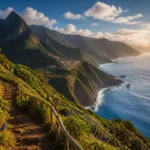
The topography that resulted from these volcanic processes is nothing short of spectacular. Deep ravines, locally called ribeiras, carve through the island like ancient scars, and the coastline alternates between sheer cliffs and pebbled coves accessible only by boat or cable car.
The northern coast bears the brunt of Atlantic storms and appears wilder, greener, and more precipitous, while the southern side, where Funchal nestles against the hills, enjoys more sunshine and gentler slopes.
This dramatic contrast between the two coasts creates microclimates that change within minutes of driving, ensuring that no two Madeira panoramas ever feel quite the same.
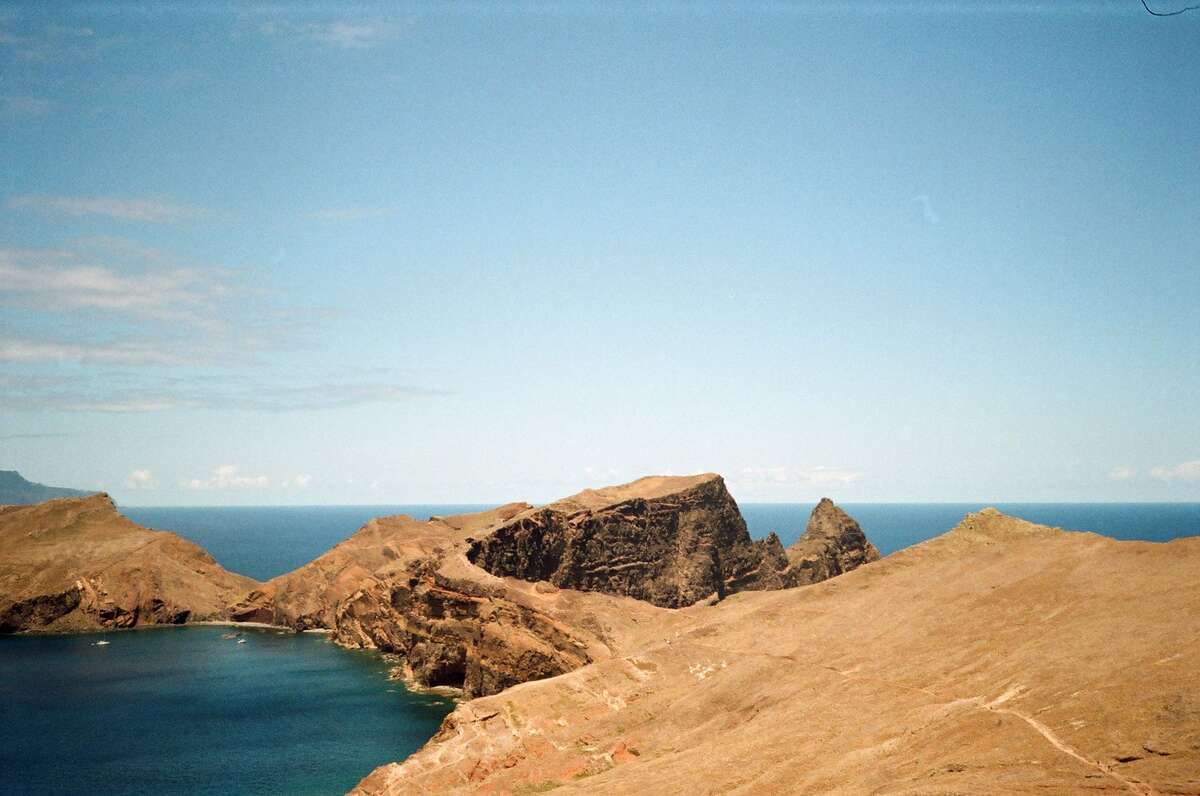
The Ponta de São Lourenço peninsula on the eastern tip, with its arid, windswept beauty, looks almost like a different planet compared to the lush ravines around São Vicente.
One of the most remarkable consequences of Madeira’s volcanic geology is the fertility of its soils. The decomposition of basaltic rock over millennia has produced mineral-rich terrain that, combined with abundant rainfall and mild temperatures, supports an extraordinary diversity of plant life.
Bananas, sugarcane, vineyards, and exotic flowers all thrive in terraced plots that climb the slopes in meticulous green staircases.
The volcanic origin also explains the absence of natural sandy beaches on most of the island—the coastline is predominantly rocky, a fact that has shaped Madeira’s identity as a destination less about lazy beach days and more about active exploration.
Where beaches do exist, such as the golden sands of Porto Santo, the sister island 40 kilometers northeast, they formed from coral and shell fragments rather than volcanic erosion.
Visitors who take time to explore the volcanic caves of São Vicente or walk through the ancient lava tubes gain a visceral appreciation for the forces that built this island.
These underground chambers, illuminated with careful lighting, reveal the frozen rivers of molten rock that once flowed toward the sea.
The volcanic legacy also manifests in the distinctive calhau—the rounded black cobblestones used to pave Madeira’s streets and plazas, creating patterns of white and dark basalt that shimmer after rainfall.
Understanding the geology transforms how you see every landscape on the island; each cliff face becomes a chapter in a five-million-year story, and every fertile valley testifies to the creative destruction that made Madeira possible in the first place.
How Did Madeira’s History Shape the Island?
Madeira’s human story officially begins in 1419, when Portuguese navigators João Gonçalves Zarco and Tristão Vaz Teixeira, blown off course during an expedition along the African coast, stumbled upon an uninhabited island covered in dense forest.
The very name Madeira means “wood” in Portuguese, a practical designation reflecting the vast woodland that blanketed every slope.
Under the direction of Prince Henry the Navigator, settlement began the following year, and what followed was one of the most ambitious and consequential colonization projects of the early Portuguese Age of Discovery.
The settlers, drawn from the Algarve and other Portuguese regions, set about clearing land through controlled burns—fires so immense that, according to chronicler Gomes Eanes de Zurara, the flames raged for seven years and fundamentally altered the island’s ecology.
The introduction of sugarcane in the mid-15th century transformed Madeira into one of Europe’s most valuable colonial assets. By the 1480s, the island had become the world’s leading sugar producer, attracting traders, merchants, and adventurers from Genoa, Flanders, and beyond.
Funchal grew wealthy and cosmopolitan, its port bustling with ships bound for the Low Countries and the Mediterranean. This sugar boom also brought enslaved laborers from Africa and the Canary Islands, marking the beginning of Madeira’s complex multi-ethnic identity.
When Brazilian competition undercut Madeiran sugar in the 16th century, the economy pivoted with remarkable agility toward wine production, laying the foundation for the Madeira wine industry that would achieve global fame in subsequent centuries.
The strategic value of Madeira as a provisioning stop for ships crossing the Atlantic cemented its importance in global trade networks.
Vessels en route to the Americas, Africa, and India routinely called at Funchal to replenish supplies of fresh water, fruit, and the increasingly celebrated fortified wine.
British merchants established a significant presence during the 17th and 18th centuries, introducing their own commercial practices, architectural preferences, and even sports—the island’s first golf course and football matches can be traced to British influence.
This period also saw the construction of the island’s remarkable irrigation system, the levadas, which expanded dramatically under both private and public initiative to support agriculture on the steep terrain.
Walking these channels today, you are tracing the arteries of an economic lifeline that sustained generations.
The 19th and 20th centuries brought new chapters: the arrival of tourism as a health retreat for European aristocrats seeking the island’s mild climate to recover from tuberculosis, the development of the embroidery and wicker industries that employed thousands of women and artisans, and the political shifts that culminated in Madeira’s establishment as an autonomous region of Portugal in 1976.
Each historical layer—sugar, wine, empire, tourism—left its architectural and cultural imprint, visible in everything from the Manueline details of Funchal Cathedral to the British-style park benches in the Municipal Garden.
Understanding this layered history transforms a visit to Madeira from a simple scenic holiday into a richer experience of a place where the past is never far beneath the surface.
What Is the Best Time to Visit Madeira?
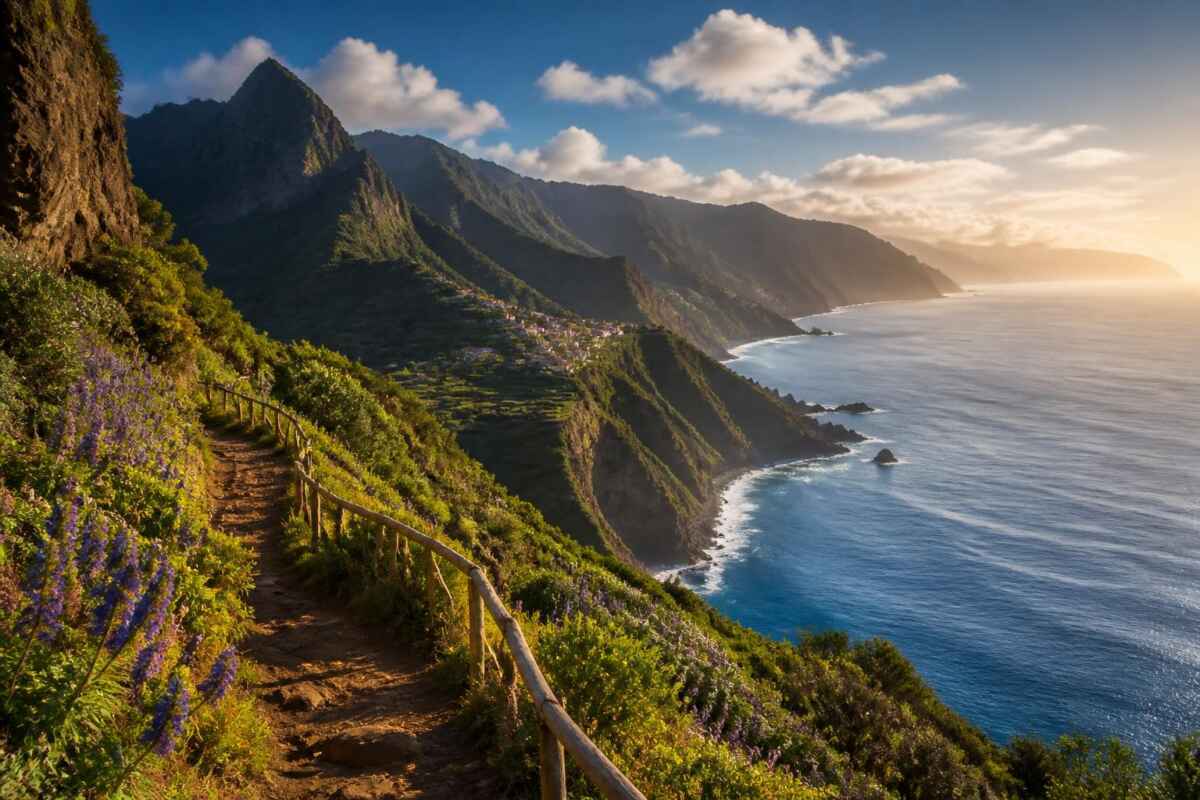
The short answer is that Madeira genuinely deserves its nickname as the “Island of Eternal Spring,” with temperatures rarely dropping below 16°C in winter or exceeding 26°C in summer, making it a year-round destination with distinct seasonal advantages depending on your priorities.
The island’s subtropical climate, moderated by the surrounding Atlantic Ocean and the Gulf Stream, creates conditions where flowers bloom continuously and outdoor activities remain viable across all twelve months.
However, each season in Madeira brings its own character, and the best time to visit depends largely on whether you prioritize wildflower displays, festival participation, hiking comfort, or simply the lowest chances of rainfall.
Spring, particularly April through early June, represents what many seasoned visitors consider Madeira’s most spectacular window.
The island erupts into a riot of color as the annual Flower Festival transforms Funchal’s streets in May, while the high-altitude walking trails showcase rare orchids and endemic flora at their peak.
Temperatures hover comfortably between 18°C and 22°C, rainfall moderates after the wetter winter months, and the tourist crowds have not yet reached their summer density.
Hiking conditions in spring are often ideal—the levada paths are lush without being muddy, and the long daylight hours allow for ambitious full-day treks across the central massif.
Prices for accommodation and flights also tend to be slightly lower than the July-to-September peak, making spring the sweet spot for value-conscious travelers who want the best of Madeira’s natural beauty.
| Season | Temperature Range | Best For | Considerations |
|---|---|---|---|
| Spring (Mar–May) | 17°C – 22°C | Flowers, hiking, festivals | April showers possible; book Flower Festival early |
| Summer (Jun–Sep) | 20°C – 26°C | Coastal activities, long days, swimming | Peak prices; popular levadas can feel busy |
| Autumn (Oct–Nov) | 18°C – 24°C | Wine harvest, photography, fewer crowds | Increasing rainfall; some days can be overcast in the north |
| Winter (Dec–Feb) | 14°C – 20°C | Christmas displays, solitude, lower prices | Mountain trails may be wet; pack waterproof layers |
Summer delivers the warmest and driest conditions, with July and August seeing temperatures sometimes brushing 28°C on the southern coast. This is the season for ocean swimming, sunset sailing trips, and late dinners on open terraces without needing a jacket.
The Atlantic water temperature rises to a relatively comfortable 22°C to 23°C, encouraging dips in the natural volcanic pools of Porto Moniz and Seixal.
However, summer is also when the island welcomes its largest number of visitors, and popular attractions such as the Cabo Girão skywalk and the Pico do Arieiro sunrise viewpoint can feel crowded. Booking accommodation and rental cars well in advance is strongly recommended for summer travel to Madeira.
Winter in Madeira surprises many first-time visitors. While the mountains may be wrapped in mist and the north coast experiences genuine rainfall, the south coast around Funchal often basks in pleasant sunshine with daytime temperatures around 18°C.
December brings Europe’s most ambitious Christmas lights display, with Funchal’s entire waterfront transformed into a glittering wonderland that draws visitors from around the world.
New Year’s Eve fireworks over the bay have earned a Guinness World Record, and the atmosphere is celebratory without being frantic.
For hikers, winter requires flexibility—trails above 1,500 meters can be cold, wet, and occasionally closed—but the lower levada walks remain accessible and dramatically green.
The tradeoff of occasional rain for empty trails and significantly lower prices makes winter an appealing option for Madeira travelers who prioritize solitude and atmosphere over guaranteed sunshine.
Funchal – The Heart of Madeira
Funchal wears its centuries with an effortless grace that few capital cities can match. Spreading across a natural amphitheater of green hills that slope down to a crescent bay, Madeira’s principal city manages to feel simultaneously like a living museum, a working port, and a surprisingly cosmopolitan urban center.
The name derives from funcho, the wild fennel that early settlers found growing abundantly on these slopes, and today those same hillsides support a terraced cityscape of whitewashed houses with terracotta roofs, punctuated by church towers, botanical gardens, and the distinctive silhouette of the cathedral.
Walking Funchal’s streets rewards curiosity at every turn—one moment you are admiring 15th-century Manueline stonework, and the next you discover a contemporary art gallery or a specialty coffee roaster tucked into a centuries-old building.
The historic core of Funchal clusters around the Sé Cathedral, a Gothic-influenced structure built between 1493 and 1514 using local red stone from Cabo Girão.
Its interior reveals a magnificent wooden ceiling crafted from Madeiran cedar, intricately carved choir stalls, and an atmosphere of contemplative stillness that contrasts with the lively streets outside.
A few minutes away, the bustling Mercado dos Lavradores has been the city’s commercial pulse since 1940, its art deco façade housing stalls piled high with exotic fruits, fresh fish, regional cheeses, and the island’s signature flowers.
Even if you do not intend to buy, the market is an essential Madeira experience—the vendors in traditional costume, the theatrical fishmongers who still auction their catch in the hall downstairs, and the sheer sensory overload of colors and scents capture the island’s abundant spirit in one building.
Beyond the market and cathedral, Funchal offers layers of discovery that reward leisurely exploration. The Zona Velha, or Old Town, has undergone a remarkable transformation in recent years, its narrow cobbled lanes now home to some of the city’s best restaurants and an ever-growing collection of painted doors—public art installations that turn the district into an open-air gallery.
The Rua de Santa Maria, the main artery of the old quarter, hums with life from late afternoon until well past midnight, as locals and visitors gather for grilled limpets, black scabbardfish, and glasses of chilled poncha.
Meanwhile, the leafy Avenida Arriaga provides a more formal promenade experience, its plane trees shading cafés where elderly gentlemen read newspapers beside tourists consulting their maps.
For elevation and perspective, the Monte cable car lifts visitors from the city center to the hillside suburb of Monte in approximately fifteen minutes, offering increasingly spectacular views of Funchal’s terracotta rooftops and the blue Atlantic beyond.
At the top, the Monte Palace Tropical Garden spreads across multiple levels with oriental bridges, koi ponds, and one of the finest collections of cycads and exotic plants in Europe.
The church of Nossa Senhora do Monte, nearby, houses the tomb of Charles I of Austria, the last Habsburg emperor, who lived his final months in Madeira’s mild climate.
The return journey offers a choice between the cable car and one of the world’s most unusual urban transport experiences—the Monte toboggan ride, where two carreiros guide a wicker sled down the steep roads using their rubber-soled boots as brakes, a tradition dating back to the 1850s that has become an iconic Madeira experience.
Madeira’s Levada Walking Trails
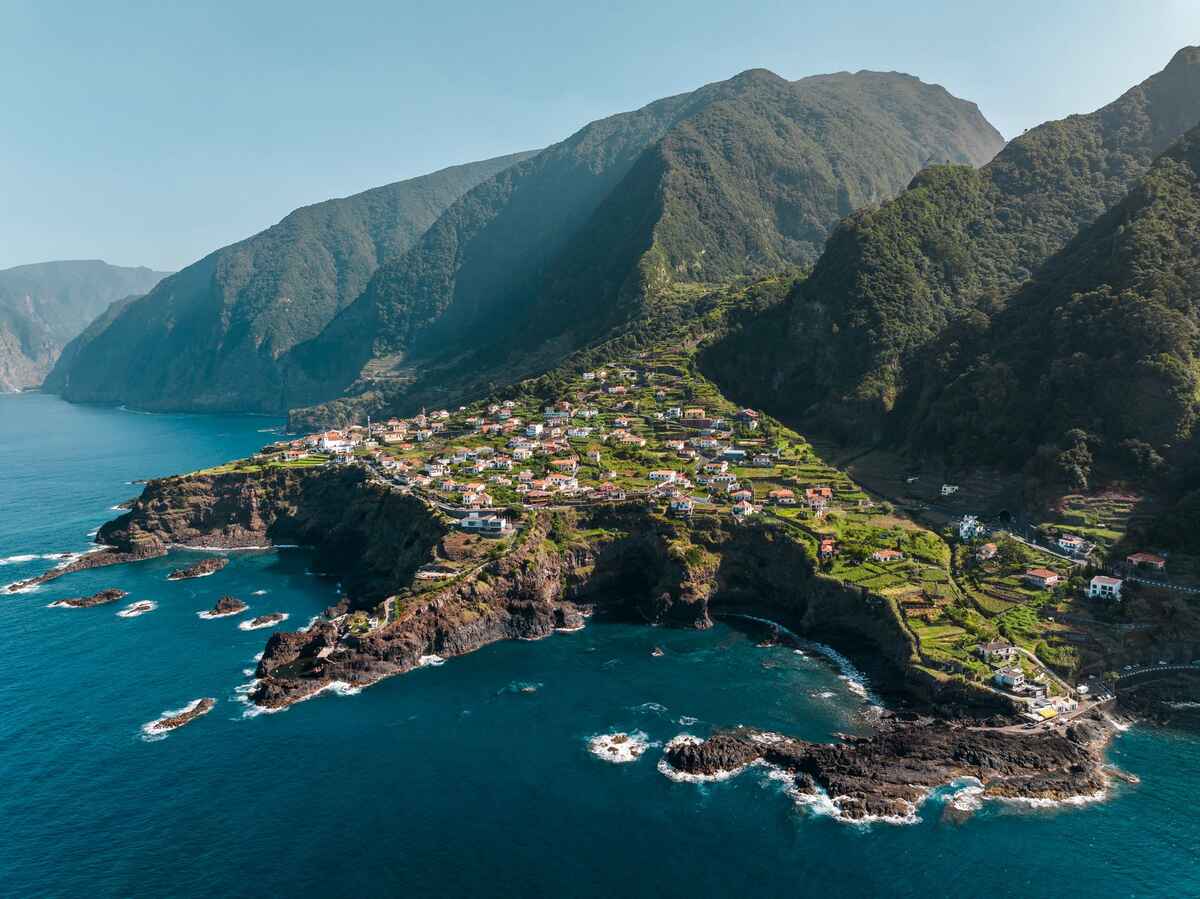
If there is one experience that defines Madeira for the active traveler, it is walking along a levada. These irrigation channels, most of them narrow enough to step across, carry water from the rain-rich northern mountains to the drier southern slopes, and alongside them run more than 3,000 kilometers of maintenance paths that double as some of the most extraordinary hiking trails in the world.
The levada network began in the 16th century and expanded most dramatically in the 19th and early 20th centuries, a collective feat of engineering that required workers to carve channels through vertical rock faces, tunnel through mountains, and traverse sheer drops with little more than ropes and hand tools.
Walking these paths today means tracing the invisible threads that made Madeira’s agriculture possible—and experiencing landscapes that would otherwise remain inaccessible.
The variety of levada walks available suits every fitness level and ambition. For a gentle introduction, the Levada das 25 Fontes, though popular for good reason, descends through the lush Rabaçal valley to a pool fed by multiple waterfalls cascading over mossy rocks.
The path is well-maintained and relatively flat for much of its length, though the return climb tests the legs. More demanding options, such as the Levada do Caldeirão Verde, lead hikers into the island’s interior through tunnels long enough to require a flashlight, emerging beside waterfalls that plunge hundreds of meters from the high plateau.
The feeling of walking through a dark, dripping tunnel and stepping out onto a narrow ledge carved into a cliff face, with the rainforest canopy below and mist swirling above, delivers an adrenaline-charged intimacy with Madeira’s wildest terrain that no bus tour can replicate.
The most thrilling and physically challenging levada route, the Levada do Risco to the 25 Fontes circuit, rewards those prepared for a full day of walking with a comprehensive immersion in the Laurissilva ecosystem.
Along the way, endemic plants such as the Madeiran orchid and the rare mountain ash cling to the vertical banks, while the constant sound of running water provides a meditative soundtrack.
Hikers should come equipped with sturdy footwear—the paths can be muddy even in dry weather—a waterproof layer, a flashlight or headlamp for the tunnels, and sufficient water and snacks.
While many of the popular levadas are well-signposted, hiring a local guide for more remote or exposed routes adds an invaluable dimension of safety, knowledge, and storytelling that transforms the physical walk into a cultural and ecological education.
Planning levada walks in Madeira requires respecting both the terrain and the weather. The northern side of the island receives significantly more rainfall, and conditions can change rapidly even on routes that begin in sunshine.
Checking the forecast specifically for the area you plan to hike—not just for Funchal—is essential, as mountain weather operates on its own logic.
Some levadas include sections with significant exposure, where a slip could have serious consequences; these demand a calm head for heights and an honest assessment of your own comfort level.
The official Madeira tourism website and local walking organizations provide up-to-date information on trail conditions and any closures.
Approached with preparation and humility, the levada walks of Madeira offer a profound connection to an island that reveals its deepest beauty not from viewpoints, but along the narrow, water-carved paths that stitch the mountains together.
The Laurissilva Forest of Madeira
Stepping into the Laurissilva forest of Madeira feels like entering a landscape that time forgot—and in scientific terms, that is precisely what has happened.
This ancient laurel forest, now a UNESCO World Heritage Site, once covered much of Southern Europe and North Africa during the Tertiary period, some 15 to 40 million years ago.
Climate changes drove this humid subtropical ecosystem into near extinction on the mainland, but Madeira’s oceanic position, reliable rainfall, and rugged topography provided a refuge where the Laurissilva survived and thrived.
Today, approximately 15,000 hectares of this living fossil forest blanket the northern and central slopes of the island, representing the largest and best-preserved example of a vegetation type that predates the Ice Ages.
The ecological significance of Madeira’s Laurissilva cannot be overstated. Within its dripping, mist-shrouded interior, scientists have catalogued over 70 species of vascular plants found nowhere else on Earth, alongside a rich community of endemic invertebrates, birds, and lichens.
The dominant trees—the laurel, the til, the barbusano, and the vinhatico—form a dense canopy that filters sunlight into a perpetual green twilight, their gnarled branches draped in epiphytic mosses and filmy ferns that seem to exhale moisture with every breath of wind.
The Madeiran long-toed pigeon, a subspecies endemic to the island, moves through the upper branches like a phantom, while the elusive Madeiran firecrest, one of Europe’s smallest birds, flits among the understory with a high-pitched call that echoes through the stillness. Walking here is not just hiking—it is traveling backward through evolutionary time.
Accessing the Laurissilva in Madeira is typically done through the network of levada trails that penetrate the forest’s edges and, in some cases, its deeper interior.
The Ribeiro Frio area, with its trout hatchery and visitor facilities, serves as a popular gateway, but those willing to venture further on routes such as the Levada do Furado or the trail toward Pico das Pedras will find themselves increasingly alone in a forest that feels primeval.
The Fanal, a high plateau in the northwest where ancient til trees stand silhouetted against shifting banks of fog, has become one of Madeira’s most photographed locations for good reason—the centuries-old trees, their twisted forms emerging from a luminous green meadow, create a scene that seems borrowed from folklore.
Early morning visits to the Fanal offer the best chance to experience the forest at its most atmospheric, with mist transforming familiar shapes into something mysterious.
Preserving the Laurissilva is a responsibility that Madeira takes seriously, and visitors play a role in its continued protection. Sticking to marked trails prevents erosion and protects the fragile forest floor from trampling.
Lighting fires or smoking anywhere near the forest is strictly prohibited, particularly during the drier summer months when fire risk escalates.
Taking only photographs applies here with particular urgency—removing even a small piece of moss or a cutting from a plant damages an ecosystem that has taken millions of years to develop.
Organizations such as the Madeira Natural Park offer guided walks led by trained biologists, and these provide not just safety and navigation but a deeper appreciation of the intricate web of life that the Laurissilva represents.
Standing among trees that sheltered species now vanished from Europe’s mainland is a humbling privilege, and one that rewards the effort of reaching these green sanctuaries many times over.
Madeira’s Coastal Wonders
While Madeira’s mountainous interior commands the most attention in travel photography, the coastline holds its own treasury of wonders that deserve dedicated exploration.
The island’s volcanic origins have sculpted a shoreline of dramatic contrasts—towering sea cliffs that rank among the highest in Europe, natural swimming pools carved from black lava, pebbled coves accessible only by boat, and the occasional golden beach that reminds visitors they are, after all, on an island.
Unlike the continuous sandy stretches of the Algarve or the Caribbean, Madeira’s coast demands a different kind of engagement, one that rewards curiosity and a willingness to explore beyond the obvious viewpoints.
Cabo Girão, rising 580 meters above the Atlantic on the south coast, holds the distinction of being one of Europe’s highest sea cliffs and now features a glass-floored skywalk that extends over the edge.
The vertigo-inducing perspective, with the ocean crashing against the base of the cliff far below and the terraced fields of the coastal plain spreading out to either side, attracts visitors in large numbers.
Those seeking a less crowded but equally dramatic coastal experience should head to Ponta de São Lourenço, the easternmost peninsula of Madeira, where the landscape transforms into something almost Martian in its aridity and mineral coloration.
The walking trail that follows the spine of the peninsula, undulating past volcanic formations in shades of ochre, rust, and charcoal, delivers 360-degree ocean views and a palpable sense of being at the edge of the world.
The peninsula’s geology tells the story of Madeira’s earliest volcanic eruptions, and the sparse vegetation—succulents, sea lavender, and hardy grasses—contrasts sharply with the lush interior.
The northern coast presents a wilder face of Madeira, where Atlantic swells have carved the volcanic rock into sea stacks, grottoes, and blowholes that roar during winter storms.
The natural swimming pools of Porto Moniz, formed when lava flows cooled and solidified at the water’s edge, have been enhanced with walkways and ladders to create a uniquely Madeiran swimming experience—saltwater pools replenished by the tides, set against a backdrop of crashing waves.
A short drive east, the village of Seixal offers a smaller, less developed version of the same phenomenon, with a dark sand beach that is one of the island’s rare naturally sandy shores.
The contrast between the white foam of the Atlantic and the black volcanic rock creates a monochromatic beauty that photographers chase, particularly at sunset when the low light warms the stone to amber.
For those drawn to the ocean itself, Madeira’s waters have become one of Europe’s premier destinations for whale and dolphin watching. The deep offshore waters, where the seabed plunges rapidly to abyssal depths, attract cetaceans year-round.
Sperm whales, pilot whales, bottlenose dolphins, and Atlantic spotted dolphins are commonly sighted, while migratory species such as Bryde’s whales and even blue whales pass through during certain months.
Responsible operators, many based in Calheta and Funchal, follow strict guidelines to minimize disturbance, and the experience of watching a pod of dolphins ride the bow wave of a catamaran against the backdrop of Madeira’s green mountains is one that stays with travelers long after the journey home.
Coastal exploration here, whether from a cliff-top trail, a natural pool, or the deck of a boat, reveals an island that is as much defined by its relationship with the sea as by its celebrated interior heights.
What Makes Madeira Wine Famous?
Madeira wine occupies a singular place in the world of fortified wines, distinguished by a production process that would destroy most other wines but which, in this case, creates something of extraordinary complexity and near-immortal longevity.
The secret lies in deliberate exposure to heat and oxygen—a technique discovered accidentally during the 17th century when barrels of wine shipped across the tropics on long sea voyages returned to Madeira transformed, their flavors deepened and stabilized in ways that defied conventional winemaking wisdom.
Rather than treating this as a flaw, Madeira’s producers embraced and systematized the process, developing the estufagem method of gentle heating that replicates the tropical voyage effect.
The result is a wine of remarkable resilience, one that can remain open for months or even years without deterioration and that ages gracefully for decades or centuries.
The grape varieties used in Madeira wine production largely determine the style and sweetness of the final product, and understanding these is key to appreciating the range available.
Sercial produces the driest expression, with high acidity and a saline, nutty character that pairs beautifully with olives, almonds, and seafood starters.
Verdelho occupies the medium-dry spectrum, offering a balance of smoky richness and bright acidity that works well with soups and mild cheeses. Bual, or Boal, moves into medium-sweet territory, its caramel and dried fruit notes complementing desserts based on caramel or toffee.
Malmsey, the sweetest style, delivers a luscious intensity of raisins, molasses, and spice that stands up to chocolate, strong blue cheeses, or simply a moment of quiet contemplation at the end of a meal.
Additionally, Tinta Negra, the island’s most widely planted grape, produces wines across the sweetness spectrum and accounts for the majority of non-vintage Madeira wine production.
Visiting a Madeira wine lodge in Funchal offers an immersion into a tradition that has shaped the island’s economy and identity for over four centuries.
Blandy’s, the most famous of the old producers, occupies part of a former Franciscan monastery and conducts guided tours through cellars where vintages from the 19th century still rest in oak barrels.
The aroma inside these aging rooms—a mingling of old wood, evaporating alcohol, and the faintly sweet scent of maturing wine—is intoxicating in itself. Tastings typically range across the four main styles, and for those new to fortified wines, the experience often reshapes assumptions.
Madeira wine, with its balancing acidity and layered complexity, bears little resemblance to the cloying dessert wines that some visitors expect.
Beyond the tasting rooms, Madeira wine culture permeates the island in more casual forms. The poncha, a potent local drink made from aguardente de cana (sugarcane spirit), honey, and lemon juice, represents the island’s other fermented tradition, and no visit to a fishing village bar is complete without watching the bartender mix it with a wooden caralhinho until it froths.
Meanwhile, the annual Madeira Wine Festival in late August and early September celebrates the harvest with traditional grape-treading demonstrations, folk music performances, and tastings across the island.
Whether you approach Madeira wine as a connoisseur seeking rare vintages or as a curious traveler discovering a new dimension of the island’s heritage, the story in every glass connects you to a chain of history, geography, and human craftsmanship that spans continents and centuries.
Traditional Madeiran Cuisine
Madeira’s cuisine reflects the island’s history as a crossroads of maritime trade and its identity as a place where abundance grows from volcanic soil. The flavors are hearty and honest, built around fresh seafood, locally raised meats, subtropical fruits, and the aromatic herbs that thrive in the mild climate.
Eating in Madeira means encountering dishes that have evolved over centuries, shaped by the resourcefulness of a population that learned to preserve, transform, and celebrate whatever the land and sea provided.
The culinary experience here is not about Michelin-starred experimentation—though Funchal now boasts several highly regarded restaurants—but about the deep satisfaction of food that tastes deeply connected to its place of origin.
The undisputed star of Madeiran seafood is the black scabbardfish, or espada preta, a deep-water species with a fearsome appearance that belies its delicate white flesh.
Typically served fried with banana and passion fruit sauce—a combination that sounds improbable but works brilliantly—it appears on menus across the island and represents the kind of sweet-savory pairing that characterizes much of Madeiran cooking.
Equally essential to any culinary exploration is espetada, chunks of beef marinated in garlic, bay leaf, and coarse salt, threaded onto laurel skewers and grilled over open flames until the exterior chars and the interior remains succulent.
The ritual of eating espetada, often suspended from a hook at the table and accompanied by bolo do caco—a flatbread made with sweet potato and slathered in garlic butter—is a definitive Madeira experience best enjoyed at a countryside restaurant where the view competes with the food for your attention.
Lapas, or limpets, grilled in their shells with butter, garlic, and a squeeze of lemon, have become something of a cult dish among visitors in the know. Served in cast-iron pans at seaside cafés and upscale restaurants alike, these chewy morsels capture the briny essence of Madeira’s rocky shoreline.
For those with more adventurous palates, picado, a dish of small fried meat or fish pieces served in a garlicky sauce with fries and bread for dipping, is the island’s answer to shared comfort food.
And no discussion of Madeiran cuisine would be complete without mentioning the range of tropical fruits—custard apple, passion fruit, pitanga, and several banana varieties—that appear at breakfast buffets, in fresh juices, and as garnishes that remind diners how close to the equator this island sits.
The island’s baking tradition deserves its own paragraph. Bolo de mel, Madeira’s signature honey cake, is a dense, dark confection made with sugarcane molasses, spices, citrus peel, and sometimes nuts, traditionally prepared during the Christmas season but increasingly available year-round. Its texture improves with age, and families often bake these cakes weeks before the holidays.
The aforementioned bolo do caco, cooked on a hot stone and served as a pre-meal staple, has crossed over from rustic kitchens to restaurant tables without losing its essential character.
Exploring Madeira’s food culture—whether through the bustling Mercado dos Lavradores, a roadside tasca in a mountain village, or a harbor-front restaurant in Câmara de Lobos—offers a delicious education in how geography, history, and human ingenuity converge on the plate.
Where Are the Best Viewpoints in Madeira?
Madeira’s dramatic topography ensures that breathtaking vistas are never far away, but certain viewpoints, or miradouros, elevate the experience of landscape into something approaching the sublime.
The island’s road network has been engineered to connect these lofty perches, and a well-planned driving route can string together a series of panoramas that reveal the full diversity of Madeira’s terrain—from cloud forests to coastal cliffs, from terraced vineyards to the distant silhouette of Porto Santo on the horizon.
The best viewpoints reward both the casual visitor who drives up and steps out of the car and the dedicated hiker who earns the panorama through hours of ascent.
Pico do Arieiro, at 1,818 meters, is the most accessible of Madeira’s high peaks and, for many visitors, the single most memorable viewpoint on the island.
A road winds all the way to the summit, where a visitor center, café, and radar station share space with a viewing platform that, on clear mornings, looks out over a sea of clouds pierced by distant mountain peaks.
The sunrise experience here has become iconic—arriving in darkness to watch the first light illuminate the cloud inversion, with the jagged peaks of the central massif emerging like islands in a white ocean, is a ritual that requires an early start but repays the effort a hundredfold.
From Arieiro, the trail to Pico Ruivo, Madeira’s highest point, follows a ridge punctuated by tunnels and staircases carved into the rock, and the views along this route are among the most dramatic in Europe.
For a different perspective, the Eira do Serrado viewpoint gazes down into the Curral das Freiras, or Nun’s Valley, a vast volcanic crater where a village of white houses appears impossibly small against the scale of the surrounding cliffs.
The story of how nuns from Funchal’s Santa Clara convent sought refuge here during pirate raids in the 16th century adds historical resonance to the geological drama. A short detour from the main viewpoint leads to a higher perch with an even more vertiginous drop.
Meanwhile, the Cabo Girão skywalk, though busy, offers a unique vertical perspective that no other Madeira viewpoint replicates—a glass platform extending over Europe’s highest cliff, with the ocean, coastal villages, and terraced fields all visible in a single downward glance.
The lesser-known viewpoints often deliver the most intimate connection with Madeira’s landscapes. The Balcões, reached by a short, easy levada walk from Ribeiro Frio, frames the island’s highest peaks in a single dramatic composition.
The Ponta do Pargo lighthouse on the westernmost tip of Madeira offers sweeping ocean views and spectacular sunsets over an apparently endless Atlantic.
The Encumeada pass, where the road crosses the central mountain spine, provides the rare experience of standing at a point where both the north and south coasts are visible—a geography lesson compressed into a single glance.
Whether you chase the famous panoramas or discover your own quiet miradouro on a winding mountain road, Madeira’s viewpoints remind you that this island, more than most places on earth, was designed to be admired from above.
Outdoor Adventures in Madeira
Beyond the famous levada walks and scenic viewpoints, Madeira offers a portfolio of outdoor activities that leverage the island’s unique geography in unexpectedly thrilling ways.
The steep volcanic terrain and reliable Atlantic conditions have attracted a growing community of adventure sports enthusiasts, and what began with hiking and canyoning has expanded to encompass mountain biking, coasteering, paragliding, rock climbing, surfing, and deep-sea fishing.
For travelers who measure a destination by the pulse-quickening experiences it provides, Madeira delivers with a combination of accessibility and genuine challenge that few European islands can match.
Canyoning has emerged as one of Madeira’s signature adventure sports, and for good reason—the island’s steep ravines, permanent watercourses, and volcanic rock formations create natural water parks that no engineered attraction could replicate.
Guided canyoning experiences range from introductory routes suitable for families to demanding descents that require abseiling through waterfalls, sliding down natural rock chutes, and jumping into deep pools.
The Ribeira das Cales and Ribeiro Frio areas offer some of the most popular routes, with professional operators providing full equipment and instruction.
The sensation of descending through a narrow gorge with mossy walls rising on either side, the sound of rushing water echoing off the stone, and the sudden emergence into a sunlit pool is a Madeira memory that stands apart from the more sedate pleasures of sightseeing.
The waters surrounding Madeira provide another dimension of outdoor adventure. The consistent swell that rolls in from the Atlantic has made Jardim do Mar and Paul do Mar on the southwest coast into respected surf destinations, with waves that challenge experienced surfers during the winter months.
For those who prefer to explore the coastline at sea level, kayaking and stand-up paddleboarding tours operate from several coastal villages, offering access to sea caves, hidden beaches, and the unique perspective of looking up at cliffs that hikers normally look down from.
Coasteering—a hybrid of swimming, climbing, and cliff-jumping along the rocky shoreline—has also gained popularity, particularly along the dramatic north coast where the volcanic formations create natural obstacle courses.
Operators in Madeira generally maintain high safety standards, but participants should always confirm that their chosen provider is licensed and insured.
Mountain biking in Madeira deserves special mention for its variety and the sheer audacity of some of the trails. The island’s network of old paths, forest roads, and purpose-built singletrack offers everything from gentle coastal rides to technical descents that rank among the most challenging in Europe.
The annual Madeira Bike Race attracts international competitors, but rental shops and guided tours make the trails accessible to visiting riders of all abilities.
For cyclists, the climbs are relentless—there is almost no flat ground on the island—but the rewards in terms of scenery and the exhilaration of descending through eucalyptus forests toward the ocean justify every pedal stroke.
The key to enjoying any outdoor adventure in Madeira is respecting the terrain, choosing activities suited to your fitness and experience level, and recognizing that the island’s weather can change rapidly; what begins as a sunny morning in Funchal can translate to wet and windy conditions in the mountains, and preparation should account for that variability.
Where to Stay in Madeira
Choosing where to base yourself in Madeira shapes the rhythm and character of your entire visit, and the island offers accommodation options that range from grand historic hotels in Funchal to remote mountain cottages accessible only on foot.
The decision involves tradeoffs between convenience, atmosphere, access to hiking trails, and proximity to restaurants and nightlife.
Funchal and its surrounding suburbs concentrate the largest number of hotels, restaurants, and services, making the capital the natural choice for first-time visitors who want to balance exploration with urban amenities.
However, those willing to stay in smaller coastal towns or rural villages often discover a quieter, more immersive Madeira experience that the capital cannot provide.
Funchal’s hotel scene spans the full spectrum from luxurious five-star properties in the historic Reid’s Palace tradition to boutique guesthouses in the Zona Velha.
The Lido area, west of the city center, clusters many of the larger resort-style hotels with sea views, swimming pools, and easy access to the coastal promenade.
Staying in Funchal means being able to walk to dinner, having the widest choice of tour operators and car rental agencies, and enjoying the city’s evening atmosphere. The tradeoff is traffic, parking challenges, and a certain remove from the wilder landscapes that define Madeira’s interior.
For those who value convenience and culinary variety, however, Funchal remains the island’s most practical base.
For travelers who prioritize ocean proximity and a more relaxed pace, the coastal towns west of Funchal provide compelling alternatives.
Câmara de Lobos, a fishing village immortalized by Winston Churchill’s paintings, sits just a short drive from the capital and retains an authentic working harbor atmosphere despite its growing popularity.
Further west, Calheta boasts one of the island’s rare sandy beaches (imported from Morocco), a marina, and several quality accommodation options ranging from hillside villas to boutique hotels.
The north coast, around São Vicente and Porto Moniz, appeals to those seeking dramatic scenery and proximity to some of the island’s best levada walks, though the weather here is significantly wetter and the restaurant scene more limited.
Rural tourism in Madeira has blossomed in recent years, with traditional stone cottages, converted manor houses, and quintas (farm estates) offering accommodation that connects visitors directly to the island’s agricultural rhythms.
The Santana area, known for its iconic triangular thatched houses, provides a base for exploring the Laurissilva forest and the eastern peaks.
These rural stays often include breakfast featuring homemade bread, local jams, and fresh fruit from the property’s gardens, and the hosts frequently serve as invaluable sources of local knowledge—recommending hikes, restaurants, and hidden corners that guidebooks miss.
Wherever you choose to stay in Madeira, booking well in advance is recommended, particularly for the popular spring and summer months and the Christmas and New Year period when the island’s accommodation stock fills rapidly.
The relatively small size of the island—it is possible to drive from Funchal to almost any point in under 90 minutes—means that most bases allow for comprehensive exploration, provided you are comfortable with winding mountain roads.
Conclusion
Madeira is not the kind of destination that exhausts itself in a single visit or surrenders all its secrets to the casual observer. It is an island that rewards return, that deepens with each trail walked and each conversation had, that changes its face with the seasons and the altitude and the shifting Atlantic light.
From the volcanic drama of its peaks to the patient engineering of its levadas, from the complexity of a well-aged Madeira wine to the simple perfection of grilled limpets by the sea, every experience here carries layers of meaning that connect geology, history, culture, and the sensory present into something richer than the sum of its parts.
The island’s greatest gift may be the way it invites slowing down without ever feeling boring. Walking a levada demands attention—to the narrowness of the path, the sound of water, the sudden appearance of an orchid clinging to a mossy bank.
Driving the mountain roads requires presence and patience. Even sitting in a Funchal café, watching the city’s life unfold against a backdrop of green hills and blue water, becomes a form of quiet contemplation rather than passive waiting.
Madeira teaches, gently and persistently, that the best travel experiences are not collected like trophies but absorbed like sunlight.
As you plan your journey, remember that conditions on the ground change—weather, trail accessibility, restaurant openings, and seasonal events all shift with time.
Checking current information through official sources such as Visit Madeira and the Madeira Natural Park, confirming reservations, and maintaining flexibility in your itinerary will serve you well.
The island has welcomed travelers for six centuries, from sailors seeking fresh water to aristocrats seeking recovery to modern adventurers seeking beauty and challenge.
What each of them found, and what you will find, is a place that feels astonishingly alive—a floating poem written in basalt and laurel and the endless rhythm of the sea.
FAQ
Do I need a visa to visit Madeira?
Madeira is an autonomous region of Portugal, so the same visa rules apply as for mainland Portugal. Citizens of the European Union, the Schengen Area, the United Kingdom, the United States, Canada, Australia, and many other countries can enter Madeira visa-free for stays of up to 90 days within a 180-day period for tourism purposes. Entry requirements can change, and your nationality, passport validity, and travel purpose all affect your situation. Always confirm current entry rules with the Portuguese embassy or consulate in your country, or check the official Portuguese immigration website, well before your planned travel date. Ensure your passport is valid for at least three months beyond your intended departure from Madeira.
How many days should I spend in Madeira?
A stay of seven to ten days allows most visitors to experience Madeira’s essential highlights—Funchal, two or three levada walks, a mountain peak sunrise, coastal exploration, and a wine tasting—without feeling rushed. Five days is the practical minimum for a meaningful first visit, while two weeks or longer opens the possibility of deeper exploration, including the wilder north coast, multiple full-day hikes, and perhaps a day trip to Porto Santo. The island’s compact size means you can cover considerable ground even on a shorter stay, but Madeira rewards a slower pace, and extending your visit by a few days often makes the difference between a checklist trip and a genuinely immersive experience.
Is Madeira suitable for families with children?
Madeira is an excellent destination for family travel, provided you choose activities and accommodation suited to your children’s ages and energy levels. Many of the easier levada walks, such as the Balcões trail or the Levada do Risco viewpoint section, are manageable for school-aged children. The Monte cable car and toboggan ride, the whale-watching boats, the natural swimming pools of Porto Moniz, and the botanical gardens all appeal to younger visitors. Families should note that some trails involve significant drops without barriers, and supervision is essential. Accommodation with swimming pools and self-catering facilities adds flexibility for families, and the island’s generally low crime rate and welcoming attitude toward children make it a reassuring choice for parents.
What is the local currency in Madeira?
Madeira uses the euro (€), the same currency as mainland Portugal and the rest of the eurozone. Credit and debit cards are widely accepted in hotels, restaurants, and larger shops, particularly in Funchal and other tourist areas. However, smaller rural establishments, village cafés, and some taxi drivers may only accept cash, so carrying a reasonable amount of euros is advisable, especially if you plan to explore away from the main towns. ATMs are available in Funchal and in larger villages, but they can be sparse in remote areas. Notify your bank of your travel plans to avoid card issues.
Can I drink tap water in Madeira?
Yes, tap water in Madeira is generally safe to drink and meets European Union quality standards. The water comes from the island’s mountain springs and levada-fed reservoirs, and many visitors comment on its fresh, clean taste. In Funchal and most developed areas, tap water requires no additional treatment. In very remote mountain refuges or older rural properties, bottled water may be preferred as a precaution. For hiking, filling your water bottle from taps in villages or visitor centers is a practical and environmentally friendly alternative to buying single-use plastic bottles.
What language is spoken in Madeira?
The official language in Madeira is Portuguese, and the local dialect has a distinctive accent and some vocabulary differences from mainland European Portuguese. In tourist areas, hotels, and restaurants, English is widely spoken and understood, particularly among younger people and those working in the tourism sector. Many Madeirans also speak some French or German, reflecting the island’s diverse visitor base. Learning a few basic Portuguese phrases—such as bom dia (good morning), obrigado/obrigada (thank you), and por favor (please)—is appreciated by locals and enriches the travel experience.
Is driving difficult in Madeira?
Driving in Madeira requires confidence, patience, and attention. The roads are well-maintained, and the main highways, including the extensive tunnel network connecting Funchal to the north and west, are modern and efficient. However, secondary roads in rural areas are often narrow, steep, and winding, with sharp drops and limited visibility on bends. Many mountain roads are single-track with passing places. Manual transmission rental cars are standard, and automatic vehicles should be reserved well in advance if needed. Parking in central Funchal can be expensive and difficult to find. If you are uncomfortable with steep, curving roads, consider staying in Funchal and using guided tours and transfers for mountain excursions.
What is the best way to get around Madeira without a car?
Madeira has a network of public buses operated by several companies, with the main provider, Horários do Funchal, covering the capital and its immediate surroundings, while Rodoeste and SAM serve the western and eastern parts of the island respectively. Buses connect Funchal to most major towns and villages, though rural services may be infrequent, particularly on weekends and public holidays. Taxis and ride-hailing services such as Bolt operate in and around Funchal. Organized tours and private guides offer an alternative for reaching hiking trailheads and viewpoints without a rental car, and many hotels can arrange door-to-door transfers. Walking within Funchal is pleasant and practical, as the city center is compact. For extensive exploration of remote areas, a rental car provides the greatest flexibility.
Is Madeira an expensive travel destination?
Compared to many Western European destinations, Madeira offers good value for money, though it is not a budget destination in the sense that some Southeast Asian or Eastern European locations can be. Accommodation ranges from affordable guesthouses and rural cottages to luxury five-star resorts. Meals in local tascas and village restaurants are reasonably priced, often offering generous portions of fresh seafood or traditional dishes for modest sums. Funchal’s fine dining restaurants and the old Madeira wine vintages can be expensive, but a satisfying meal with wine at a family-run establishment rarely strains the budget. Car rental, guided activities, and entrance fees for attractions are generally in line with European norms. Prices rise during peak summer months and over the Christmas and New Year period, when booking early can help manage costs.
What should I pack for a trip to Madeira?
Packing for Madeira requires thinking in layers and preparing for microclimates. A waterproof and windproof jacket is essential even in summer, as mountain weather changes rapidly and the north coast can be wet at any time of year. Sturdy, comfortable footwear with good grip is critical for levada walking and exploring cobbled streets. A flashlight or headlamp is needed for levada routes that pass through tunnels. Sun protection—hat, sunglasses, and sunscreen—is important year-round due to the island’s subtropical latitude. Evenings, even in summer, can be cool enough to warrant a light sweater or fleece. Swimwear belongs in every Madeira suitcase, whether for hotel pools, natural lava pools, or ocean swimming. If you plan to visit churches or more formal restaurants, a smart-casual outfit is appropriate. A reusable water bottle, a small daypack for hikes, and a power bank for your phone round out the practical packing list.

Author: Horeca Health
Horeca Health
Leave a Reply