Introduction
Edinburgh rises from ancient volcanic stone as if the land itself remembered every coronation, every battle cry and every whispered secret along the Royal Mile.
This is not a city that merely tolerates its history; it wears it like a well-loved cloak, the kind that still carries the faint scent of peat smoke and sea mist. Arriving here feels less like stepping onto a map and more like walking into a story that has been unfolding for over a thousand years.
The skyline is a jagged conversation between the brooding castle ramparts and the elegant Georgian crescents, between grey-stone tenements stacked like weathered books and the sudden green gasp of Arthur’s Seat rising from the city’s heart.
Too many travel guides reduce Edinburgh to a checklist of attractions, but that approach misses the city’s deeper rhythm. This is a place that rewards slow walking, patient listening and a willingness to duck down an unmarked close just because the light falls beautifully on its worn flagstones.
In the autumn, woodsmoke curls through the Old Town alleys while students in wool scarves hurry past centuries-old pubs. In spring, the cherry blossoms of the Meadows soften the city’s stern edges, and even the most hardened local will pause to admire the way the castle catches the low northern sun.
Edinburgh does not shout for attention; it hums with a quiet, confident soul that seeps into your bones whether you are there for three days or three months.
What makes this capital so singular is the tension between its dual identities. By day, it is a stately UNESCO World Heritage site where tour groups follow guides in tartan, and the chime of the One o’Clock Gun startles pigeons from the battlements.
By night, especially when haar rolls in from the Firth of Forth, the narrow wynds and underground vaults stir with darker stories that the city never quite forgets.
That contrast — between the polished Enlightenment city of Hume and Smith and the shadow-haunted Edinburgh of Burke and Hare — is what gives the place its unmistakable texture. Understanding Edinburgh means walking both sides of that line without favoring one over the other.
This travel guide is built for travelers who want more than a quick selfie at the castle gates. We will move through the history-soaked closes of the Old Town, explore the wide avenues of the New Town, taste the briny sweetness of Scottish oysters washed down with a dram of island whisky, and stand on the windy summit of an extinct volcano to watch the whole city stretch toward the sea.
Why Edinburgh Captivates Every Visitor
Few European capitals manage to feel both grand and deeply intimate at the same time, but Edinburgh achieves this balance with an almost theatrical grace.
The city is compact enough that you can cross from the medieval spine of the Royal Mile to the leafy paths of Dean Village on foot in under an hour, yet within that small area is packed more historical drama, literary legacy and architectural wonder than many cities ten times its size.
This walkability, combined with a skyline that changes mood with every shift of cloud and light, creates a sense of constant discovery that even repeat visitors find irresistible. Walking through Edinburgh is like reading a novel that reveals new subplots each time you open it.
The city’s dramatic topography plays an enormous role in its appeal. Built across a series of volcanic ridges and glacial valleys, Edinburgh forces you to look up constantly — at the castle perched on its basalt plug, at Calton Hill’s unfinished acropolis, at the towering tenement buildings that once housed all levels of society under one roof.
This vertical dimension means that viewpoints appear suddenly and generously. You might round a corner on Victoria Street, thinking about nothing more than the whisky shop ahead, and suddenly the whole Firth of Forth opens before you like a silver promise. The landscape makes ordinary moments feel cinematic.
Then there is the cultural calendar, which swells every August when the Edinburgh International Festival and the Fringe transform the city into the world’s greatest stage.
Every church hall, pub basement and street corner becomes a venue, and the city’s population nearly doubles as performers and audiences from across the globe flood the streets. But even outside festival season, the cultural rhythm is steady.
Storytelling nights, traditional music sessions in Rose Street pubs, thoughtful exhibitions at the National Museum of Scotland and the quiet intellectual hum of a university city that has produced philosophers and poets for centuries all ensure that Edinburgh never feels dormant. Culture here is not a product packaged for tourists; it is woven into daily life.
Visitors often arrive expecting cold stone and tartan sentimentality, but they leave talking about the unexpected warmth — the barman who shared his grandfather’s whisky recommendations, the bookseller in the West Port who gently steered you toward a neglected Scottish novelist, the old man on the bus who insisted you visit a particular café in Stockbridge.
Edinburgh’s soul resides not just in its monuments but in its people, who carry the city’s stories with a dry wit and a genuine hospitality that turns a trip into something far more personal.
What Is the Best Time to Visit Edinburgh?
The best time to visit Edinburgh depends heavily on your tolerance for crowds, your appetite for festivals and your feeling about Scottish weather.
In general, late spring (May to early June) and early autumn (September) offer the sweetest combination of mild daylight hours, fewer visitors and a city that feels fully alive without being overwhelmed.
July and August bring the world-famous festivals, extraordinary energy and long summer evenings, but also soaring accommodation costs and dense foot traffic on the Royal Mile.
Winter, meanwhile, delivers a quieter, more atmospheric Edinburgh where fireside pubs and frosty castle views create a different kind of magic.
May is perhaps the most underrated month. The cherry blossoms in the Meadows are still holding their pink confetti, the haar is less persistent than in June, and the city has not yet reached peak tourist season.
Restaurants and attractions are operating at full capacity, but you can still find a quiet corner in the National Portrait Gallery without queuing. June offers famously long twilight that stretches past ten in the evening, and while rain is always a possibility, the mood is optimistic.
This is the time for long walks along the Water of Leith, for climbing Arthur’s Seat after dinner, and for sitting outside a pub on Rose Street with a pint of local ale while the city unwinds around you.
Festival months, particularly August, transform Edinburgh into a thrilling but intense version of itself. The Edinburgh International Festival, the Fringe, the Royal Edinburgh Military Tattoo and the Edinburgh International Book Festival all converge, creating a cultural density that is genuinely unmatched anywhere in the world.
For culture lovers, this is paradise; for those seeking a quiet encounter with Edinburgh’s history, it can feel overwhelming.
If you choose to come in August, book accommodation many months in advance, expect premium rates, and plan your non-festival sightseeing for early mornings when the Royal Mile is still waking up.
The Tattoo, held on the Castle Esplanade under floodlit skies, is an experience worth the crowds if you can secure tickets.
Winter has its own devoted followers. From late November through December, Edinburgh’s Christmas markets fill Princes Street Gardens with wooden stalls, mulled wine aromas and a festive carousel, while Hogmanay — the city’s legendary New Year celebration — draws revelers from around the world for torchlight processions, concerts and a street party beneath the castle.
January and February are quiet and often cold, with short daylight hours, but you will find reduced hotel rates, nearly empty museums and a stark beauty to the bare trees and grey skies.
This is the season for cozying up in a whisky bar, listening to live folk music, and exploring the city’s subterranean vaults with only the sound of dripping stone for company.
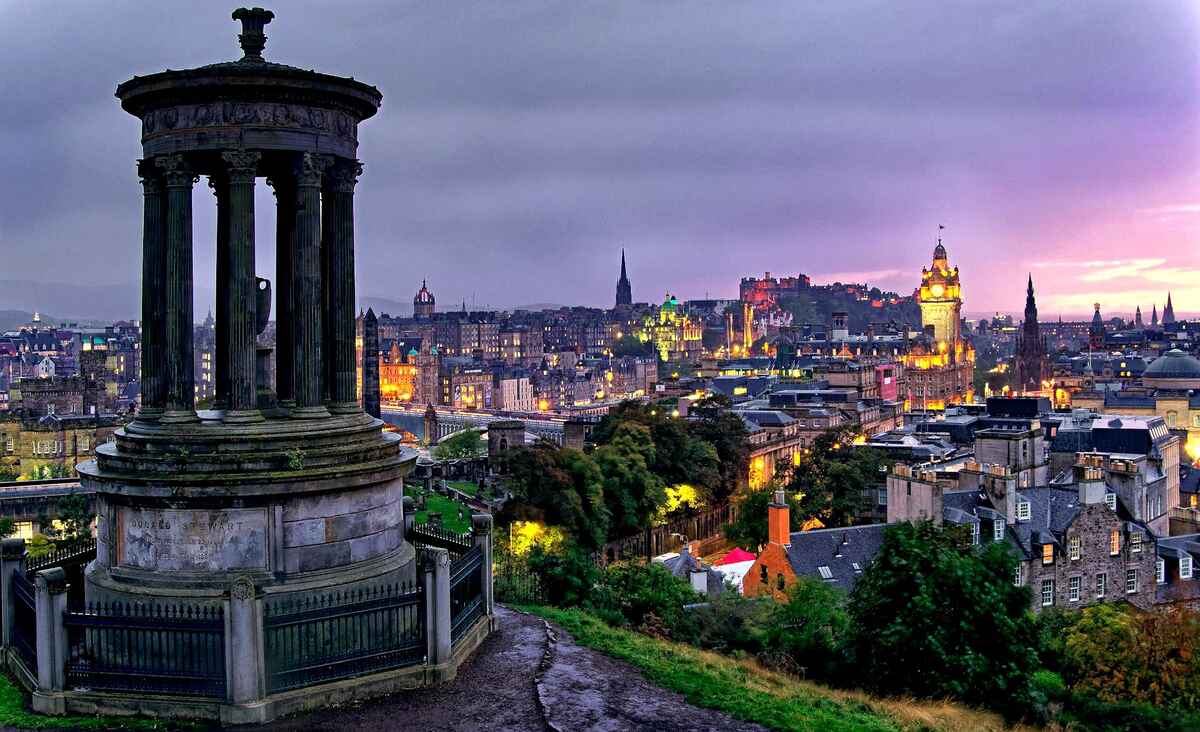
Where History Echoes: Edinburgh’s Castle and Royal Mile
To understand Edinburgh, you must begin at its highest point, both physically and symbolically. Edinburgh Castle, crowning the volcanic Castle Rock, has been a royal residence, military garrison and prison over the centuries, and its silhouette is so deeply embedded in the Scottish psyche that it appears on everything from whisky labels to banknotes.
Walking through the Portcullis Gate is not just entering a tourist attraction; it is crossing a threshold into a site where St Margaret died of grief in 1093, where Mary Queen of Scots gave birth to the future King James VI, and where the Honours of Scotland — the nation’s crown jewels — were hidden for safekeeping during turbulent times.
The Stone of Destiny, used for centuries in the coronation of Scottish kings, sits within the Crown Room, a plain oblong of sandstone that carries more symbolic weight than any jewel.
The Royal Mile, which stretches from the Castle Esplanade down to the Palace of Holyroodhouse, is not a single street but a succession of four ancient thoroughfares — Castlehill, Lawnmarket, High Street and Canongate — each with its own character and microhistory.
This is the spine of medieval Edinburgh, and though it now hosts a generous number of tartan souvenir shops and street performers, it retains a deep authenticity if you know where to look.
Duck into the closes and wynds that branch off the main artery: narrow alleyways where the city’s residents once crammed into towering tenements, where outbreaks of plague swept through, and where merchants, lawyers and paupers lived stacked one atop the other.
Riddle’s Court, a beautifully restored 16th-century merchant’s house tucked away off the Lawnmarket, offers a glimpse into the life of Edinburgh’s prosperous burgesses, far from the tourist tide.
The final point on the Royal Mile is the Palace of Holyroodhouse, the official Scottish residence of the British monarch and a place steeped in the tragic history of Mary Queen of Scots.
The palace feels quieter and more intimate than the castle, with its abbey ruins and the brooding presence of Arthur’s Seat rising just beyond the garden wall.
Standing in the chambers where Mary’s private secretary David Rizzio was stabbed over fifty times by jealous nobles, you feel the chill of that violent night.
Across the gardens, the modern Scottish Parliament Building, a controversial work of architecture by Enric Miralles, sits in deliberate contrast, connecting Scotland’s turbulent political past with its devolved present.
Walking the entire Royal Mile in one slow afternoon, from crown to parliament, is to trace the entire arc of Scottish history on your feet.
What makes these monuments so affecting is that they are not frozen in sterile preservation. The castle still fires its One o’Clock Gun daily, a tradition dating back to 1861 that once allowed ships in the Forth to set their chronometers.
The Royal Mile still echoes with bagpipes, even if the piper is now in tourist-friendly attire. And the palace still functions as a royal residence. History in Edinburgh is not behind glass; it breathes, adapts and occasionally startles you with its immediacy.
A visitor standing on the castle ramparts at dusk, watching the city lights blink on below, is participating in a ritual of awe that has been repeated for centuries.
How Many Days Do You Need in Edinburgh?
For a well-paced introduction that covers the essential historic sites, a couple of museums, a hill walk and time to simply absorb the city’s atmosphere, three full days is the sweet spot for most Edinburgh travelers.
Two days can work if you focus tightly on the Old Town, the castle and one major museum, but you will leave feeling that you only skimmed the surface.
Four days opens up the possibility of a meaningful day trip into the Lothians or Fife, and allows for more leisurely exploration of neighborhoods such as Stockbridge or Leith. The city’s compact geography means you will not waste hours in transit, but its depth repays those who linger.
A three-day itinerary might unfold like this: Day one centers entirely on the Royal Mile, with a morning spent exploring Edinburgh Castle thoroughly (book tickets online for an early timeslot), followed by a downhill walk through the closes and into St Giles’ Cathedral to see its stunning thistle-shaped spire and intricate stained glass.
After lunch in a Grassmarket pub, visit the National Museum of Scotland on Chambers Street, an institution so vast and varied that you should prioritize its Scottish history galleries and the rooftop terrace, which offers one of the finest city views.
Evening could bring a ghost tour through the Old Town’s underground vaults, where the stories of Edinburgh’s darker past come alive in candlelit chambers.
Day two moves you into the New Town and beyond. Start with a walk up Calton Hill in the soft morning light, where the unfinished National Monument and the Dugald Stewart Monument frame the city against the Firth of Forth.
Then explore the Georgian streets of the New Town, noting the precise symmetry of the architecture and stopping at the Scottish National Portrait Gallery on Queen Street.
In the afternoon, head to Stockbridge, a village-like neighborhood of independent shops and cozy cafés, and wander the Water of Leith Walkway to the stunning Dean Village, whose old mill buildings and quiet river create one of the most photogenic corners of the city.
Evening in Leith, Edinburgh’s historic port district, offers some of the city’s finest seafood restaurants along the waterfront.
Day three is for physical immersion in Edinburgh’s wild landscape. Climb Arthur’s Seat in Holyrood Park, an extinct volcano whose summit delivers sweeping views of the entire city, the Pentland Hills and the sea.
The hike is steep in places but accessible to anyone with moderate fitness, and early morning is the most rewarding time. After descending, visit the Palace of Holyroodhouse and the adjacent Queen’s Gallery.
In the afternoon, perhaps take a tour of the Scotch Whisky Experience back on the Royal Mile (more accessible than a distillery tour if you are short on time) or explore the Surgeons’ Hall Museums, which house a remarkable and somewhat macabre collection of medical specimens.
A final evening listening to live traditional music at Sandy Bell’s or The Royal Oak will seal your Edinburgh experience with a properly local send-off.
Edinburgh’s Old Town: A Labyrinth of Closes and Secrets
If Edinburgh Castle and the Royal Mile are the city’s proud face, the Old Town’s network of closes represents its hidden circulatory system.
These narrow lanes, some no wider than a cart, were the original residential streets of medieval Edinburgh, branching off the Royal Mile like the ribs of a fish.
In the 16th and 17th centuries, the Old Town was one of the most densely populated urban areas in Europe, with tenement buildings rising up to fourteen stories high and families of all social classes living in vertical proximity.
Walking through a well-preserved close such as Bakehouse Close or Advocate’s Close today, with their worn stone steps, iron railings and sudden, framed views of the city beyond, you are tracing paths that have been used for over five hundred years.
The closes each carry their own character and often their own name, derived from former residents, trades or memorable events.
Lady Stair’s Close, for instance, houses the Writers’ Museum, dedicated to Robert Burns, Sir Walter Scott and Robert Louis Stevenson, tucked away in a 17th-century courtyard house.
Further down the Mile, Dunbar’s Close Garden offers an extraordinarily peaceful withdrawal from the city — a 17th-century-style hidden garden with yew trees, lavender and worn stone benches where you would never guess the tourist throng is just metres away.
Finding these spaces requires a willingness to turn away from the obvious and trust that Edinburgh will reward curiosity. Every close is an invitation to step out of the present tense for a moment.
Beneath street level lies an even more secret Edinburgh. The South Bridge Vaults, a series of underground chambers built in the 18th century to house taverns, workshops and storage, eventually became a slum and criminal haven as damp and poor conditions set in.
Today, guided tours take visitors down into these sandstone caverns, where the only light comes from lanterns and the temperature drops noticeably.
The vaults are not for everyone — the atmosphere can be genuinely oppressive, and stories of ghostly encounters are common — but they offer a visceral connection to the city’s underclass history that no museum exhibit can replicate.
For those interested in Edinburgh’s darker side, a respectful and historically grounded tour with a reputable company such as Mercat Tours or City of the Dead is essential.
The Old Town also hides some of the city’s best independent shops and cafés for those willing to explore Mary King’s Close, a street frozen in time beneath the Royal Exchange.
This is a different experience from the vaults: a preserved 17th-century street where you can walk through former homes and hear the stories of real residents, including the devastating plague era.
The guides are skilled at balancing historical accuracy with the human dimension of loss, making it an educational rather than merely sensational experience.
Afterward, return to the surface world and find a seat at The Milkman on Cockburn Street, a specialty coffee shop set in a historic building that perfectly bridges the Old Town’s ancient bones and its contemporary pulse.
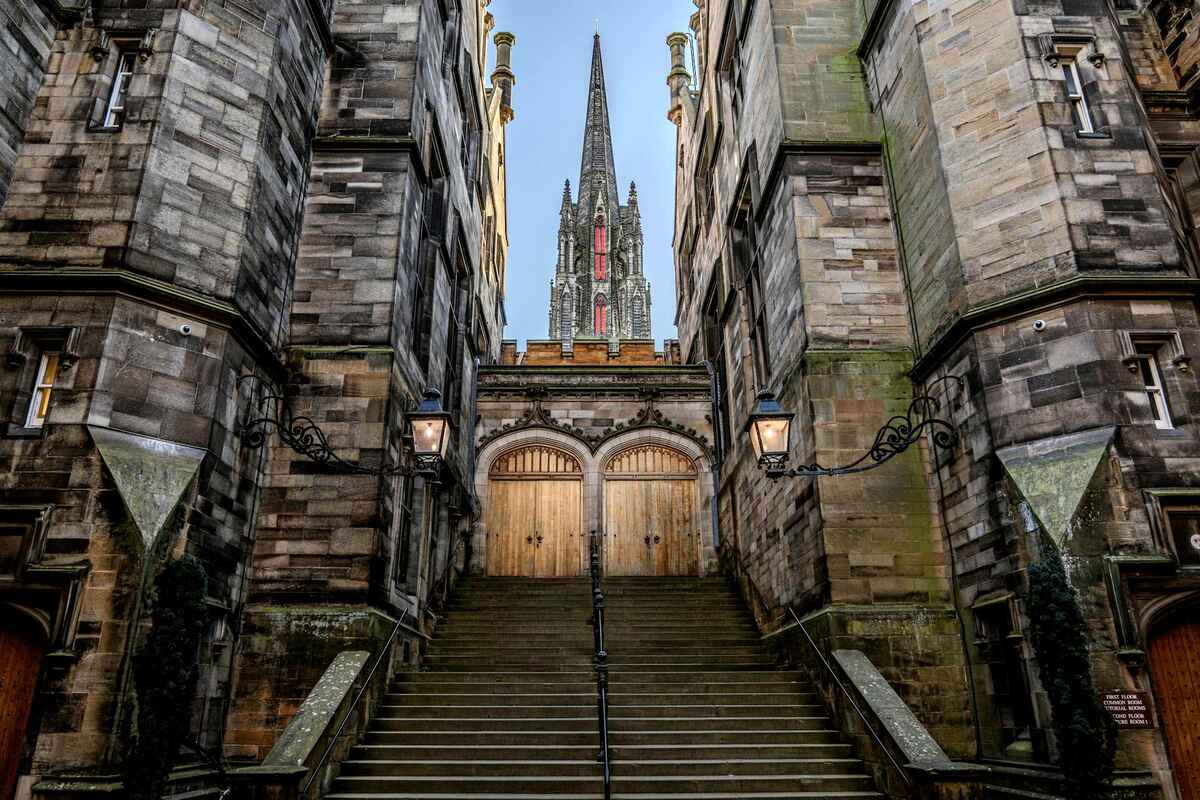
What Are the Must-See Attractions Beyond the Castle?
While Edinburgh Castle rightly dominates most itineraries, a list of the city’s must-see attractions beyond its ramparts must begin with the National Museum of Scotland, St Giles’ Cathedral and the Palace of Holyroodhouse, which together form the cultural stronghold of the Old Town.
The museum, with its soaring Victorian central hall flooded by daylight, offers an encyclopedic journey through Scottish history, natural science and world cultures, all completely free to enter.
St Giles’, often called the Mother Church of Presbyterianism, rewards even a brief visit with its crown steeple, the vibrant Thistle Chapel installed in 1911, and the serene stained-glass window dedicated to Robert Burns. And Holyroodhouse, as the working royal palace, provides an intimate counterpoint to the militaristic castle.
Moving beyond this obvious trio, Arthur’s Seat and the Salisbury Crags in Holyrood Park offer the finest free attraction in the city — a vigorous climb to panoramic views and a genuine feeling of wilderness within minutes of the Royal Mile.
The park is a geological marvel, an extinct volcanic site shaped by glacial erosion, and the walk up from Dunsapie Loch or via the Radical Road gives hikers a sense of scale that puts the entire city in perspective.
For those with limited mobility or energy, the drive up to Dunsapie Loch car park shortens the ascent considerably, though the final rocky section still requires steady footing. Sunrise from the summit, when the haar sits softly in the hollows and the castle catches the first light, is a lifelong memory.
The Royal Yacht Britannia, berthed in Leith, may seem like an outlier choice but has consistently ranked as one of Edinburgh’s most beloved attractions.
This is no dusty maritime museum but a perfectly preserved floating royal residence, used by the British royal family for over forty years until its decommission in 1997.
The self-guided audio tour takes you through the state apartments, crew quarters, engine room and even the royal honeymoon suite, offering a fascinating glimpse into the private lives of a public family.
Tea in the Royal Deck Tea Room, with views over the Firth of Forth, adds a refined pause to the visit. It is an unexpectedly warm and personal experience, even for non-royalists.
For art lovers, the Scottish National Gallery at the foot of the Mound houses masterpieces by Titian, Velázquez, Rembrandt and the Scottish Impressionists, while the nearby Scottish National Portrait Gallery tells the country’s story through its faces, set in a spectacular neo-Gothic red sandstone building.
The smaller, quirkier Surgeons’ Hall Museums merit a mention for those with strong stomachs: the pathology collection includes anatomical specimens, medical instruments and the death mask of William Burke, of Burke and Hare infamy.
This is Edinburgh in its most visceral form, revealing a city that has long been a center of medical science and, at times, its darker experimentation. Each of these attractions deepens the visitor’s understanding that Edinburgh is not a single story but a complex, layered narrative.
Exploring Edinburgh’s New Town and Georgian Grandeur
When Edinburgh’s Old Town became dangerously overcrowded and unsanitary in the late 18th century, the city undertook one of the most ambitious urban planning projects of its age: the New Town.
Laid out from 1767 following the design competition won by a young architect named James Craig, the New Town was conceived as a rational, elegant grid of wide avenues, crescents and circuses that would reflect the Enlightenment ideals of order, beauty and civic virtue.
Walking through Charlotte Square or along George Street today, with their uniform neoclassical façades of honey-colored sandstone, you are moving through a vision of urban perfection that still impresses over two hundred years later.
The contrast with the medieval jumble of the Old Town, just a short walk across the North Bridge, is one of the most dramatic architectural juxtapositions in any city.
Charlotte Square, designed by Robert Adam, is the jewel of the First New Town. The north side features the Georgian House, a National Trust for Scotland property that recreates the domestic life of an affluent late-18th-century Edinburgh family.
Visitors can move through the drawing room, dining room and bedchambers, each filled with period furnishings, paintings and the kind of social detail — from china tea sets to written invitations — that makes the past feel inhabited.
Even the kitchen and servants’ quarters are carefully presented, reminding us that the elegant New Town was built on a foundation of labor often unseen. Across the square, Bute House serves as the official residence of Scotland’s First Minister, grounding this historic quarter in contemporary political reality.
George Street, named for King George III and running parallel to Princes Street, has evolved into a sophisticated shopping and dining avenue that balances heritage with modernity.
Here, you will find the domed and columned Assembly Rooms, where Sir Walter Scott’s friends once gathered for literary society events, now repurposed as an elegant events venue with a fine restaurant.
The street also hosts the recently renovated St Andrew Square, where the Melville Monument — a towering column topped by a statue of Henry Dundas — has become a focal point for public discussion about Scotland’s colonial legacy.
Edinburgh does not shy away from these difficult conversations, and interpretive panels in the square now offer nuanced historical context alongside the formal gardens.
For a quieter New Town experience, drift northward toward the waterside paths. The Water of Leith Walkway winds through the heart of the Georgian grid, dipping under bridges and passing the elegant Dean Village, once a separate milling hamlet and now one of the city’s most picturesque enclaves.
The walk from Stockbridge to Dean Village and onward to the Scottish National Gallery of Modern Art is a gentle two-hour stroll through a green corridor that feels worlds away from the city’s stone heart.
The Gallery of Modern Art itself, split across two buildings in a sculptural park, offers a refreshing contrast to the Old Town’s antiquities, with major works by Francis Bacon, Damien Hirst and Scottish artists such as Eduardo Paolozzi.
This interplay between Enlightenment order and contemporary creativity keeps Edinburgh constantly fresh.
Where to Stay in Edinburgh: Neighborhood Guide
Choosing the right base in Edinburgh transforms a good trip into a great one, and the city offers a compact but distinct set of neighborhoods, each with its own atmosphere, price range and convenience factors.
The Old Town puts you in the thick of history, steps from the castle and the Royal Mile, but expect steep hotel rates, some noise at night and a general tourist intensity.
The New Town and its extensions toward Stockbridge offer a quieter, more residential feel with elegant Georgian architecture, excellent cafés and good transport links, while remaining within a 20-minute walk of the major sights.
Leith, the historic port district, has emerged as a foodie destination with a more local, less polished vibe, and the West End and Haymarket area provide solid mid-range options close to the airport tram.
For first-time visitors who want to maximize their time, the Old Town is undeniably the most atmospheric choice.
Boutique hotels tucked into converted tenement buildings, such as The Witchery by the Castle or the Radisson Collection on the Royal Mile, deliver an immersion in Edinburgh’s medieval fabric that is worth the premium for many travelers.
The advantage is that you can step outside before breakfast and have the castle and St Giles’ virtually to yourself for an hour. The Old Town is also closest to the Waverley train station, making it convenient if you arrive by rail and plan day trips.
However, be aware that Old Town accommodations often lack elevators and that the cobbled streets can challenge wheeled luggage.
Travelers who prefer a calmer, more residential setting and enjoy walking will find the New Town and Stockbridge area ideal. Here, you exchange castle views for graceful streets lined with independent bookshops, wine bars and bakeries.
Stockbridge’s Sunday market and the Water of Leith walkway create a village-within-the-city feeling that many visitors cherish. Accommodation ranges from boutique guesthouses to serviced apartments, often at rates slightly lower than the Old Town for comparable quality.
The walk to the Royal Mile takes about 20 minutes, and the regular bus service along George Street makes the journey even shorter. This is also the best neighborhood for accessing the Royal Botanic Garden, a free and expansive green space that merits a morning of its own.
Below is a comparative overview of the five main areas to stay in Edinburgh, designed to help you match your priorities to the right street corner.
| Neighborhood | Best For | Atmosphere | Typical Price Level |
|---|---|---|---|
| Old Town | First-time visitors, history lovers | Medieval, lively, tourist-heavy | High |
| New Town & Stockbridge | Couples, independent travelers | Georgian elegance, calm, refined | Mid to High |
| Leith | Foodies, return visitors | Gritty-chic, creative, local | Mid |
| West End / Haymarket | Budget-conscious, families | Quiet, well-connected, practical | Low to Mid |
| Southside / Newington | Students, budget travelers | Young, casual, diverse eateries | Low |
All price indications are approximate and shift considerably with the festival season; always check current rates before booking.
The Southside and Newington area, while less central, offers excellent access to Holyrood Park and affordable international dining along Clerk Street, making it a smart choice for longer stays on a tighter budget.

Is Edinburgh Safe for Solo Travelers and Families?
Edinburgh is broadly considered a safe city for both solo travelers and families, with low levels of violent crime and a generally welcoming, tolerant civic culture.
The city center is well-lit in most areas, public transport is reliable and well-monitored by CCTV, and even late at night you will find a reassuring number of people around, particularly in the Old Town and central pub areas.
That said, as in any city, situational awareness matters. Solo travelers should exercise the usual caution when walking alone through the more secluded closes or through Holyrood Park after dark, especially in winter when foot traffic thins out.
The city’s underground vault systems and some of the darker tourist attractions are best experienced as part of a reputable guided group rather than alone.
For families, Edinburgh is exceptionally well-equipped. The National Museum of Scotland, with its interactive science galleries and open spaces, is a multi-generational highlight that can occupy children for an entire rainy afternoon.
The Edinburgh Zoo, located a short bus ride west of the center, is home to the UK’s only giant pandas (until their scheduled return to China) and penguins that parade daily. Dynamic Earth, a geologically themed attraction near Holyrood, engages kids with environmental storytelling and immersive exhibits.
Most restaurants in the city are child-friendly, and many pubs welcome families during the day, although you should check individual policies as they vary. Highchairs and children’s menus are widely available in the New Town and Stockbridge eateries.
Regarding specific safety considerations, the biggest practical risk in Edinburgh is probably the weather. Sudden rain, even in summer, can make cobblestones treacherously slippery, so sturdy footwear with good grip is a wise investment for all ages.
During the festivals in August, the sheer density of crowds on the Royal Mile can be overwhelming for small children, and parents should keep a firm hand in the busiest sections.
Pickpocketing is not a major issue in Edinburgh but is not nonexistent, and the standard advice — keep valuables secured, use a crossbody bag in crowded areas — applies.
The police presence in the city center is typically friendly and approachable, and Police Scotland officers are known for their helpful attitude toward lost tourists.
Edinburgh’s inclusive character extends to solo female travelers, who frequently report feeling comfortable walking alone in most central areas during the day and early evening.
The city’s compact nature means that late-night walks from a restaurant to your accommodation do not involve long stretches of desolate streets, provided you stay within the main neighborhoods.
Some women prefer to avoid the slightly more isolated stretches of the Water of Leith path or the Calton Hill area after dark simply because they are quieter at that hour, but there are no official restrictions.
As always, trust your instincts, use licensed taxis or ride-hailing services late at night, and keep your phone charged.
Tasting Scotland: Food and Whisky Experiences in Edinburgh
Edinburgh’s food scene has undergone a quiet revolution in the last two decades, shedding its old reputation for deep-fried everything and emerging as a genuine culinary destination that honors Scottish produce with creativity and respect.
The backbone of this renaissance is the astonishing quality of local ingredients: North Sea langoustines and hand-dived scallops; grass-fed Highland beef and game from the estates; wild salmon from the Tay; and soft fruits from the fertile fields of Angus and Perthshire.
Restaurants across the city, from Michelin-starred fine dining rooms to unpretentious neighborhood bistros, have embraced the mantra that Scottish land and sea provide everything a chef could dream of, if handled with restraint.
For a classic Edinburgh dining experience, seek out a restaurant that specializes in Scottish seafood. Ondine, just off the Royal Mile, serves plump oysters, barbecued lobster and a shellfish platter that tastes of the cold, clean waters of the Hebrides.
In Leith, The Kitchin, run by chef Tom Kitchin, brings a “from nature to plate” philosophy to dishes like roe deer with celeriac and girolle mushrooms, while its more casual sister restaurant, Scran & Scallie, elevates pub food with game terrine and fish pie that would make any Edinburgh grandmother proud.
Even a simple fish supper — haddock in crisp batter with chunky chips — tastes better when eaten from a paper cone while sitting on a bench overlooking the Port of Leith’s old docks, the Forth breeze sharpening your appetite.
No discussion of Edinburgh’s culinary identity can ignore whisky. Scotland’s national spirit is woven into the city’s social fabric, and even if you rarely drink whisky at home, tasting it here, in its native context, can be a revelation.
The Scotch Whisky Experience on the Royal Mile offers a well-structured introduction that includes a barrel ride through the production process and a guided tasting tailored to your palate.
For a more independent exploration, bars such as the Scotch Malt Whisky Society’s Members’ Room in Queen Street (open to non-members accompanied by a member) or the cozy, wood-paneled Canny Man’s in Morningside serve hundreds of expressions, from peaty Islay single malts to honeyed Speysides.
The bartenders possess an impressive depth of knowledge and are usually happy to guide novices toward a dram they will genuinely enjoy.
Beyond restaurants and whisky, Edinburgh’s food markets and delis reward a more casual approach. The Stockbridge Market, held every Sunday, gathers local cheesemongers, artisan bread bakers, charcuterie makers and seasonal produce stalls under one roof — perfect for assembling a picnic to enjoy on the banks of the Water of Leith.
For a rainy afternoon, visit Valvona & Crolla, the legendary Italian deli on Elm Row, which has been serving Edinburgh since 1934 with its shelves of aged parmesan, prosciutto, olive oils and a café slinging perfect espresso.
And do not leave Edinburgh without tasting haggis, ideally at a Burns Supper if you are visiting in January, but otherwise at any reputable pub that serves it with neeps (turnips) and tatties (potatoes).
It is far more delicious than its ingredients list suggests, and proper respect demands that you try it once.
How to Get Around Edinburgh Efficiently?
Edinburgh is, above all, a walking city, and your own two feet will serve you better than any vehicle for navigating the historic center.
The core attractions — the castle, the Royal Mile, the National Museum, the Grassmarket, the New Town — lie within a compact, easily walkable area, much of it pedestrianized or on narrow streets where cars barely fit.
Plan to walk as your primary mode of transport, and invest in a pair of comfortable, waterproof shoes with decent grip, because those charming cobblestones turn slippery when wet. Most first-time visitors find that a slow morning on foot reveals far more of the city’s character than any bus tour.
When your feet need a rest or you are traveling longer distances — for example, to Leith, the Royal Botanic Garden or the airport — the public transport system steps in admirably.
Lothian Buses operate an extensive network of clean, frequent services that accept contactless card and mobile payments directly on board; a single flat fare covers a single journey, and a day ticket offers unlimited travel.
The tram line runs from Edinburgh Airport through the city center to Newhaven, calling at Haymarket, Princes Street and St Andrew Square, making it the most efficient way to reach the city from the airport.
Trams run frequently from early morning until late evening, and the journey from the airport to the city center takes about 30 minutes, with real-time departure displays at stops.
Taxis and ride-hailing services are widely available but not always the quickest choice in the medieval Old Town, where narrow closes and one-way systems can make journeys circuitous.
Black cabs can be hailed on the street or found at designated ranks near Waverley Station and George Street. Uber and other ride-hailing apps operate in Edinburgh, though some visitors report longer wait times during peak festival periods.
For destinations outside the city, such as the Rosslyn Chapel or the East Lothian coastline, the Princes Street bus station and Waverley train station provide reliable connections.
Car rental is rarely necessary within the city and can become a costly headache due to limited and expensive parking; only consider it if you plan extensive rural exploration beyond the day trip radius.
Cycling has grown in popularity in Edinburgh, despite the city’s hilly terrain, thanks to an expanding network of dedicated cycle paths and the introduction of cycle hire schemes.
The National Cycle Network Route 1 passes through the city, and the Union Canal towpath offers a flat, scenic ride from the city center out to the Falkirk Wheel. For casual visitors, the Just Eat Cycles hire scheme (formerly Edinburgh Cycle Hire) may still be operating; check current availability upon arrival.
Helmets are not legally required but are strongly recommended, and cyclists should be especially cautious on the tram tracks, which can catch bicycle wheels if crossed at a shallow angle.
Ultimately, combining walking with bus and tram use will cover ninety percent of your Edinburgh transport needs without stress.
Day Trips from Edinburgh That Deepen Your Scottish Journey
While Edinburgh itself could easily occupy a week of steady exploration, the city’s position on the Firth of Forth makes it a remarkably convenient launchpad for day trips that reveal a wider Scotland.
Within an hour’s travel, you can stand inside a medieval chapel covered in mysterious carvings, walk across a 19th-century railway bridge that is a UNESCO World Heritage wonder, or watch the sea haar drift over a coastline of golden sand and ruined castles.
These day trips do not require a car; public transport and small-group tours serve all of the destinations below efficiently, and for those who prefer guided context, several respected local operators run small-group tours with expert storytelling.
Rosslyn Chapel, a short 30-minute bus ride from the city center, has become famous far beyond its scale thanks to Dan Brown’s The Da Vinci Code, but the chapel’s true fascination lies in its astonishing 15th-century stonework.
Every surface inside this small collegiate church is encrusted with carvings: biblical scenes, pagan green men, the famous Apprentice Pillar, and curious symbols that scholars still debate.
The chapel’s visitor center provides thoughtful interpretation, and the nearby Rosslyn Castle, perched dramatically over a wooded glen, adds a romantic ruin to the outing.
Booking a timed entry slot online is strongly recommended, especially in summer, as the chapel’s fame has made impromptu visits difficult.
For those drawn to the sea, a day trip to North Berwick and the East Lothian coast offers fresh air, wide beaches and a charming seaside town.
Trains from Waverley station take only 30 minutes, and from North Berwick’s station you can walk to the Scottish Seabird Centre, where live cameras stream footage from the Bass Rock, a volcanic island just offshore that is home to the world’s largest colony of northern gannets.
Boat trips around the Bass Rock, weather permitting, deliver a sensory overload of seabird cries and the startling sight of tens of thousands of white birds covering the rock like fresh snow. Back in town, the Lobster Shack by the harbor serves fresh-caught lobster and crab.
East Lothian’s long, sandy beaches, such as Gullane or Yellowcraig, are easily reachable by bus and offer bracing walks even in winter.
A slightly different option heads west to Stirling, a city that rivals Edinburgh in historical significance and is reached by a 50-minute train journey. Stirling Castle, perched on its own volcanic crag, was the childhood home of Mary Queen of Scots and the site of key battles in the Wars of Scottish Independence.
The castle’s Royal Palace, restored to its 16th-century Renaissance splendor, rivals anything in Edinburgh, and the views from the battlements across the Forth Valley toward the Highlands are magnificent.
Nearby, the National Wallace Monument towers over the town from the Abbey Craig, commemorating William Wallace’s victory at the Battle of Stirling Bridge. Combining Stirling Castle and the monument makes a long but rewarding day.
Just outside Stirling, the Doune Castle (a Monty Python, Game of Thrones and Outlander filming location) adds a more intimate fortress experience. These day trips enrich an Edinburgh visit by showing that Scotland’s story extends far beyond the capital’s seven hills.
Conclusion
Edinburgh does not let go easily. Long after you have left the city, you might find yourself remembering not the grandest castle view but the way a particular close smelled of rain and old stone, or the gruff kindness of a pub landlord who poured you a half-pint of bitter and asked where you were from.
That is the nature of this place: it seeps in quietly, building a store of sense-memory that calls you back.
From the volcanic drama of Arthur’s Seat to the dignified symmetry of the New Town, from the mist-shrouded wynds to the warmth of a fireside whisky in Stockbridge, Edinburgh offers a complete world in a walkable scale, layered with enough history, art and nature to fill a lifetime of return visits.
For travelers who take the time to look beyond the predictable postcard images, Edinburgh rewards with genuine depth. Take a wrong turn down a close and you discover a hidden garden.
Walk up Calton Hill at dusk and you watch the city arrange itself into a silhouette of spires and monuments that has inspired poets and philosophers for centuries.
Sit quietly in St Giles’ on a weekday afternoon, when the light filters through stained glass onto old stone, and you feel the deep, steady pulse of a capital that has absorbed joy and tragedy in equal measure. These are the moments that transform a standard city break into something closer to pilgrimage.
As you plan your own journey, remember that Edinburgh’s beauty lies partly in its unpredictability. The weather can change in minutes. A recommended restaurant might be fully booked, leading you to an unassuming bistro that becomes the highlight of your trip.
A festival crowd might part just long enough for you to glimpse the castle perfectly framed by a narrow close, and that single image may stay with you longer than any museum exhibit. Trust the city’s rhythm rather than fighting it.
Leave space in your itinerary for wandering without destination, for following a busker’s fiddle into a side street, for sitting on a bench in the Meadows with a newspaper and a sausage roll, being altogether and gloriously present.
Practical travel information, including accommodation prices, attraction opening hours, train schedules and local regulations, can shift with the seasons and the broader economic climate.
Check official tourism websites, transport operators and government travel advice shortly before you depart. Scotland’s hospitality is legendary, but a little preparation goes a long way toward ensuring your Edinburgh experience is smooth as well as soulful.
Pack layers, wear good shoes, bring a notebook and an appetite, and let this city of castles, mist and Scottish soul do the rest.
FAQ
What is the best time of year to visit Edinburgh?
Late spring and early autumn typically offer the most comfortable balance of mild weather, manageable crowds and reasonable accommodation rates. August brings the world-famous festivals but also peak prices and crowded streets. Winter is quieter and atmospheric, ideal for fireside pubs and festive markets, though days are short and some attractions may have reduced hours. Always check specific seasonal schedules and weather forecasts before planning your trip, as conditions can vary from year to year.
How many days should I spend in Edinburgh for a first visit?
Three full days allows a first-time visitor to explore the Old Town, New Town, a few major museums, Arthur’s Seat and one day trip without feeling rushed. Two days can cover the absolute highlights but leaves little room for spontaneous discovery. Four or more days opens up deeper exploration of neighborhoods such as Leith and Stockbridge, along with more extensive day trips. Your ideal length depends on your travel pace, interests and whether you are visiting during festival season, which can slow down movement considerably.
Is Edinburgh an expensive city to visit?
Edinburgh occupies a mid-to-high price range compared to other UK cities. Accommodation, dining out and attraction tickets can be costly, particularly during August and the Hogmanay period. However, the city offers many free museums, galleries and outdoor spaces, and inexpensive food options such as supermarkets, bakeries and street markets help budget travelers. Pre-booking trains, accommodations and tickets usually secures better rates. Prices and availability may change, so confirm current costs before you travel.
Do I need a visa to travel to Edinburgh?
Edinburgh follows the United Kingdom’s visa and entry requirements. Whether you need a visa depends on your nationality, the purpose and length of your stay, and your personal circumstances. Many visitors can enter the UK for short tourist visits without a visa, but some nationalities must apply in advance. Entry regulations can change, so always consult official UK government sources or your nearest British embassy before booking travel.
What is the best way to get from Edinburgh Airport to the city center?
The tram is the simplest and most reliable option, running from the airport terminal to the city center in about 30 minutes, with stops at Haymarket, Princes Street and St Andrew Square. Lothian Buses also operate the Airlink 100 express bus service, which reaches the city center in a similar time frame and runs 24 hours. Taxis and ride-hailing services are available but generally more expensive. Tram and bus fares are subject to change, so verify current prices and schedules on the operator’s website.
Can I visit Edinburgh Castle without booking in advance?
During peak summer months and festival season, Edinburgh Castle often sells out days in advance, especially for morning time slots. It is strongly recommended to book tickets online ahead of your visit to secure your preferred date and time. In quieter months, same-day tickets may be available, but advance booking remains the safer choice to avoid disappointment. Ticket prices, opening hours and access to certain areas may be affected by weather, maintenance or special events.
Are there good day trips from Edinburgh without a car?
Yes, many rewarding day trips are easily accessible by train or bus. North Berwick, Stirling, Linlithgow and the coastal towns of East Lothian are all well served by public transport. Rosslyn Chapel can be reached by a short bus ride from the city center. Small-group guided tours offer another car-free option, especially for destinations such as the Highlands or the whisky regions. Timetables and availability shift seasonally, so check current transport schedules and tour operator details before setting out.
Is Edinburgh suitable for a family holiday?
Edinburgh welcomes families with a wide range of child-friendly attractions, including the National Museum of Scotland, Dynamic Earth, Edinburgh Zoo and Holyrood Park. Many restaurants are accommodating to children during the daytime, and the compact, walkable nature of the city reduces logistical stress for parents. During festival season, family-oriented Fringe shows add extra entertainment, though crowds can be intense. Always verify age policies, accessibility and family admission rates for specific venues before visiting.
What is the typical food I should try in Edinburgh?
Traditional Scottish dishes worth seeking out include haggis (often served with neeps and tatties), Cullen skink (a creamy smoked haddock soup), fresh seafood such as oysters and langoustines, and full Scottish breakfast. Edinburgh’s contemporary restaurants reinterpret these classics with high-quality local produce. Vegetarian and vegan options are widely available throughout the city. As menus and opening hours change, it is sensible to check current restaurant details and reserve ahead, especially for popular dinner spots.
How safe is Edinburgh for tourists at night?
Edinburgh is generally a safe city with low levels of violent crime. The central areas remain relatively busy into the evening, and public transport is well-monitored. As in any city, solo travelers and families should remain aware of their surroundings, avoid poorly lit or deserted closes late at night, and use licensed taxis or ride-hailing services when needed. Police Scotland is approachable and helpful. No destination can guarantee absolute safety, so trust your instincts and stay informed about local conditions.

Author: Horeca Health
Horeca Health

















Leave a Reply