Profile
Duomo di Firenze: A Symphony in Stone
Duomo di Firenze, or the Florence Cathedral, is a breathtaking masterpiece that dominates the city’s skyline. As the main church of Florence, Italy, it stands as a testament to the city’s wealth, power, and artistic genius during the Renaissance.
Construction began in 1296 and took over 140 years to complete, with its iconic dome, engineered by Filippo Brunelleschi, being its most famous feature. The cathedral is a symbol of the Florentine spirit—ambitious, innovative, and profoundly beautiful. The architectural design, primarily by Arnolfo di Cambio, blends Gothic elements with a distinctly Italian flair.
Its exterior is a stunning mosaic of pink, green, and white marble, creating a vibrant and elegant facade that captivates visitors from around the globe. The sheer scale of the Duomo di Firenze is awe-inspiring, and it holds a special place in the hearts of both locals and tourists alike, a true icon of Italian art and history.
The name itself, “Santa Maria del Fiore,” translates to “Saint Mary of the Flower,” a tribute to the Virgin Mary and the city’s floral emblem, the lily.
This grand structure, alongside Giotto’s Campanile and the Baptistery of St. John, forms a UNESCO World Heritage site and is a must-see for anyone traveling to Italy. The sheer scale and intricate detail of the cathedral’s exterior are a feast for the eyes, promising an unforgettable visual experience.

Duomo di Firenze: Brunelleschi’s Architectural Triumph
Duomo di Firenze is forever linked with the genius of Filippo Brunelleschi, whose dome is widely considered a marvel of engineering. When the cathedral’s construction stalled for over fifty years due to the impossibility of building such a large dome, a competition was held.
Brunelleschi, a brilliant goldsmith and architect, won the commission with his revolutionary design. His innovative approach involved a double-shelled dome, an inner and an outer shell, without the need for traditional wooden scaffolding. He utilized a self-supporting chain system of stone and wood, allowing the structure to support itself as it was built upwards.
This was an unprecedented feat in the 15th century, a triumph of human ingenuity and a cornerstone of Renaissance architecture. The dome itself, painted with Giorgio Vasari’s frescoes of the Last Judgment, is a breathtaking sight from the inside, and a climb to the top offers a panoramic view of Florence that is simply unparalleled.
The sheer scale and complexity of the dome demonstrate Brunelleschi’s profound understanding of mathematics and engineering, pushing the boundaries of what was thought possible at the time.
His design not only completed the magnificent cathedral but also solidified his legacy as one of the most influential figures in architectural history, forever changing the face of construction.
Duomo di Firenze: The Luminous Interior and Artistry
Duomo di Firenze holds a treasure trove of art and history within its walls. The interior, while less ornate than the exterior, is defined by its serene and soaring Gothic vaults. The stained-glass windows, some designed by masters like Donatello and Paolo Uccello, cast a kaleidoscope of colors across the floor.
The vast space, capable of holding thousands of worshipers, creates an atmosphere of solemnity and reverence. One of the most striking features is the frescoed dome, a magnificent depiction of the Last Judgment by Giorgio Vasari and Federico Zuccari.
This colossal work, painted between 1572 and 1579, is a dizzying spectacle of figures, demons, and angels that visitors can admire up close by climbing the narrow staircase to the top.
The interior also features a number of notable artworks, including the clock by Paolo Uccello, which still keeps time today in its own unique way, and a memorial to the architect of the dome, Filippo Brunelleschi, whose remains are interred within the church.
The Duomo di Firenze offers a journey through centuries of religious and artistic expression, revealing layers of human creativity and devotion. The sheer scale of the interior is a profound experience, inviting contemplation and wonder at the spiritual and artistic vision of its creators.
Duomo di Firenze: The Ascent and Panoramic Vistas
Duomo di Firenze offers an unforgettable experience for those willing to climb its 463 steps. The ascent to the top of Brunelleschi’s dome is not merely a climb; it’s a journey through the very structure of the building itself.
Visitors pass between the two shells of the dome, gaining a unique perspective on the engineering marvel that holds it all together. As you wind your way up the narrow, spiraling staircase, you’ll get an up-close look at the massive brickwork and the internal structure.
Partway up, you can step out onto an interior balcony for a stunning, vertiginous view of the Last Judgment fresco, seeing the intricate details of Vasari and Zuccari’s work from a perspective few get to experience. Once you emerge at the very top, the reward is a breathtaking, 360-degree panorama of Florence.
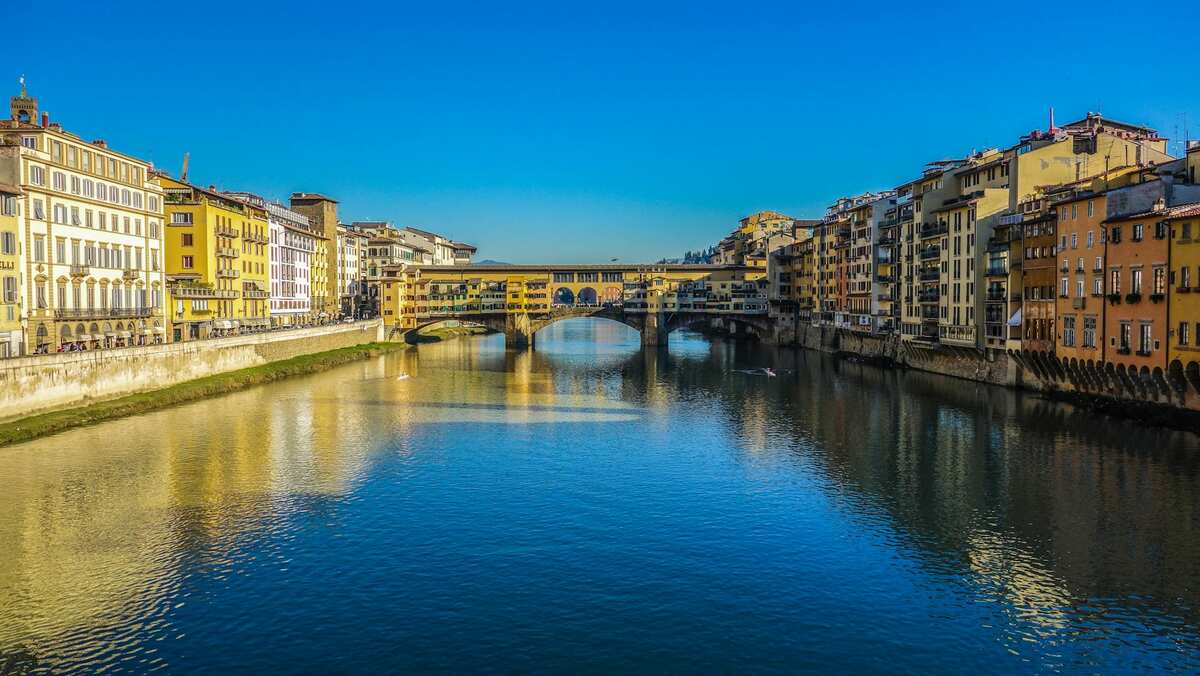
The city unfolds below you, a sea of terracotta rooftops stretching out to the Tuscan hills. From this vantage point, you can appreciate the city’s layout, see landmarks like the Ponte Vecchio, and truly grasp the scale of the Duomo di Firenze in relation to the city it has watched over for centuries. The effort of the climb is a small price to pay for such a spectacular and humbling view.
Giotto’s Campanile and the Baptistery
Duomo di Firenze is part of a larger complex that includes two other architectural gems: Giotto’s Campanile and the Baptistery of St. John. Giotto’s Campanile, a magnificent freestanding bell tower, stands beside the cathedral and is a masterpiece of Florentine Gothic architecture.
Its decorative panels, designed by Giotto and later sculpted by artists like Andrea Pisano and Luca della Robbia, tell stories from Genesis and the history of humanity. The tower’s exterior, like the cathedral’s, is adorned with polychrome marble in shades of green, pink, and white.
A climb up the 414 steps of the campanile provides a different but equally stunning view, offering a perfect angle to photograph the Duomo di Firenze and its magnificent dome. Across the piazza stands the Baptistery of St. John, one of the oldest buildings in Florence, famous for its magnificent bronze doors.
The Baptistery’s iconic Doors of Paradise, created by Lorenzo Ghiberti, are considered a seminal work of the early Renaissance. These three structures together form a cohesive and breathtaking architectural ensemble, each one an essential piece of Florence’s artistic and historical identity.
Legacy and Timeless Influence
Duomo di Firenze is more than just a building; it is a living monument to human aspiration, ingenuity, and artistry. Its construction was a monumental undertaking that spanned generations, embodying the ambition of a city that sought to be a center of art, finance, and culture.
The cathedral’s influence extends far beyond Florence, with Brunelleschi’s dome inspiring architects and engineers for centuries to come. The innovative techniques used in its construction marked a turning point in architectural history, ushering in the era of the Renaissance and its renewed focus on classical principles and scientific inquiry.
Today, the cathedral continues to be a vibrant center of religious life and a major tourist destination, drawing millions of visitors each year who come to admire its beauty, learn its history, and experience its spiritual grandeur.
The Duomo di Firenze serves as a powerful reminder of what is possible when great minds come together with a shared vision, a timeless legacy etched in marble and stone. Its enduring beauty and cultural significance ensure its place not just as a landmark, but as a symbol of human creativity and persistence.